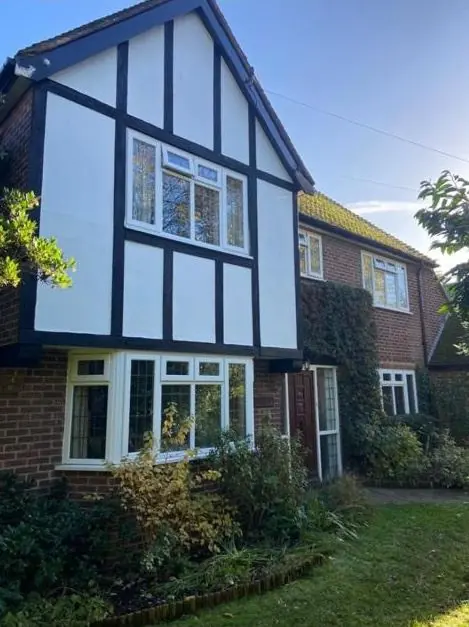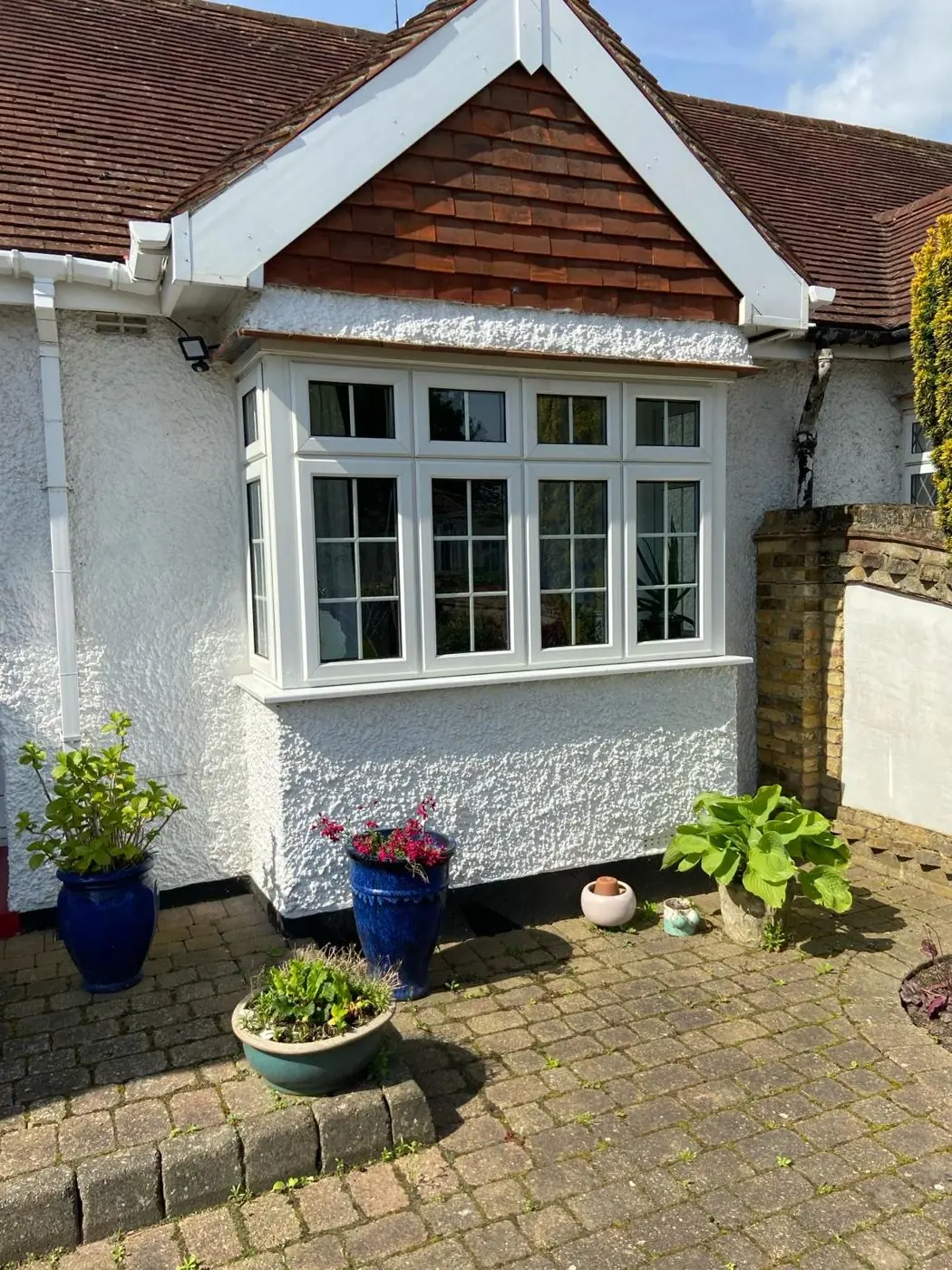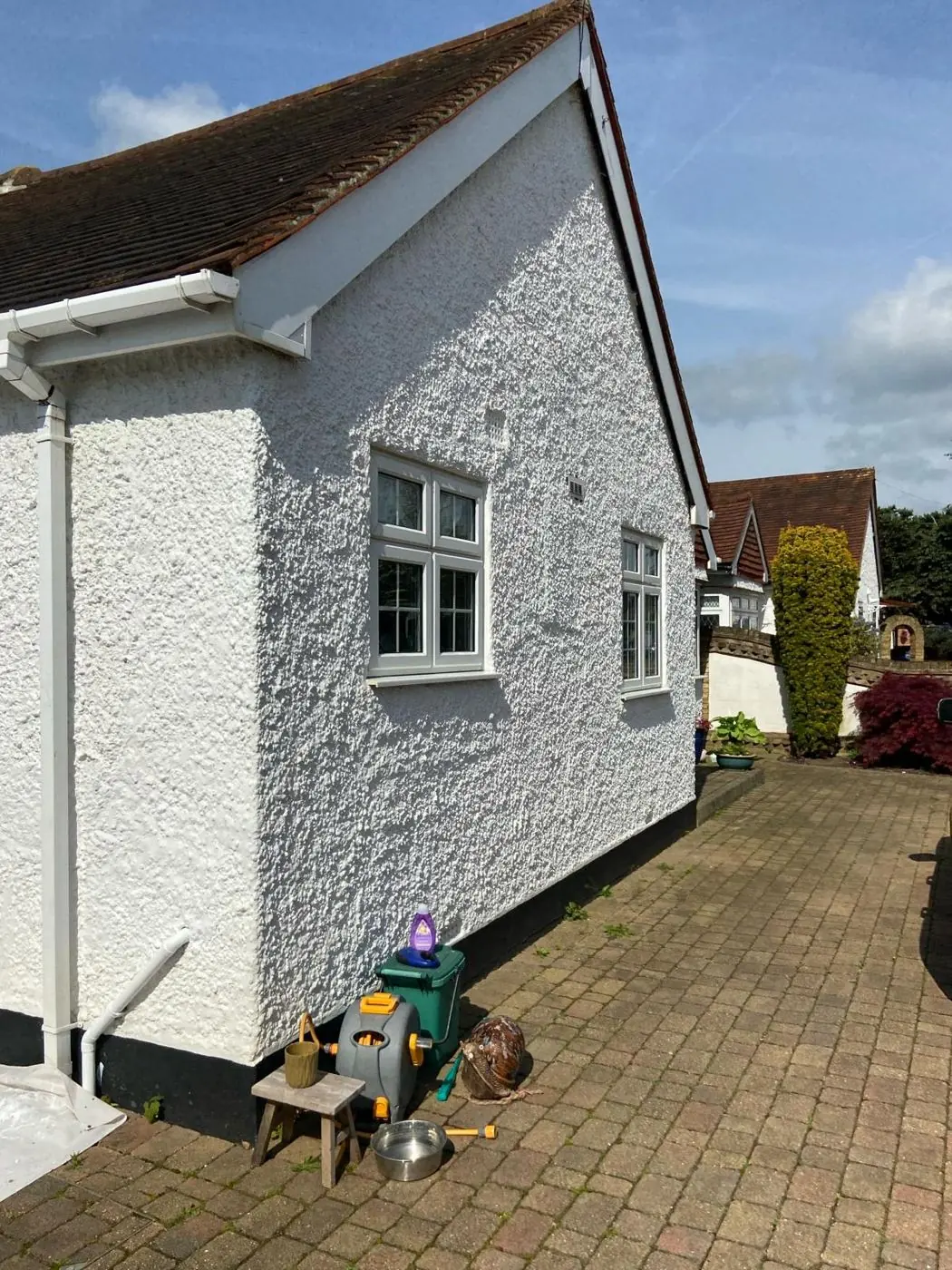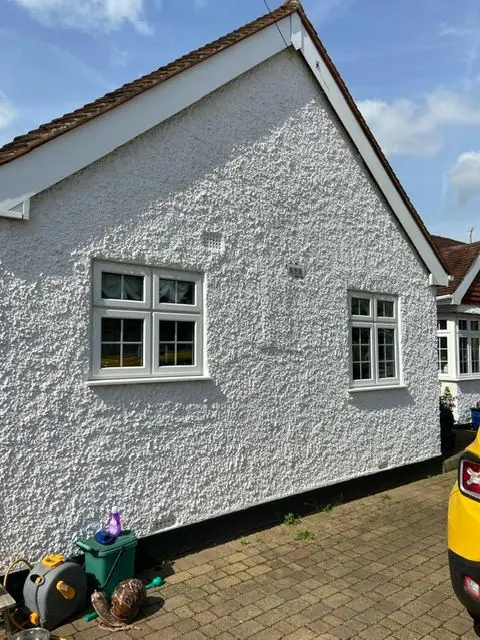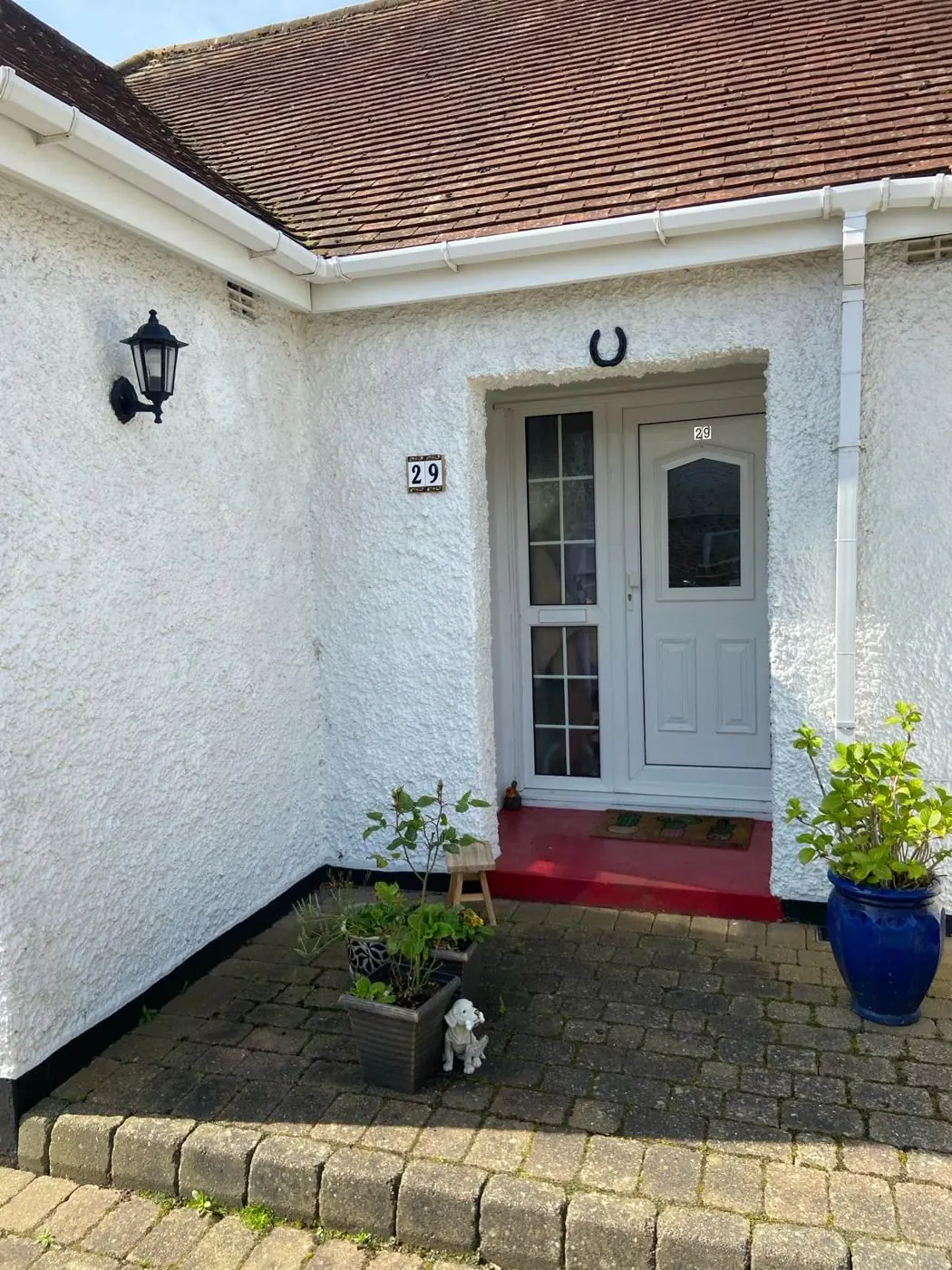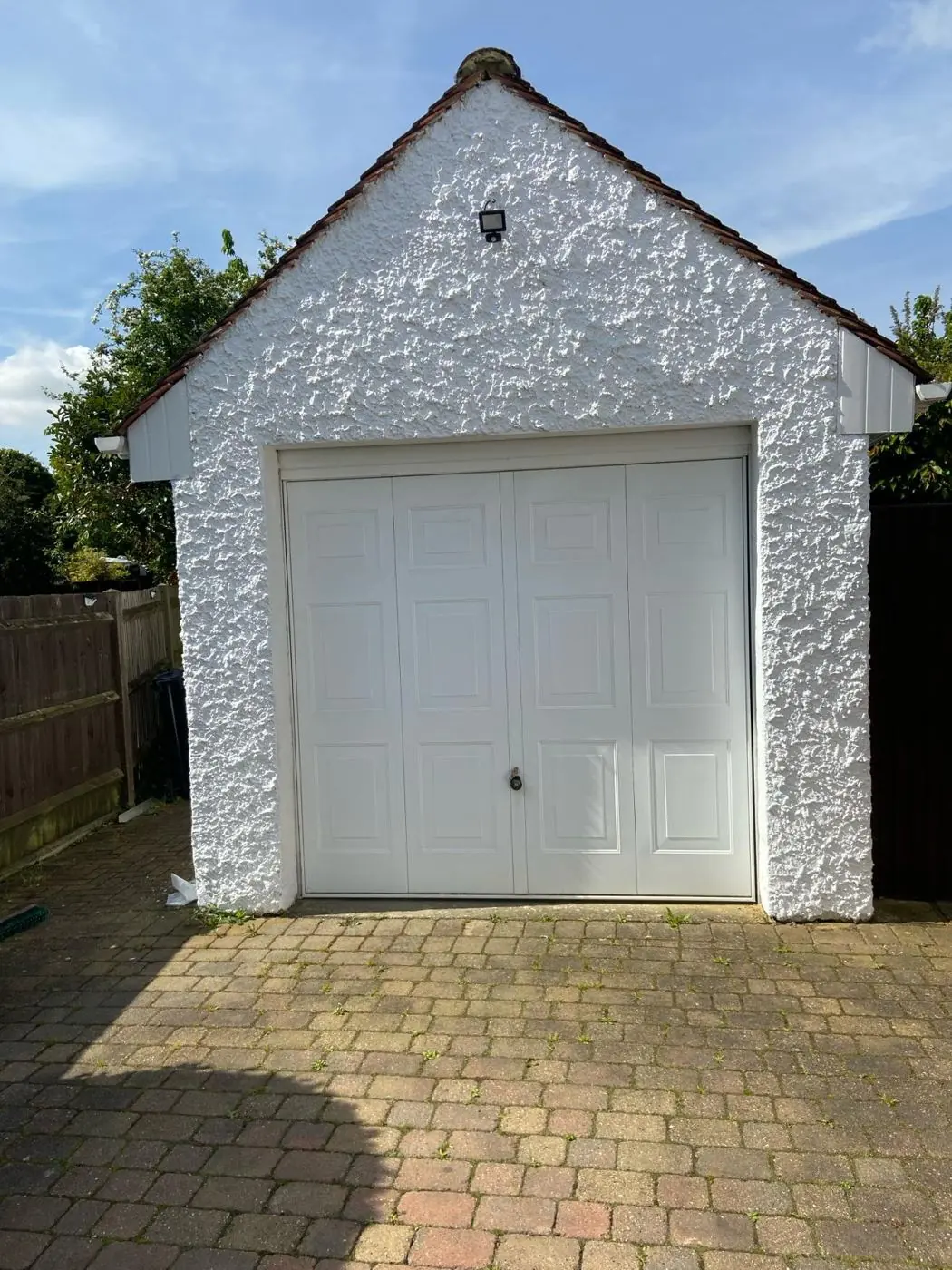
We paint render and stucco in Wellingborough, about 9.7 miles north-east of Northampton, using breathable systems suited to older lime-based finishes. Bare ironstone and limestone walls in the old town are left unpainted, and on Article 4 houses a first coat of paint or a new colour needs planning permission.
Three wall types, three different answers
Before any masonry paint is bought for a Wellingborough house, the first question is what the wall is made of. The town has three broad types, and they call for very different treatment.
| Wall | Where you find it | What we do |
|---|---|---|
| Painted stucco and render | Late 18th and early 19th century town houses and short terraces on Sheep Street, Silver Street and the High Street | Repaint like-for-like in a breathable system suited to lime-based stucco |
| Ironstone, often banded with Blisworth or Lincolnshire limestone | All Hallows area, Church Street, Broad Green, London Road Georgian houses, boundary walls on West Street and Salem Lane | Leave unpainted; paint only the joinery |
| Render added over original stone or brick | Scattered through older streets | Check for trapped damp and blown render before deciding anything |
Our render and masonry painting page covers algae treatment, crack filling and coat counts in general terms. What follows is how those decisions play out in this town.
Stucco fronts in the old town centre
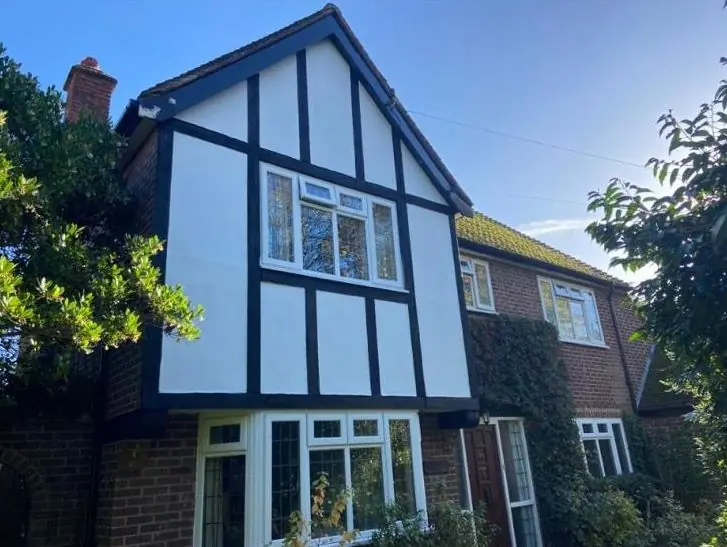
Smooth painted render and stucco is a genuine part of Wellingborough’s character, particularly on the early 19th-century fronts of Sheep Street and Silver Street, in a centre that had largely turned to brick after the great fire of 1738. Stucco of that age is usually lime-based, and it needs to let moisture out. A modern acrylic masonry paint forms a tighter film, and over time it can trap water in the stucco behind it, which then blows away from the brick in patches.
So on these fronts Dean taps the whole surface to find hollow areas, cuts back loose stucco for a plasterer to repair, and then uses a breathable mineral or lime-compatible paint. Where earlier owners have already used a non-breathable coating, we talk through whether it should be removed in the worst areas rather than simply painted over again.
Ironstone and limestone stay bare
The rich brown ironstone of All Hallows Church, the Tithe Barn and the Georgian houses around Broad Green is meant to be seen. Painting it is not only a conservation problem; the local Blisworth limestone used in banding is described as soft, powdery and less weather-resistant than other stones. Sealing it under impermeable masonry paint traps moisture and speeds up its decay. On these buildings we limit ourselves to windows, doors and other joinery, and if a wall needs any treatment at all, it must be breathable and agreed with the council.
On houses covered by the town centre Article 4 direction, which names streets such as Rock Street, Oxford Street, Westfield Road and Moffat Terrace, painting or rendering a previously untreated surface is not permitted development. If a wall on one of those houses has never been painted, it stays that way unless planning permission is granted.
When later render is the problem
The 2009 conservation area appraisal records render applied over original stone or brick, often with an unsatisfactory appearance. These are the walls that need most thought. Cement render over soft brick or stone can crack at the edges and hold water against the masonry. Dean checks for blown sections, damp at the base, and staining under sills before giving a price. Sometimes repainting is the right answer; sometimes the honest advice is that the render needs repair first.
The same caution applies on low ground near the River Nene, the Ise and Swanspool Brook, where lower walls can stay damp. Our guide to painting render and roughcast explains the general prep, and our Wellingborough page covers the town’s other property types.
Last updated by Dean, DH Painter & Decorator.