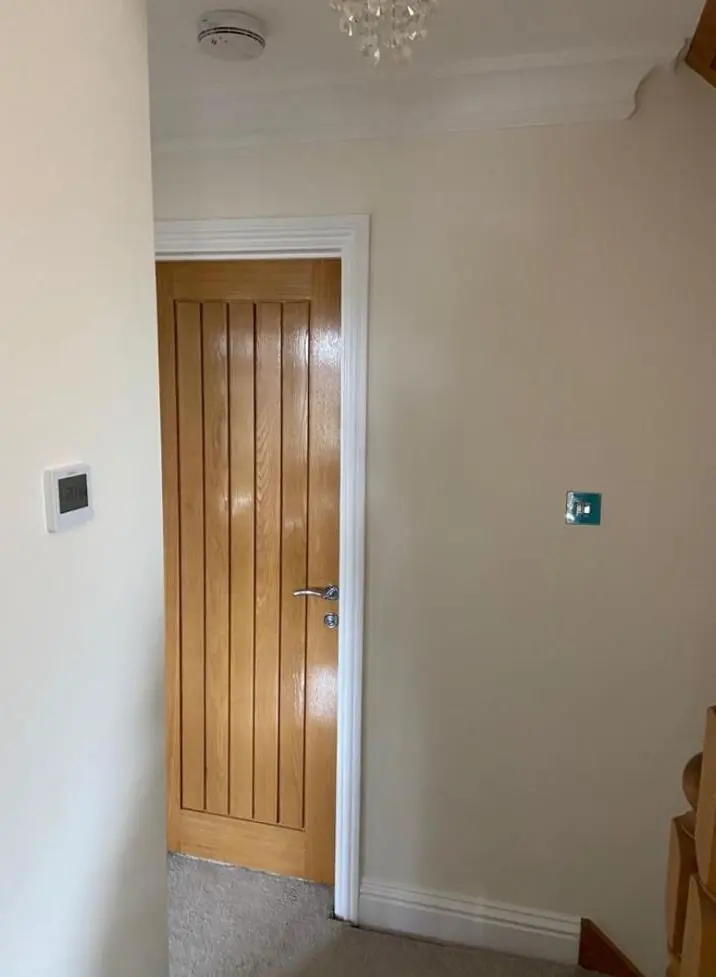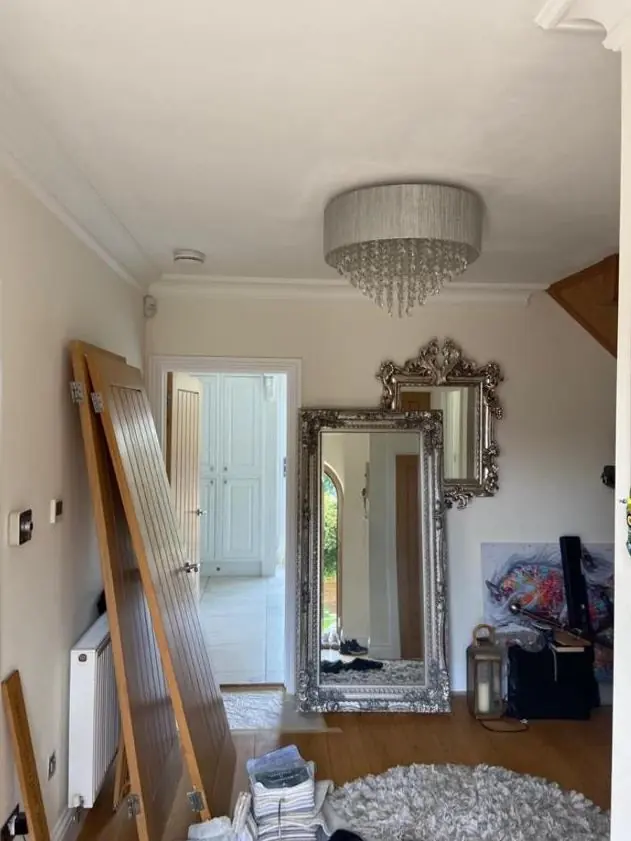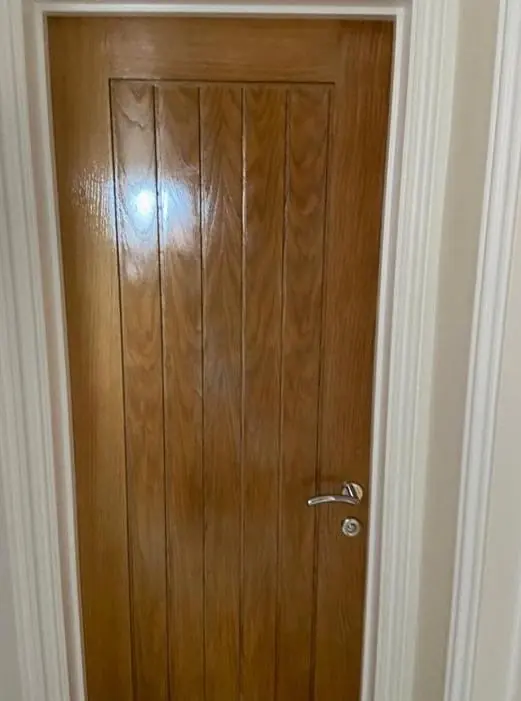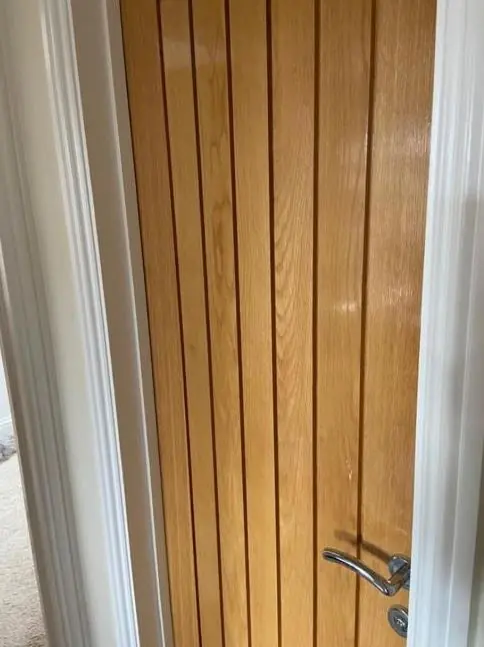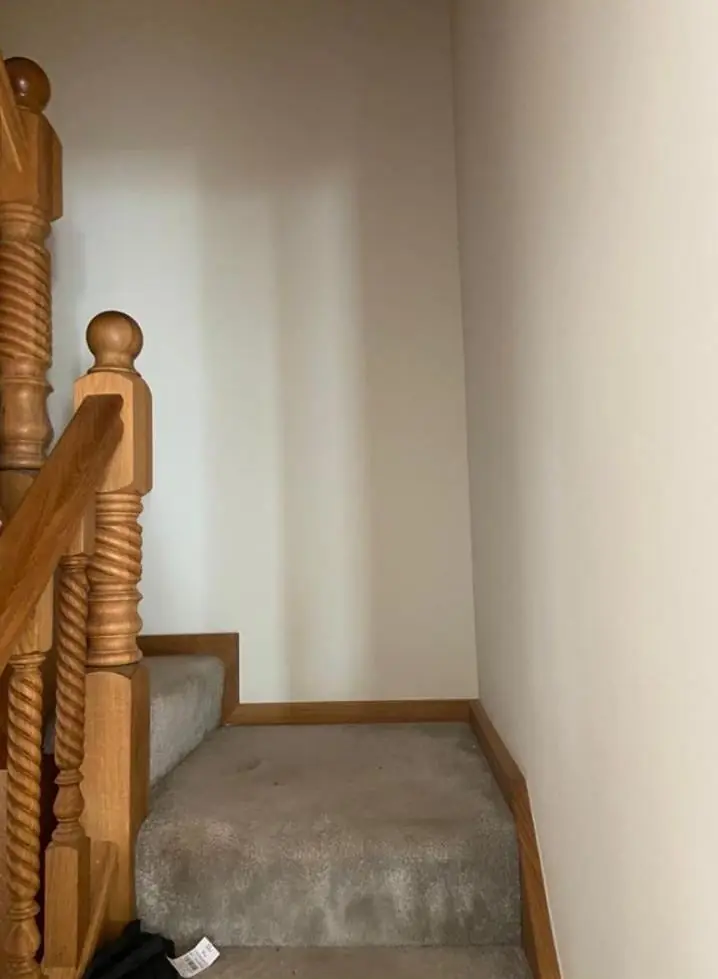
DH Painter & Decorator decorates hallways, staircases and landings in Wollaston, about 9.6 miles east of Northampton town centre. Dean works in both the larger family houses that make up most of the village and the older cottages, where stairs are steep and walls uneven.
Why stairwells in Wollaston tend to be tall
Census figures used in the Wollaston Neighbourhood Plan show that 72.3% of homes in the village have three or more bedrooms, and 75.5% were owner-occupied in 2011. In practice that means a lot of two-storey family houses with a full-height wall over the stairs. Those hallways also carry the most traffic, with school bags, bikes, dogs and shoes.
The tall wall cannot be reached safely from a stepladder on a tread. Dean sets up adjustable stair platforms, combination ladders and staging boards, so there is a level, stable place to work from at every height and the stairs can still be used around it.
Tight stairs in the old village core
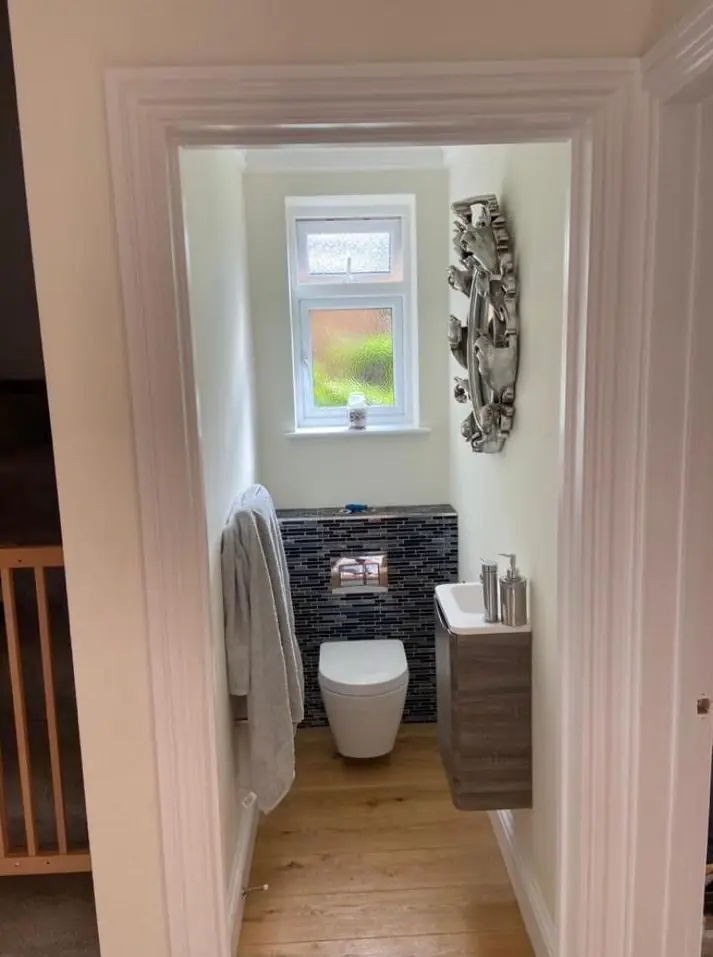
The older part of Wollaston is a different job. The late 17th and mid-18th-century cottages on Duck End, Hickmire, Bell End and Church Lane were often built on two- or three-unit plans. Some groups of cottages have since been joined into single houses, and a joined-up cottage can have narrow, winding stairs, low ceilings over the flight, and changes of level where one cottage meets the next. The access kit has to fit the space. Short boards and small platforms go where a full staging set will not turn the corner.
Walls in these houses are coursed limestone, often with old plaster, so they bow and ripple. A strong sheen picks out every bump. A flatter, washable finish on the walls tends to look better, with the shine kept for handrails, spindles and the string.
Hard-wearing choices for a busy hall
Most of the wear in a hallway happens below waist height and on the stair woodwork. For a family hall we suggest:
- A scrubbable matt or eggshell on the walls, so marks can be wiped off without burnishing shiny patches into the paint.
- A durable satin or gloss on spindles, newels and handrails, which get handled every day.
- A slightly darker or more forgiving colour below a dado or along the stair wall, if you have children or pets.
- Careful masking and edging where the stair carpet meets the string, so the carpet stays clean.
A hall, stairs and landing is usually two to four working days, depending on how much woodwork there is and whether the ceilings are included. Dean will tell you which part of the house will be out of use on each day.
Getting to you, and staying out of the way
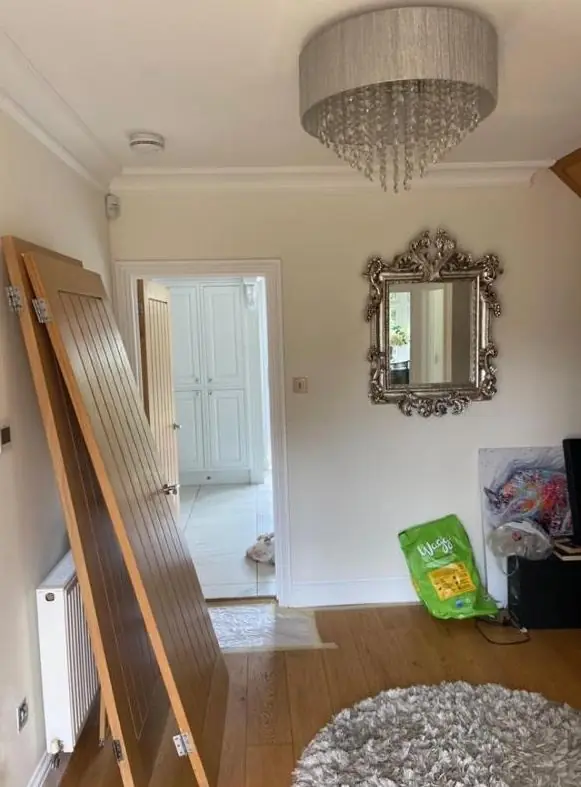
Stair platforms, boards and dust sheets all come through the front door, so where the van stops matters. The parish plan flags drop-off and pick-up around the schools as the worst time for parking. If you live near Hookhams Path or South Street, we will arrive before the school run or after it. We talk to you about where the van can sit without blocking a neighbour, because stair platforms and boards come in and out through the front door. We cover dust sheets on the treads and protect the banister, so the stairs stay usable at night.
Later houses in the village, on roads like St Mary’s Road, may have a straight flight from the front door or stairs rising out of the living room. In those layouts, the hall colour carries up the stairs and round the landing, so we agree where the colour stops before work starts.
The hallway, stairs and landing decorating page explains the access equipment and the order of work. For other jobs in the village, see our Wollaston painter and decorator page.
Last updated by Dean, DH Painter & Decorator.