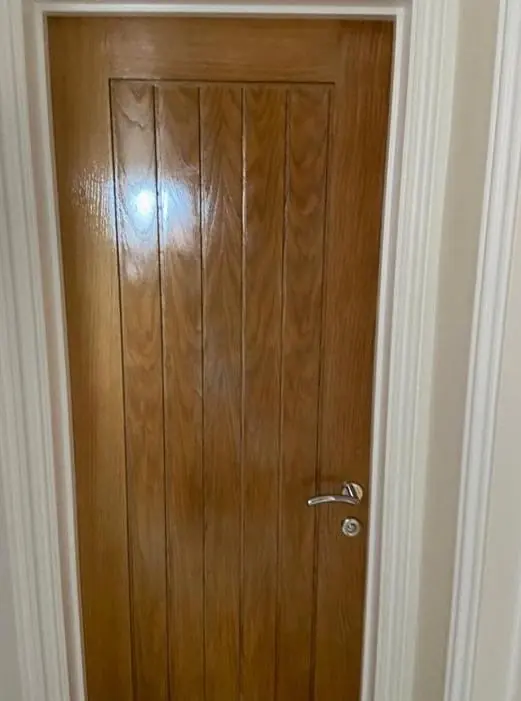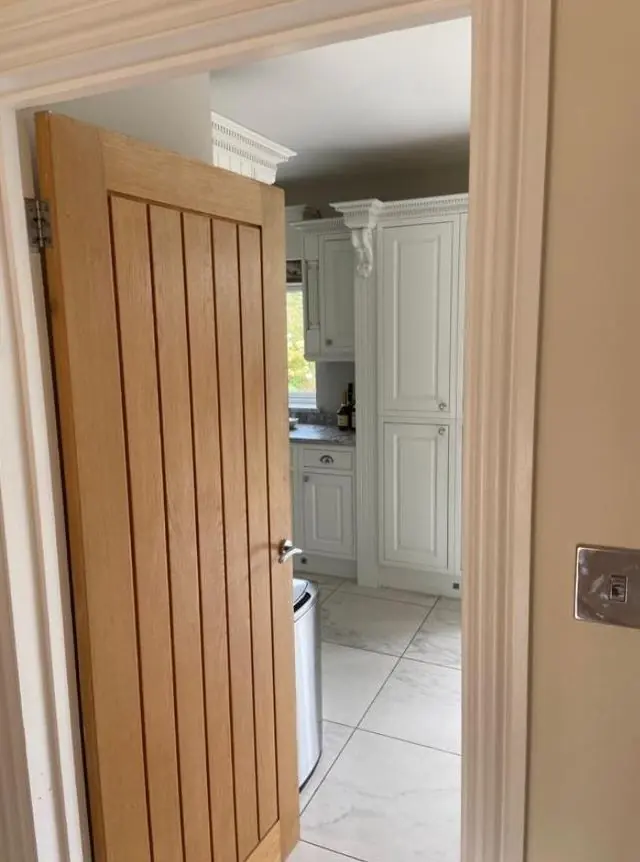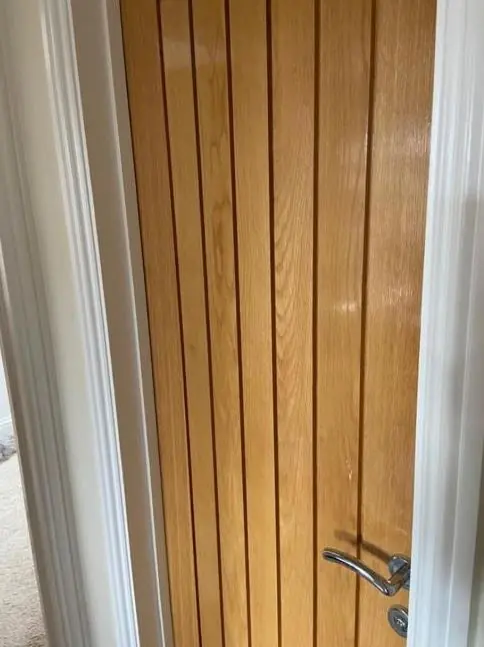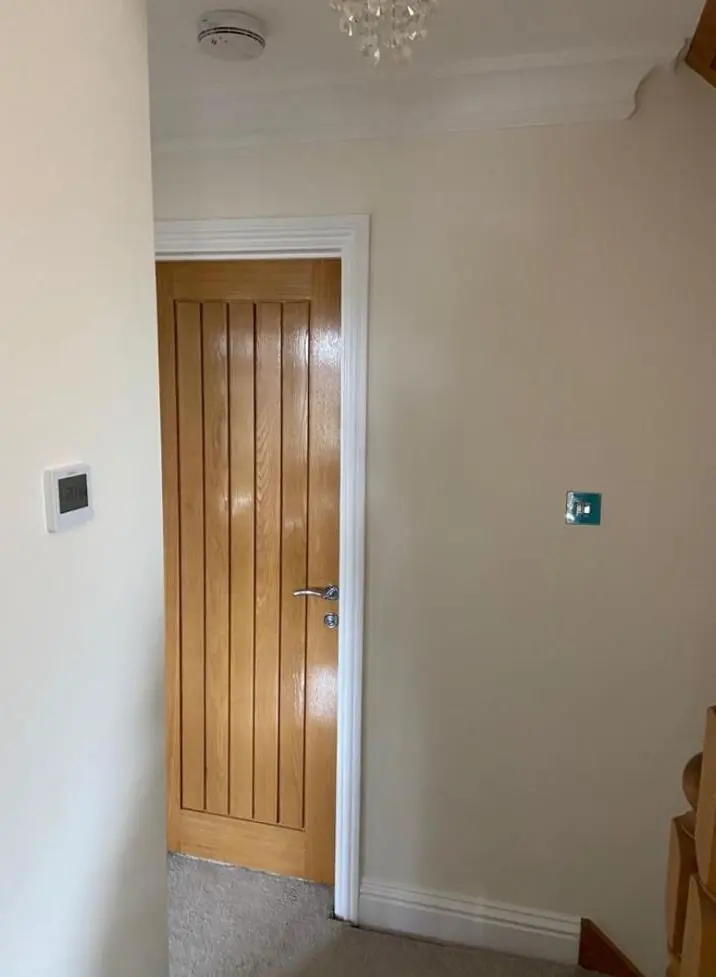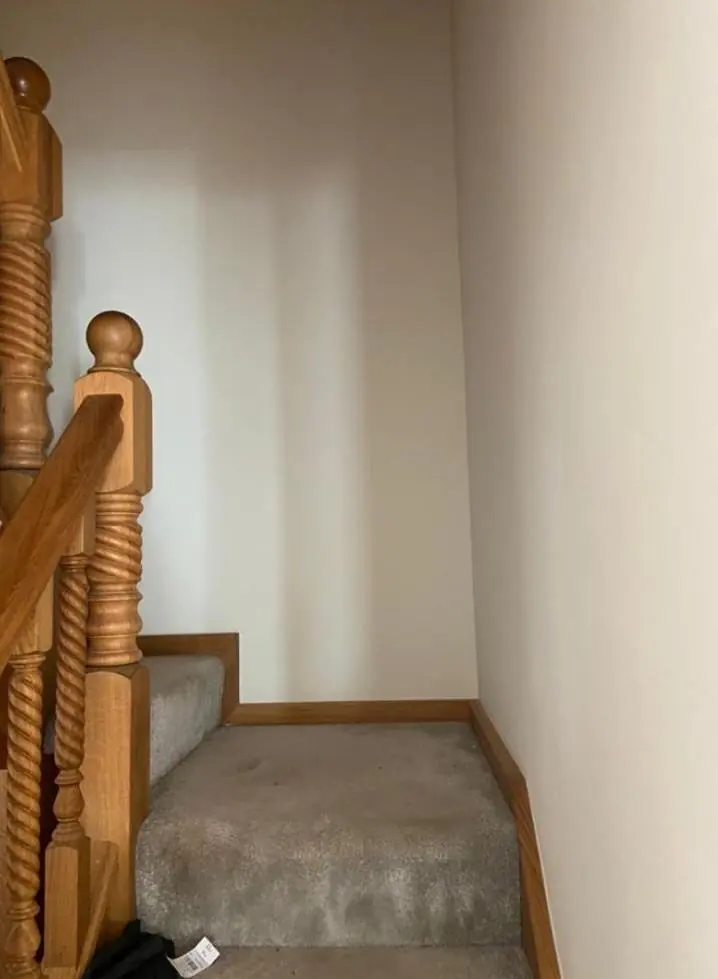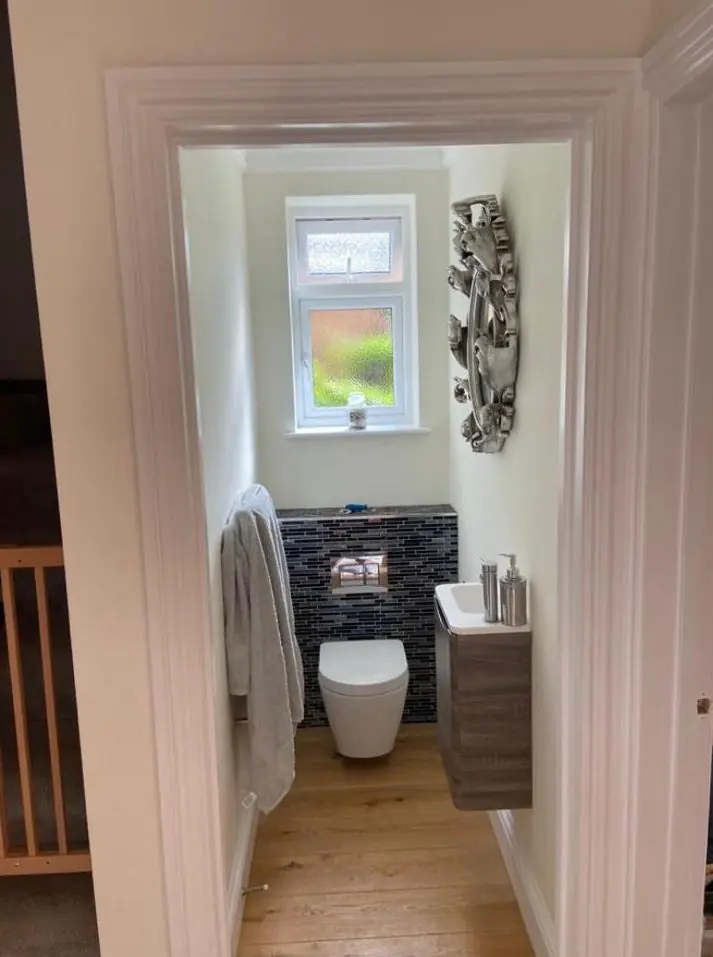
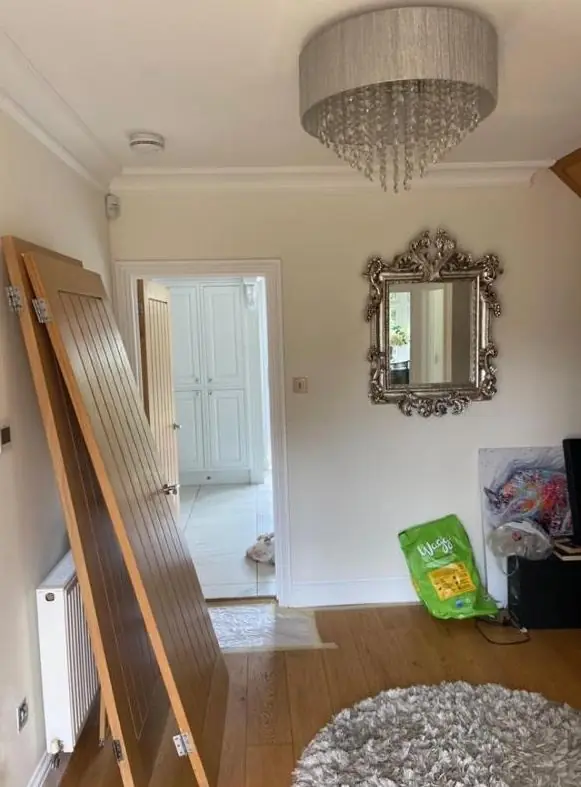
DH Painter & Decorator paints doors, skirtings, architraves, sashes and bay joinery in Wellingborough, about 9.7 miles north-east of Northampton town centre. Most of the period joinery is in the Victorian boot-and-shoe terraces, where the conservation area favours repairing and repainting originals over replacing them.
Sashes, bays and panelled doors in the Victorian streets
A large share of Wellingborough’s period joinery sits in the red-brick terraces and semis built for the boot and shoe trade: Midland Road, Park Road, Havelock Street, Great Park Street, Rock Street, Alma Street, Oxford Street and Moffat Terrace, plus the eastern streets around York Road and Mill Road. These houses were built with timber sliding sashes and canted bays framed in timber or stone, and the council’s conservation appraisal records both surviving. Inside, the panelled doors, moulded architraves and tall skirtings date from the same years and usually carry decades of gloss.
That build-up is the main problem. Thick layers clog the mouldings on door panels, glue sashes into their boxes and hide splits in skirting boards. Before any new coat goes on, we scrape back old runs, cut paint out of the sash gaps so the windows still slide, fill and sand, and spot-prime bare timber. Old paint on joinery of this age can contain lead, so we abrade it wet rather than dry sanding. The full preparation and paint system is set out on our main door, skirting and woodwork painting page; what follows is about the Wellingborough side of it.
Repair and repaint: how Article 4 shapes joinery work
Several of those terrace streets, Rock Street, Park Road and Havelock Street among them, contain houses named in the 2011 Article 4 direction for the town centre. For joinery, two parts of it matter. Owners of those listed townscape-merit houses lose the automatic right to swap their windows and doors for new ones, and painting outside counts as development if the colour changes or the surface was bare before.
For owners on those streets, the practical result is that original sashes, bays and front doors are worth looking after. A careful repaint in the existing colour is the simple route. Want a new front door shade? Ask the council’s planning service first, then we order paint. We also look at the stone sills under the bays, which the council’s 2009 conservation area appraisal notes are sometimes painted over. Where a sill already carries paint we keep it sound; bare stone stays bare.
Georgian doorcases on ironstone fronts
The Georgian houses of Broad Green and London Road, built in ironstone, along with the stuccoed and brick fronts of the late Georgian period around Sheep Street and Silver Street, are older again. On an ironstone or limestone frontage, the doors, doorcases and window joinery are the only parts that should take paint, because the stone has to stay unpainted and able to breathe. Exterior work there is all timber, and masking has to keep drips off the stone around each frame. Many of these buildings sit right on the back edge of the pavement, so we sheet the footway and keep it passable while we work.
Flush doors, MDF and settling gaps on the estates and new builds
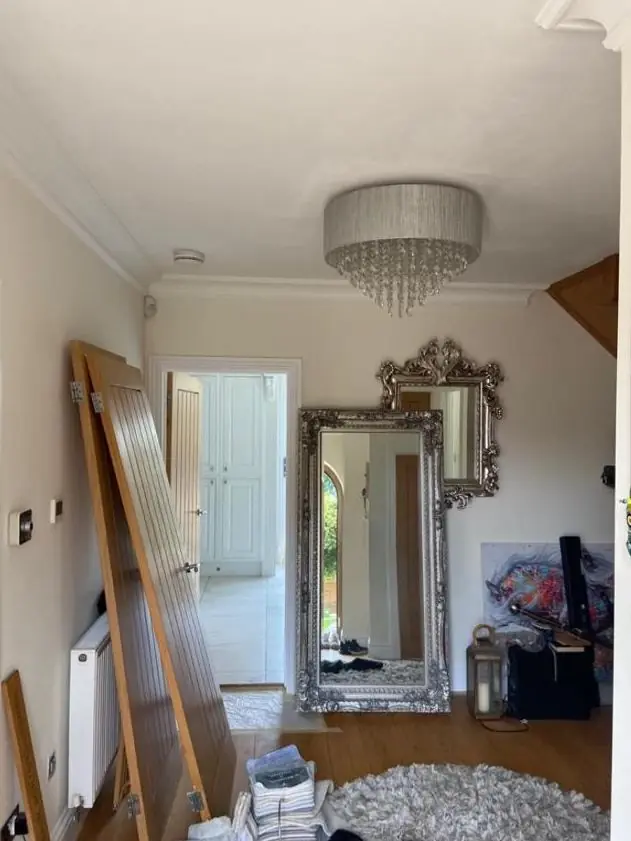
Away from the historic core the job changes. On the 1960s and 70s estates at Hemmingwell, Queensway and Kingsway, and the smaller ones at Spring Gardens and Knights Court, woodwork painting is mostly an interior refresh of doors, frames, skirtings, spindles and window boards, often alongside a room repaint. There are no heritage limits here, so the decision is about finish. Satin or eggshell hides knocks better than high gloss in a busy family hall, and water-based enamels hold their white for longer.
At Stanton Cross, Glenvale Park and Park Farm, the usual first job is different. As a new house dries out, gaps open between skirtings and walls and along architraves. We caulk them once the house has settled, then repaint all the woodwork in one go.
Damp skirtings on the low ground
Homes on the lower ground near the River Nene, the River Ise and Swanspool Brook can hold damp in the bottom of their walls. Skirtings show it first, with flaking paint, swollen timber or a tide line just above. We take moisture readings before painting and tell you if the wall needs drying out or the cause needs fixing first, because paint on damp timber won’t last. Other services and the town’s building types are covered on the painting and decorating in Wellingborough hub.
Last updated by Dean, DH Painter & Decorator.