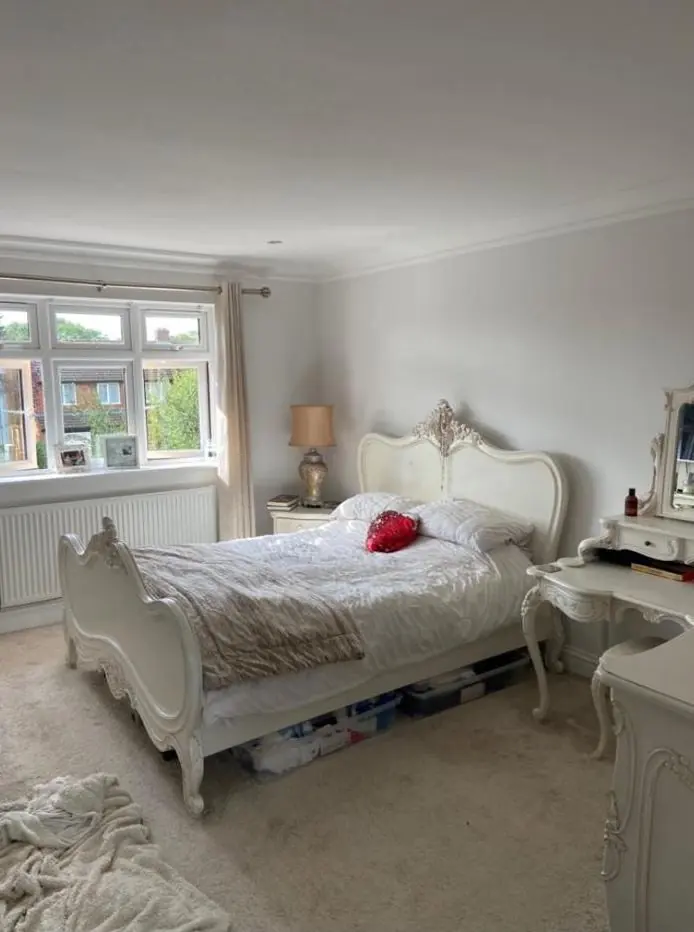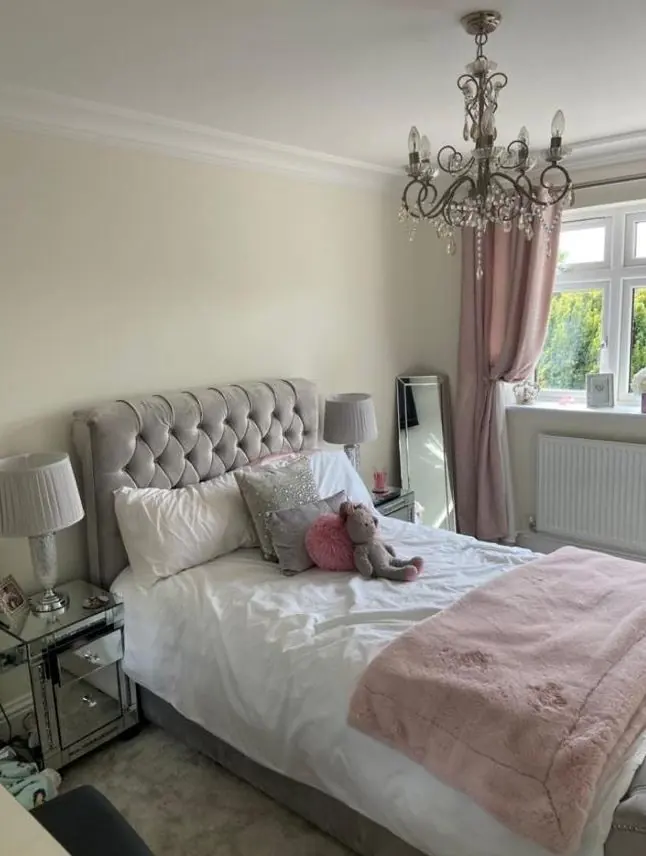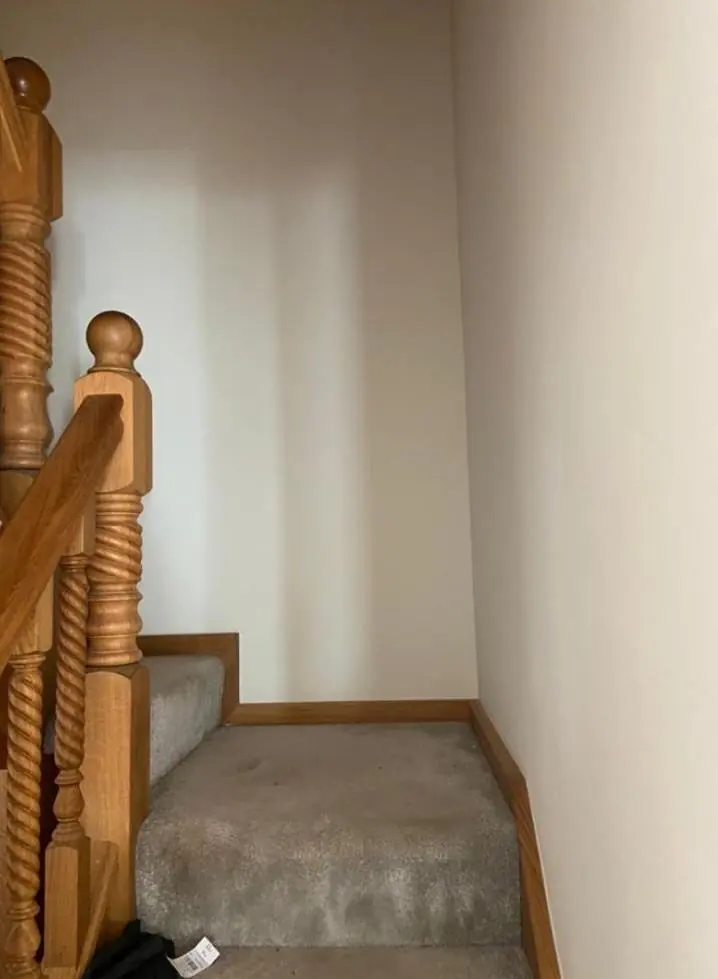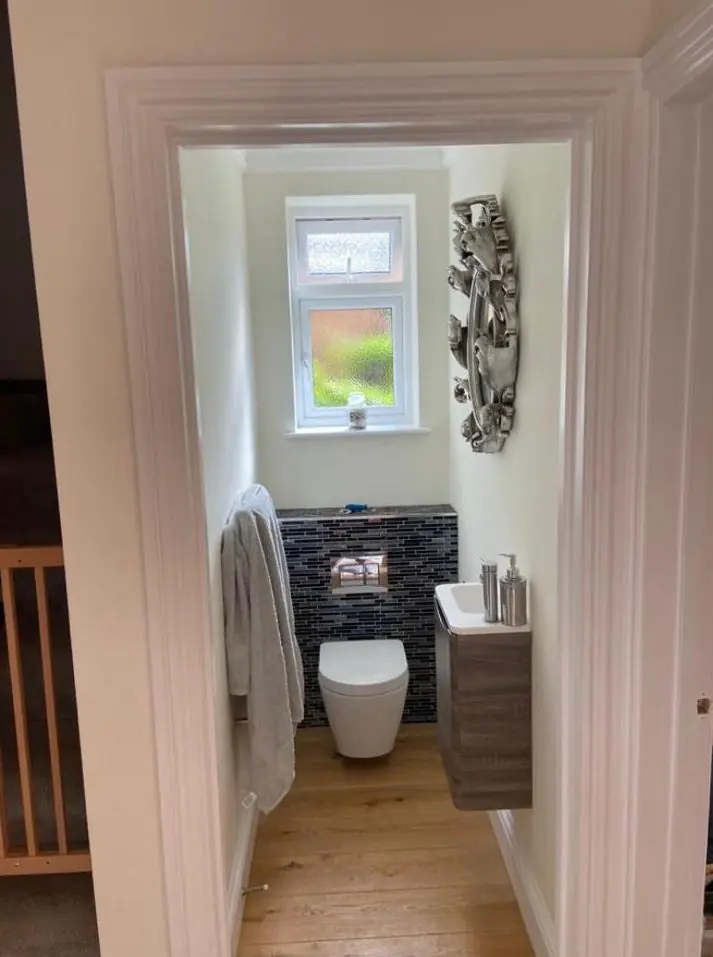
Dean hangs lining paper and wallpaper in Wellingborough homes, 9.7 miles north-east of Northampton town centre. In the older streets that usually means lining the walls first, and in the new builds at Stanton Cross, Glenvale Park and Park Farm it means waiting until the plaster has fully cured.
Old walls on Park Road, Rock Street and Havelock Street
The Victorian and Edwardian terraces that grew up around the boot and shoe factories, and the older Georgian houses nearer the church, were plastered long before modern gypsum skims. Many still have lime plaster, and after a century or more it is rarely flat. Walls bow between the windows, corners drift out of square and old repairs leave ridges you can feel with a hand.
Wallpaper shows all of that, especially a paper with a sheen or a tight geometric print. In these houses we usually recommend a layer of lining paper first, hung horizontally so its joints never line up with the joints of the finish paper. It evens out minor dips, gives the finish paper a uniform surface to stick to and helps the old plaster cope with the water in the paste.
Lime plaster also needs a lighter touch when old paper comes off. Soaking and scraping too hard can lift the surface, so we strip slowly, let it dry, then fill and sand before anything new goes up. If a section of plaster has come away from the wall behind, that needs a plasterer before we paper.
Patterns, heights and the shape of the room
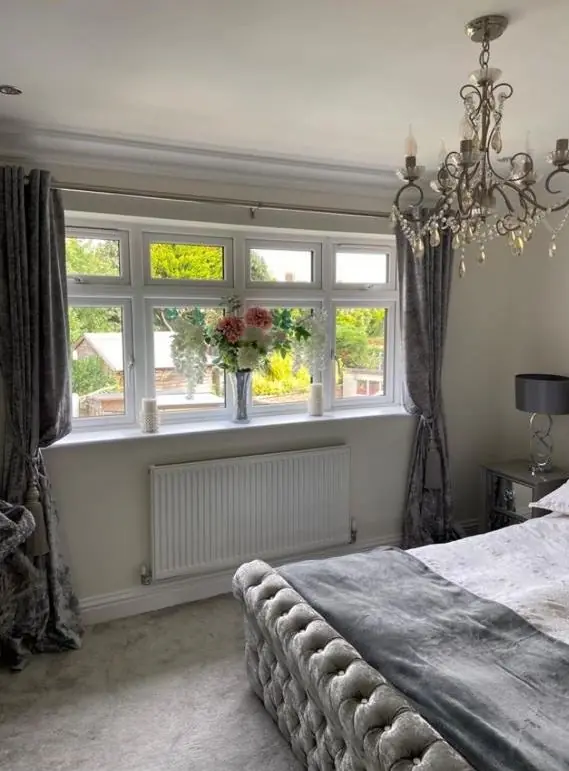
The tall rooms in the Georgian houses around Broad Green and London Road can carry a large-scale repeat that would swamp a smaller room. Two-storey Victorian terraces sit somewhere in between. In the more compact 1960s and 70s homes on the Hemmingwell and Kingsway estates, a feature wall in a bold print often works better than papering all four walls.
Canted bay windows, common in the Victorian streets, are the trickiest part of a room to paper. Each facet of the bay needs its own pattern match and the reveals around the sash windows need careful cutting. We set out the first drop from the centre of the main wall or the chimney breast, not from a corner, so any loss in the pattern ends up somewhere you won’t notice. More on how we hang different paper types is on our main wallpaper hanging page.
Fresh plaster east of the station
Stanton Cross is planned for about 3,200 homes beside the railway, and Glenvale Park and Park Farm are adding more. Their walls are much flatter than in the old town, which suits wallpaper. The catch is moisture. New plaster can take several weeks to dry out fully, and paste on a damp wall can stop it drying properly, which causes lifting seams or staining that shows through.
On new plaster we check the walls are dry, then size them or apply a suitable primer so the paper can be slid into place and taken off again in future without tearing the plaster face away. If you are not in a rush, living with painted walls for the first year lets any settlement cracks appear and be filled before the paper goes on. The drying and sealing process is set out in our guide to new plaster and mist coats.
Damp low walls and paper don’t mix
Some of the town sits on low ground near the Nene, the Ise and Swanspool Brook, and houses there can carry damp in the bottom of their walls. Wallpaper is less forgiving than paint on a wall like that: it can stain, bubble or grow mould behind the surface. On ground-floor rooms in those parts of town, we take a moisture reading before agreeing to paper a wall, and we will tell you plainly if it would be better painted.
For the wider picture of decorating in the town, visit our Wellingborough page.
Last updated by Dean, DH Painter & Decorator.