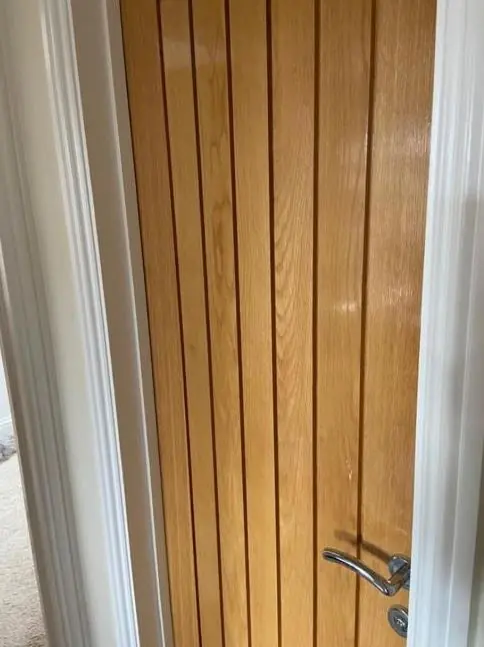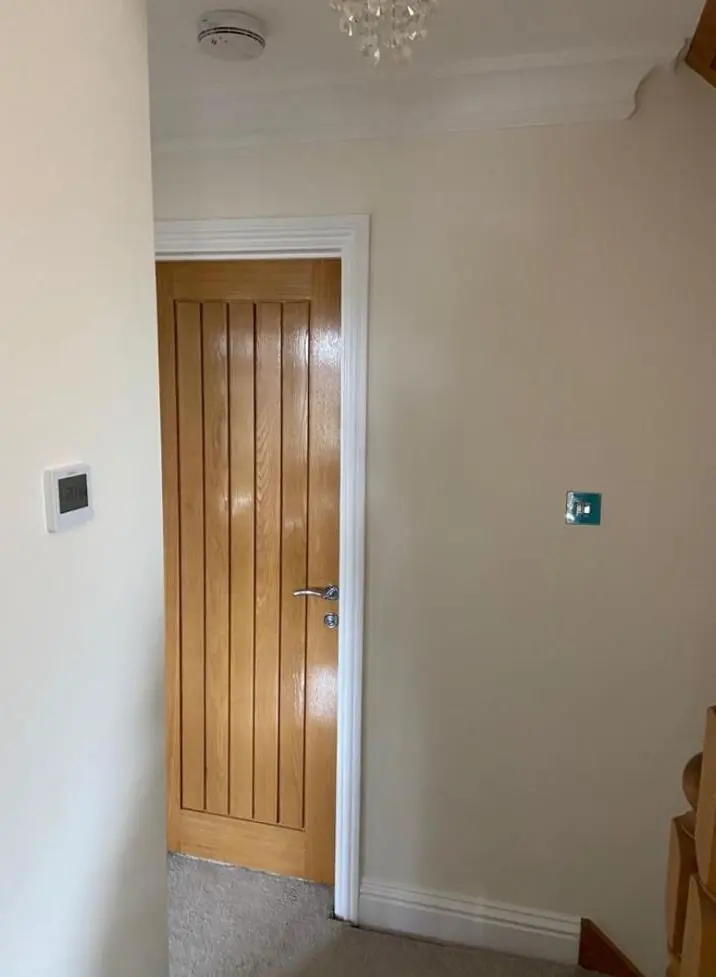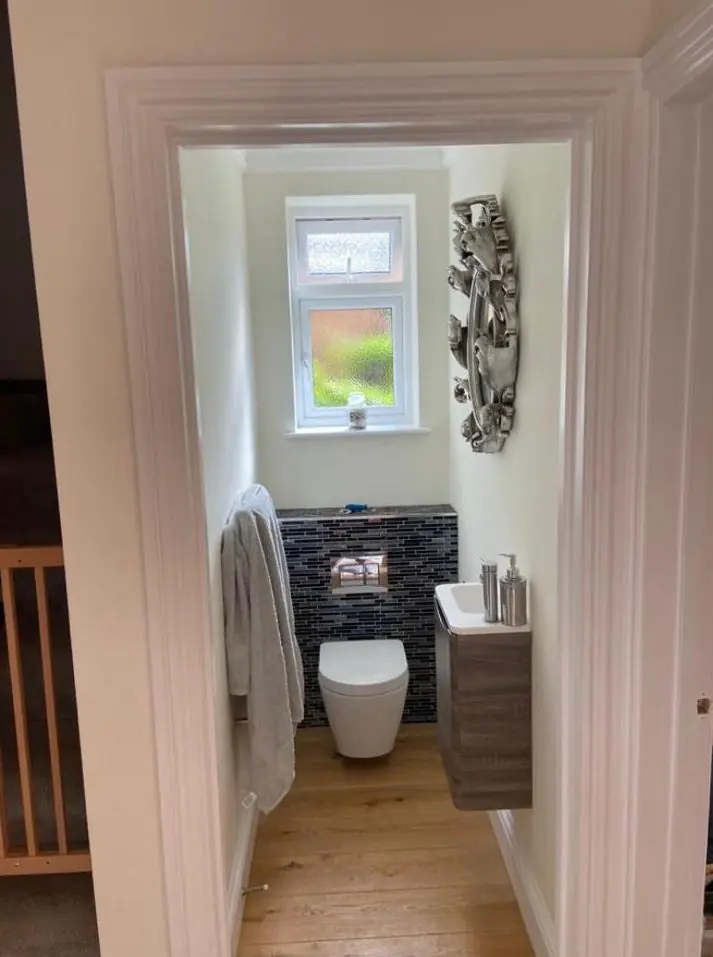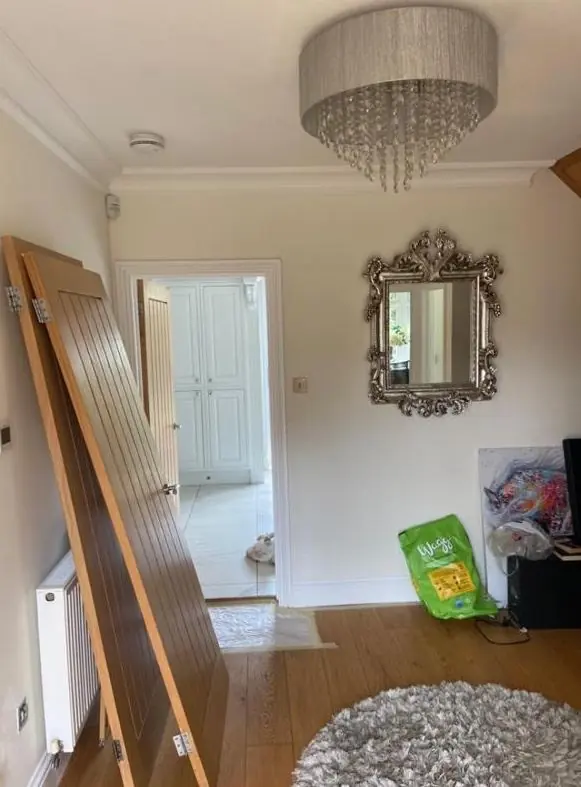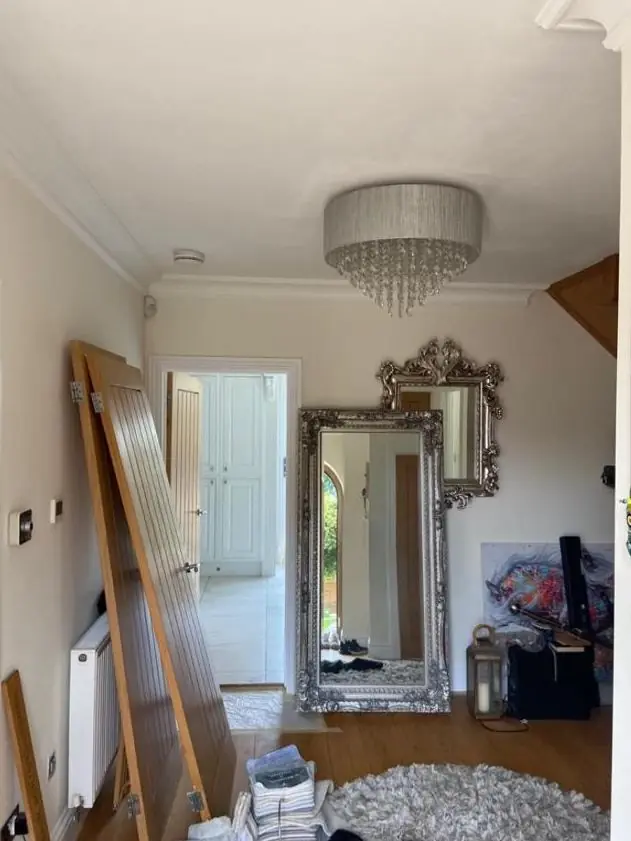
Dean paints internal and external woodwork in Weston Favell, about 2.9 miles north-east of Northampton town centre: doors, skirtings, architraves, sash windows, lintels and shutters. In the conservation-area village core, joinery is a big part of the character, so we repair and repaint it rather than replace it.
Why joinery matters so much in the old village
Weston Favell’s historic core, from the Wellingborough Road end of High Street to Church Way, is built from coursed limestone rubble that is meant to stay as bare stone. That leaves the timber to carry the colour. Front doors, window frames, shutters and timber lintels are the painted parts of each elevation, and the council’s 2010 conservation area appraisal treats them as part of what makes the village look the way it does.
The appraisal records surviving glazing-bar sashes at 18, 25, 36 and 95 High Street. Rixon’s Farm at 91 High Street has window shutters, and timber lintels set into the stonework are recorded on the locally listed cottages. Wood bedded into stone sits wherever water runs down the wall, so these pieces rot first if the paint is allowed to fail.
How we handle sashes, lintels and shutters here
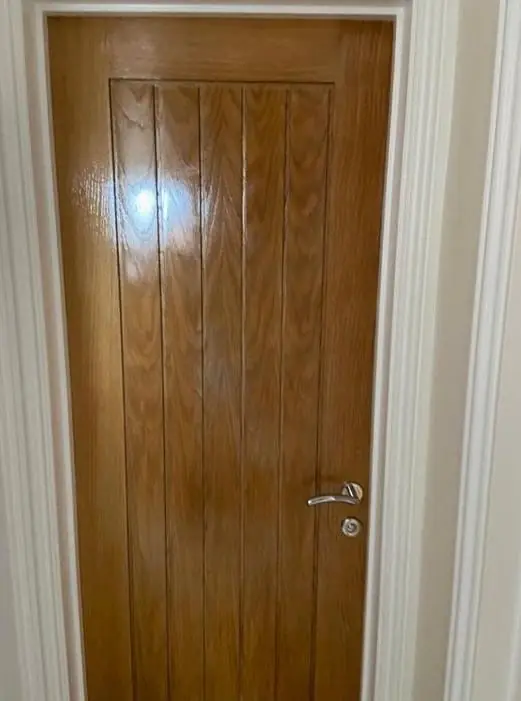
On glazing-bar sashes the slow part is the preparation: raking out failed putty, reputtying where needed, filling end grain at the joints and keeping the paint line a millimetre or two onto the glass to seal it. Sashes are painted in an order that leaves them able to slide, and we keep the paint off the parting beads so they do not stick shut.
A timber lintel or shutter in a stone wall is treated more like a small piece of exterior carpentry. We cut back soft wood, consolidate and fill it, prime bare timber and then build up the coats, keeping the paint off the surrounding stone. Shade from the mature trees around the church, many of them under Tree Preservation Orders, keeps some north-facing joinery damp for longer, so we test the moisture first and wait for a dry spell rather than trapping water under new paint. The general method for woodwork is on our door and skirting painting page.
Listed doors and the Wellingborough Road villas
Weston Favell has 13 listed buildings, among them The Grange at 10 High Street, Hervey’s Cottage on Church Way and The Priory at 113 High Street. Listed building consent covers more than the outside: changing the colour of historic joinery or stripping old finishes from internal doors can need consent too. Before we quote for work on a listed house we suggest you check the plan with the conservation officer. Like-for-like repainting is usually the simplest route.
The terrace of 19th-century villa-style houses on the Wellingborough Road has a different problem. The appraisal notes that many of them have lost their original doors and windows. Where a period front door survives, it is worth restoring and painting in a colour that suits the age of the house rather than a modern high gloss. Against the appraisal’s ‘muted reddy-browns’ and the limestone, dark, quiet colours look settled.
Inside the cottages and the suburbs
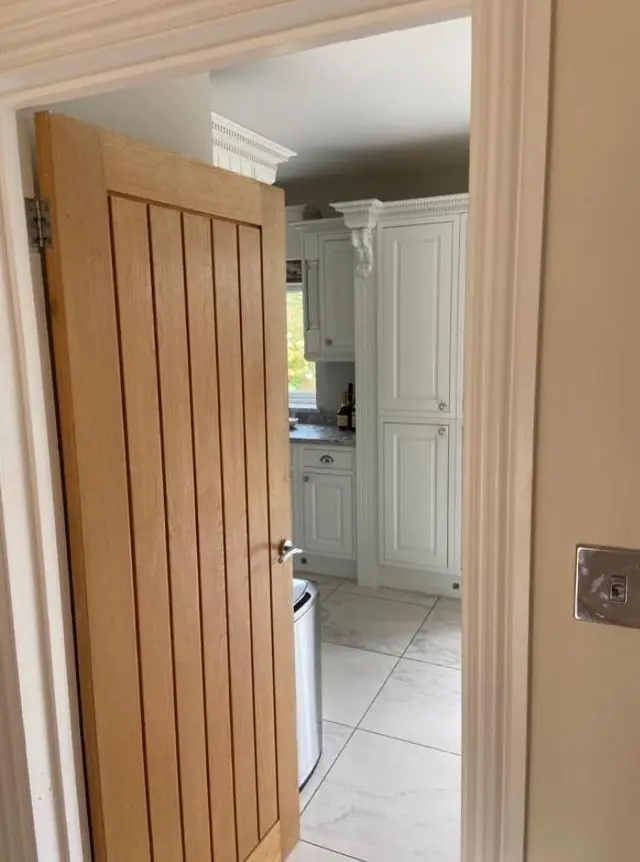
Indoors, the older cottages often have period plank or panelled doors and deep skirtings fixed to uneven solid walls. Those skirtings are rarely straight, so the gap at the top needs flexible filling rather than a hard filler that will crack. Old doors are worth stripping back where the paint has built up, instead of replacing them.
Away from the conservation area, the 20th-century semis, detached houses and flats around Park Way, Pyket Way and Edgemont Road have ordinary softwood or MDF skirtings and flush or moulded doors. There are no heritage limits, so the choice is between a satin or eggshell finish, oil or water based, and whether to do the woodwork alone or with the walls. For the wider picture of decorating in the area, see our Weston Favell area page.
What to tell us when you ask for a quote
- Whether the house is listed or inside the conservation area.
- How many sashes, doors and lengths of skirting are involved.
- Any soft timber, sticking sashes or loose putty you have noticed.
- Whether the front faces directly onto the High Street pavement, which means planning ladder work around people walking past.
Prices depend on condition more than size, so there is no fixed rate. Our cost guide explains what affects the figure.
Last updated by Dean, DH Painter & Decorator.