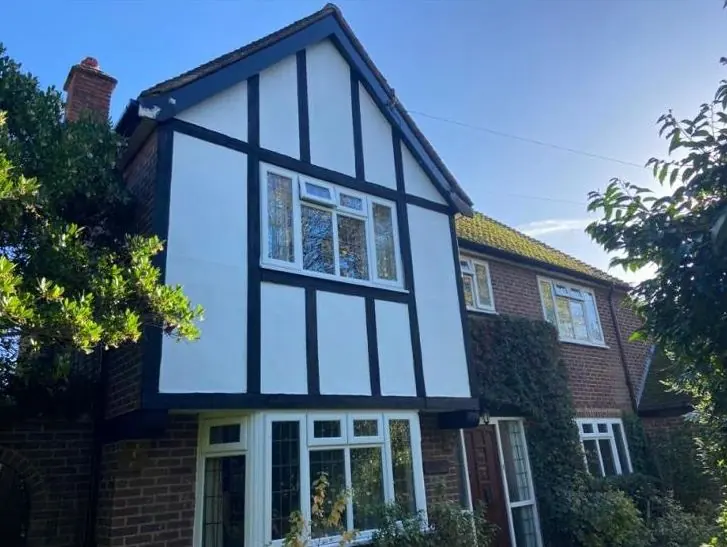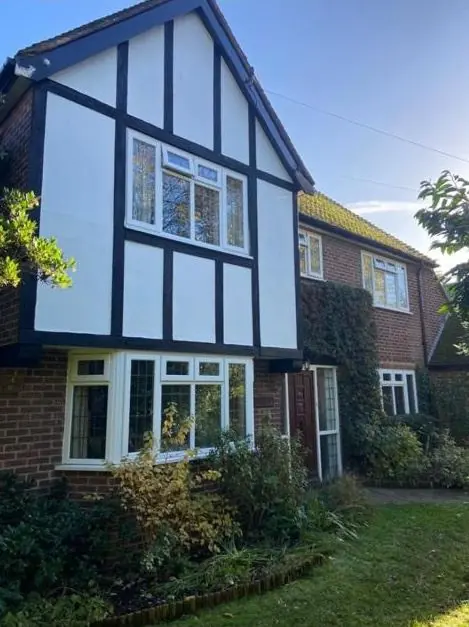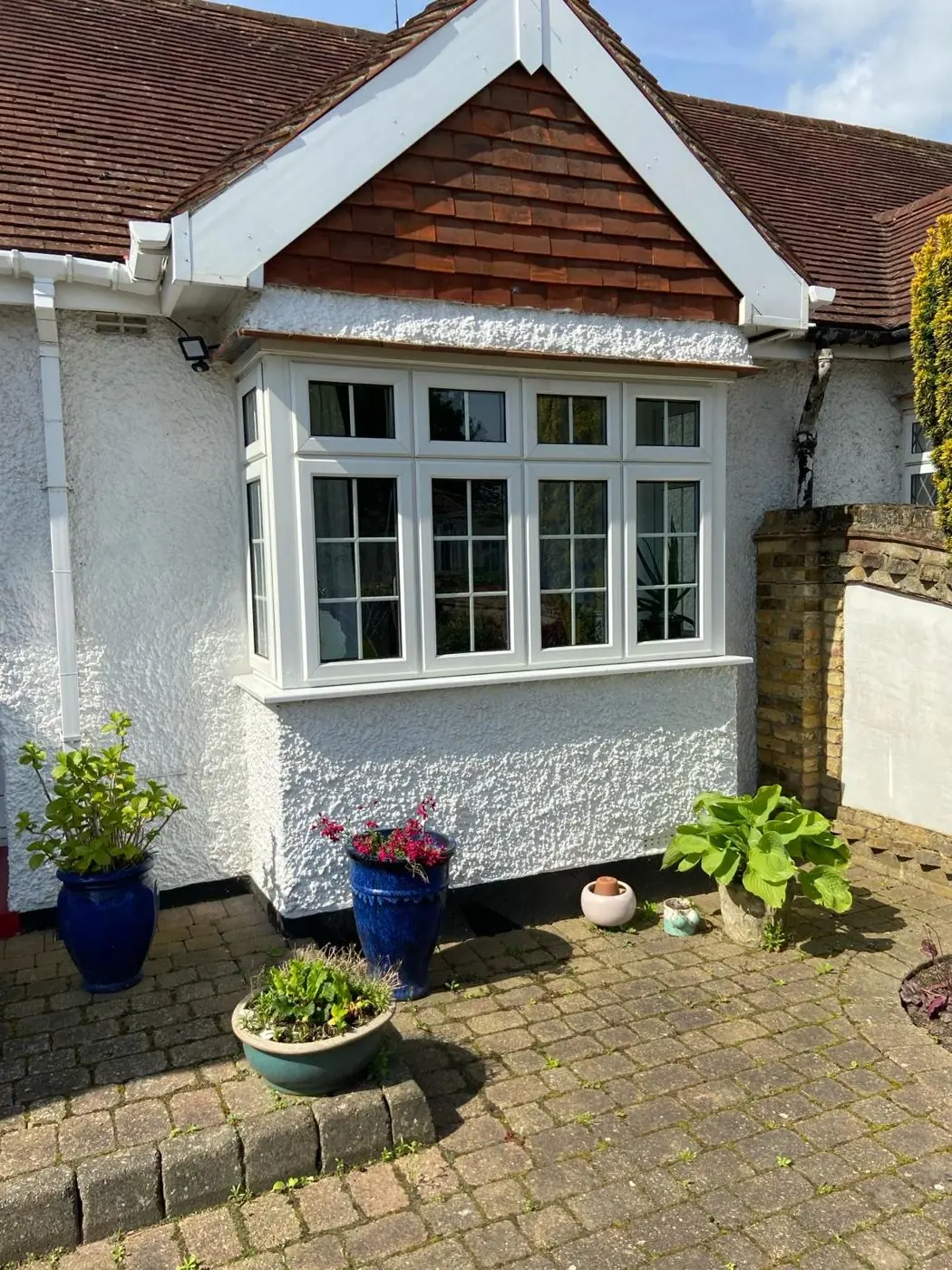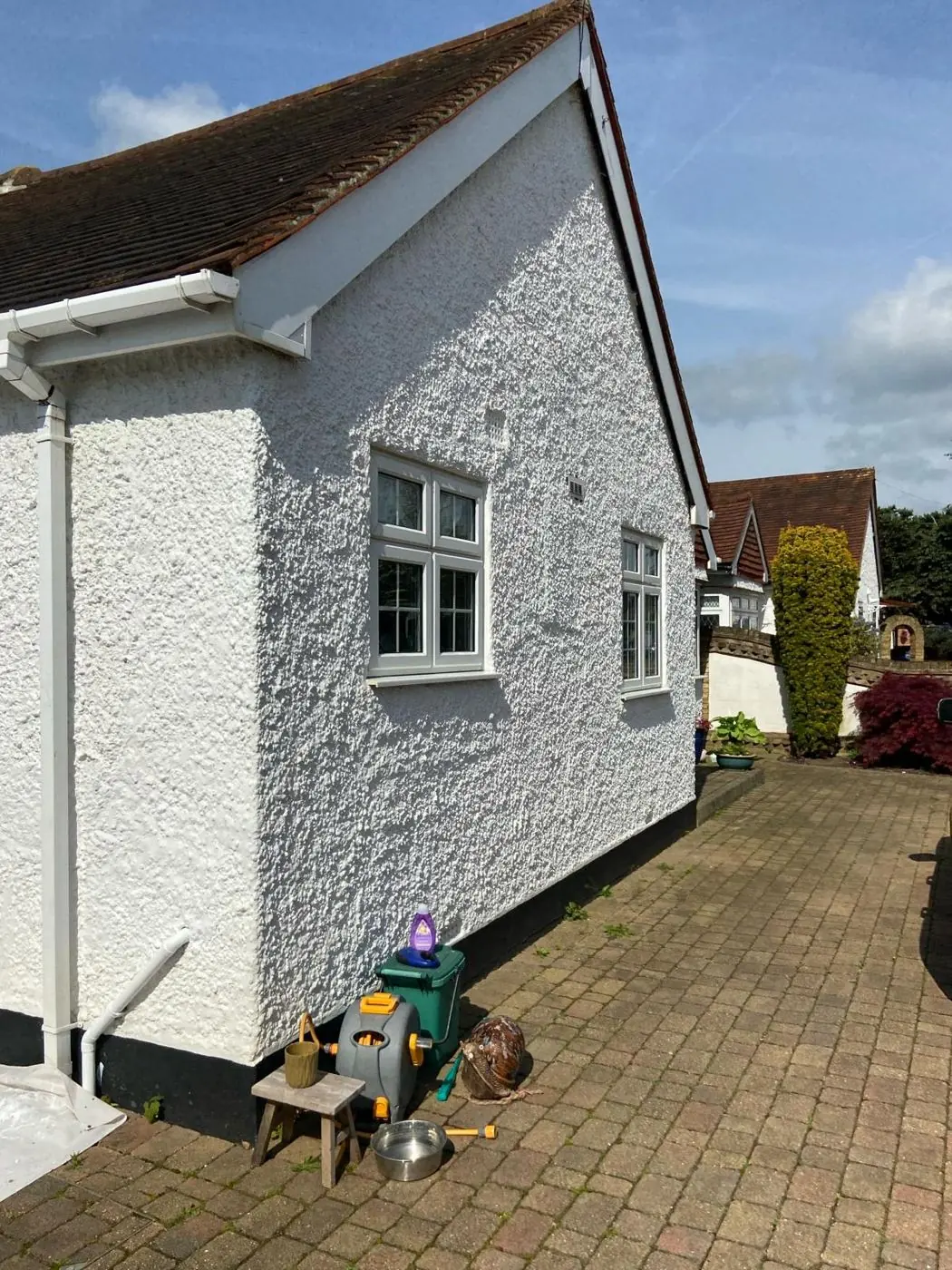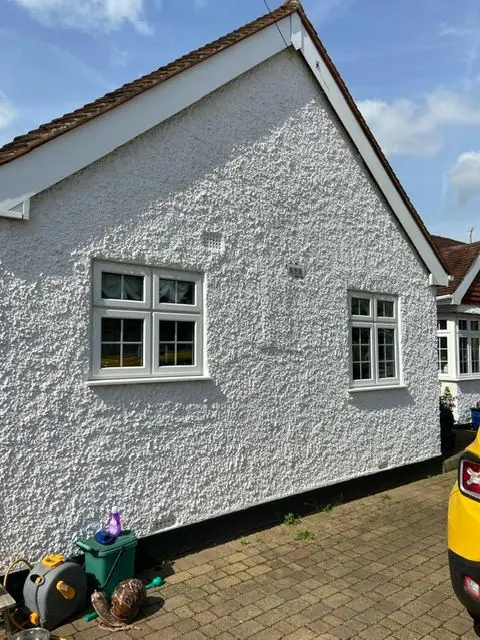
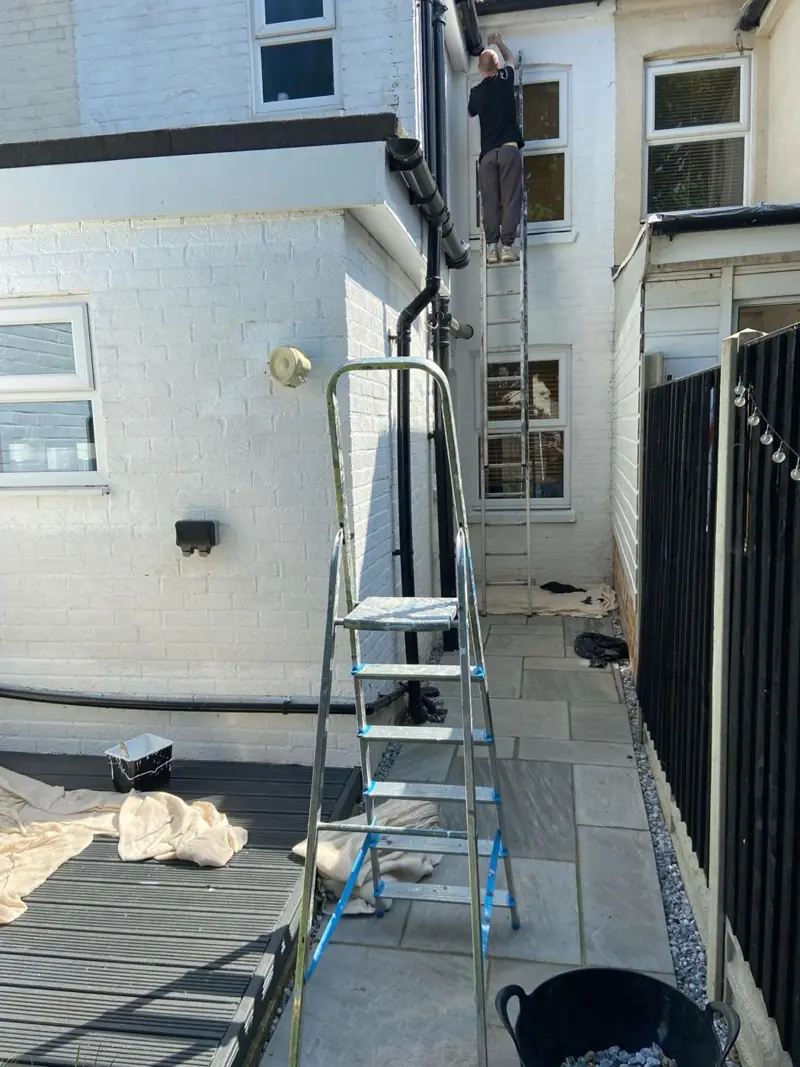
We paint rendered and masonry walls on Boothville houses and bungalows in NN3, about 3 miles north-east of Northampton town centre. Wall finishes vary from house to house here, so Dean surveys each wall before quoting and tells you plainly which surfaces should be painted and which should stay bare brick.
Start with the wall, not the colour chart
Boothville is a mix: houses that already stood on Booth Rise by the late 1930s, bay-fronted semis near Kettering Road, cul-de-sacs of bungalows, individually built detached homes on Chartwell Avenue and maisonettes at Yewtree Court. None of the property records we use say whether a given house is brick, smooth render, roughcast or a combination, so we do not guess. On the survey Dean checks:
- whether the wall has been painted before, and with what kind of coating
- whether render sounds hollow when tapped, which points to it coming away
- hairline and structural cracks, especially around bays and extension joins
- chalkiness, by wiping a hand across the old paint
- damp patches low down or under leaking gutters
Only once that is done do we talk about masonry paint, primer or stabiliser.
Brick walls that should stay brick
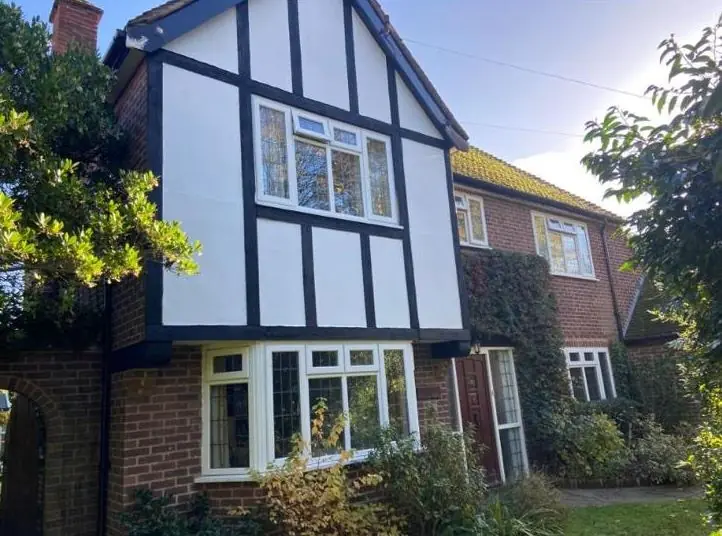
Many Boothville front gardens are enclosed by low brick walls. Our advice is to leave those as bare brick unless someone painted them years ago. Paint on a freestanding garden wall traps moisture rising from the ground and soaking through the coping, then it blisters and needs redoing every few years. If yours is already painted, we can clean it, scrape loose areas and recoat with a breathable masonry finish, but it will always need more upkeep than brick left alone. The same thinking applies to houses built in facing brick: painting them is a one-way decision, so we would rather talk it through than simply price it.
Shade, leaf litter and traffic film
Two local conditions shape the preparation more than anything. First, listings describe mature trees and shrubs in front gardens. A rendered front kept in shade, with leaves sitting in the gutter above, grows green algae and lichen, and paint laid over that fails within a season or two. We wash it down, apply a biocide, give it time to work and let the wall dry out before painting.
Second, fronts facing Kettering Road on the south-west edge or Lumbertubs Way to the east collect a greasy film from passing traffic. It is not always visible, but masonry paint will not grip it, so these walls get a thorough clean as a separate step.
The raised ground around Booth Rise, at about 104 metres, cuts the other way on rear walls: they get full sun and drying wind, which helps curing but means a south-facing wall should not be painted in the midday heat of summer.
Corner plots and extension joints
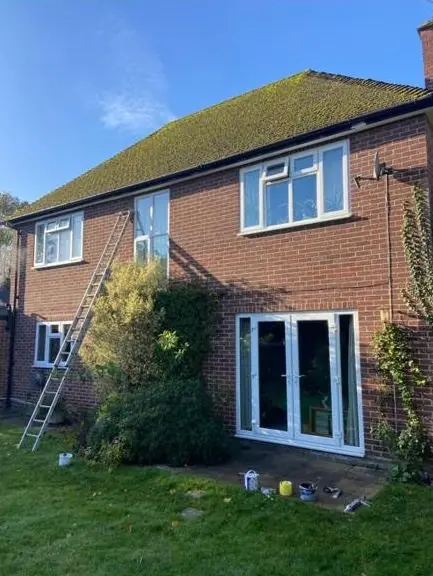
A corner house shows its gable to the street, so the side wall matters as much as the front, and it roughly doubles the masonry area to paint. Extensions are also common across the district, from loft rooms in bungalows to semis extended over three floors. Where new render meets old there is often a fine crack along the joint. We rake and fill those with a flexible filler before painting, otherwise the line reappears through the new coat. Our guide to painting render and roughcast covers the coating choices in more depth.
There is no conservation area over Boothville, so colour is your call on a freehold house. For the method we follow on render generally, see the main render and masonry painting page, and for other services in the district, our Boothville page.
Last updated by Dean, DH Painter & Decorator.