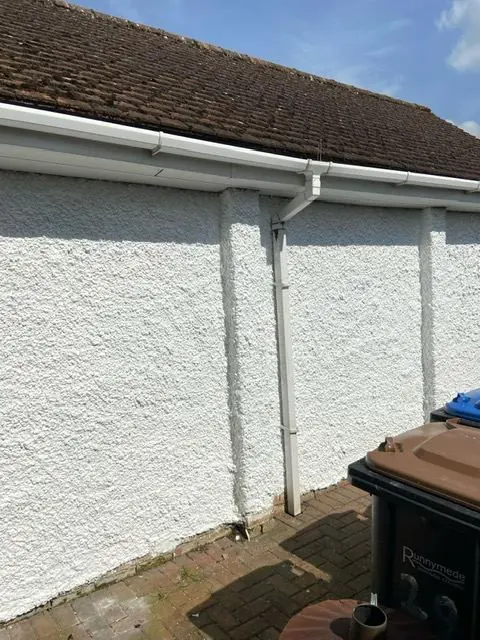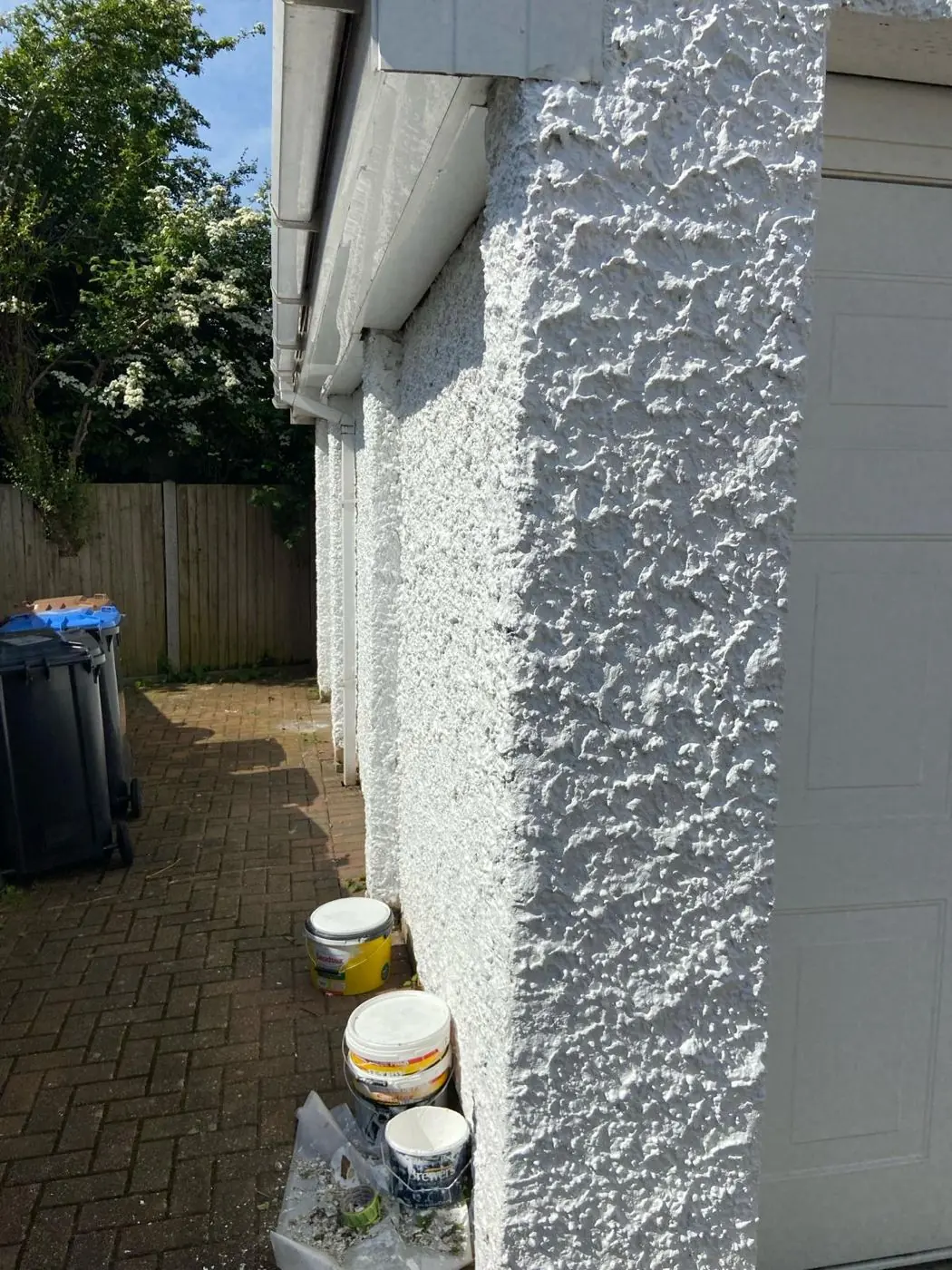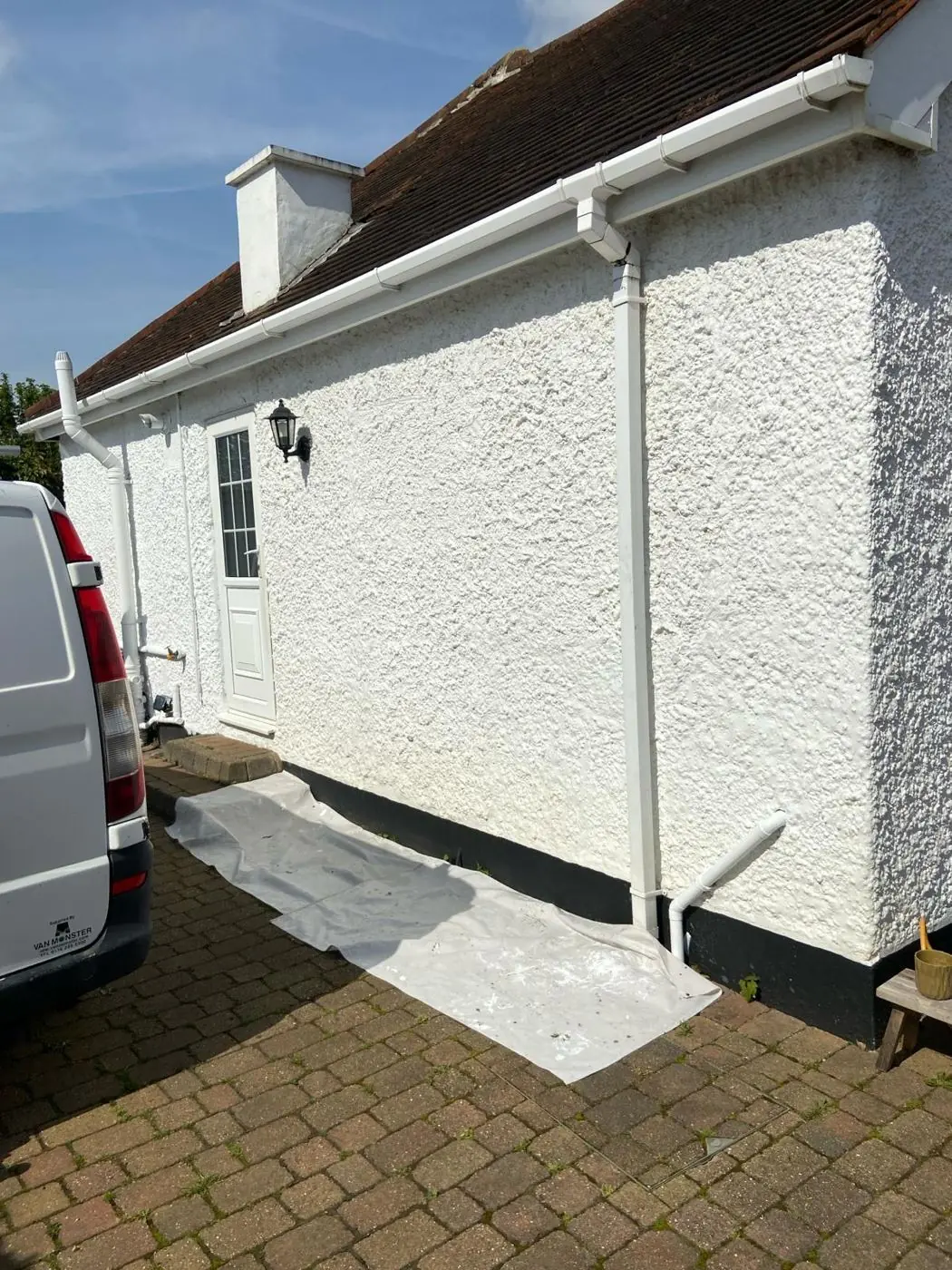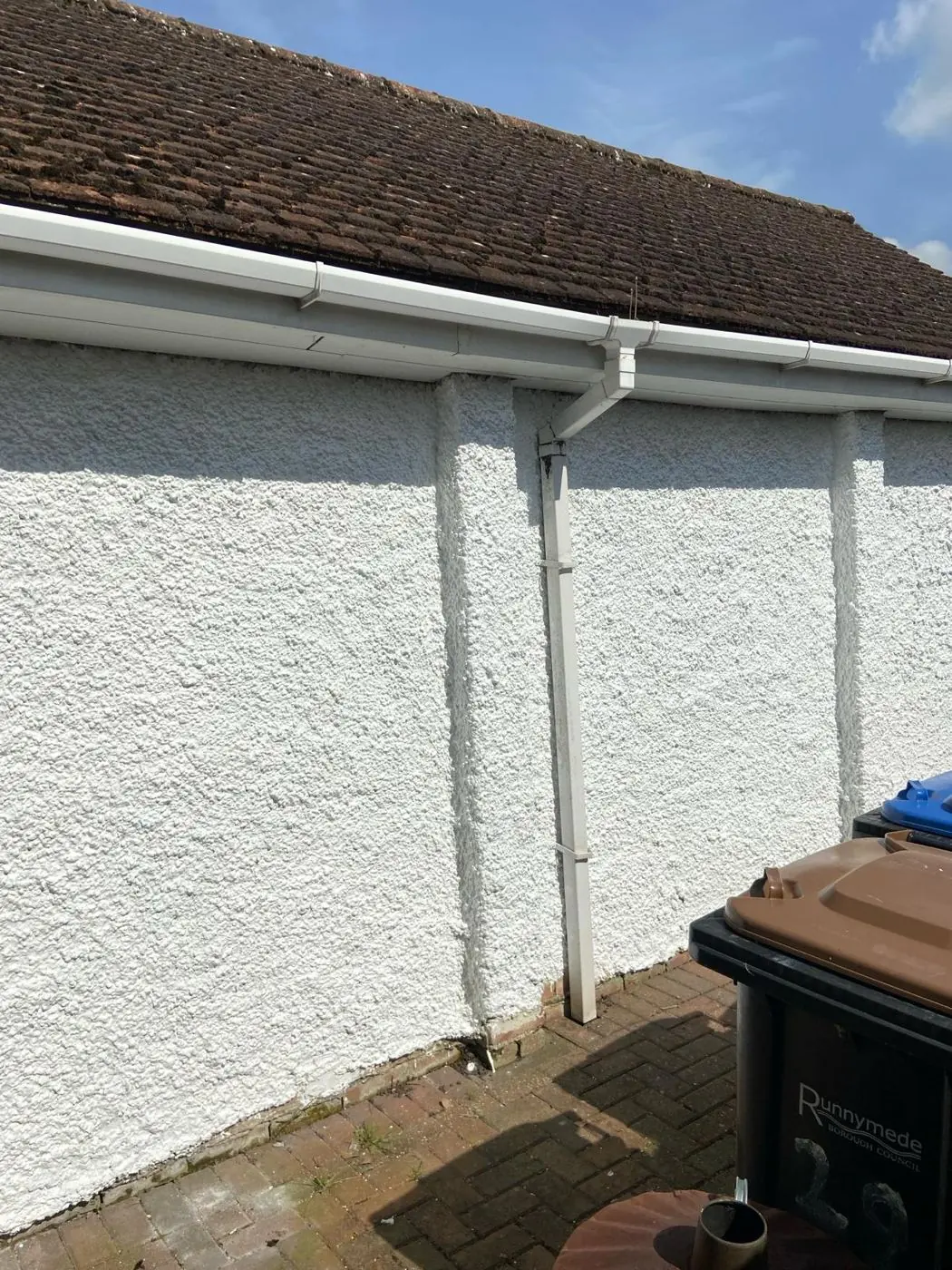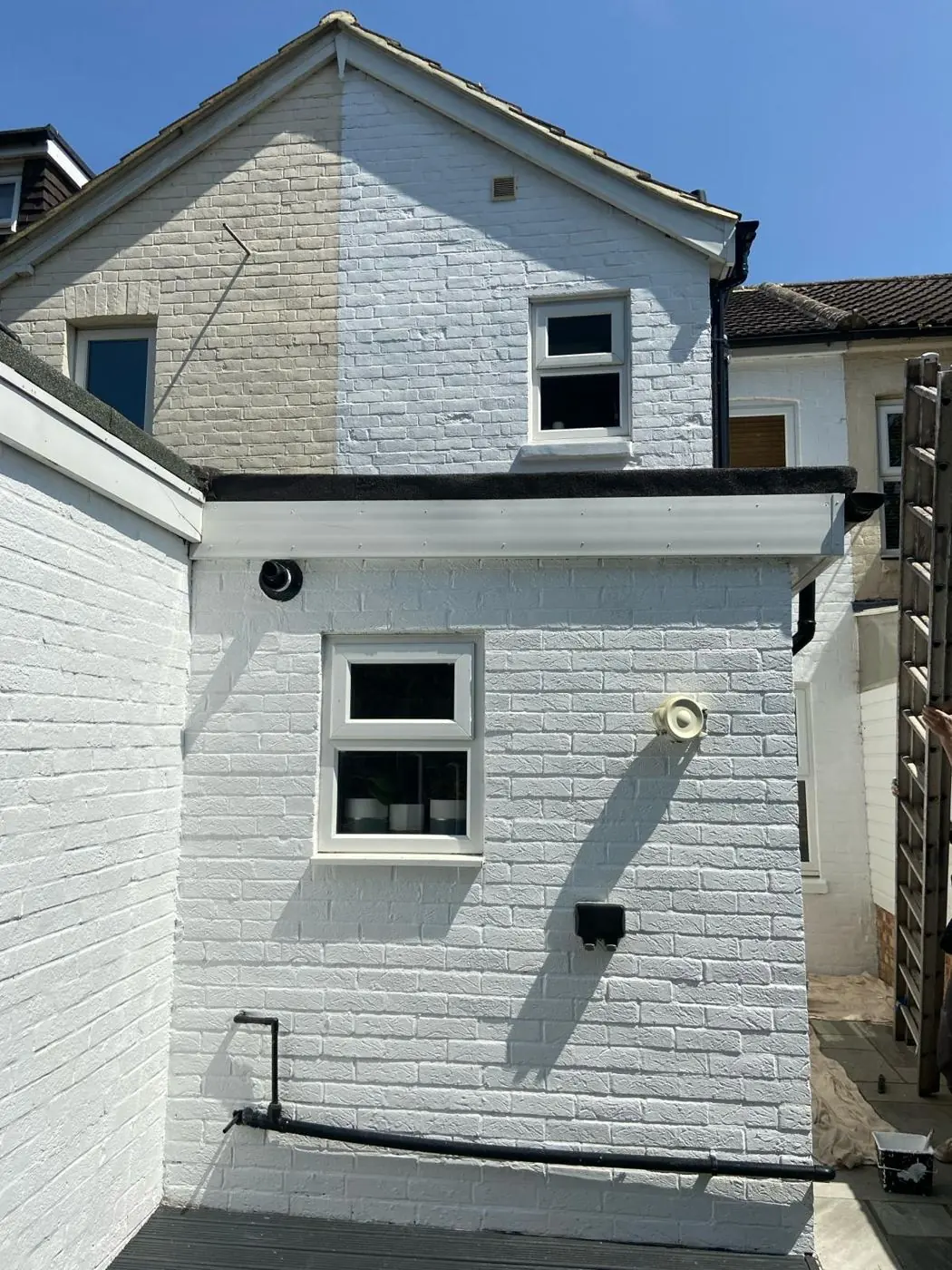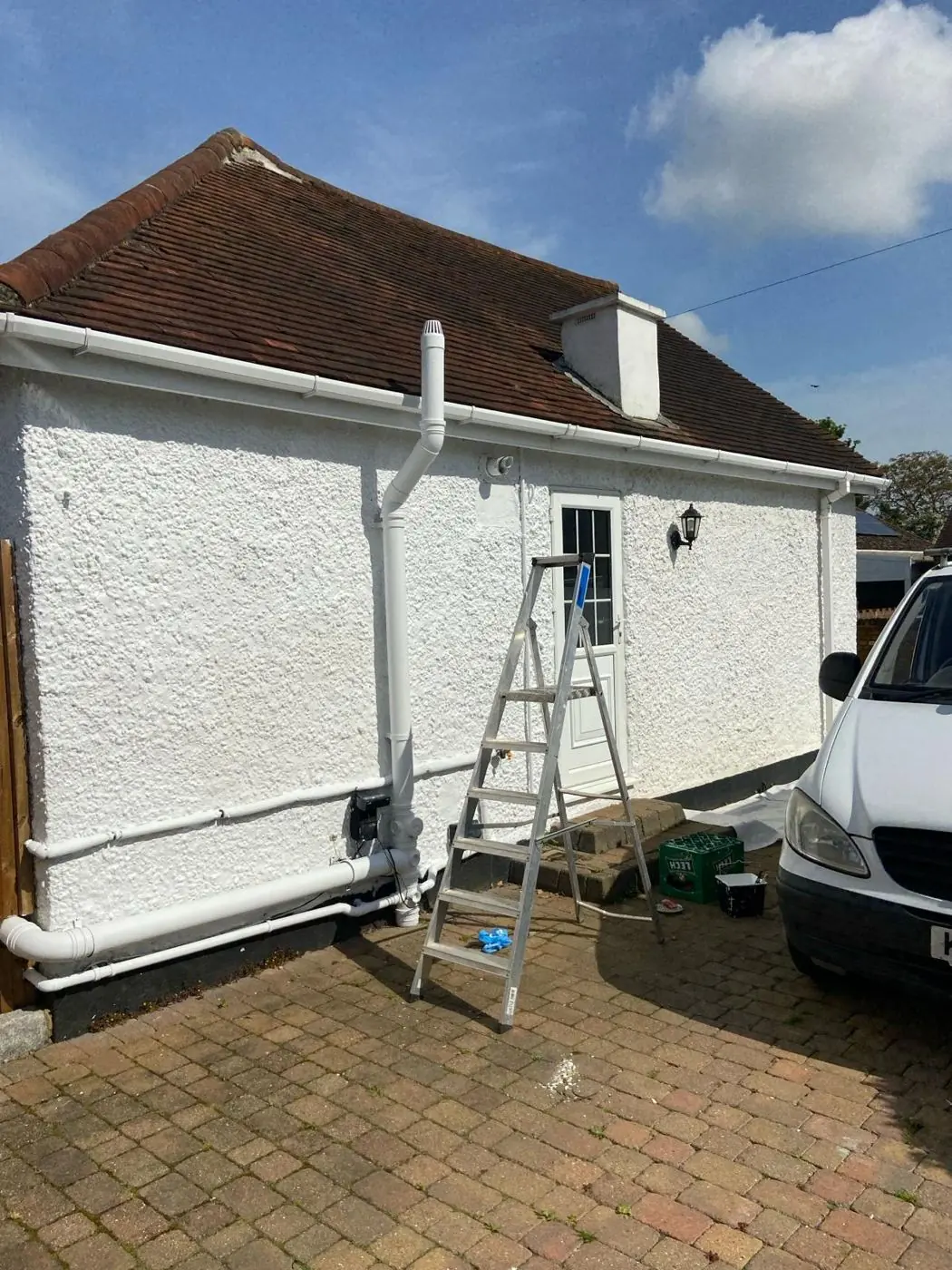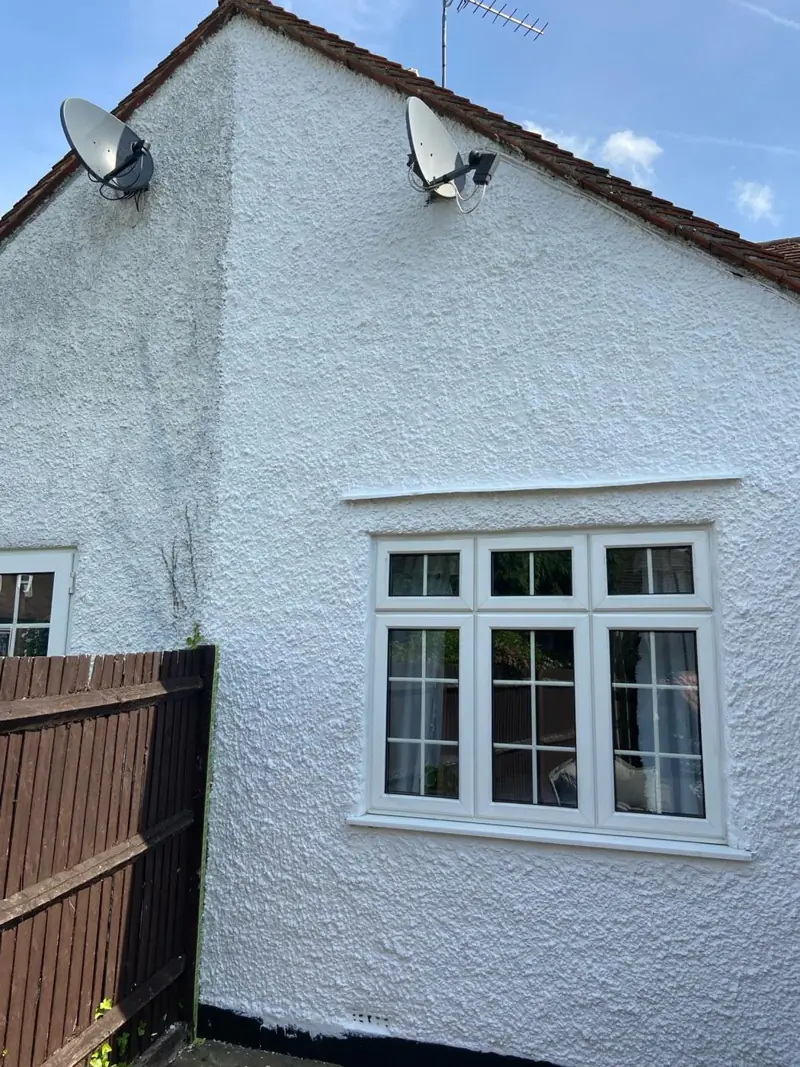
We paint render and masonry in Headlands, NN3, roughly 2.2 miles north-east of Northampton town centre. On this mainly brick 1930s estate the work is usually rendered or painted panels on bays, extensions and garages, and Dean tests the existing coating before quoting.
Mostly brick, with painted patches
Headlands is not a rendered suburb. The interwar semis on The Headlands, Longland Road, Bush Hill and Birchfield Road East are brick-fronted, and the most common build year on those streets is 1939. Masonry painting here is therefore rarely a whole-house job. It tends to be one of these:
- rendered or previously painted panels between and around the ground- and first-floor bays
- a rear or side extension whose blockwork was rendered to hide the joint with the old brick
- a brick garage added on the driveway and painted to tidy it up
- brickwork that a previous owner painted, now flaking in sheets
Unpainted brick in sound condition rarely needs painting at all, and we will say so. Once brick is painted, it commits every future owner to repainting it, so on an untouched front we would normally suggest cleaning and repointing advice instead.
What is already on the wall decides the job
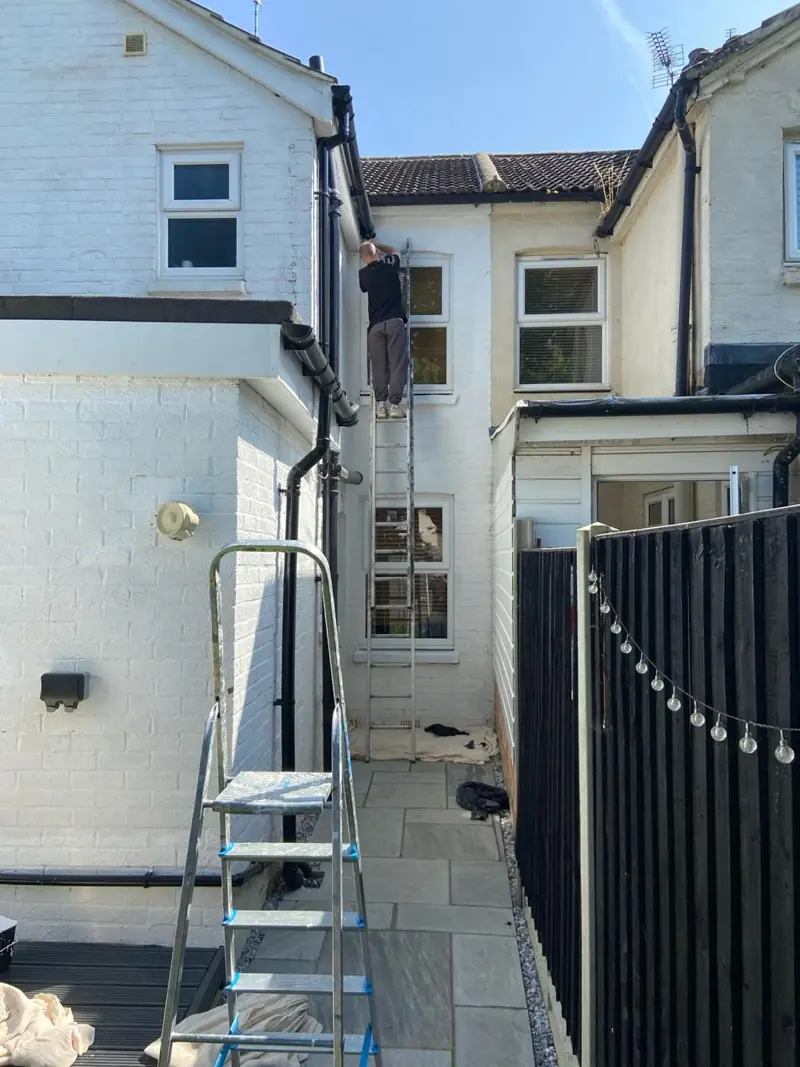
Because so many of these houses have had eighty-odd years of owners, the coatings on bay panels and extensions vary from house to house, even within one pair. Before pricing, Dean checks how well the existing paint is holding: a cross-hatch cut and tape test on a hidden patch, a look for powdering on the surface, and a tap along the render for hollow sections. Paint that lifts on the tape has to come off before anything new goes on, or the fresh coat will fail with it.
The walls themselves matter too. Houses of this age were built in solid brick or early cavity construction, and both need to dry outwards. A non-breathable coating, such as some older textured finishes or a gloss someone put on a garage wall, holds moisture behind it and pushes the next coat off. We use breathable masonry paints and will flag where a previous coating is the real cause of damp patches inside. Our guide to painting render and roughcast goes further into products and repairs.
Old brick meets new block
Agent listings for Headlands homes often mention brick garages and later extensions, and those are where masonry paint most often goes on. The new wall and the old house rarely match: newer render is harder and smoother than an older painted panel or the brick beside it, and where the two meet there is usually a movement crack. We rake and fill that joint with a flexible filler first, then paint the extension and any adjoining panels as one area so the colour reads the same across materials that absorb paint at different rates. Fresh render needs to cure before it is painted, so if your extension has only just been finished we will tell you how long to leave it.
Choosing a masonry colour on a semi
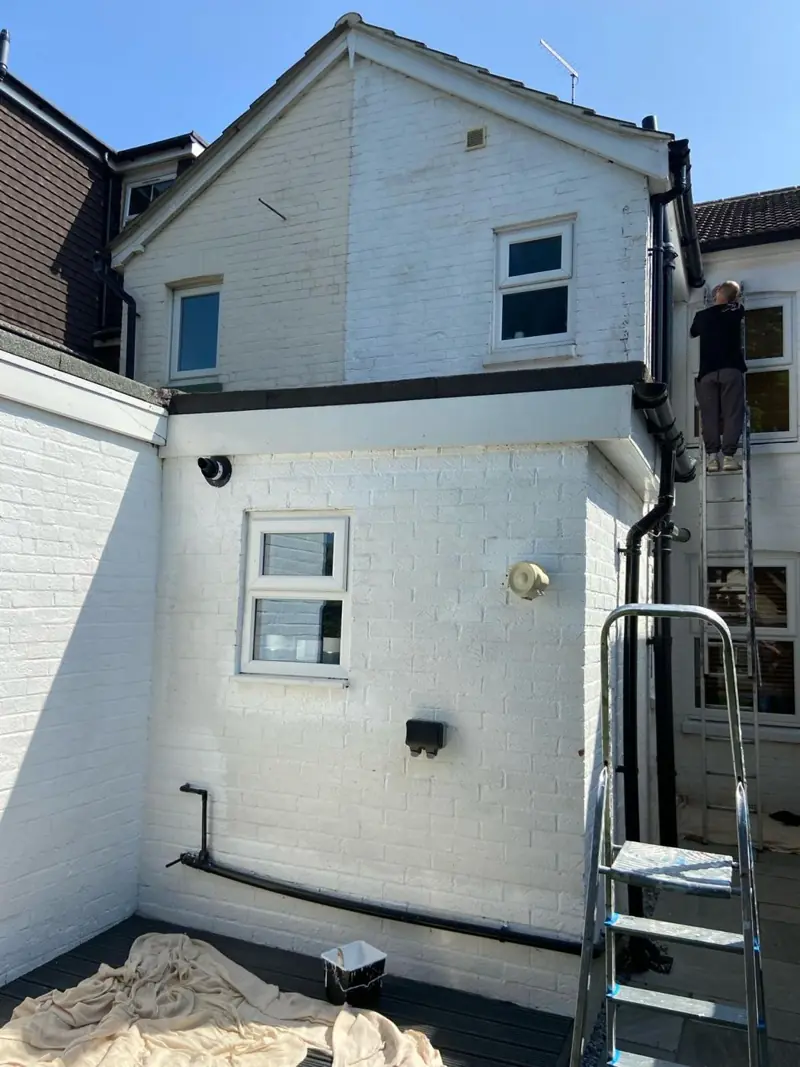
No conservation area covers Headlands, so a masonry colour change needs no permission. The constraint is visual. The rendered panels on one half of a semi line up with the panels on the other, and a different shade on each side is very noticeable from the street. If your neighbour is not repainting, matching their existing colour is often the safer choice; if you are both planning work, doing the pair together keeps the bays consistent. The Abington Park Conservation Area lies just across Wellingborough Road; the sources do not place Headlands streets inside it, but if you are near that edge and unsure, check with West Northamptonshire Council first.
Product choice, repair methods and drying times are covered on our main render and masonry painting page, and the Headlands area page covers the other work these semis tend to need.
Last updated by Dean, DH Painter & Decorator.