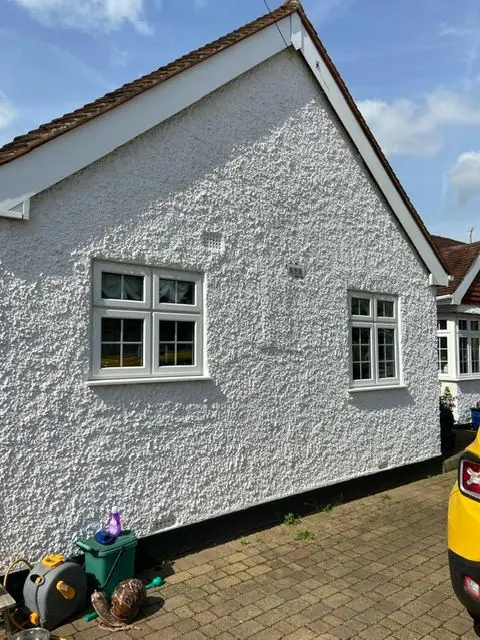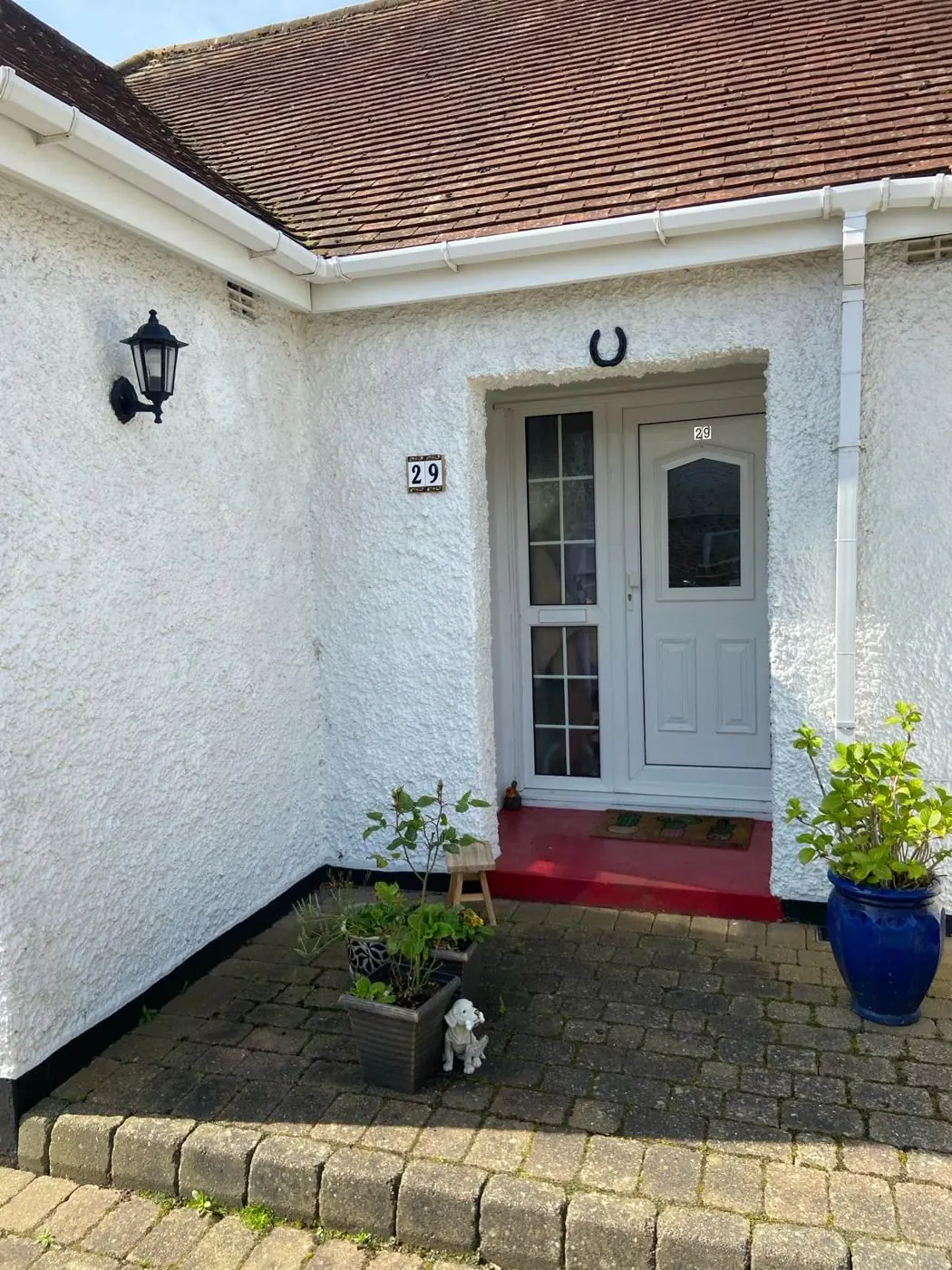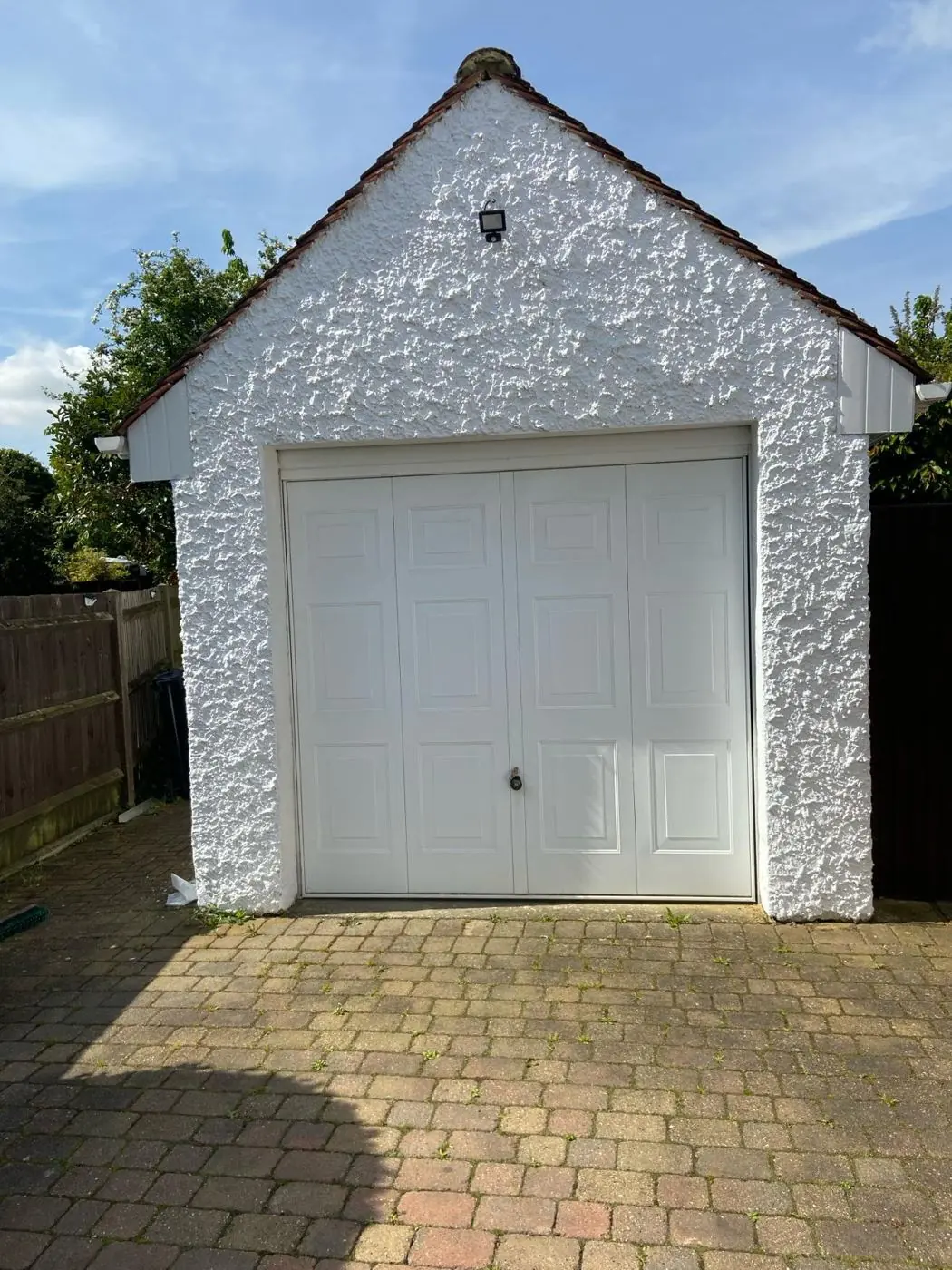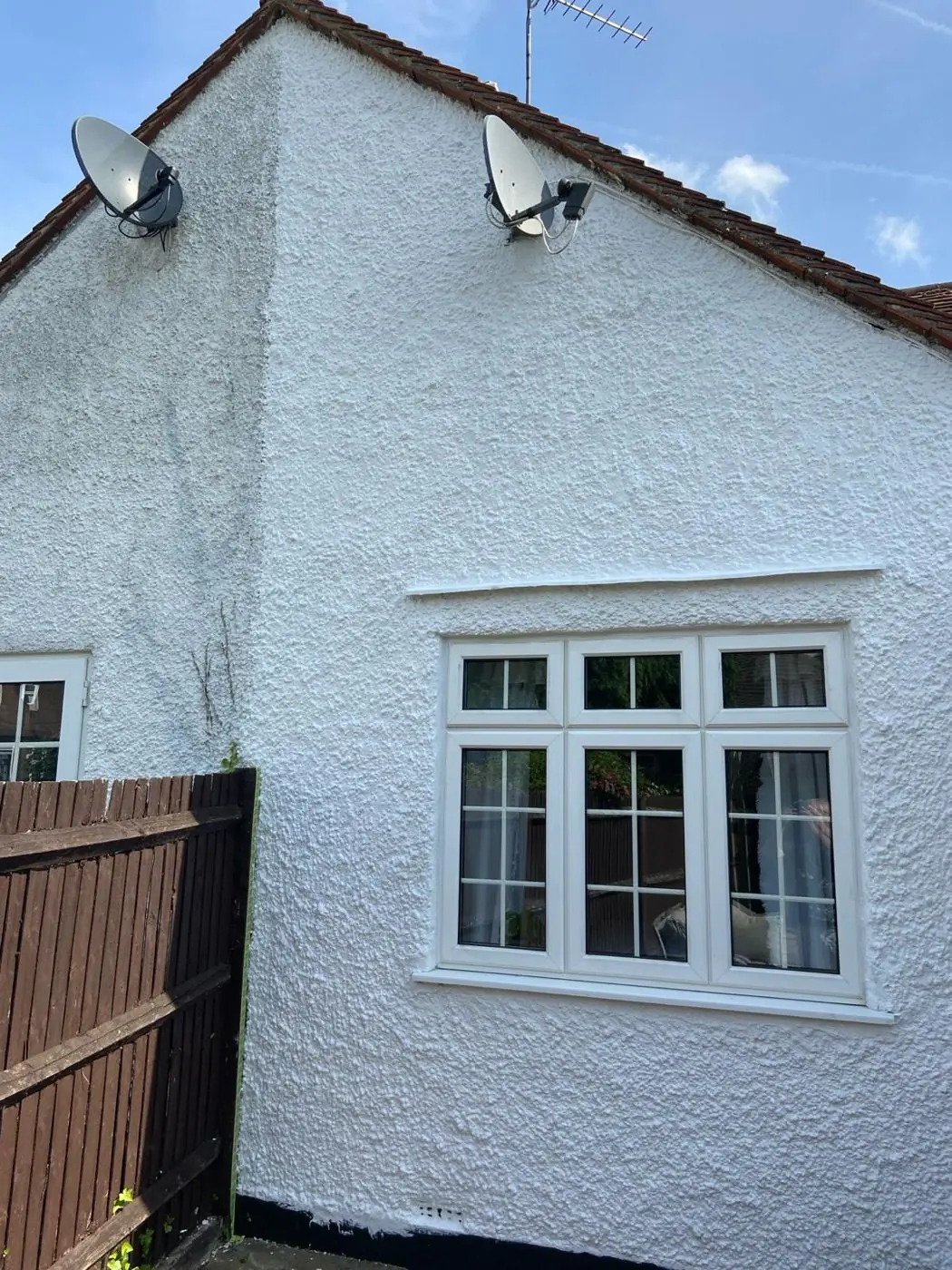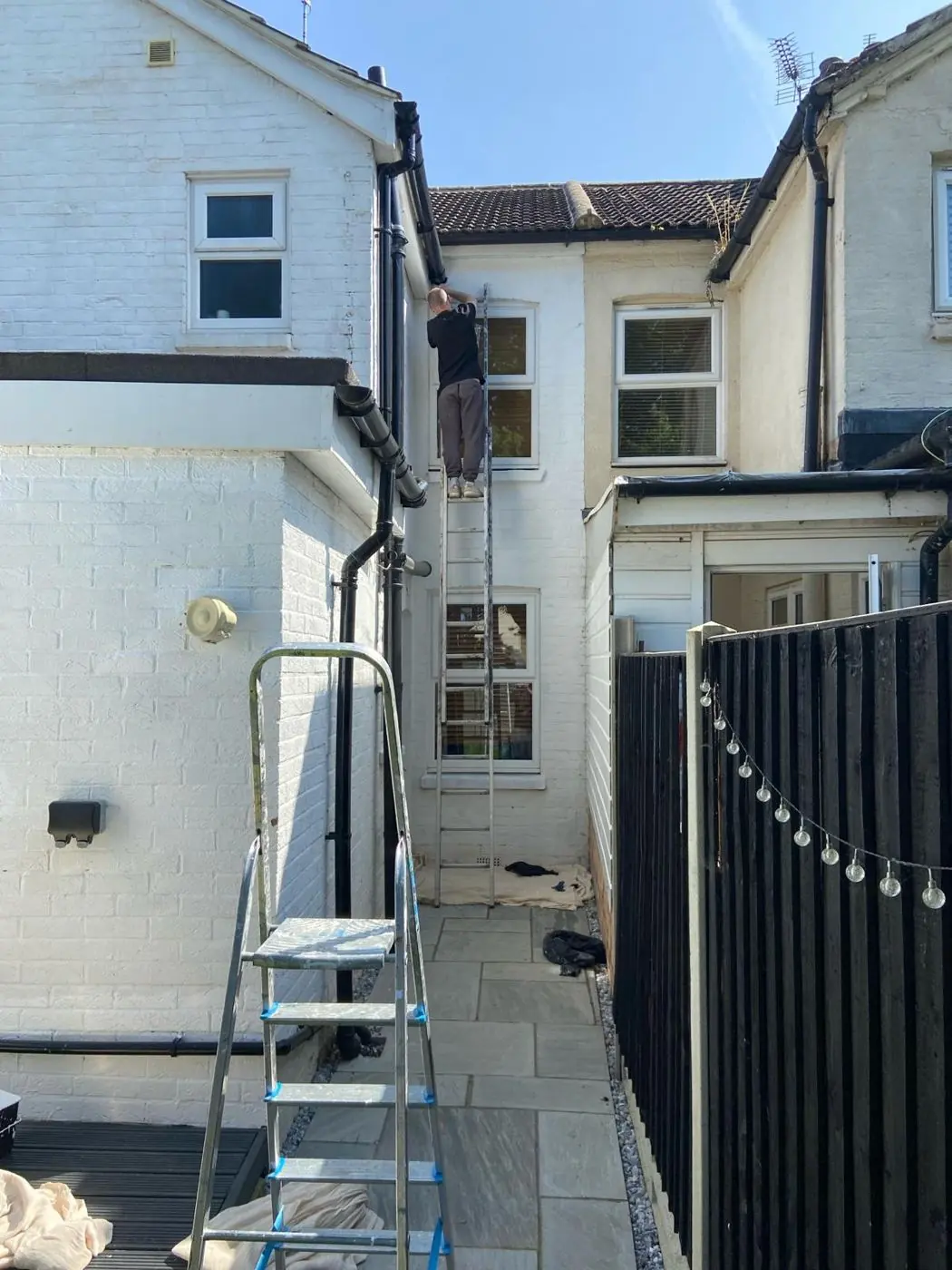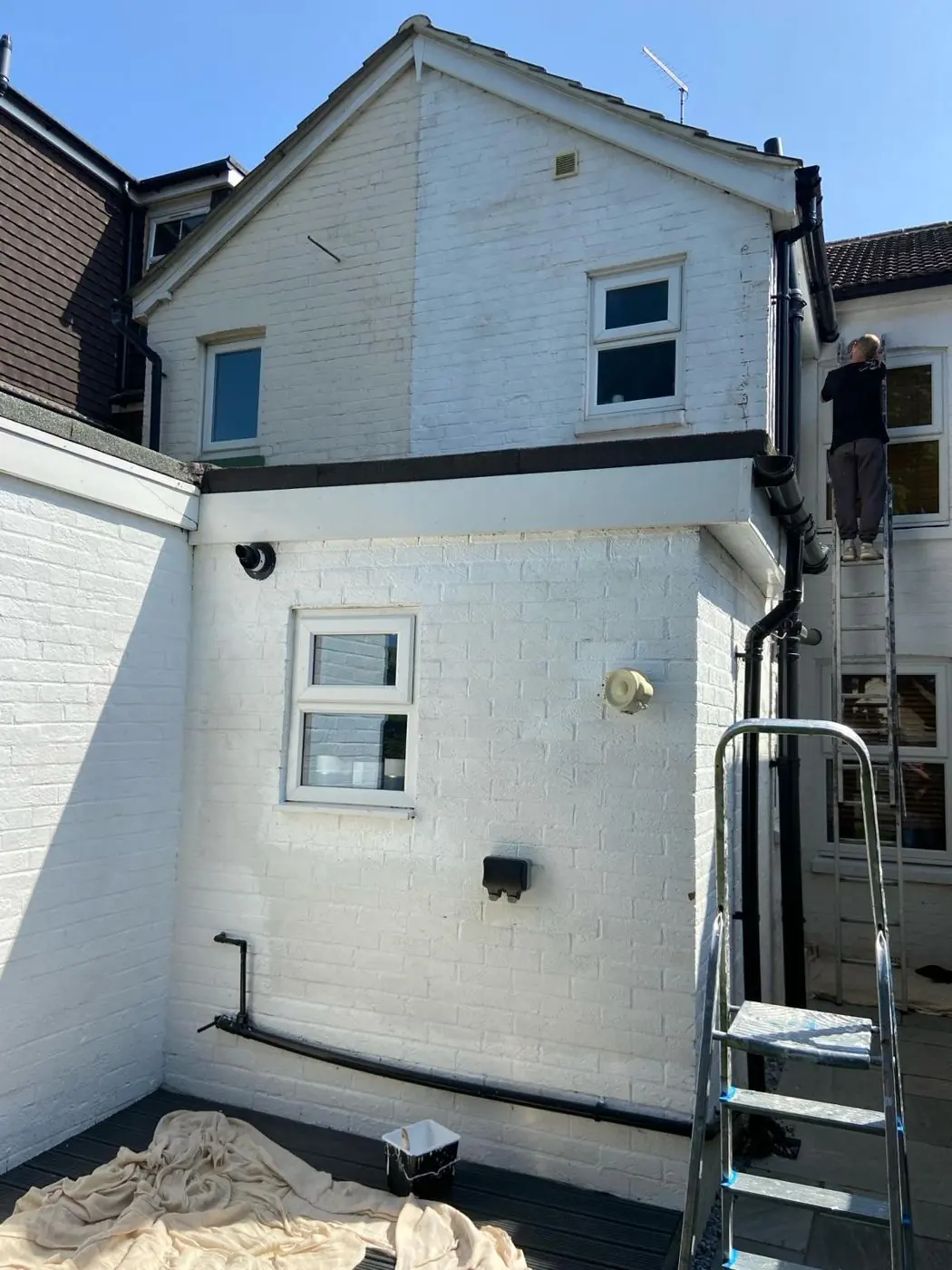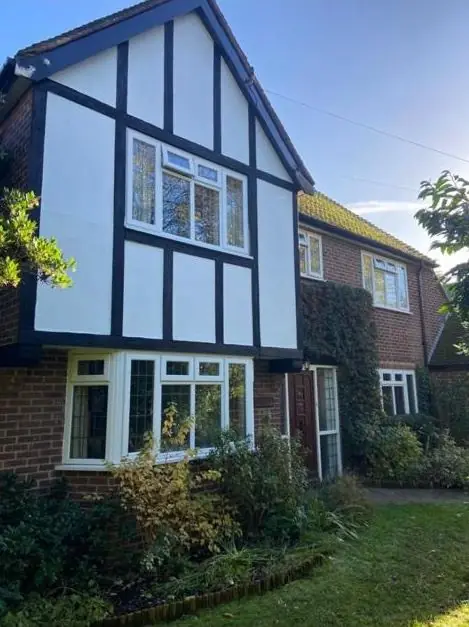
DH Painter & Decorator paints render and masonry in Little Billing, NN3, about 3.2 miles east of Northampton town centre. Dean identifies the wall first, then quotes for breathable coatings on the old village's colour-washed buildings or a standard repaint on the later rendered houses.
First question: should this wall be painted at all?
The most useful thing we can do on a Little Billing masonry job is look closely before any tin is opened. The old village is built from local Northampton Sand stone: the pale, sandy Pendle limestone and the darker, rust-brown ironstone quarried locally on the valley side. On most of the listed cottages that coursed rubble has never been painted, and it should not be. A plastic masonry coat on bare rubble traps moisture inside a solid wall, and on a listed building it would also need listed building consent.
So an enquiry here usually turns out to be one of three things: a wall that is already colour-washed and due for renewal, a later house with sand and cement render that needs a normal repaint, or bare stone that wants cleaning and nothing more. We tell you which one you have before we talk about paint.
Colour-washed fronts and what is already on them
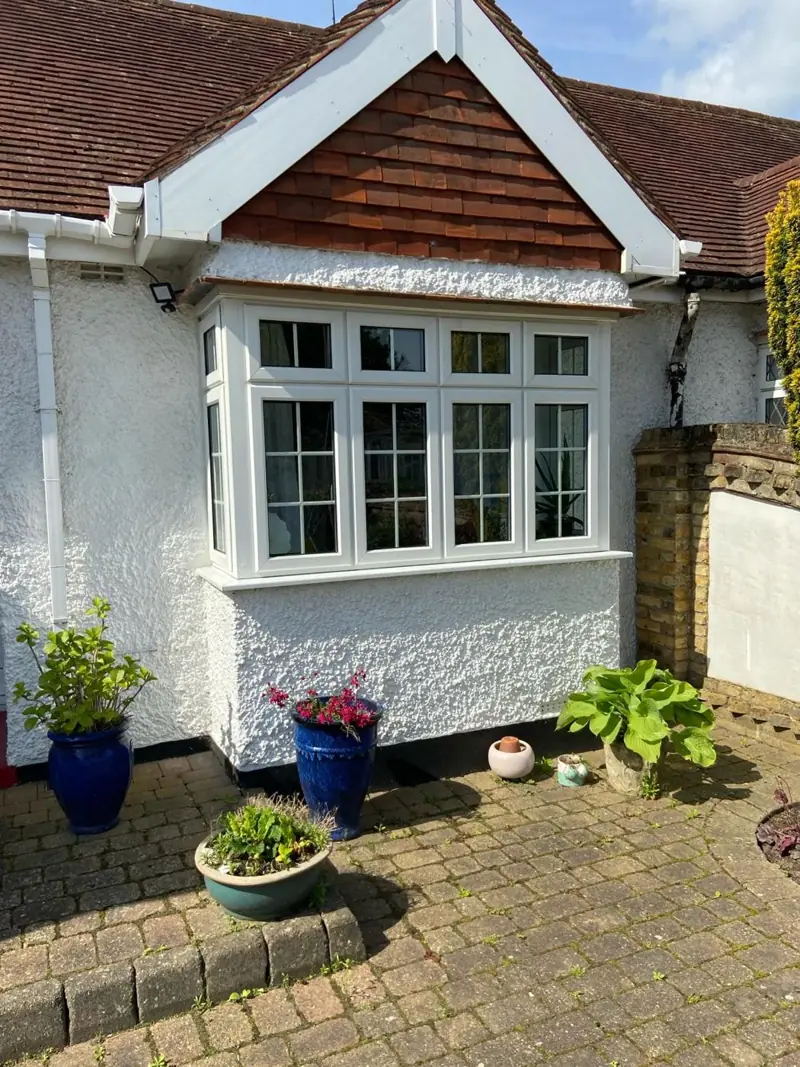
Two of the village’s listed buildings carry a coat already. On Hastings Cottage the colour-wash sits over cement render; on the Old Rectory along Church Lane it was applied straight onto the stone of the east front. With old finishes like these, the existing layer decides the recoat. Limewash takes more limewash. A mineral silicate system needs a mineral surface to bond to. If someone has used a modern acrylic in the past, it may have to come off before a breathable coat can work.
We test small patches: how the surface takes water, whether it powders on the hand, whether it lifts as a skin. That tells us whether a breathable system can go straight on or whether stripping comes first. Any change of finish or colour on these buildings should be agreed with West Northamptonshire Council’s conservation officer before work starts. The Old Rectory is now a day nursery, so low-odour products and work timed around the nursery’s hours would apply there as well.
Stone and brick details to keep clean
Several old buildings mix materials in ways a careless brush would spoil. Corn Ricks has ironstone quoins at its corners. 2 Orchard Hill, once Home Farmhouse, is squared rubble with ashlar dressings. Knight’s Cottage at 16 Orchard Hill has red brick battered buttresses against its rubble walls. None of these should carry paint. When a neighbouring surface is being coated, we mask the stone and brick, keep dust sheets tight to the wall and wash off any splash at once, before it dries into the pores of the stone.
Render on the closes around Valley Road
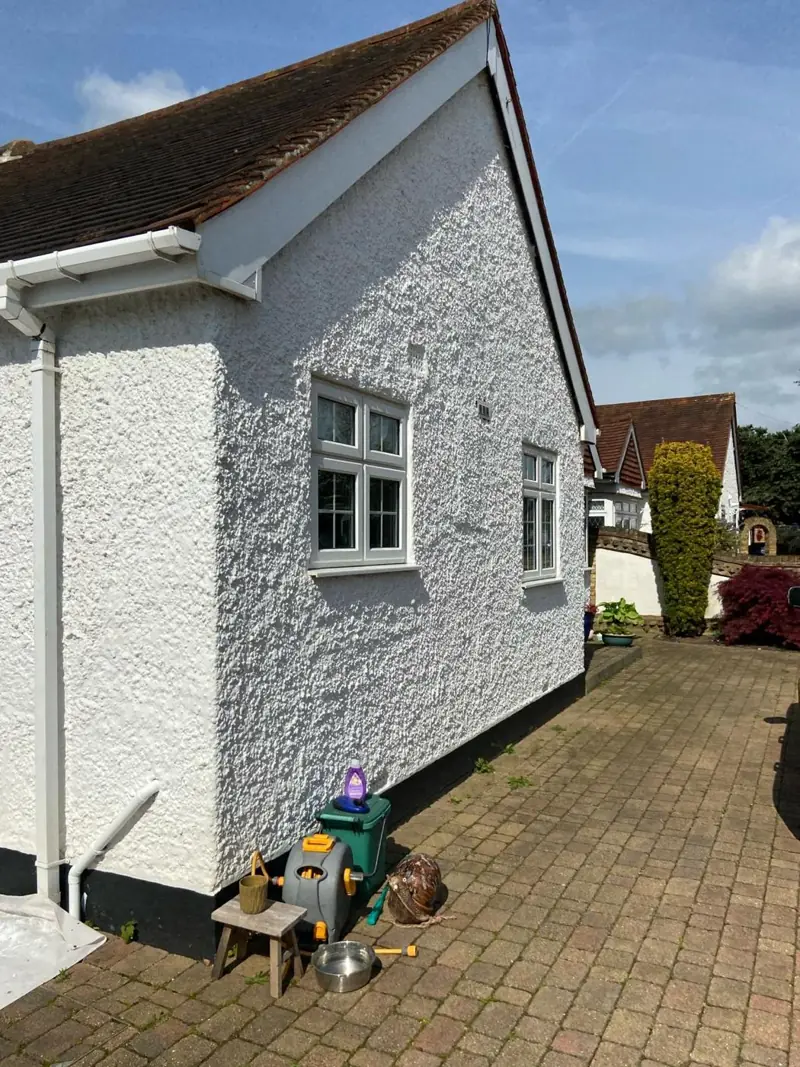
The later houses around the old core are a more straightforward masonry job. Our sources do not record their wall materials street by street, so we check each house on the visit: a rendered panel, painted brick and a pebbledash gable each need their own preparation. What they share is setting. Homes backing onto the Billing Brook woodland and the pocket park get less sun on their rear walls, and render there tends to carry algae and stay damp for longer. A fungicidal wash, time for it to work and a settled dry spell before painting are part of the job on those walls.
Our render and masonry painting page sets out the full preparation sequence, and the guide to painting render and roughcast compares coating types. For decorating across the rest of the village, see the Little Billing area page.
Last updated by Dean, DH Painter & Decorator.