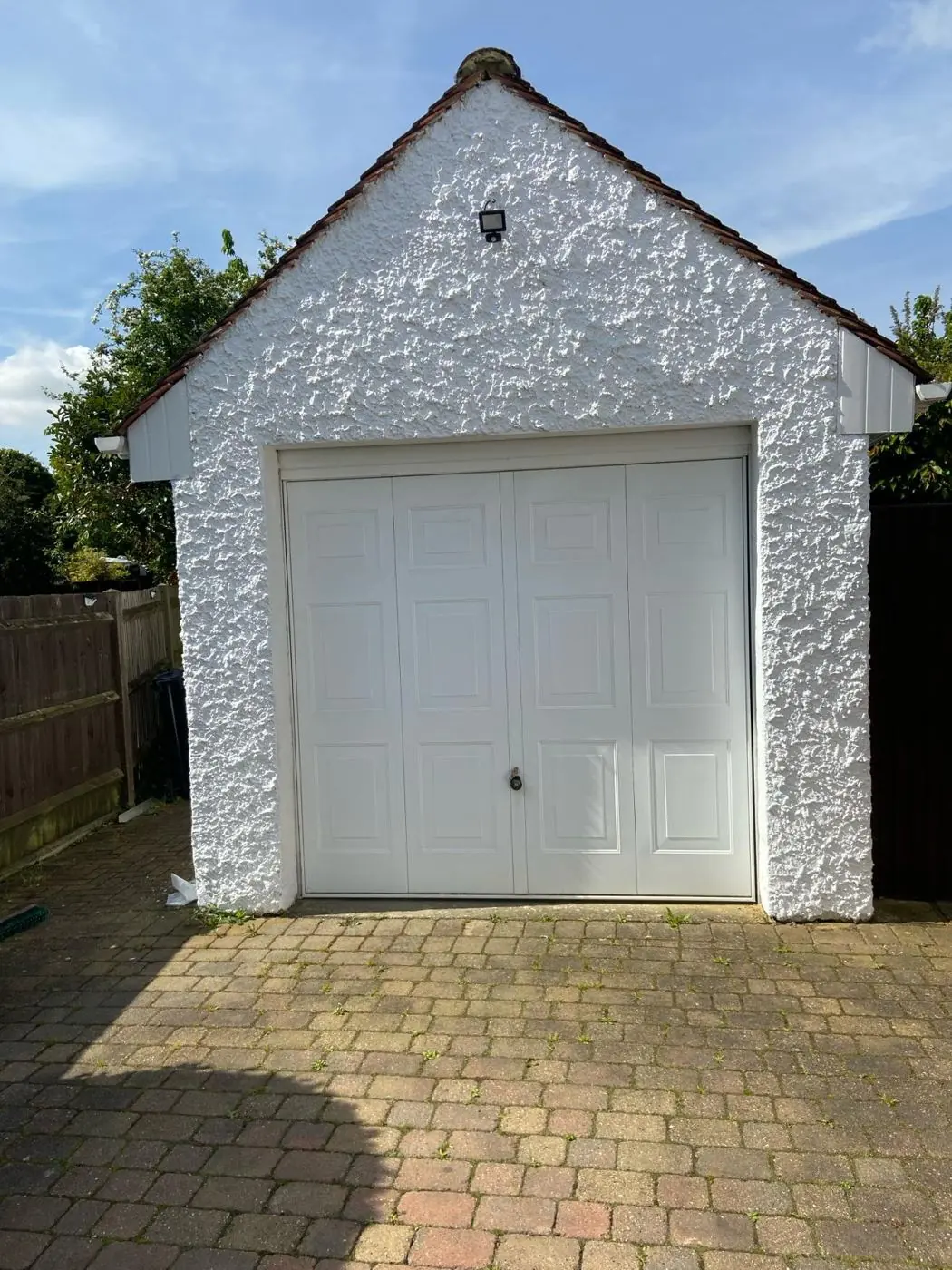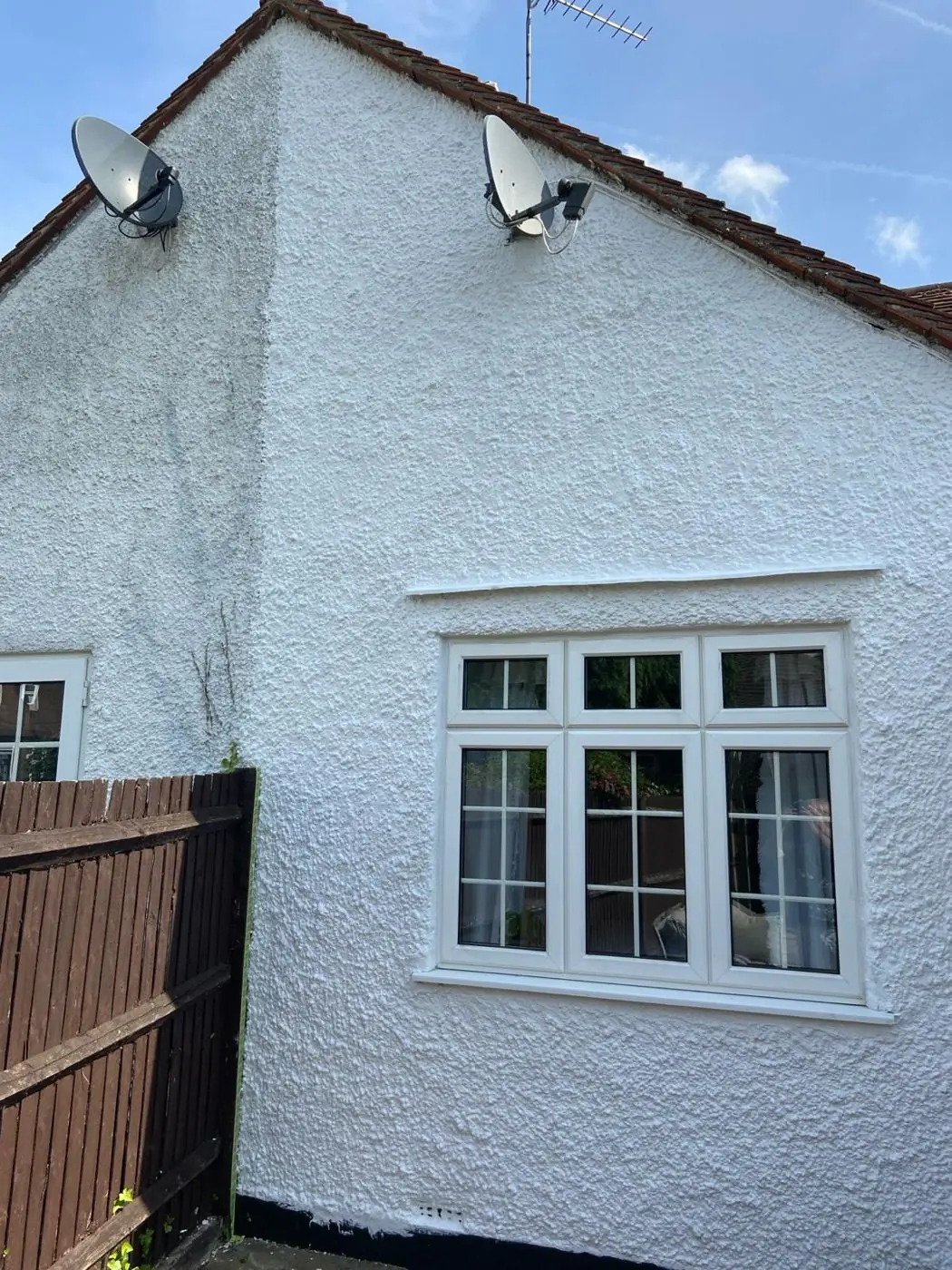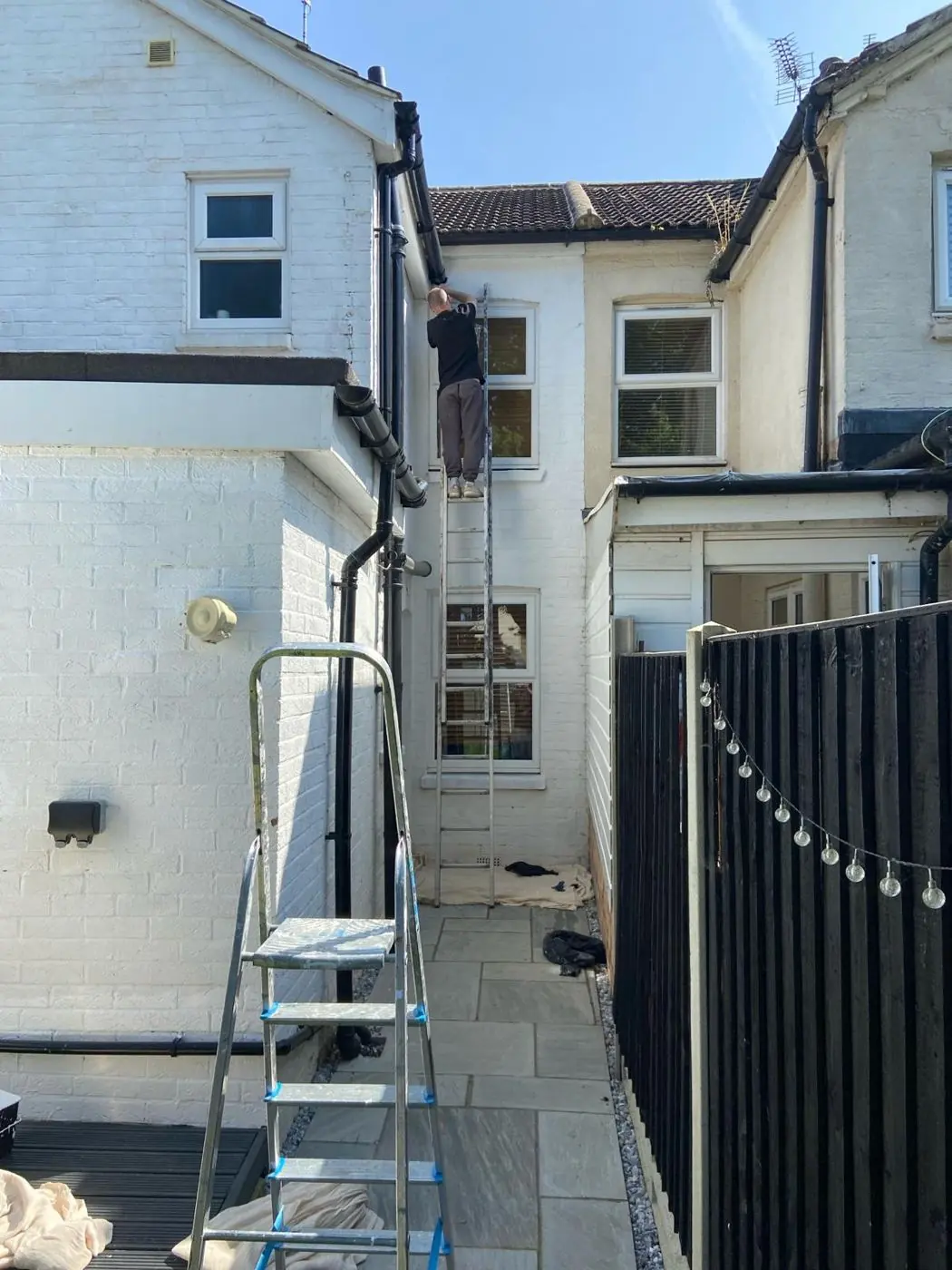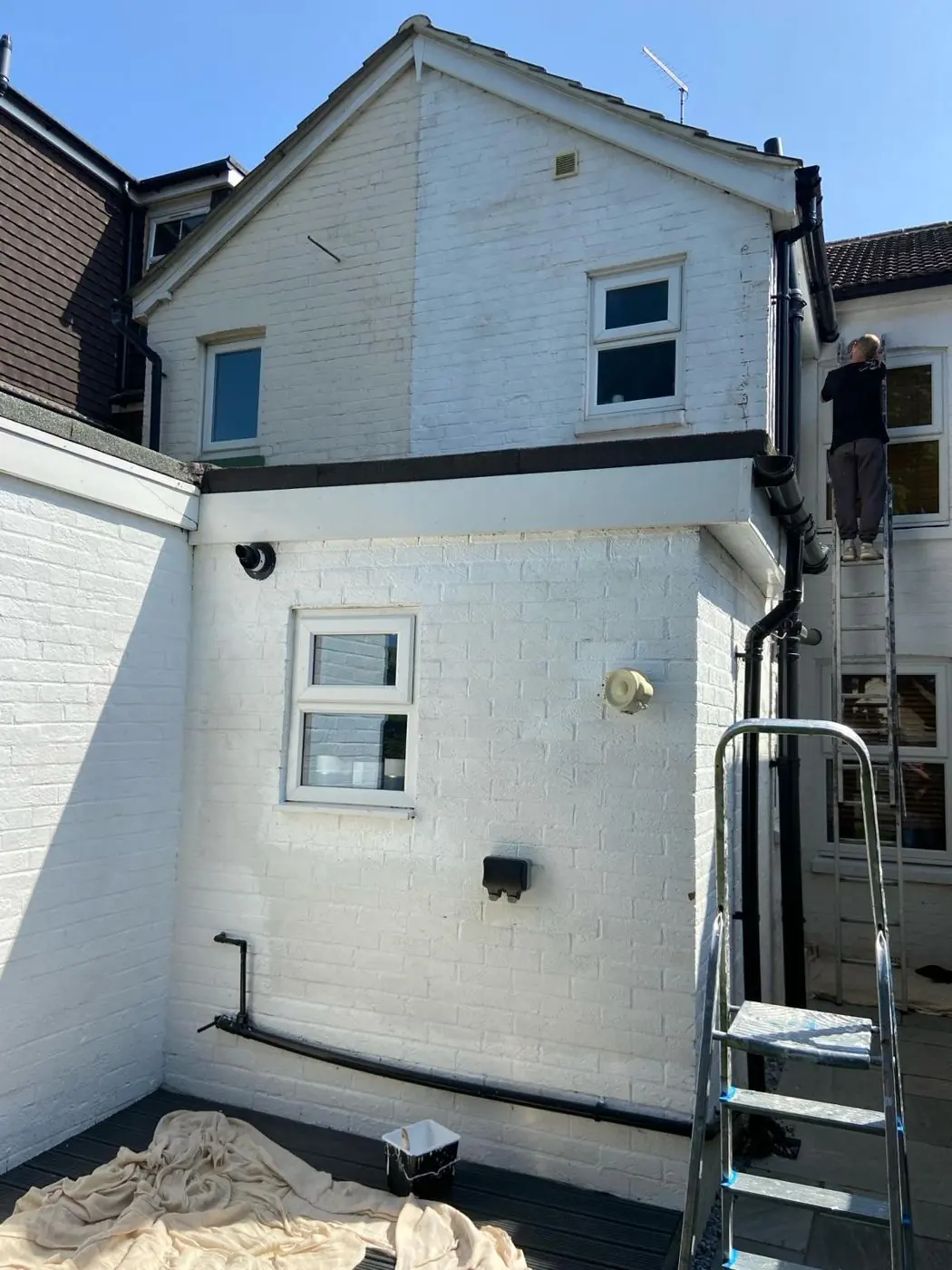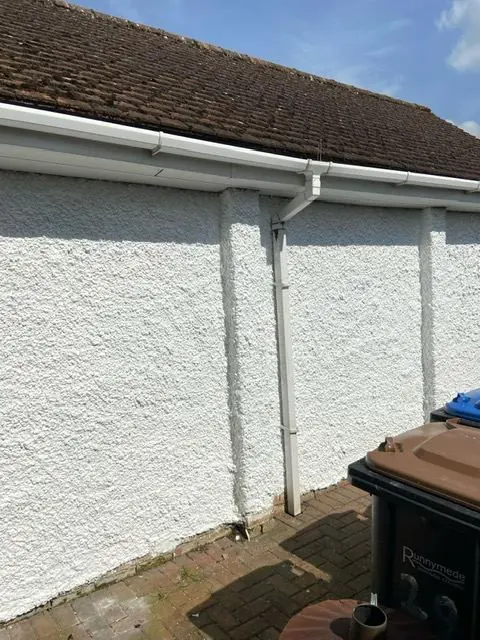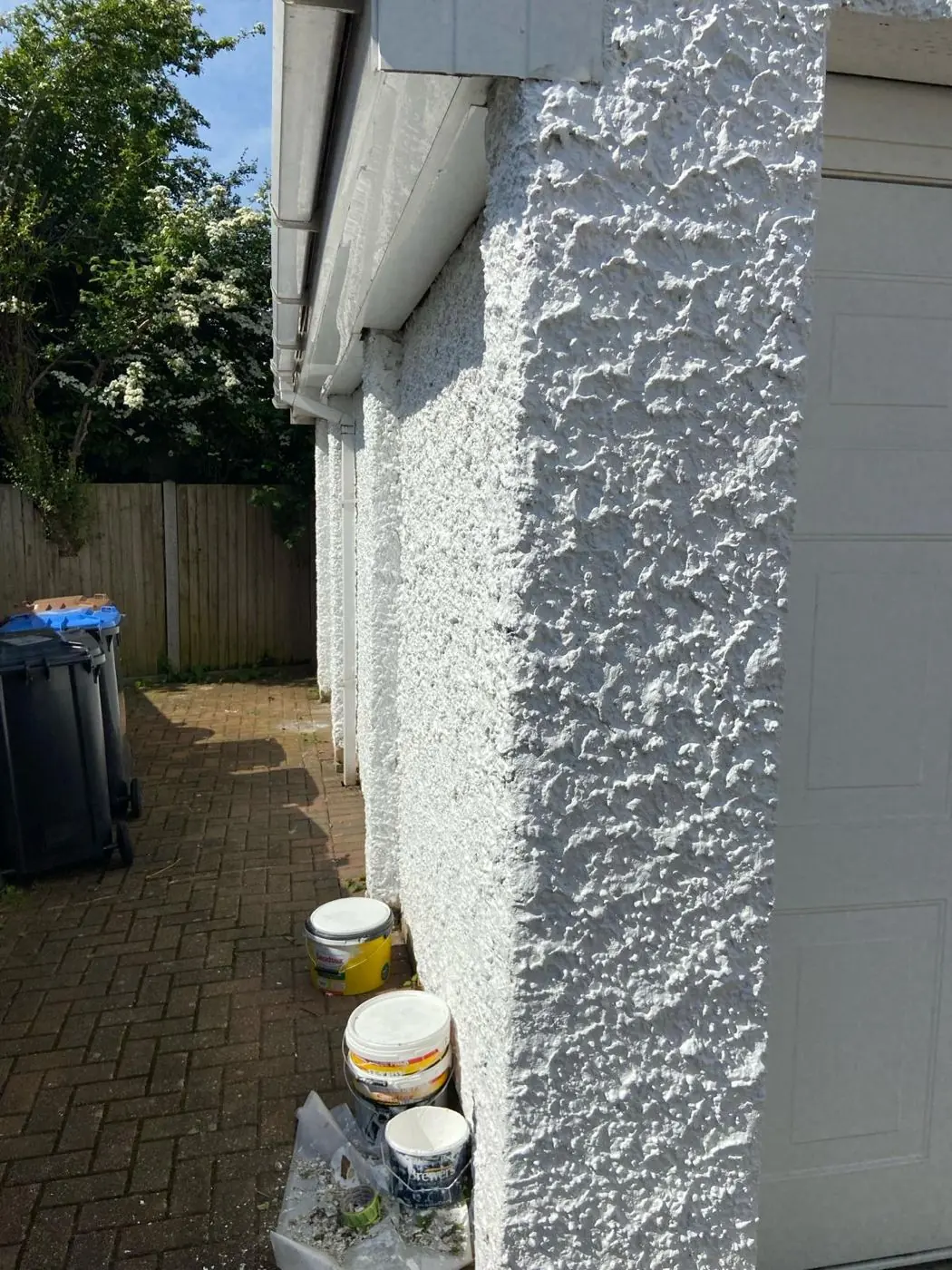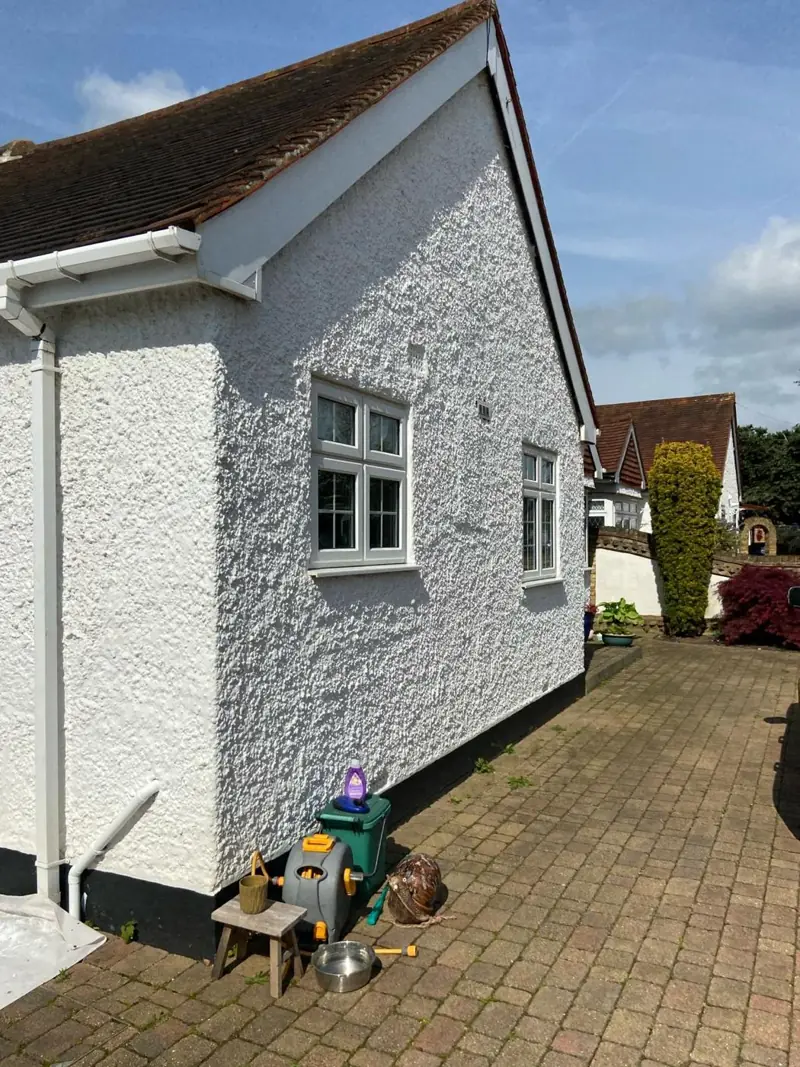
We paint rendered and pebble-dashed walls in Weston Favell (NN3), 2.9 miles north-east of Northampton town centre. Most historic walls in the village are bare limestone that should not be painted, so the work here is on pebble-dash side elevations, rendered later infill and the 20th-century houses around the conservation area.
Most walls in the old village should stay unpainted
A render and masonry page for Weston Favell has to start with what we will not paint. The historic core along High Street and Church Way is built of coursed limestone rubble, which the council’s 2010 conservation area appraisal calls ‘Pendle limestone’, with some squared rubble and ashlar surrounds. The high stone boundary walls that curve along Church Way are the same material. Painting that stone, even in a stone-coloured masonry paint, changes the look of the conservation area and seals the face of a wall that relies on drying out through its surface.
The same goes for the few red-brick buildings in the village: The Rectory at 48 Church Way, the former Wesleyan Chapel of 1853 and 20 High Street. Their brick faces should stay unpainted. If someone asks us to coat bare stone or brick here, we will explain why we think it is a mistake before anything else happens.
Where masonry paint does belong in Weston Favell
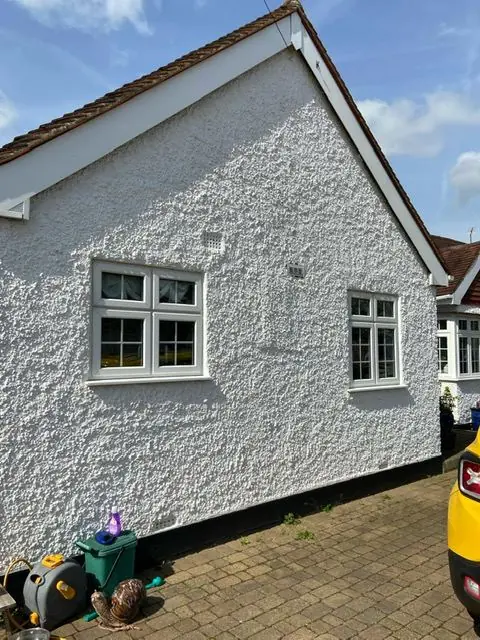
There is still plenty of genuine masonry work. The appraisal notes a pebble-dashed side elevation at 32 High Street, and pebble-dash appears on some other side elevations too. The late-20th-century closes built inside the conservation area, Kestrel Close from the late 1970s, The Smithy and The Mews, mix stone with render and brown brick. Beyond the conservation boundary, a suburban semi or detached house with a rendered or pebble-dashed front that has gone chalky or green is ordinary masonry work.
| Surface | Where you will find it | Our approach |
|---|---|---|
| Bare coursed limestone | Cottages and boundary walls on High Street and Church Way | Leave unpainted; advise on repair by a stonemason |
| Pebble-dash | Side elevations such as 32 High Street; suburban semis | Clean, stabilise, then breathable masonry paint |
| Smooth or textured render | Kestrel Close, The Smithy, The Mews; 20th-century houses | Algae wash, fill cracks, two coats of breathable masonry paint |
| Historic red brick | The Rectory, the former chapel, 20 High Street | Leave the brick face alone; paint joinery and metalwork only |
Breathable coatings next to old stone
Where a rendered panel or pebble-dash wall butts up against limestone rubble, the two have to be treated as one wall. Moisture moves between them, and a thick plastic masonry paint on the rendered part can push damp into the stone next to it, or trap it behind the render itself. On any wall that touches old stone we use a mineral or silicate masonry paint, or a limewash-compatible system where lime render is involved. These let water vapour out and age more gently.
The village also sits on the northern ridge of the Nene valley, with ground falling from north to south, and protected trees shade many walls near the church. Shaded render holds algae, so a fungicidal wash and enough drying time before the first coat matter more here than on an open estate. Our guide to painting render and roughcast covers the preparation in more detail.
Keeping to the village’s muted colours
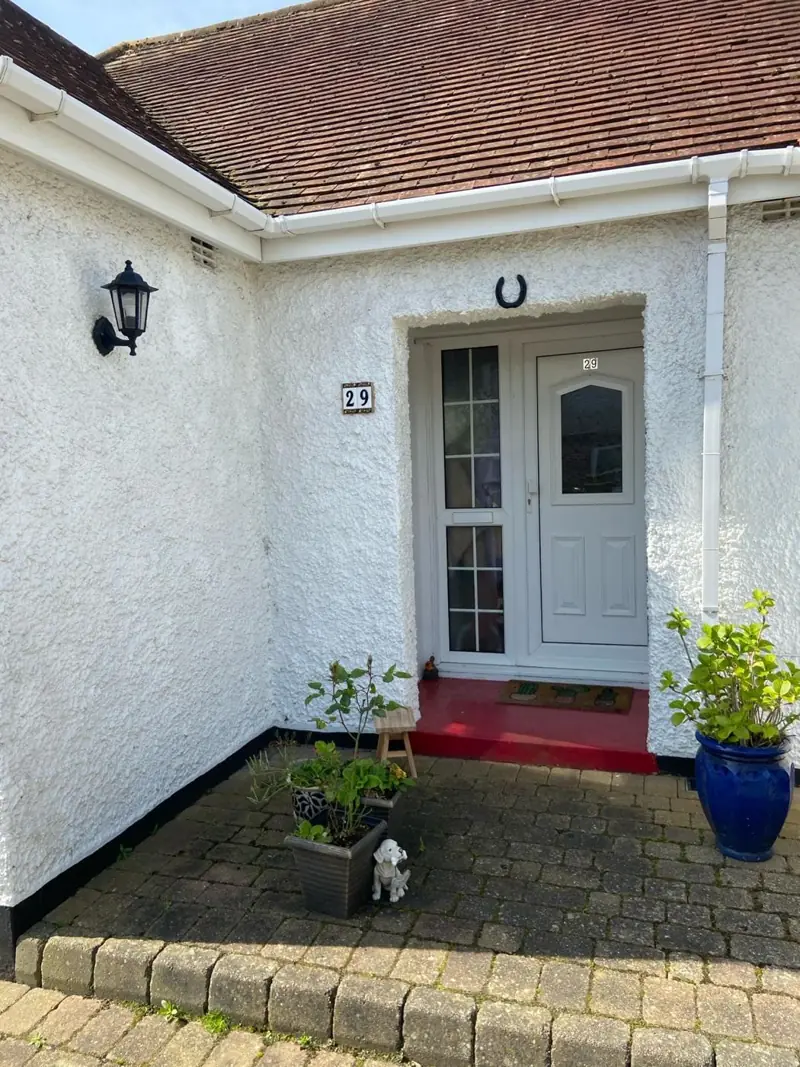
The appraisal describes Weston Favell’s harmonious palette of muted reddish-browns alongside its limestone. Rendered houses inside the conservation area look right in soft stone, putty and earth tones that sit with that palette. Brilliant white or strong colours stand out against the old walls. Outside the boundary you have a freer choice, though most people still pick something that suits the street.
There is no Article 4 heritage direction for Weston Favell at present, but a listed building needs consent for changes beyond like-for-like repair. If your rendered wall is part of a listed house, check with the conservation officer before changing its colour. For the wider process, see our main render and masonry painting page, and the Weston Favell area page covers the village’s other property types.
Last updated by Dean, DH Painter & Decorator.