We hang wallpaper in Boothville homes, about 3 miles north-east of Northampton town centre in NN3. Typical jobs are bay-windowed lounges, chimney breast and gas-fire walls in bungalows and semis, and tall stairwells in 1930s houses extended over three floors.
The walls that suit paper in a Boothville home
Most Boothville houses and bungalows give you two obvious places for wallpaper. One is the bay-windowed lounge at the front, a layout shared by the cul-de-sac bungalows on streets like Woodside Avenue and by the bay-fronted semis on Lumbertubs Lane and along the Kettering Road edge. The other is the chimney breast, or the wall where a gas fire sits, which is already the focal point of the room. Papering one of those and painting the rest lets you use a bold pattern without it taking over.
The bay can be papered as well, but it is fiddly work, and it changes which papers make sense.
Carrying a pattern round a bay window
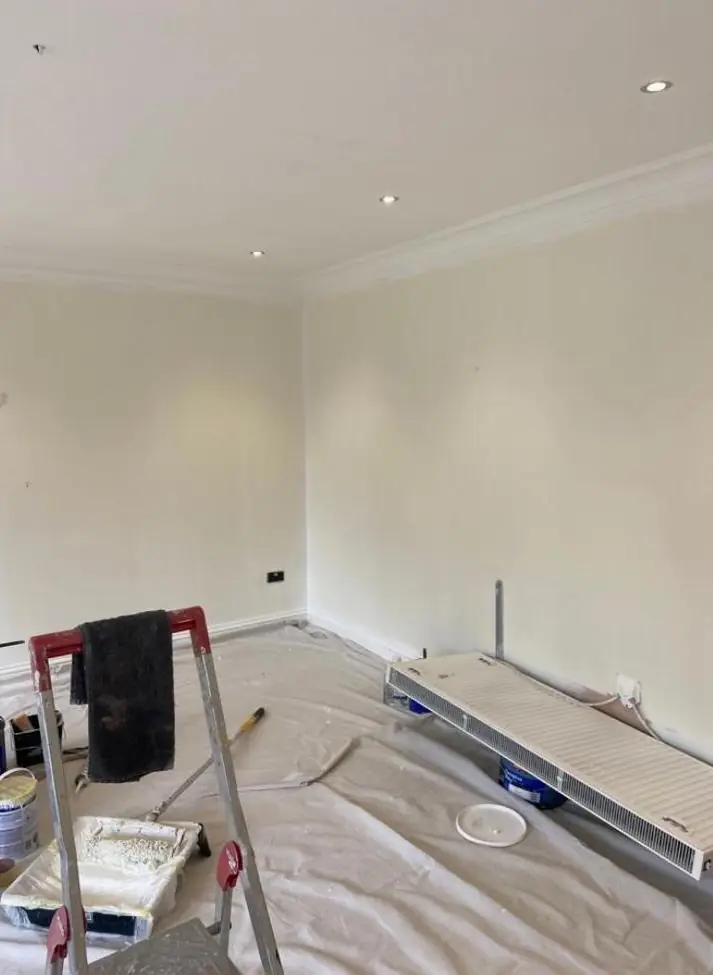
A bay is several short walls meeting at angles, each with a window reveal, a board below and often a radiator underneath. With a patterned paper, every angled return needs the design carried round so it lines up at eye level, which means setting out the drops from the centre of the bay outward rather than starting in a corner. Tight geometrics show any drift straight away. A looser floral or a textured plain is far more forgiving in that space.
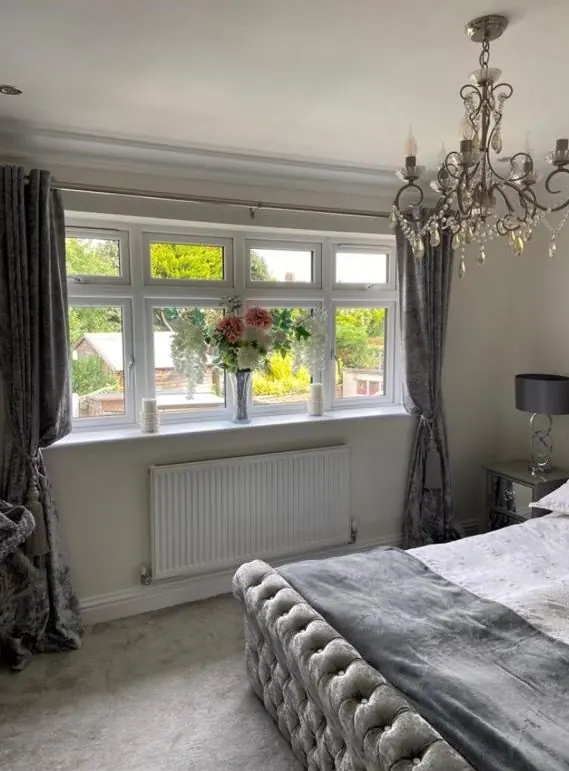
Most windows in Boothville are now uPVC double glazing, so the paper finishes against plastic trims instead of painted timber. We trim tight to the frame and leave a clean edge so the paper does not lift where the glass runs with condensation in winter. If the bay walls show hairline cracks, common where a bay meets the main wall, we hang lining paper first so the movement does not split the finishing paper later.
Long drops in a three-storey stairwell
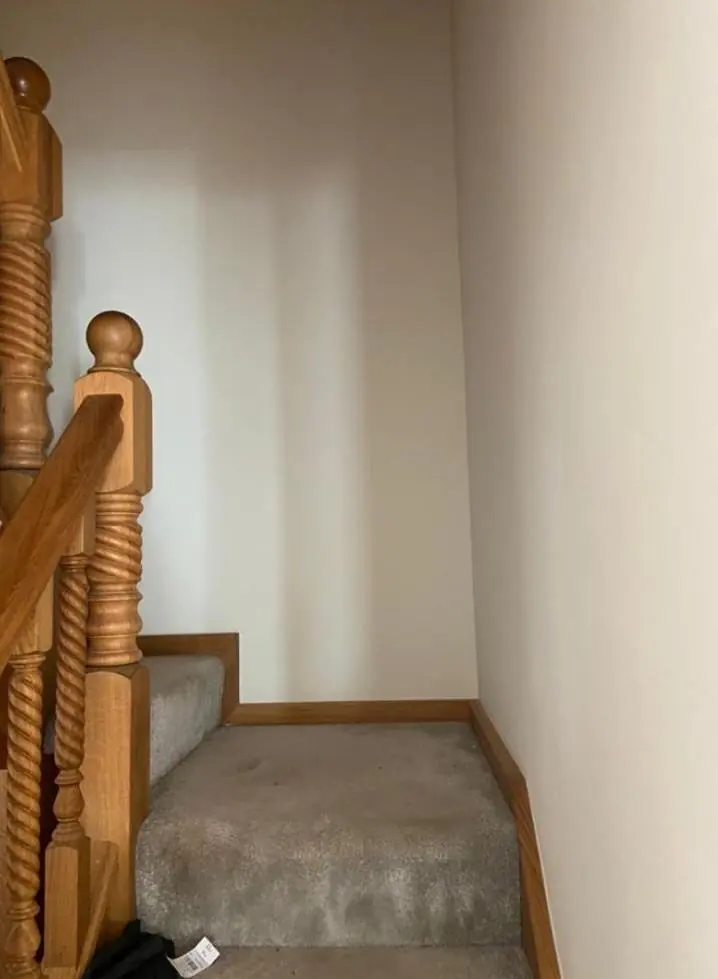
Some of the 1930s semis near Kettering Road have been extended up to three floors, giving a stairwell wall far taller than anything in a bungalow. Papering it calls for proper staging over the stairs, not a stepladder balanced on a tread. Each length can run to several metres, so we paste and hang one drop at a time, check plumb on every length and confirm the pattern match at the head of the stairs before carrying on down.
The extended part of these houses usually has newer plaster than the original rooms. Fresh skim is very absorbent and must be sized or sealed before paper goes on, or the paste dries too fast and the seams open. Where old and new walls join on a landing, a cross-lining layer gives one even base for the finishing paper.
Paper in sunny rooms and loft bedrooms
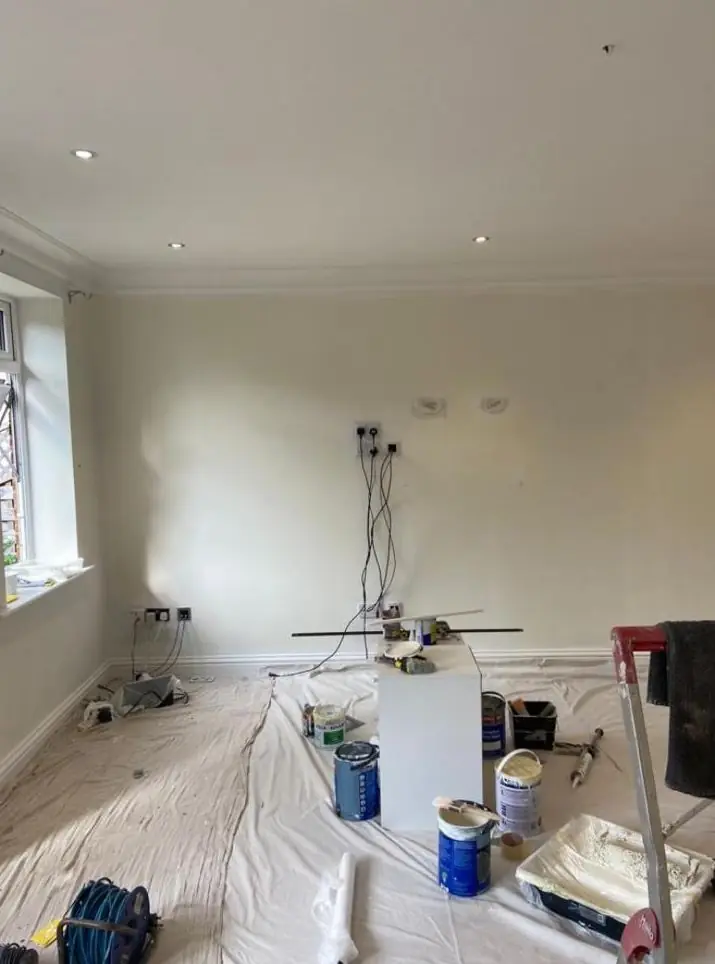
Rear rooms in Boothville often look over open, sunny gardens, and the district sits on raised ground at about 104 metres, so there is little to shade them. Some papers, especially cheaper printed ones and deep colours, fade where direct sun lands, leaving a paler band beside the window. Before you buy, check the light-fastness symbol on the roll label. For a south-facing room or one that opens onto a conservatory, we would steer you towards a paper with good light-fastness, or keep the pattern to a wall that does not catch the sun.
In converted bungalow loft rooms, sloping ceilings make full-room papering awkward, because the pattern runs off at an angle where slope meets wall. One papered wall at the gable end usually looks better.
Arranging a visit
Boothville is about three miles north-east of the town centre, a short run from our Northampton base, and driveways mean we can normally park right at the house. Dean will look at the walls, talk through the paper you have in mind and give you a written quote. The full process, from stripping to the final trim, is on our wallpaper hanging page; for everything else we do locally see the Boothville page. Our decorating cost guide explains what affects the price.
Last updated by Dean, DH Painter & Decorator.