DH Painter & Decorator hangs wallpaper in Headlands, about 2.2 miles north-east of Northampton town centre. The homes here are mostly 1930s semis, where the walls are seldom true, so lining paper often goes up first and the chimney breast in the bay lounge is the usual spot for a feature paper.
The chimney breast in the bay lounge
Front lounges in the interwar semis around The Headlands, Longland Road and Fullingdale Road are arranged around two things: the bay window at the front and the chimney breast on the side wall, with an alcove either side. When someone wants one patterned wall, the chimney breast is the obvious candidate. It faces you as you walk in, it is a manageable width, and the alcoves can be painted in a colour drawn from the paper.
Getting it to look right is mostly about setting out. We hang from the centre line of the breast outward, so the pattern sits symmetrically and both edges finish with matching part-motifs. The drop is planned so a full repeat lands at the top, whether the paper stops at the ceiling or at the picture rail that many of these rooms still have. Alcoves are rarely the same width as each other in a house of this age, which is another reason to paint them rather than paper them to match.
Walls that are rarely true
Most Headlands homes were built around 1939, with lime or early gypsum plaster on brick. Those walls are seldom flat or plumb. Corners drift, chimney breast edges wander and fine cracks run across the surface. A thin modern paper, especially a plain colour or a tight geometric print, shows every ripple once light falls across it from the bay.
That is why lining paper so often goes up before the feature paper here. Hung horizontally, it evens out the surface, bridges hairline cracks and gives the finished paper a consistent base to dry onto. Heavier textured papers and some non-woven designs cope better without it, but they still need the wall filled and sanded. We check the wall with a straight edge and a work light, tell you whether lining is worth it, and price it as a separate line so you can decide.
Taking off what is already there
Houses of this age have usually been decorated many times over. Under the current paint there may be woodchip, vinyl, or several layers of older paper, sometimes emulsioned over. Steaming them off is slow but necessary, because new paper over old layers can blister and lift. On old plaster the stripping sometimes pulls away loose skim with it. Those patches are filled and left to dry properly before any paper goes on, and anything that needs a plasterer is flagged rather than papered over.
Bedrooms, the stairwell and the extension
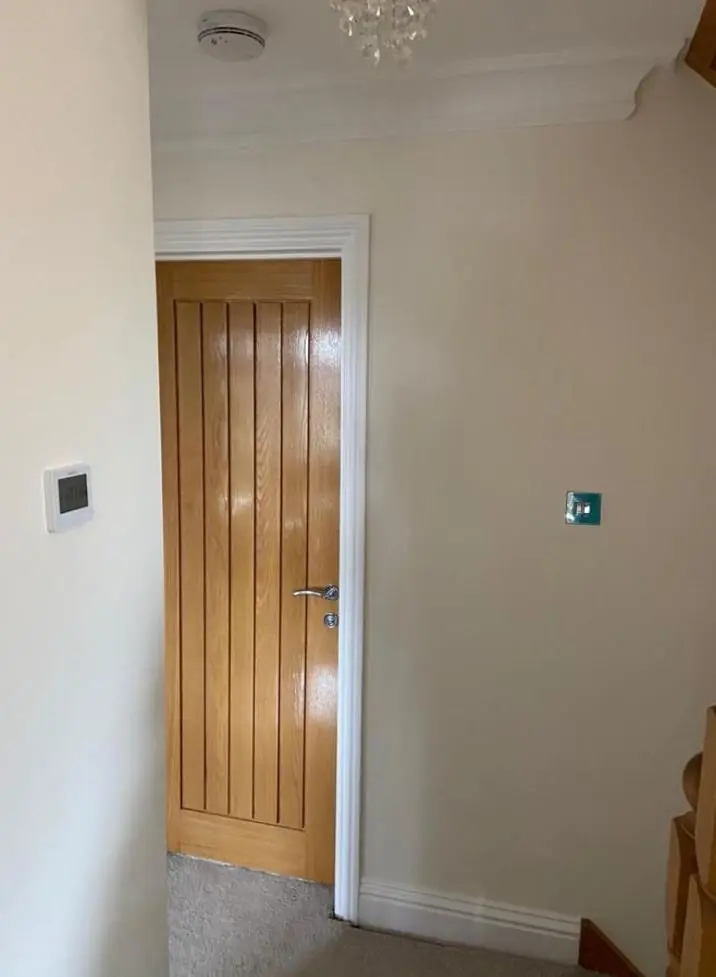
Upstairs, the front bedroom repeats the bay shape of the lounge, so paper around the bay window means more cuts and more careful trimming at the angled reveals. Rear bedrooms are plainer boxes and a good place for a full papered room.
The compact hall in these semis, with its straight flight of stairs, is the hardest wall to paper. The longest drops in the house run from the landing ceiling down to the stair string, and a stair platform is needed to hang them safely and keep them plumb. Where a rear extension or converted garage has new plaster, it needs sealing or sizing first so the paste does not soak straight in.
Papers, pastes and the general process are explained on our main wallpaper hanging page. For a feel of what work tends to cost, see the decorating cost guide, and the Headlands page covers the rest of what we do in these houses.
Last updated by Dean, DH Painter & Decorator.