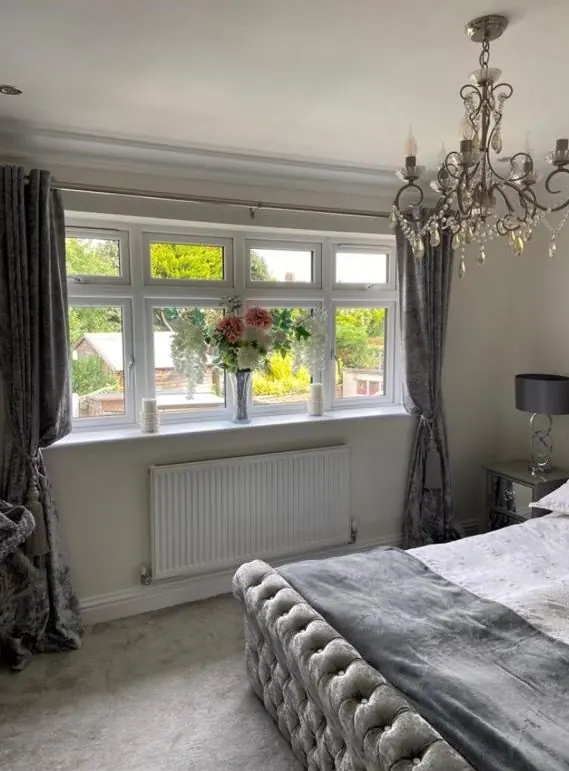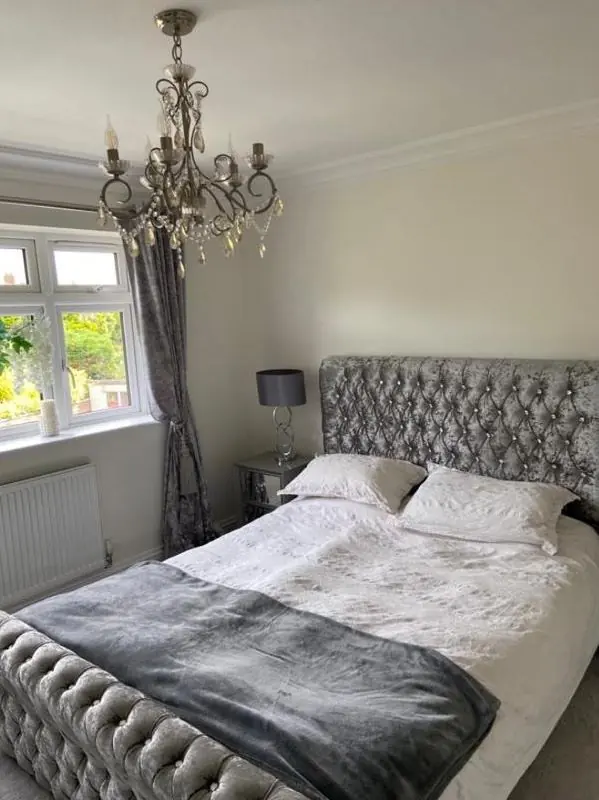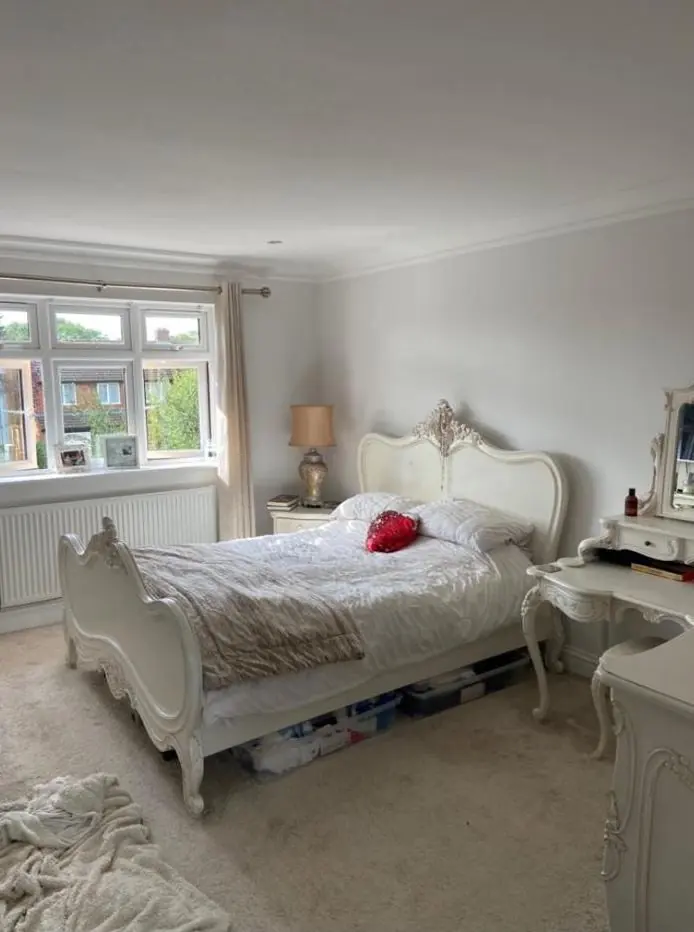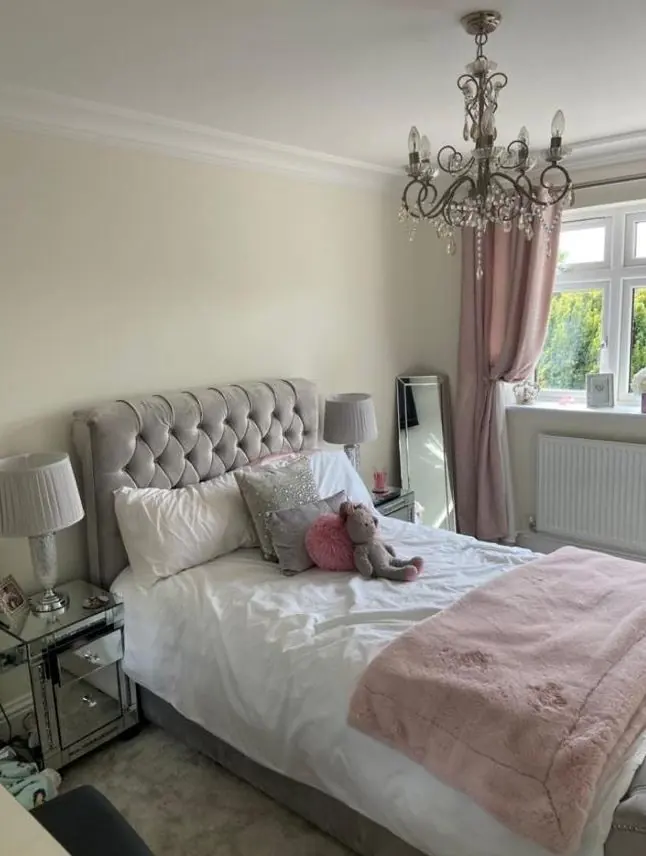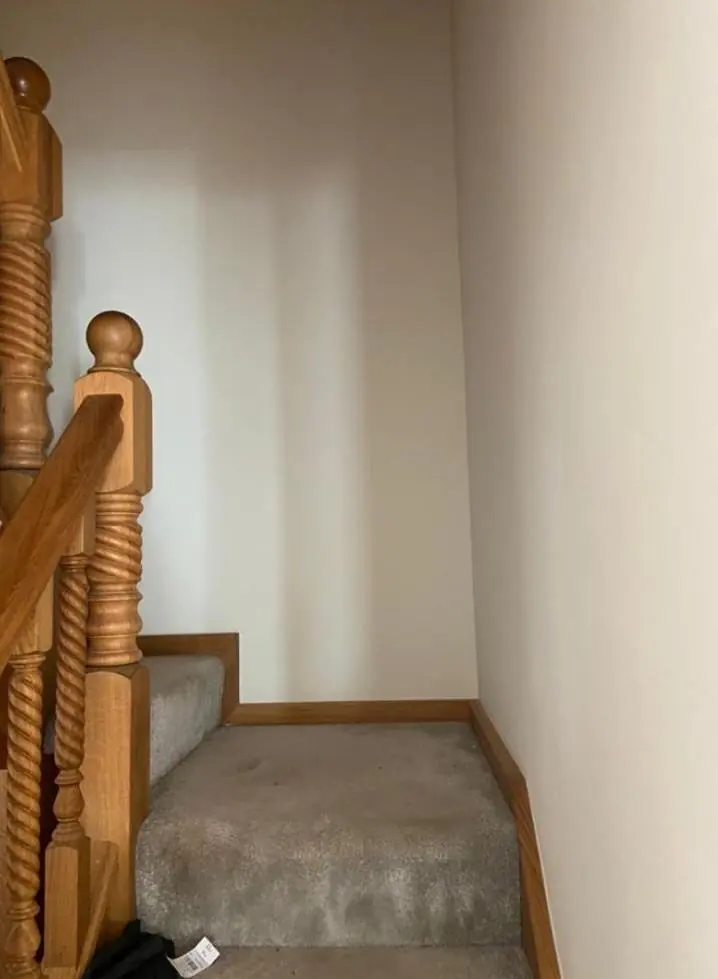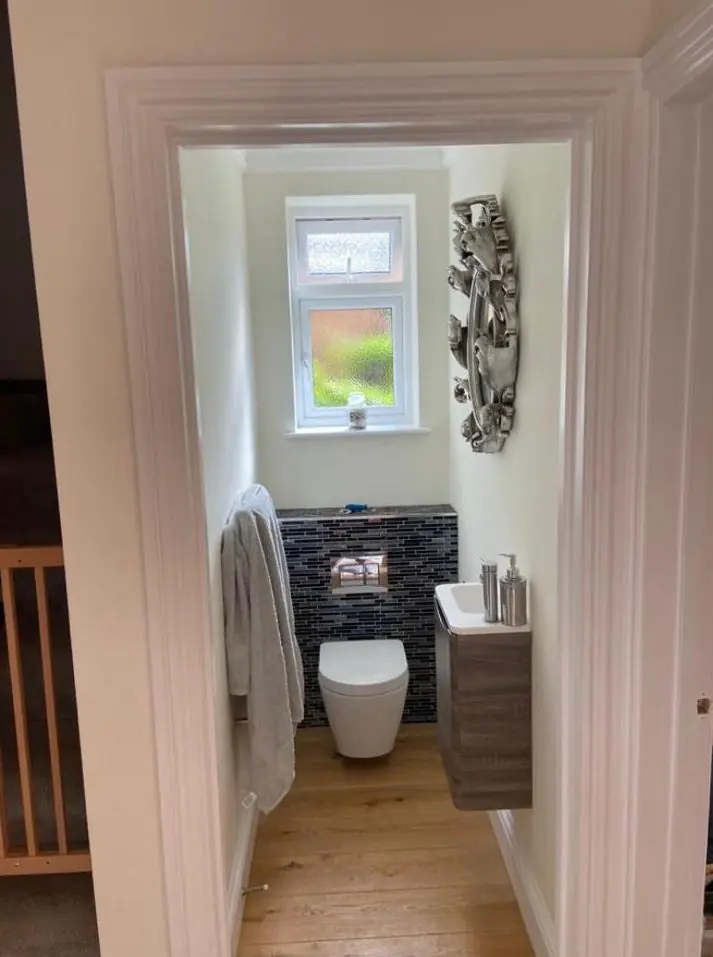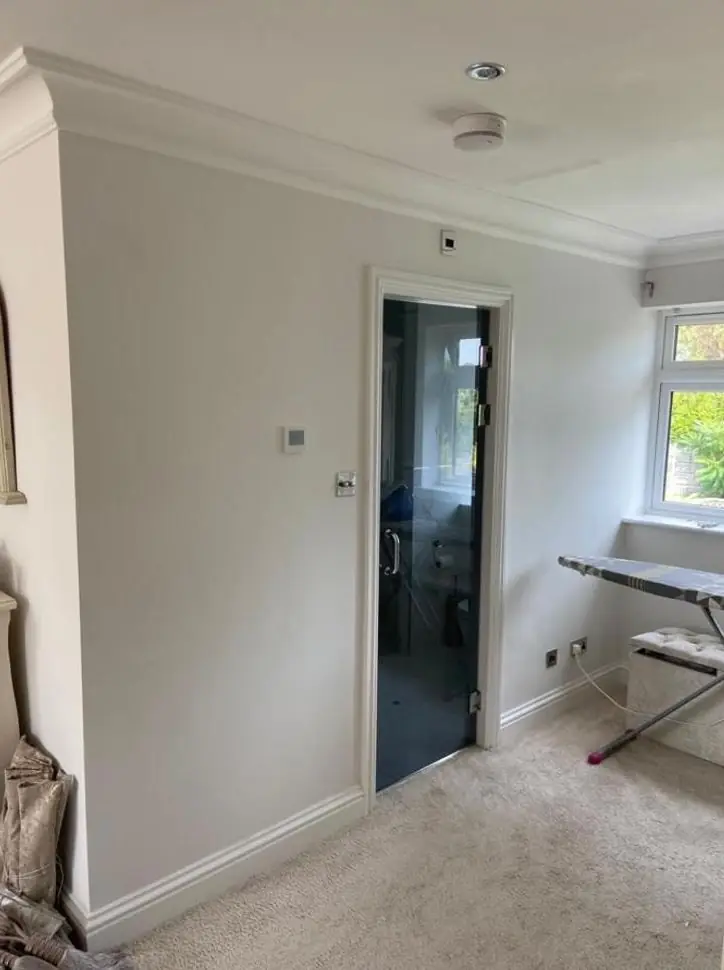
DH Painter & Decorator hangs lining paper and wallpaper in Weston Favell, NN3, about 2.9 miles north-east of Northampton town centre. Dean handles both the irregular rooms of the old stone cottages and the regular plastered walls of the 20th-century houses around them.
Papering a cottage room that was never square
Most of the cottages along High Street and Church Way went up between the 1600s and the 1800s, in coursed limestone rubble. Walls built that way are rarely flat on the inside. Plaster follows the stone, corners drift off true, and a wall can lean a little from skirting to ceiling. Hang a patterned paper straight onto that and every fault shows: the pattern climbs or drops along the ceiling line, and seams open where the wall bellies out.
So on older walls the first job is usually lining paper. Hung horizontally (cross-lined) under the finish paper, it evens out minor hollows, gives the paste an even surface and stops joins in the two layers lining up. Where plaster is loose or hollow, it is repaired first, because paper will not hold a wall together.
Where to start the pattern
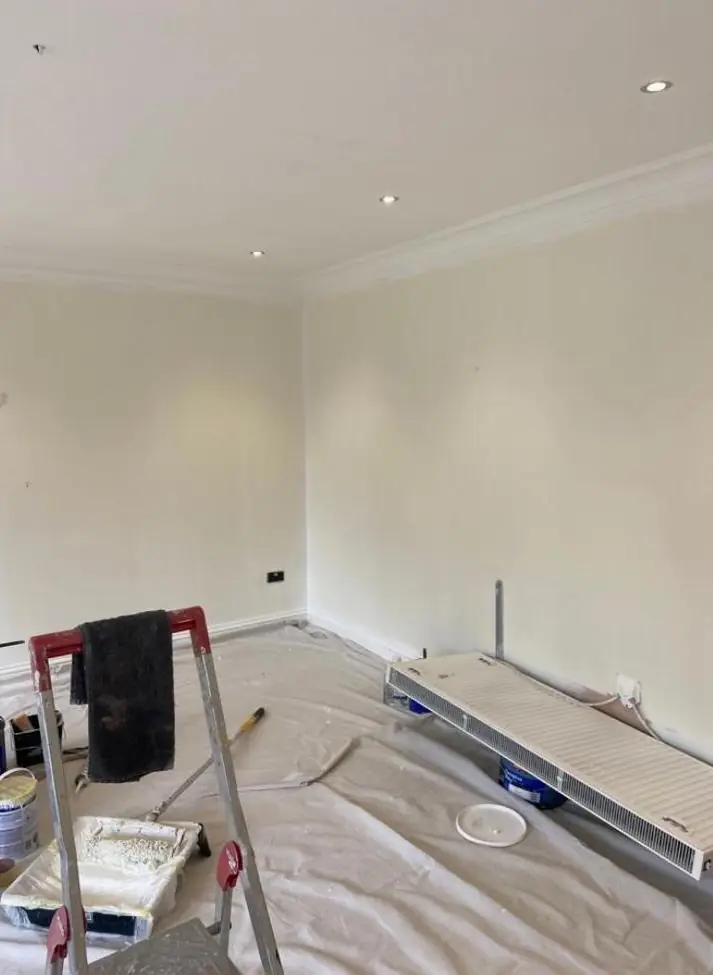
In a room with no true vertical, the pattern has to be set out by eye from the point you look at most. In many cottage rooms that is the chimney breast, since the cottages carry prominent stone and brick stacks. Dean drops a plumb line there, centres the design on it and works outwards in both directions, so any small mismatch ends up in the least visible corner, behind a door or above a cupboard.
Low ceilings and deep window reveals in solid walls also change the choice of paper. Large, busy repeats can feel heavy in a small cottage room, and reveals take a lot of cutting and wrapping. We will tell you before you buy if a design is going to fight the room, and how many extra rolls an awkward layout needs.
Solid walls, moisture and the paper you choose
A solid stone wall with no cavity needs to dry out through its surfaces. Heavy vinyl wallpapers act like a waterproof skin and can trap damp behind them, which shows up as lifting edges or mould under the paper. In those rooms a paper-backed or breathable non-woven paper is the safer choice, hung with a paste suited to the wall. If an outside wall is already damp, that gets sorted before anything is hung.
The village also has 13 listed buildings, including The Grange, Hervey’s Cottage and The Priory. Stripping old papers and finishes in a listed interior can count as alteration, so if your home is listed, ask the council’s conservation officer before we take anything off the walls.
Suburban semis and the newer closes
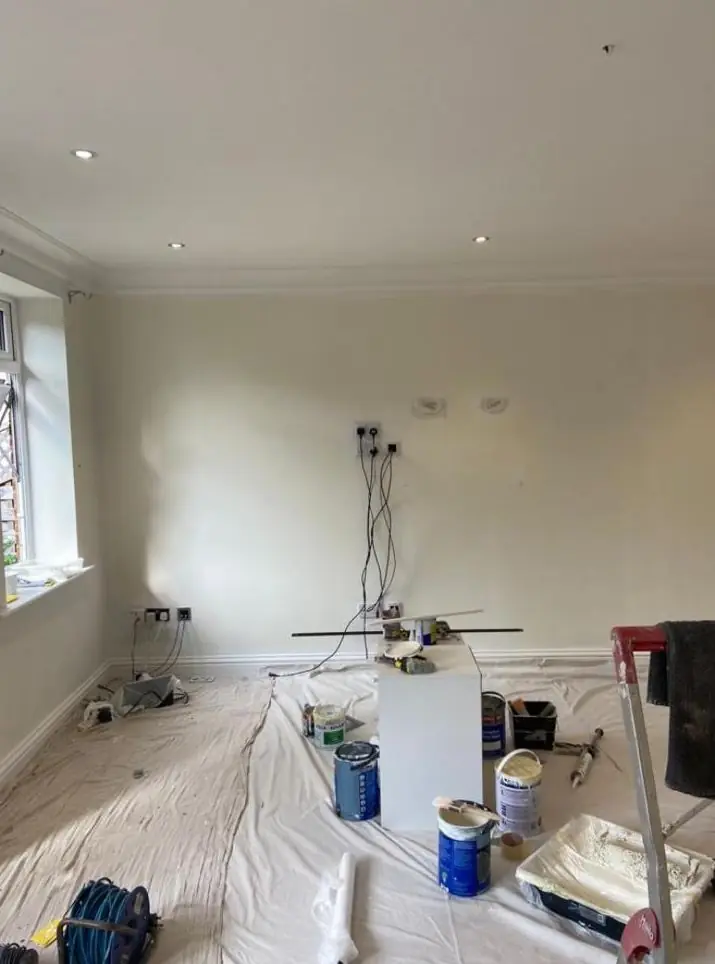
Most of Weston Favell is not the old village. The detached and semi-detached houses on streets like Graspin Lane, Edgemont Road and Thorburn Road, and the late-20th-century closes inside the conservation area (Kestrel Close, The Smithy, The Mews) have conventional plastered walls. These take any paper you like, from a single feature wall behind the bed to a full room in a heavy designer print.
Here the work is about clean preparation: stripping old paper fully, sizing new plaster, and lining walls with a lot of old filler before a fine or metallic paper goes up. The day runs more predictably than in a cottage, and we can tell you how long it will take with more confidence.
Read the main wallpaper hanging service page for the paper types and steps we work with, or see our Weston Favell area page for the other decorating we cover there.
Last updated by Dean, DH Painter & Decorator.