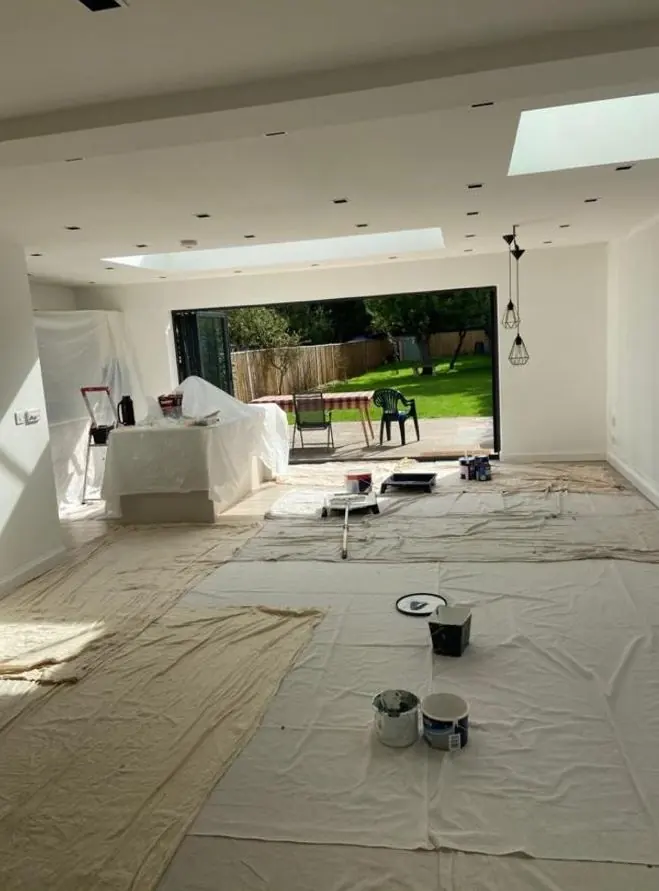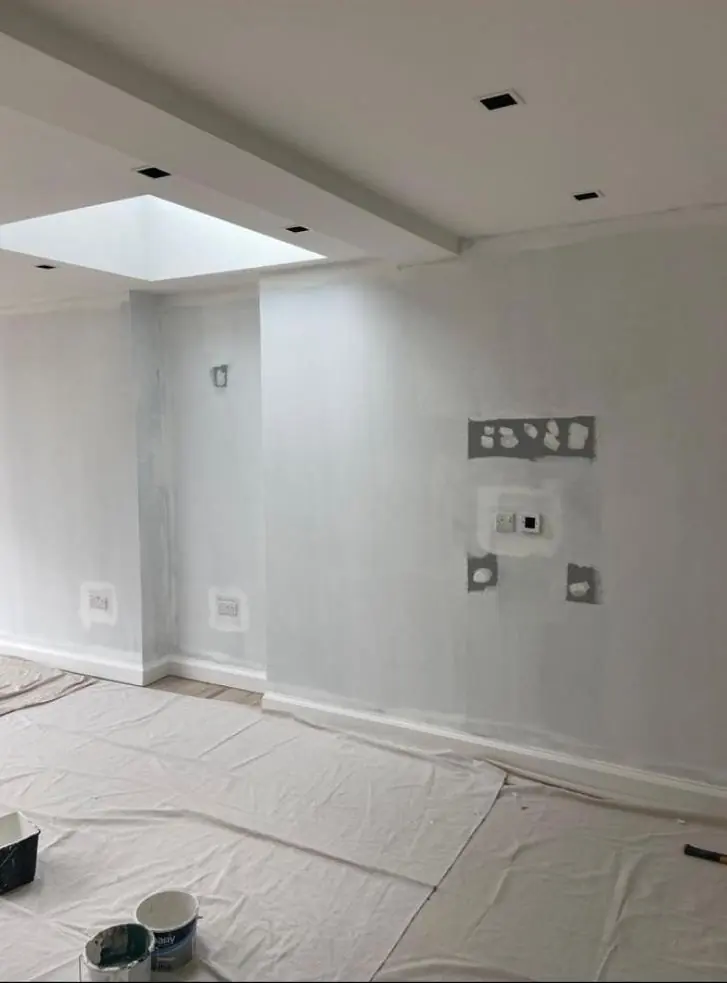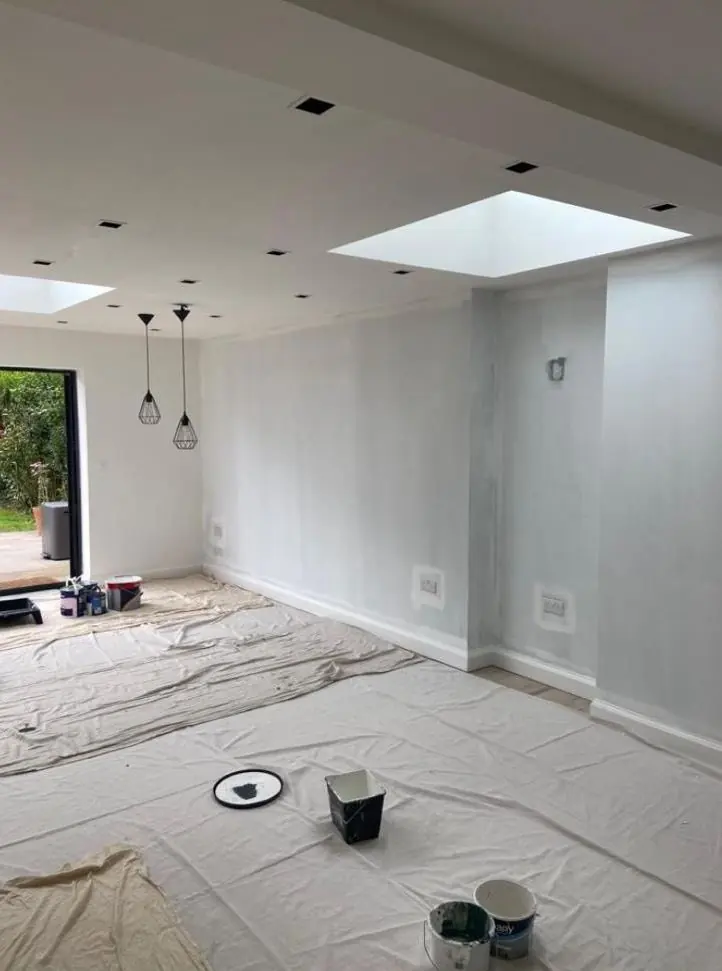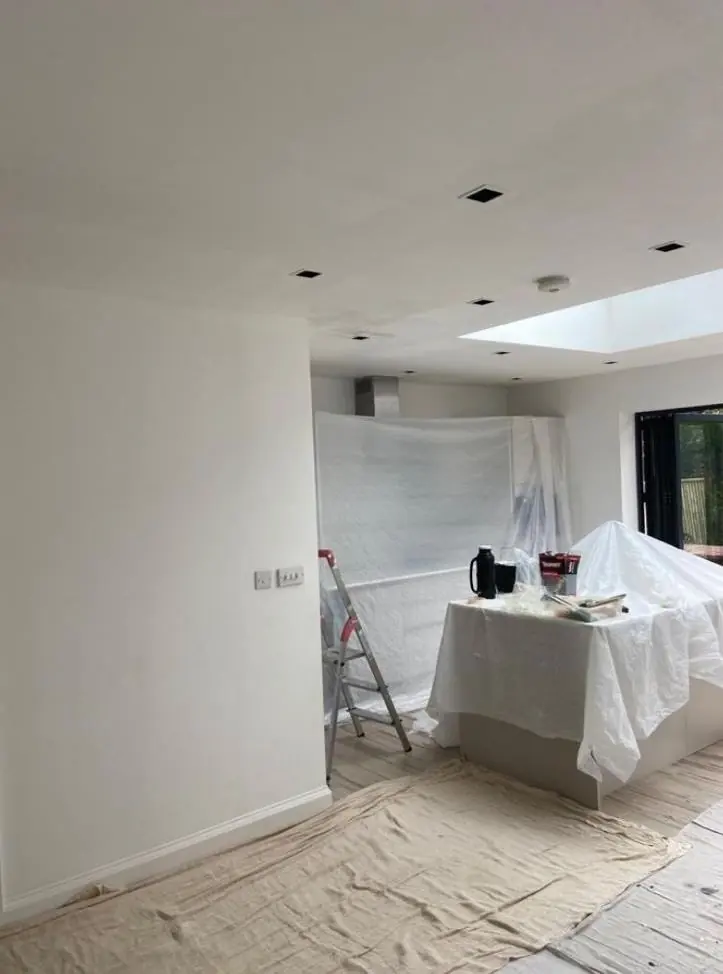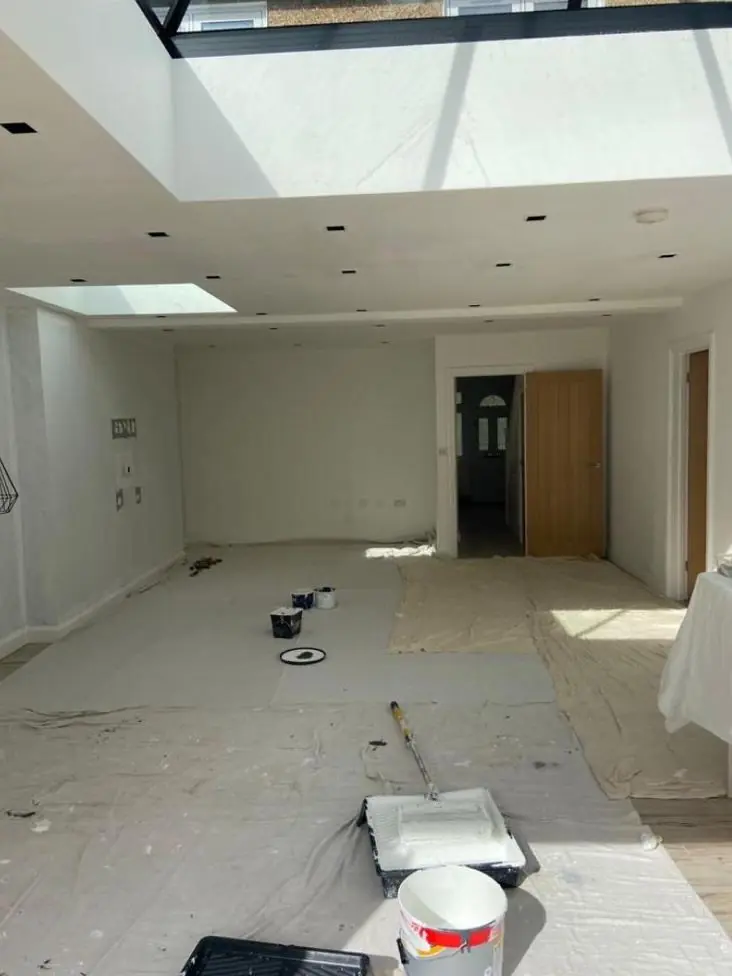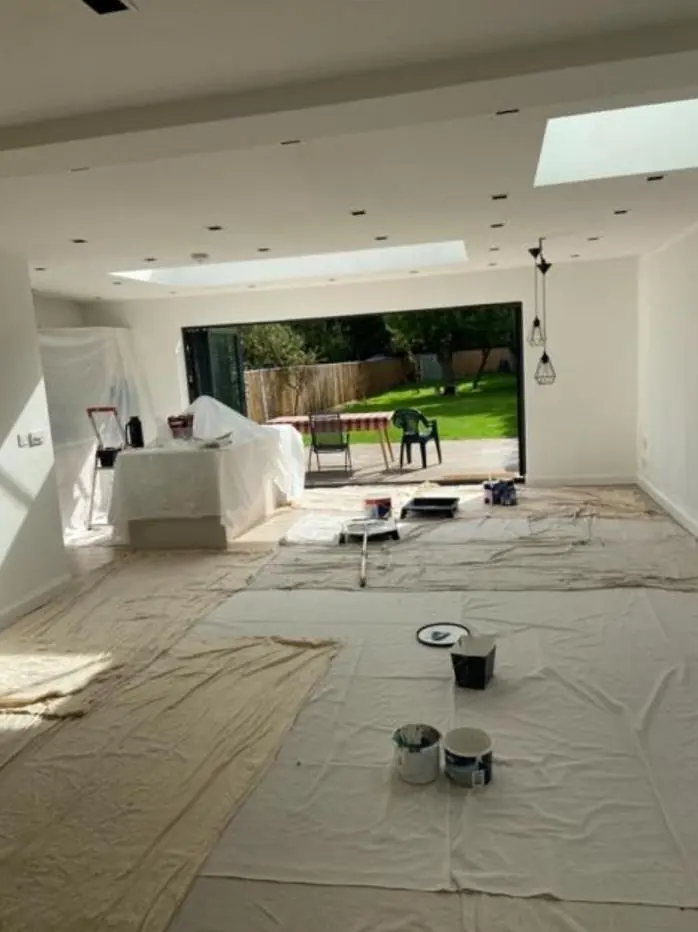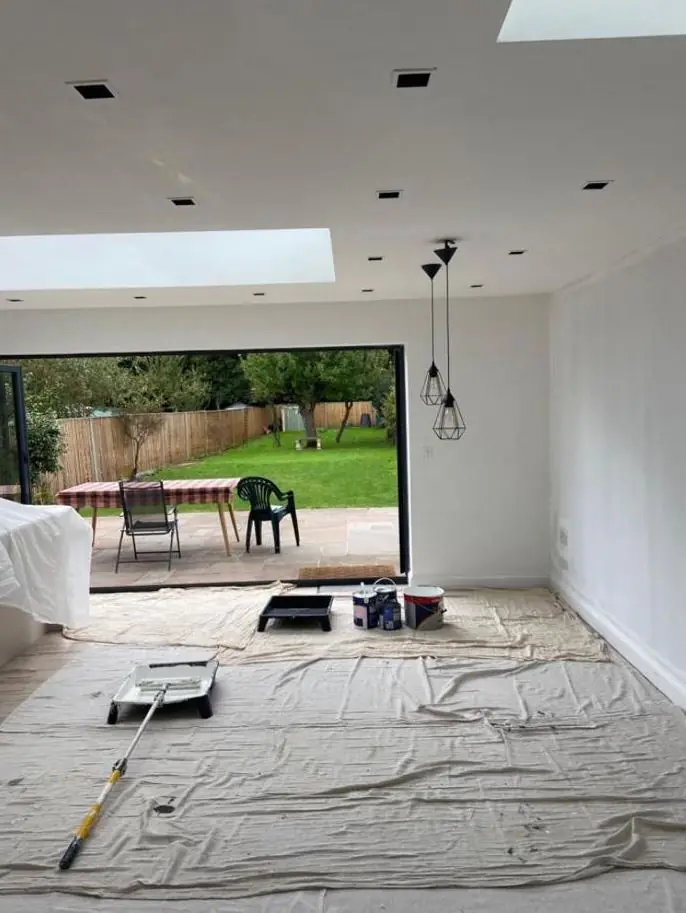
Dean decorates newly plastered rooms and extensions in Boothville, out on the NN3 side of town some 3 miles north-east of the centre. Extended bungalows with loft rooms and kitchen extensions linked to conservatories are common here, and every one of them needs bare plaster sealed with a mist coat before it can take a finish.
Why so much fresh plaster turns up in Boothville
Boothville’s bungalows sit in quiet cul-de-sacs, and many have since been extended outwards, upwards or both. Sales listings for streets such as Bibury Crescent describe bungalows with loft rooms, and other homes in the district have kitchens opening onto conservatories or bay-fronted semis taken out over three floors. Each of those projects ends the same way: the builder and plasterer leave, and the rooms are left in bare pink plaster that can’t simply be rolled over with ordinary emulsion.
New plaster is very absorbent. Full-strength paint sits on the surface, dries too fast and can peel away in sheets later. The first coat has to be thinned so it soaks in and seals, which is the mist coat explained step by step in our new plaster mist coat guide. After that the walls and ceilings take normal finish coats.
Dormers and loft rooms up a pull-down ladder
A bungalow loft room is one of the fiddliest spaces to decorate. Sloping ceilings meet short knee walls, dormer cheeks have their own small angled faces, and there are usually several new plasterboard joints and corner beads in a small area. The mist coat tends to show up every slight ridge and trowel mark, so we expect a round of light filling and sanding between the mist coat and the first finish coat.
- Access is often by a pull-down loft ladder from the hall, so we bring materials up in small loads and keep the hatch clear for you.
- Roof spaces trap warmth and moisture while plaster is drying. We check the walls are evenly pale before sealing, especially behind any new radiator.
- Sloping ceilings and walls are usually painted in one colour to avoid a cutting-in line along every angle.
Ceilings in loft rooms deserve a word too. New plasterboard ceilings under a roof often have recessed downlights cut in, and each fitting leaves a ring of patched plaster around it. We mist coat and fill those rings before the finish, so they do not show as halos once the lights are on.
Kitchen extensions next to a conservatory
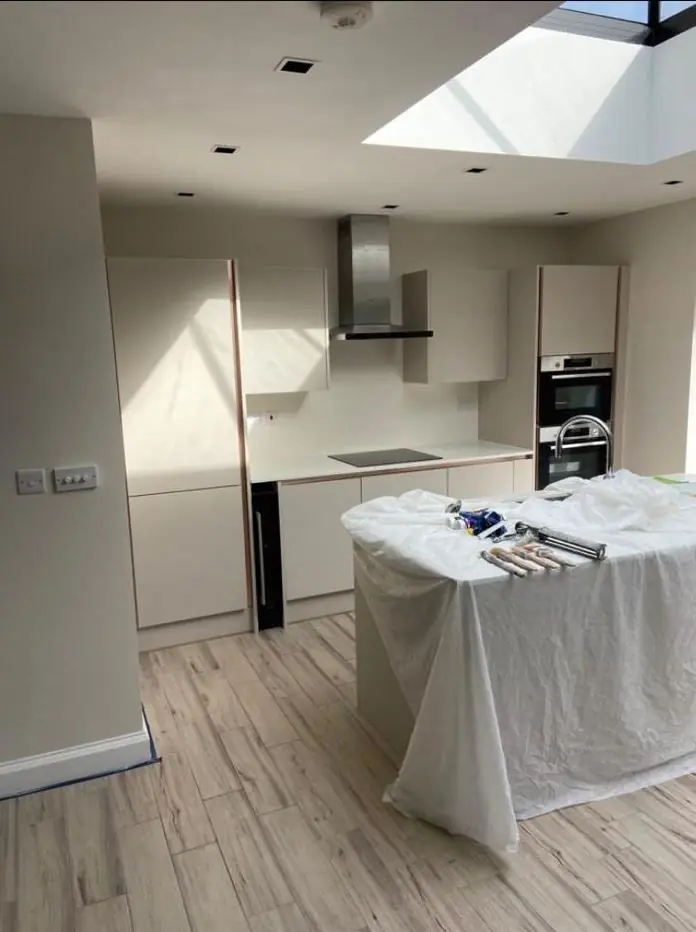
Some Boothville homes, among them a corner-plot detached house at Yewtree Court, have kitchens or dining areas linked to a conservatory. Being on raised ground at around 104 m, with sunny rear gardens, these rooms get a great deal of daylight. Strong side light rakes across new plaster and picks out any patchiness or flashing in the paint, so we are careful to keep a wet edge and apply full, even finish coats. A kitchen also needs a wipeable finish near the cooker and sink, which we discuss before choosing paint. If the extension has a new ceiling, MDF skirting and new doors, those are sealed and painted as part of the same job; the full list is on our new plaster and extension painting page.
Fitting in after your builder
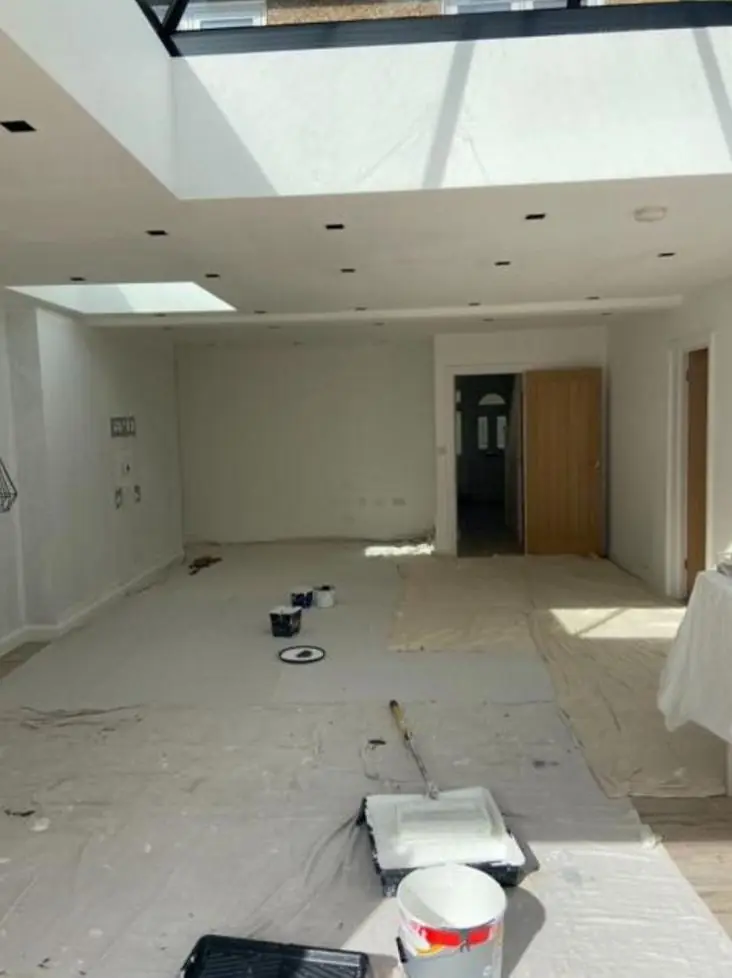
Most of the delay on these jobs is drying time. Skimmed walls typically need a few days to a week or more, and a fully plastered wall longer, depending on thickness, season and ventilation. Booking Dean in at the planning stage helps line the decorating up with the end of the build. Boothville homes usually have a driveway or garage, so there’s normally space to park the van and set out materials away from the new floor. The Boothville area page lists the rest of what we do locally.
Last updated by Dean, DH Painter & Decorator.