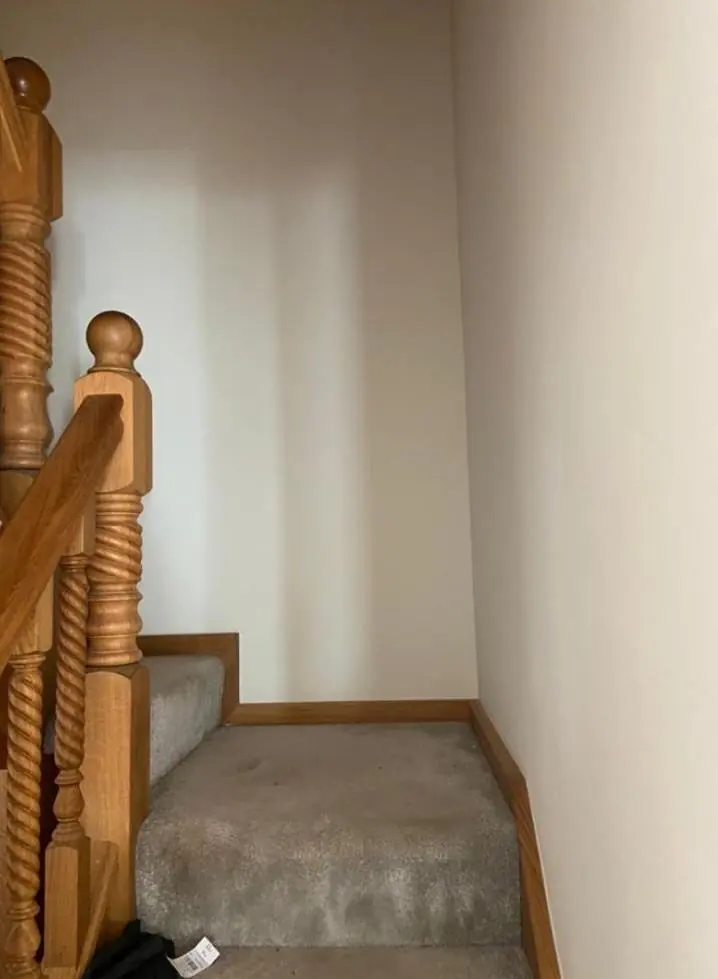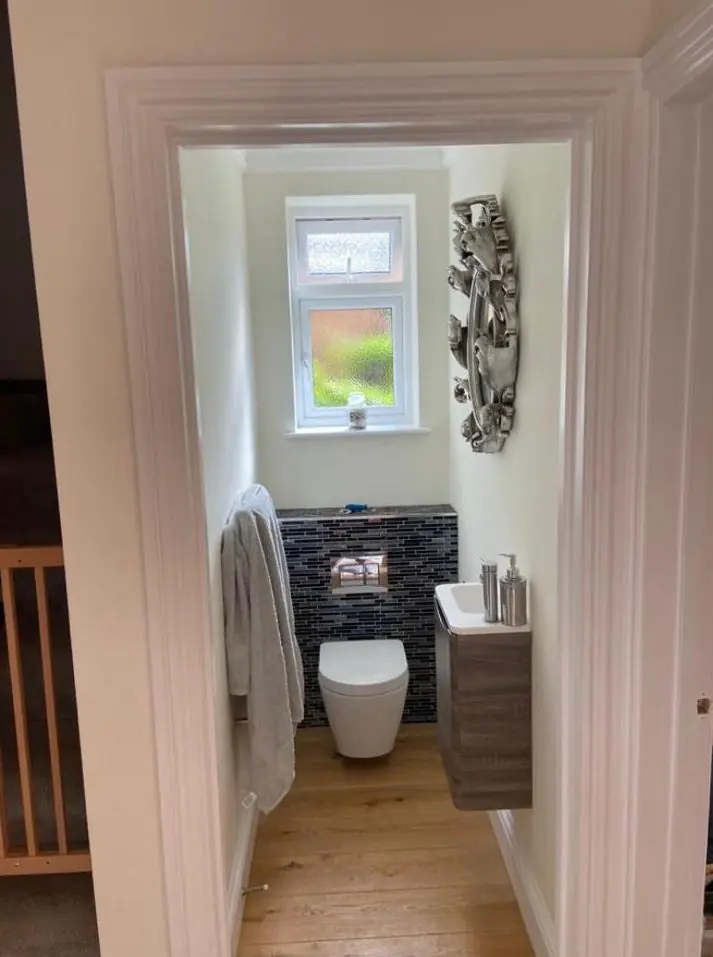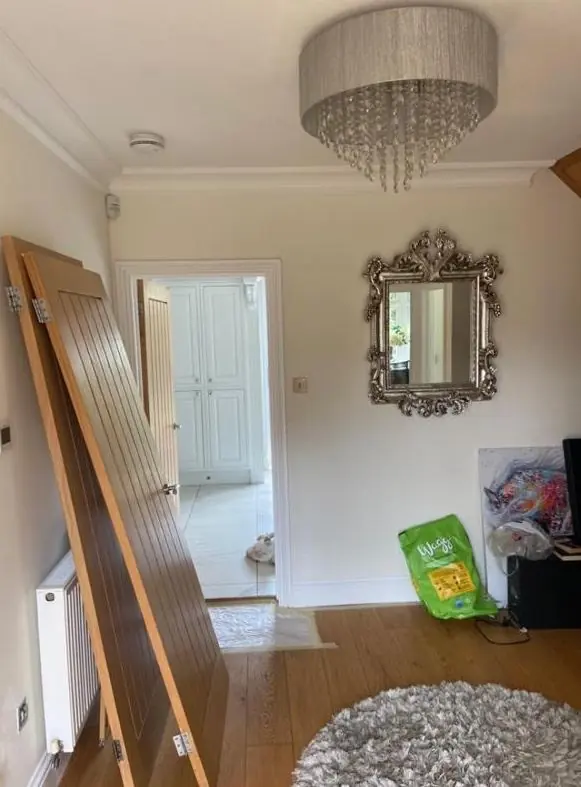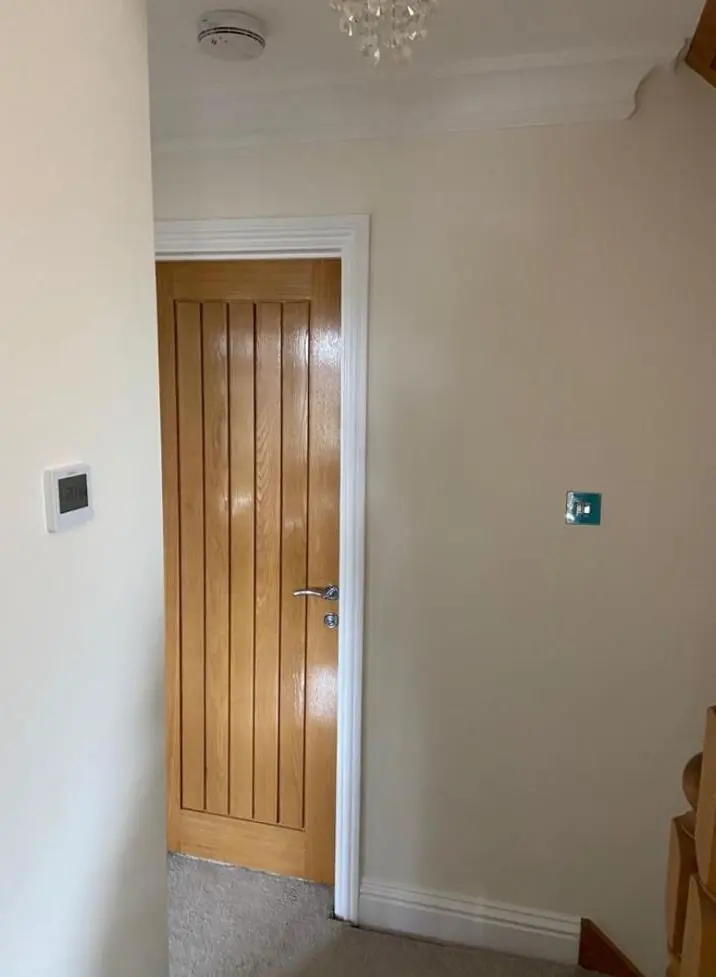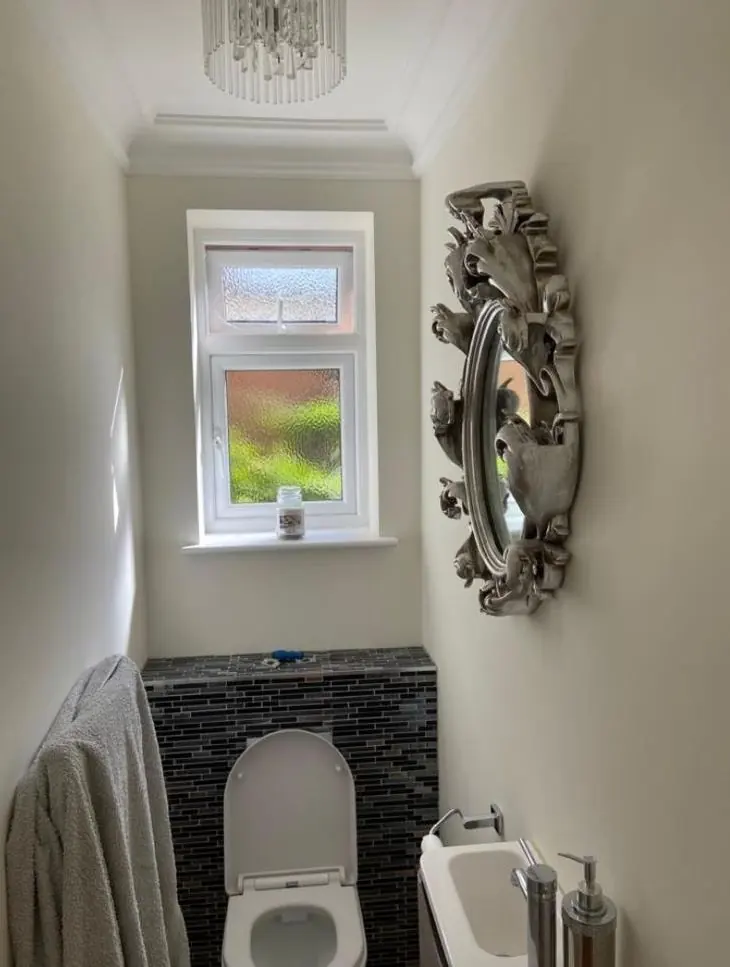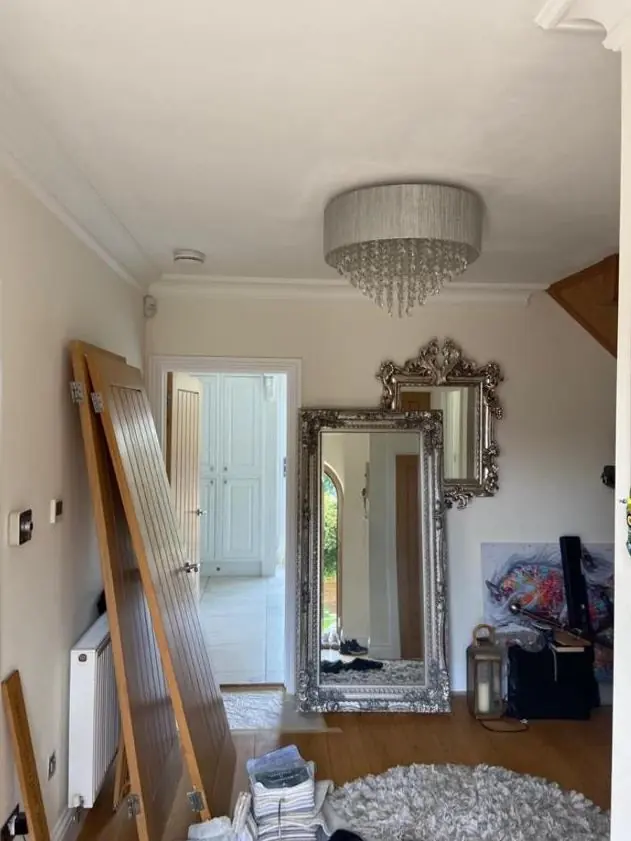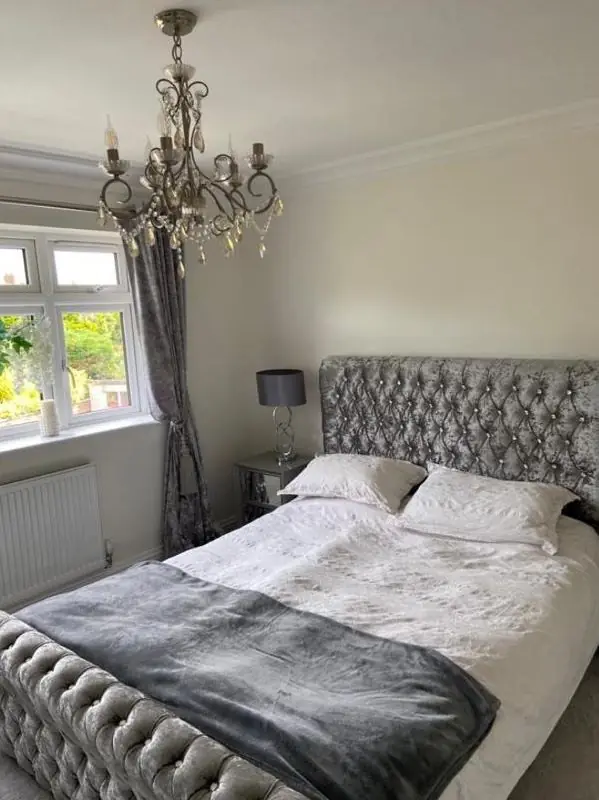
Dean gives colour and finish advice to Boothville homeowners as part of a decorating job, about 3 miles north-east of Northampton town centre. Boothville has no conservation area, so the choice is open, but its bright, raised gardens and conservatories make colours look very different from the chart.
Free rein outside, with a few exceptions
Unlike Abington Park or St Giles, Boothville is not covered by any of West Northamptonshire Council’s heritage Article 4 directions, and we found no conservation area here. For a freehold house or bungalow, that means you can choose any front door, fascia or wall colour without asking permission.
A few things are still worth weighing up. On a quiet cul-de-sac such as Bibury Crescent, a strong colour is in view of every neighbour, so look at the houses either side before you commit. Corner plots, which come up often around Lumbertubs Lane and Yewtree Court, show two elevations to the street, so the colour has to work from two angles. And owners of leasehold flats, such as the first-floor maisonettes at Yewtree Court, should check their lease: a new exterior or entrance colour may need the freeholder’s agreement first.
How colour behaves on high, open ground
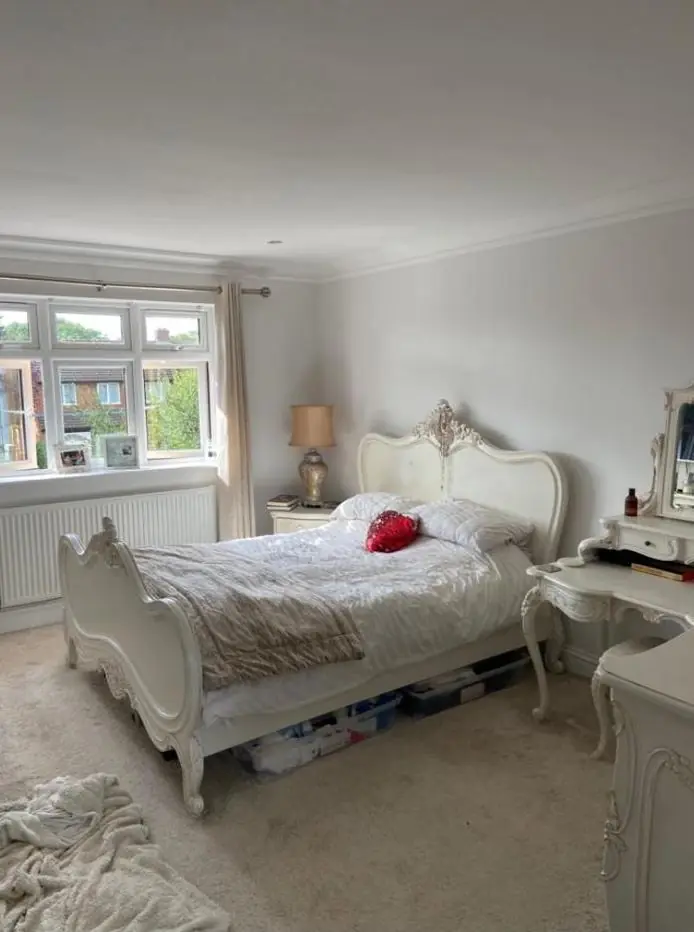
The county’s historic environment record puts Booth Rise at about 104 metres, on Northampton Sands, and property listings here repeatedly mention sunny rear gardens. Strong, direct daylight bleaches pale colours. A soft grey that looked calm on a card can read as almost white on a south-facing back wall at midday, and a pale sage can lose its green altogether.
Conservatories off kitchens add glare. Light comes in from three sides and through the roof, and the room next to it picks up that brightness. In those rooms we often suggest going a shade or two deeper than your first instinct, and choosing a low-sheen finish so the walls do not throw glare back. Large painted sample boards, moved round the room and checked morning and evening, tell you far more than a small tester square.
Working with what is already there
Boothville homes come with fixed features that any scheme has to sit beside:
| Fixed feature | What it means for colour |
|---|---|
| White uPVC windows | A brilliant white gloss on fascias or a door frame may not match the white of the plastic exactly; match it closely or choose a clear contrast so it looks deliberate |
| Bare brick front garden walls | They set the tone of the frontage, so pick door and garage colours that sit with the brick rather than fight it |
| Metal up-and-over garage doors | A large flat panel on the front of the plot; a mid or dark tone hides marks and makes the door less dominant |
| Mature front garden trees and shrubs | Shade and green reflected light cool a frontage, so a slightly warmer tone can balance it |
On a bungalow, the fascias sit low, right in your eyeline from the pavement, so their colour carries more weight than on a two-storey house where they are tucked under the gutter line.
Inside a bungalow, colour flows from one hall
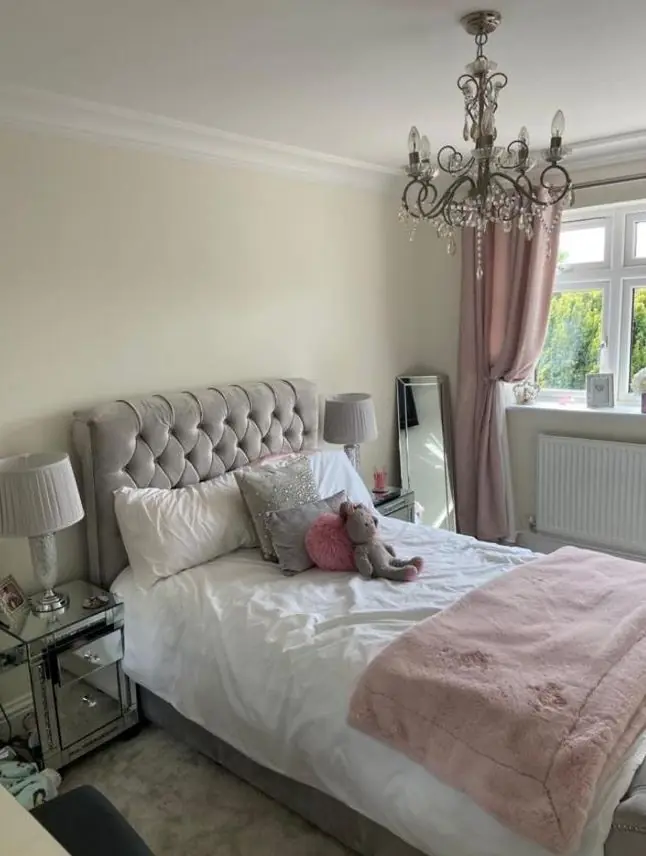
In a typical Boothville bungalow every room opens off a central hall, so you see into several rooms at once from the front door. A scheme that changes completely at each doorway can feel bitty. We usually suggest one woodwork colour throughout, a calm hall shade, and stronger colours kept for rooms behind closed doors. Where a dining room also serves as a third bedroom, a neutral that suits both roles saves repainting each time its use changes.
Dean gives this advice while planning and quoting your decorating, not as a separate design service. More on undertones and finishes is on our colour and finish advice page. We cover Boothville from our Northampton base, about 3 miles north-east of the town centre, and the Boothville area page lists the other work we take on there.
Last updated by Dean, DH Painter & Decorator.