
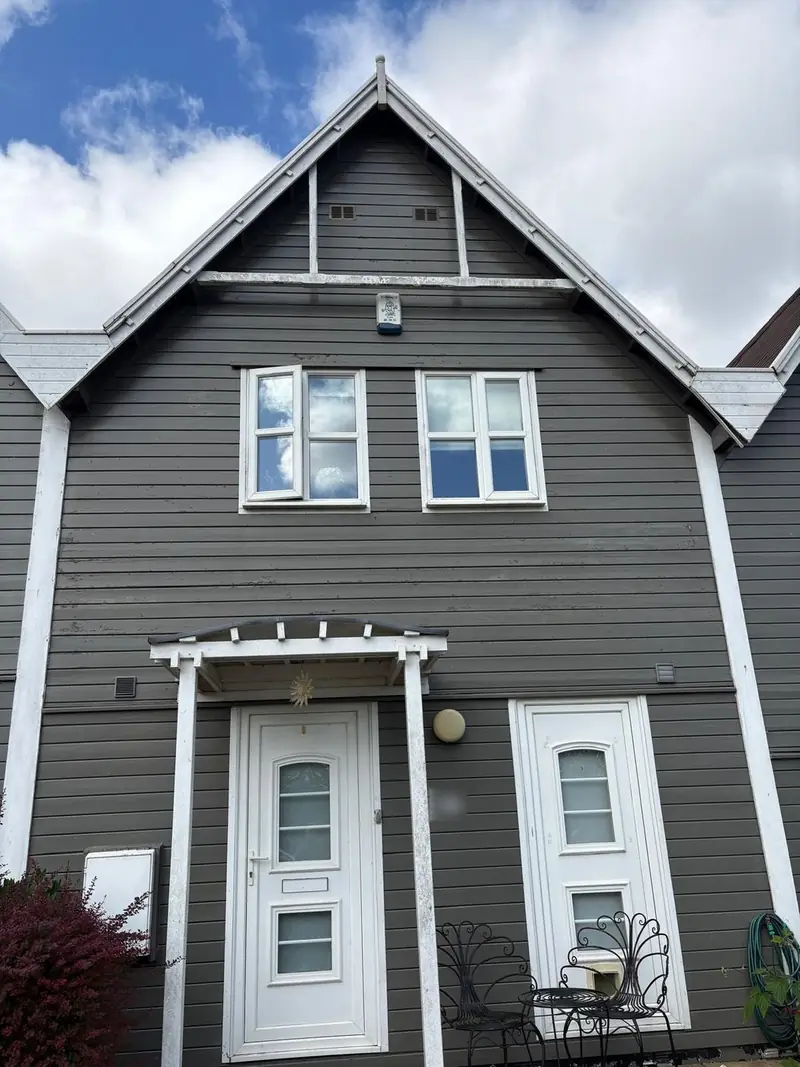
DH Painter & Decorator paints render and masonry in Briar Hill, NN4, after first working out what the wall is. Briar Hill House's squared stone needs breathable, lime-compatible treatment; the estate houses are cavity masonry or timber frame, and their outer face is checked on site before any coating is chosen.
Squared rubble and ashlar: the two old farmhouses
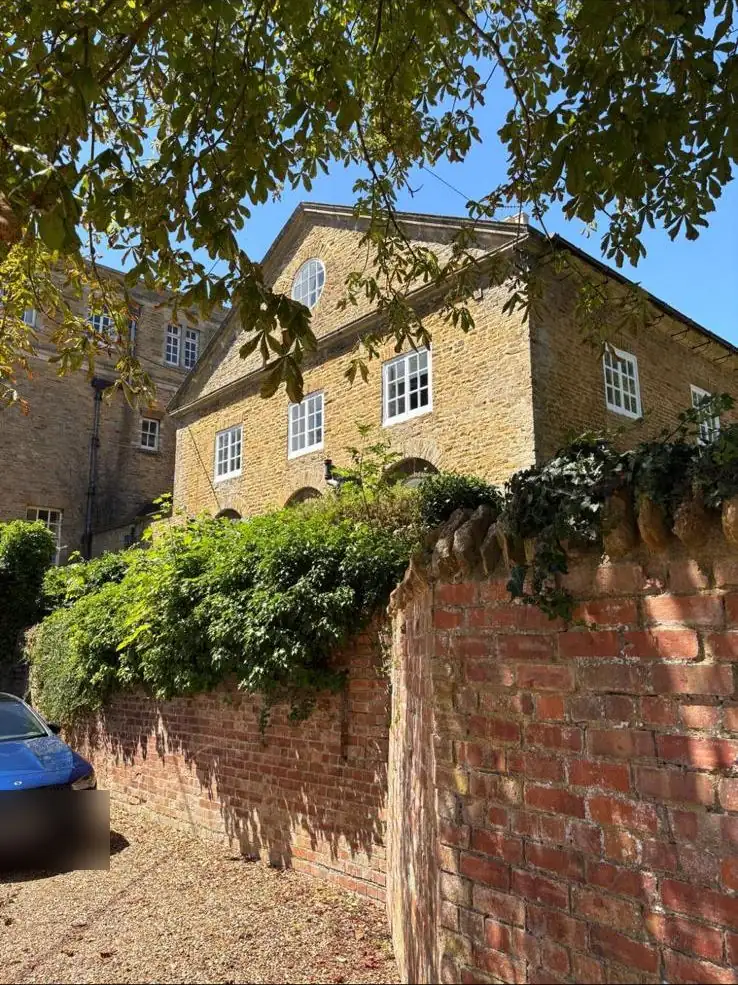
The oldest walls in Briar Hill belong to Briar Hill House, the early 19th-century farmhouse whose land became the estate. Its list entry describes squared stone rubble under a hipped Welsh slate roof with wide eaves, and the building has been listed at Grade II since January 1976. Just over the boundary, on the Camp Hill side in West Hunsbury parish, Hunsbury Hill Farmhouse is an 18th-century Grade II building of dressed stone (ashlar) with later wings. It falls inside the census area but is not a Briar Hill house, and we mention it only because the same rules apply.
Old stone walls like these were built to let moisture in and out freely. Seal them with an acrylic masonry paint and that moisture gets trapped behind the coating, where frost and salts can blow the face off the stone and the paint peels in sheets. If stone of this kind is coated at all, it needs a breathable finish such as limewash or a mineral paint compatible with lime, over lime-based repairs. Cement repointing and plastic coatings do the same damage. Because both buildings are listed, a new coating where there was none, or a change of material, is likely to need listed building consent.
| Fact | Detail | Source |
|---|---|---|
| Wall types in EPC sample | 93 cavity, 22 timber frame, 1 system built (124 certificates) | EPC register |
| Briar Hill House walls | Squared stone rubble; hipped Welsh slate roof | British Listed Buildings |
| Hunsbury Hill Farmhouse (Camp Hill side) | Grade II, 18th century, ashlar | British Listed Buildings |
| Conservation areas over the housing | None | planning.data.gov.uk |
| Listed buildings in Briar Hill | One (Briar Hill House) | planning.data.gov.uk |
| Type | Share |
|---|---|
| Detached | 21.2% |
| Semi-detached | 32.2% |
| Terraced | 32.9% |
| Flat or maisonette | 13.7% |
Source: Census 2021 (ONS), accommodation type (TS044) tables via Nomis. The figures are for the census area that best fits Briar Hill, so its edges are not exactly Briar Hill’s.
What is behind the outer face of an estate house?
For the 1,900 or so other homes, the first question is what the wall is made of. A sample of 124 energy certificates across the three census areas recorded 93 cavity-wall homes, 22 timber-frame homes and one system-built home. Certificates describe the structure, not the outside surface, so brick, boarding, tile-hanging or render panels are confirmed on the visit.
| Wall type | Where in Briar Hill | What we check | Coating approach |
|---|---|---|---|
| Cavity masonry | All 38 sampled homes around Hunsbarrow Road and Floribunda Drive; most of the rest | Whether the face is bare brick, painted brick or render; cracks; damp at low level | Bare brick usually left bare; painted or rendered faces get a breathable masonry paint |
| Timber frame | Most sampled homes around Arrow Head Road and Axe Head Road; some on Southwood Hill, Thorn Hill and The Briars | Whether panels are an outer skin of brick, render on board, or cladding; ventilation gaps | Nothing that traps moisture or blocks weep holes and vents |
| System built | One example, at Stoneyhurst | Construction type and condition of the panels and joints | Specified only once the system is identified |
| Squared stone or ashlar | Briar Hill House (and Hunsbury Hill Farmhouse over the boundary) | Listing, previous coatings, mortar type | Limewash or lime-compatible mineral paint, with consent where needed |
The timber-frame point matters most. On those houses a rendered or boarded panel is an outer layer over a ventilated frame, and the frame relies on that gap to dry out. Coatings or sealants that close up vents or weep holes can hold water against the timber.
Should the brick be painted at all?
On most estate houses, no. Sound facing brick in good condition does its job unpainted, and once brick has been painted it has to be repainted every several years for the rest of the building’s life. Masonry paint makes sense where a wall is already painted or rendered, where the face has been patched in mismatched brick, or where render needs protecting. On a terrace or semi, one painted house in an unpainted row also changes the look of the whole row, so it is worth talking through with neighbours first. With no conservation area over the housing, it is your decision.
Green north walls and the right masonry paint
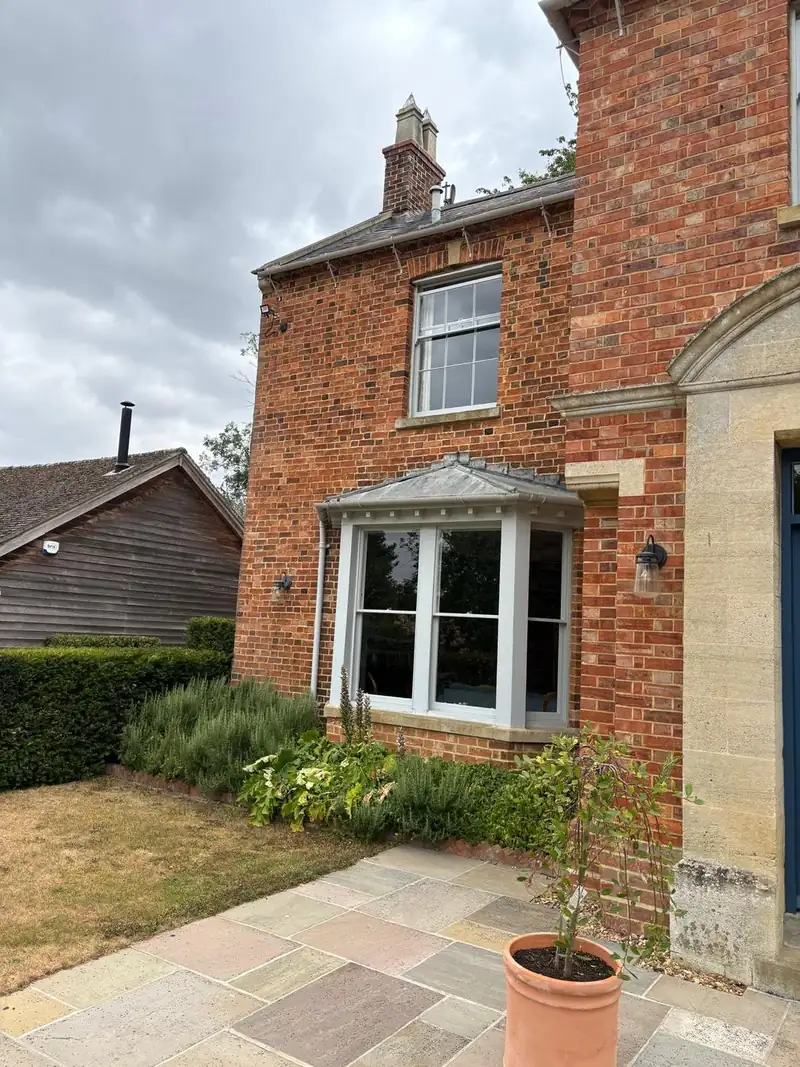
Briar Hill’s north-facing slope means rendered and painted walls on the downhill side stay damp and grow algae. Before painting, that is washed off and treated with a biocide, loose and chalky coatings are brushed back and stabilised, and cracks are cut out and filled. Then a breathable masonry paint goes on in a settled dry spell. Our guide to painting render and roughcast goes through the products, the main render and masonry painting page explains our method, and the Briar Hill area page has the wall-type figures for each part of the estate.
Sources
- Energy certificates search, NN4 8 postcodes, GOV.UK EPC register (accessed 2026-11-16)
- Briar Hill House, Northampton (list entry 1189964), British Listed Buildings (accessed 2026-11-16)
- Hunsbury Hill Farmhouse, Northampton (list entry 1052393), British Listed Buildings (accessed 2026-11-16)
- Listed buildings intersecting the Briar Hill census area, planning.data.gov.uk (accessed 2026-11-16)
- Conservation areas intersecting the Briar Hill census area, planning.data.gov.uk (accessed 2026-11-16)
- Briar Hill, Northamptonshire, Wikipedia (accessed 2026-11-16)
Last updated .


