
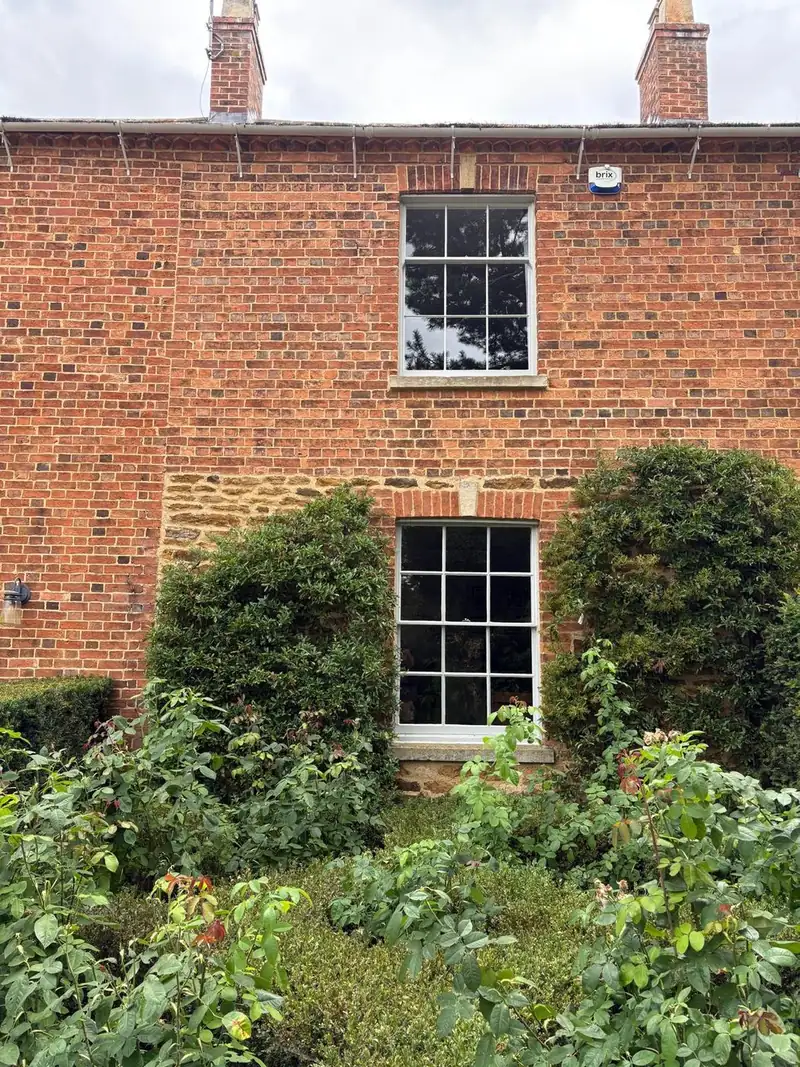
We paint the outsides of houses, bungalows and flats in Briar Hill, NN4, south-west of Northampton town centre. With nearly every home double glazed, the job is usually doors, fascias, porches and boarding, and the north-facing elevations decide when it can be done.
Why the north side of a Briar Hill house is the hard side
Briar Hill was built on the gentle north-facing slope of the Nene Valley, at around 81 metres, with the river roughly 700 metres away down the hill. The council’s appraisal of the canal below the estate describes open, low land to the north: the Nene floodplain, Sixfields Reservoir and Storton’s Pits Nature Reserve. From the back of many houses you are looking out over that ground, and for exterior paint two things follow.
First, elevations that face north get little or no direct sun for much of the year, so they stay damp long after rain stops and dry slowly even on a fair day. Second, they take the weather coming across open land with nothing in between to break it. Green algae on north-facing fascias, door frames and timber boarding is common in this setting, and it has to be washed off and treated before anything is painted. Paint put on timber that looks dry but is still damp underneath is the usual reason exterior gloss blisters or flakes within a couple of years.
Mist and dew rather than floodwater
The Environment Agency’s Flood Zones 2 and 3 cover the low floodplain at the northern edge of the census area, but the housing sits on the rising ground above it, and none of 65 residential postcodes checked against the flood map falls inside either zone. Flooding is not the issue for paintwork here. Moisture in the air is. On still spring and autumn mornings, mist sits over the low ground and dew settles heavily on the shaded side of the houses. That shortens the working day: a shaded wall cannot be started until the dew has gone, and paint has to go on early enough to skin over before the damp returns in the evening.
| Type | Share |
|---|---|
| Detached | 21.2% |
| Semi-detached | 32.2% |
| Terraced | 32.9% |
| Flat or maisonette | 13.7% |
Source: Census 2021 (ONS), accommodation type (TS044) tables via Nomis. The figures are for the census area that best fits Briar Hill, so its edges are not exactly Briar Hill’s.
A paint calendar for both sides of the house
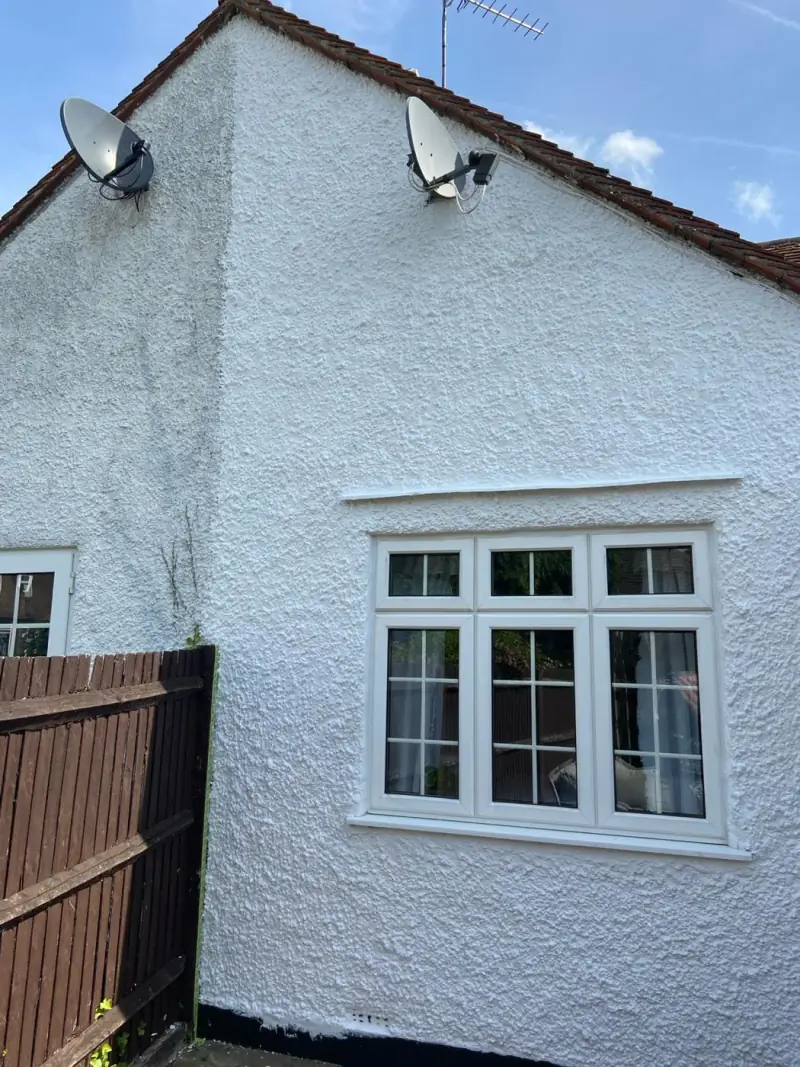
Because the two sides of a house here behave so differently, we often plan them separately. Roughly, the year works out like this:
| Time of year | South-facing and side elevations | North-facing elevations |
|---|---|---|
| May and June | A good window once nights stay mild | Usually the right time: long days, drier air |
| July and August | Avoid direct midday sun; follow the shade round | Reliable drying, the easiest months for this side |
| September | Workable in settled spells | Late starts for dew, early finishes, watch the forecast |
| October to April | Only short, dry, mild spells | Not advised: surfaces rarely dry out fully |
Our guide to timing exterior painting in the UK covers the temperature and humidity limits in more detail.
| Fact | Detail | Source |
|---|---|---|
| Height and aspect | About 81 m, on the north-facing slope of the Nene Valley | Wikipedia |
| Open land to the north | Nene floodplain, Sixfields Reservoir and Storton’s Pits Nature Reserve | westnorthants.moderngov.co.uk |
| Flood Zones 2 and 3 | Cover the floodplain at the northern edge, not the 65 housing postcodes checked | planning.data.gov.uk |
| Double glazing | 112 of 124 sampled energy certificates record fully double glazed | EPC register |
What is left to paint on a double-glazed estate?
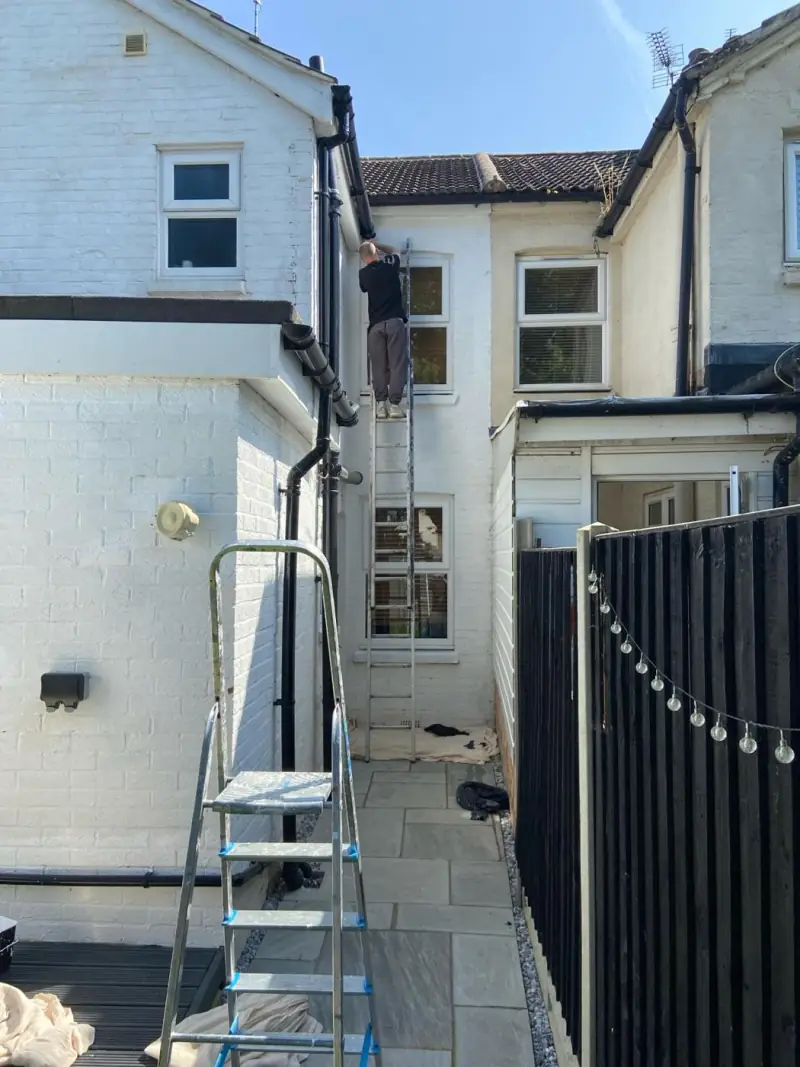
A sample of 124 energy certificates across the three census areas found 112 homes recorded as fully double glazed. Most homes are recorded as fully double glazed, so windows are rarely the painting job. It is about the timber and masonry that remain:
- fascias, soffits and bargeboards, usually the most weathered timber on the house (see fascia and soffit painting in Briar Hill);
- front and back doors that are still timber, their frames, and any timber porch;
- boarding or cladding panels on some estate houses, which the certificates do not describe, so Dean checks what each house actually has;
- brick or render that has already been painted, which needs a breathable masonry paint.
Getting to those surfaces takes some planning on this estate. Briar Hill was laid out with footpaths kept apart from the roads, which is why Hunsbarrow Road has a pedestrian underpass, and some front doors face footpaths rather than a road. Terraces such as those on Southwood Hill park in a shared court instead of on a drive. So ladders, steps, dust sheets and paint are often carried in from the nearest parking, and the path outside a front door has to stay passable for neighbours while we work. On low-rise flats, upper-floor fascias and stairwell windows may need a mobile tower rather than ladders.
The one exterior in the district that needs a different approach is Briar Hill House, the early 19th-century former farmhouse listed at Grade II. Its squared stone, sash windows and Doric door surround need breathable, like-for-like materials, and changes may need listed building consent. Everything we do outside is on our main exterior painting page, and the Briar Hill area page shows which streets were built when.
Sources
- Briar Hill, Northamptonshire, Wikipedia (accessed 2026-11-16)
- Briar Hill Neolithic causewayed enclosure, Northamptonshire Historic Environment Record (accessed 2026-11-16)
- Grand Union Canal Northampton Arm conservation area appraisal (draft, Appendix B4), West Northamptonshire Council (accessed 2026-11-16)
- Flood risk zones intersecting the Briar Hill census area, planning.data.gov.uk (accessed 2026-11-16)
- Energy certificates search, NN4 8 postcodes, GOV.UK EPC register (accessed 2026-11-16)
- Briar Hill House, Northampton (list entry 1189964), British Listed Buildings (accessed 2026-11-16)
Last updated .


