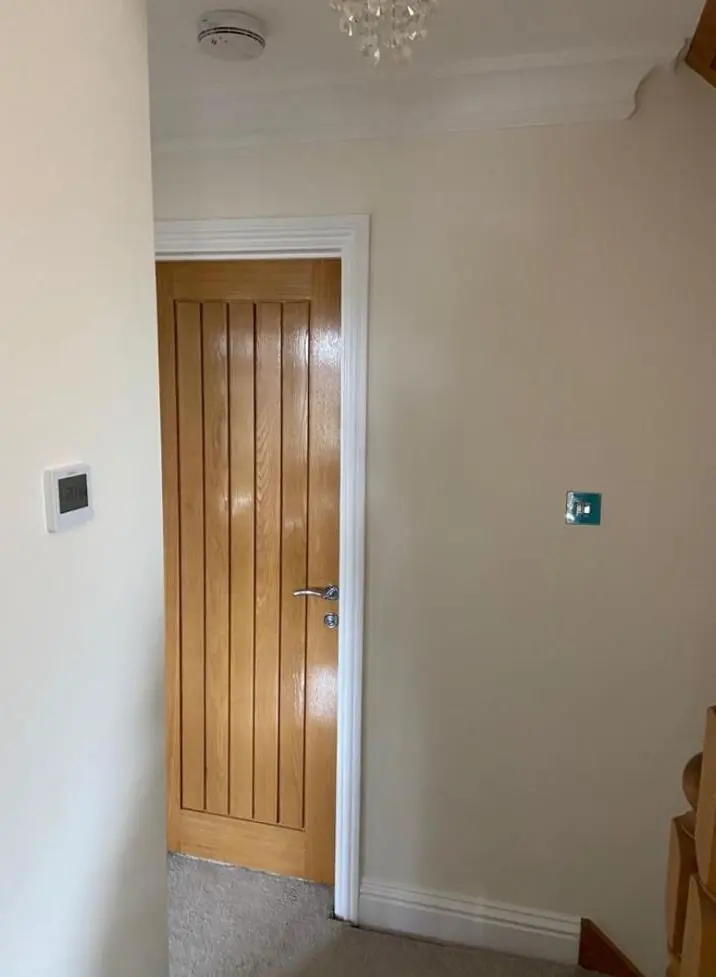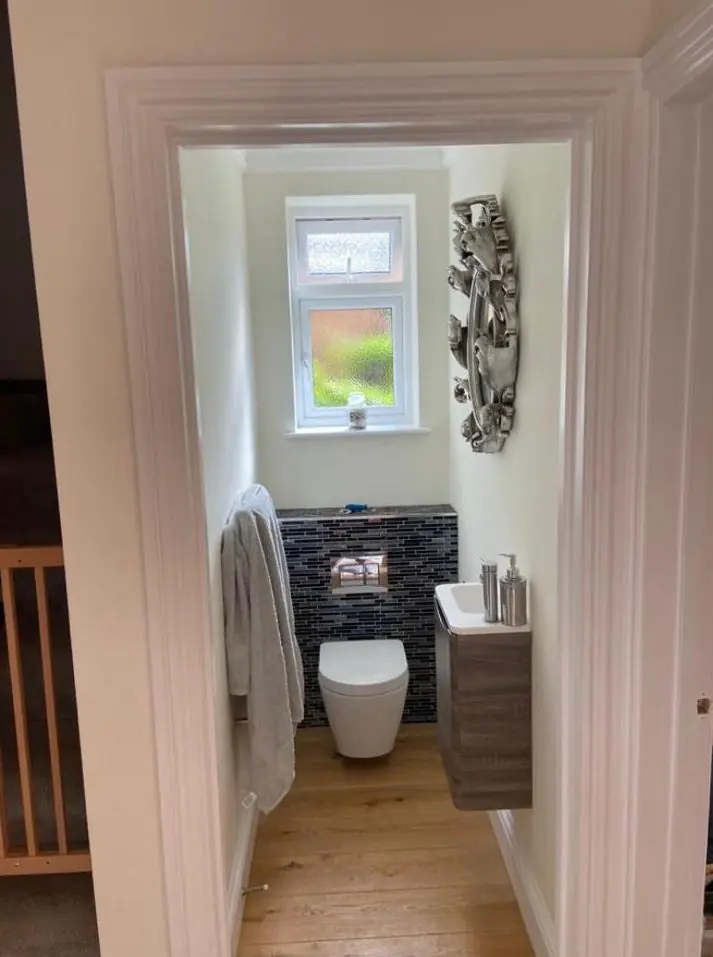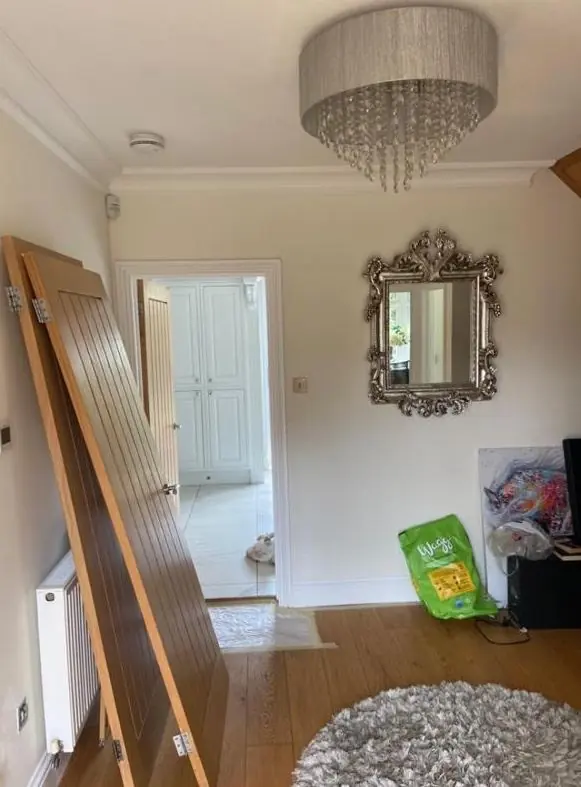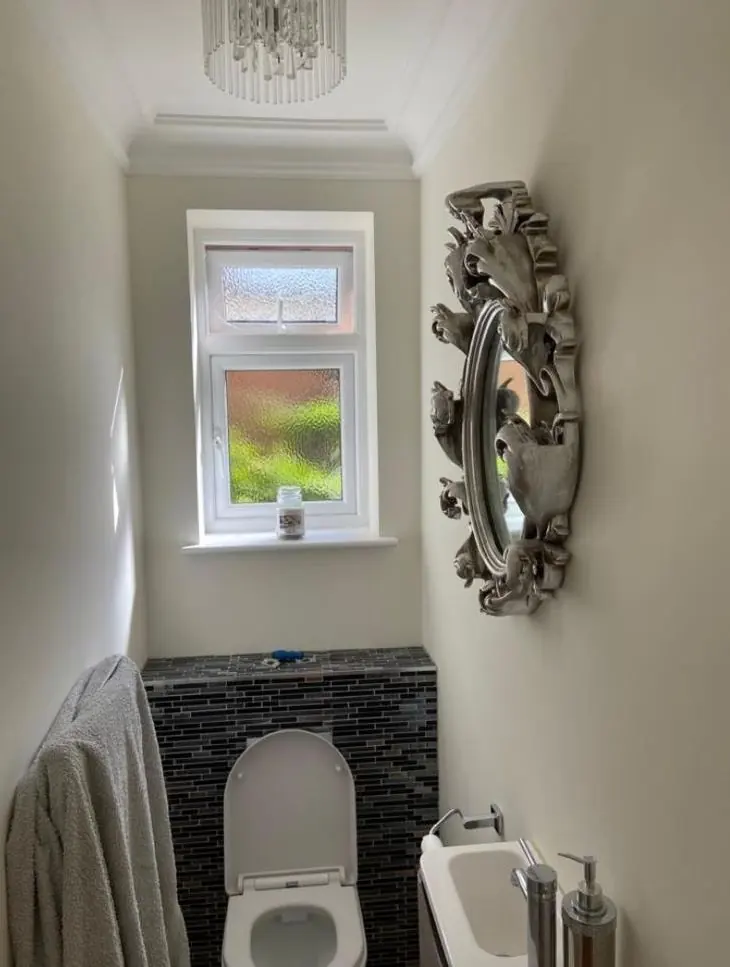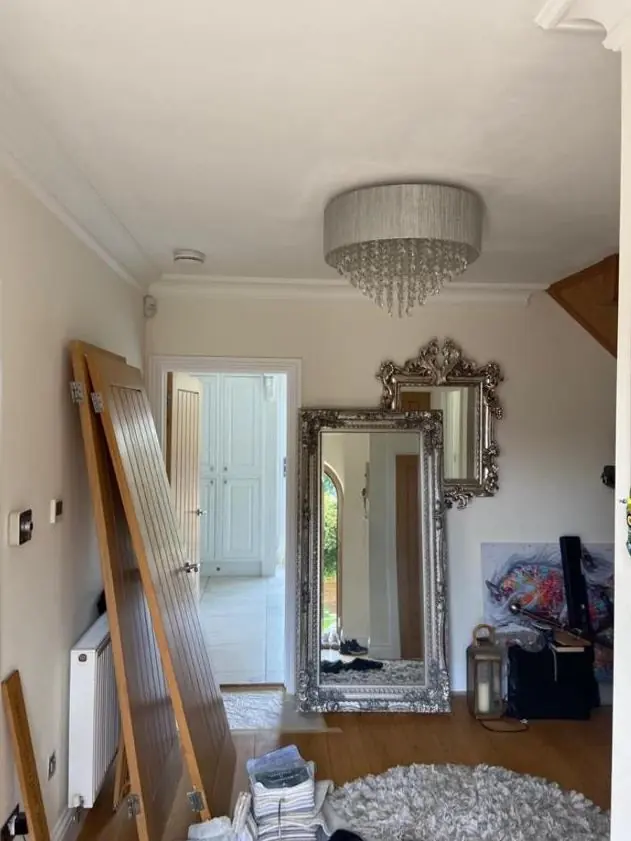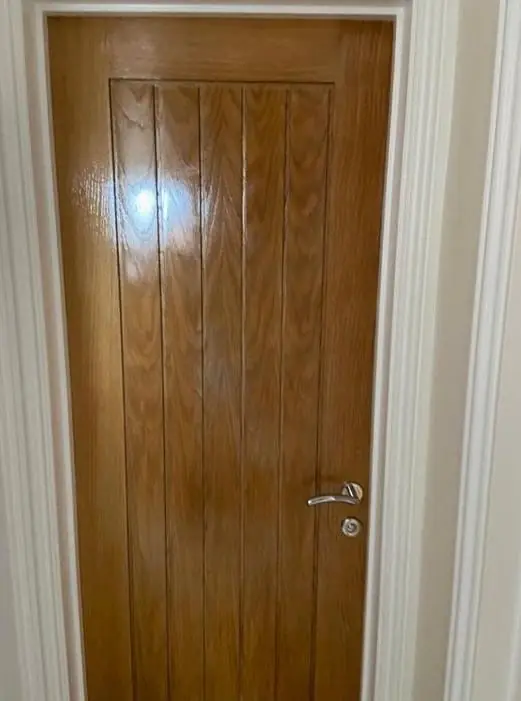
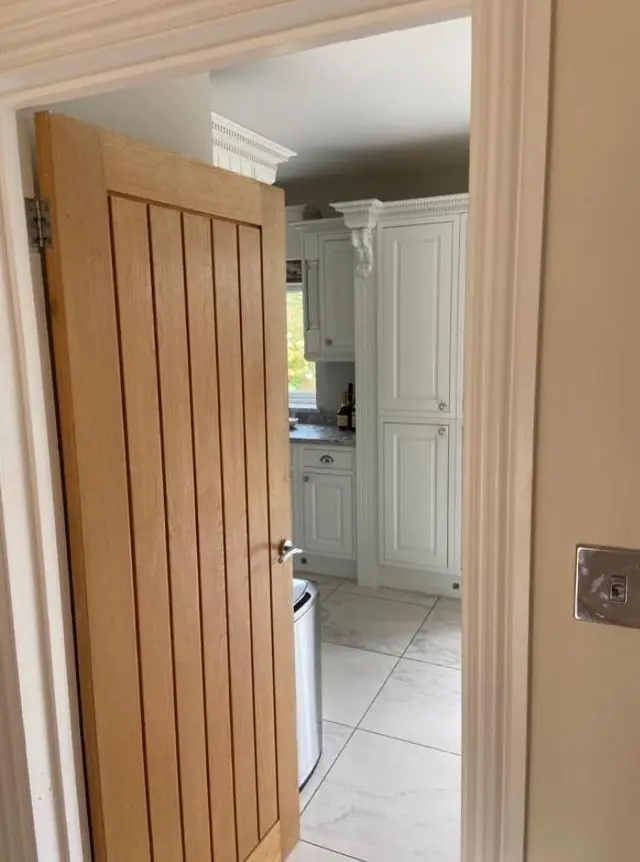
DH Painter & Decorator paints doors, skirtings, frames and window joinery in Walgrave, a village about 7.9 miles north-east of Northampton. Dean handles everything from old plank doors and leaded casements on the listed lias houses along Holcot Road to the flush and moulded doors on the post-war and 1970s streets.
Timber is the painted face of an old Walgrave house
Most of the historic buildings in Walgrave show bare coursed lias, the local limestone, sometimes banded with ashlar. That stone is not meant to be coated, and on a listed building painting it for the first time would need consent. So when the outside of a house such as Cross Farmhouse or The Old House on Holcot Road looks tired, the answer is nearly always the joinery: the door, the casements and the timber around them.
Those casements are the tricky part. Both houses are recorded with leaded-light timber casements, and leaded glazing leaves very little timber to work on. We cut in by hand along each bar of the frame, keep paint off the lead cames, and use a microporous joinery paint that lets the wood breathe. A thick, film-forming gloss looks crisp for a year or two, then traps moisture in old timber and starts to lift.
The wood lintels above the windows
At Cross Farmhouse and The Old House the listing records windows under wood lintels set into the lias, and other stone cottages in the village may share the detail. People rarely notice them, yet a lintel is end grain and face grain sitting in a damp stone wall, and it is the timber most likely to have gone soft. Whenever we paint windows on one of these houses we probe the lintel, dig out any decayed wood, fill or flag it for a joiner if the damage is structural, and seal it before the top coats. Leaving it bare while the casement below gets a fresh finish only stores up trouble.
The Hollies on Holcot Road is the odd one out: a brick house with sash windows and glazing bars. Sashes need different handling. The staff beads and parting beads are freed, paint is kept off the running faces, and the sashes are left able to slide once the paint has hardened rather than stuck at half height.
Old paint layers inside the older houses
Inside the stone farmhouses and village houses you tend to find plank and panelled doors and deep skirtings with many decades of paint on them. Some of the lower layers on joinery this old are likely to contain lead. We treat that as the starting assumption: no dry sanding or burning off, wet abrading instead, dust kept down and sheets cleared carefully at the end of each day. If a door has so much build-up that the mouldings have filled in, we will tell you whether stripping is worth it or whether a careful rub down and recoat is the more sensible route.
The shoe-workers’ rows built for Walkers Works, such as New Row and Crispin Cottages, have smaller rooms and simpler joinery, but the skirtings in old cottages seldom sit true to the floor. We follow the line of the room rather than forcing a straight caulk line that only highlights how much the floor dips.
Original doors on the 20th-century streets
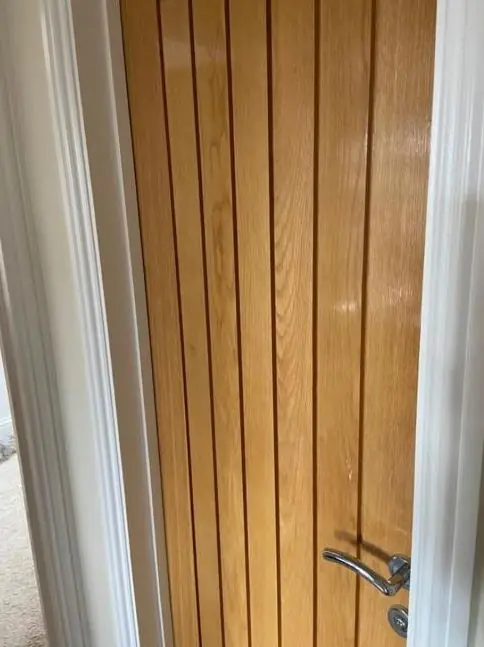
Walgrave grew in stages, and the woodwork changes with each one.
| Street and era | Joinery you are likely to find | How we would approach it |
|---|---|---|
| Jubilee Drive, around 1929 | Original panelled doors, picture rails, older softwood skirtings | Key and spot-prime existing oil gloss; keep the profiles crisp |
| Townsend Road and Springfield Road, around 1949 | Post-war doors and frames, often overpainted many times | Cut back runs and drips before recoating |
| Amber Drive and the 1970s to 1990s closes | Flush or moulded doors, softwood or MDF skirtings | Water-based satin or eggshell that stays white |
An inter-war door with its original panels is worth keeping. Rather than replace it, we fill splits, ease a sticking edge and repaint, which keeps the character of the house. The general preparation steps, from knotting to keying old gloss, are on our main door and skirting painting page.
Because Walgrave has no trade counter, we arrive with the primers, joinery paints and filler the job needs and plan the work as full days, so doors go back on their hinges and rooms are usable each evening. For the other work we cover in the village, see the Walgrave area page.
Last updated by Dean, DH Painter & Decorator.