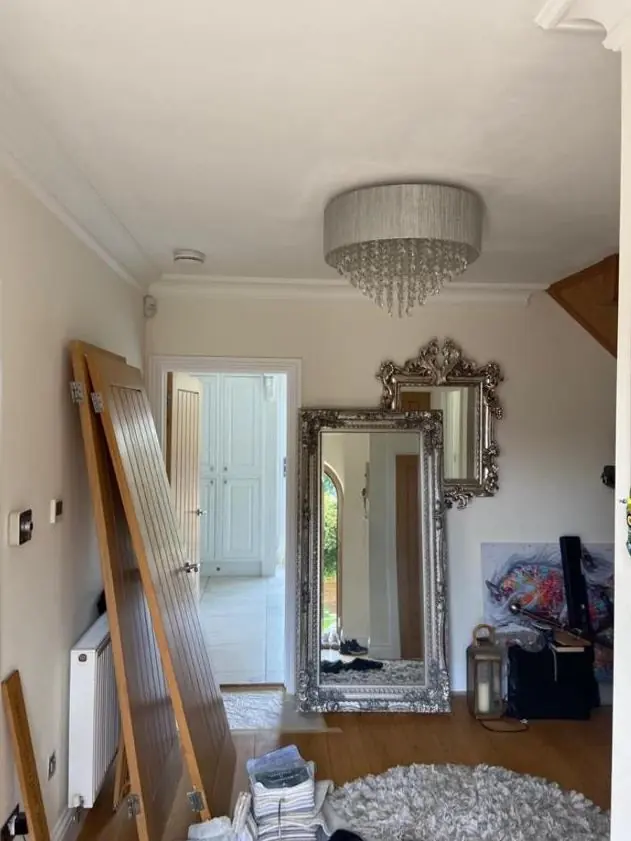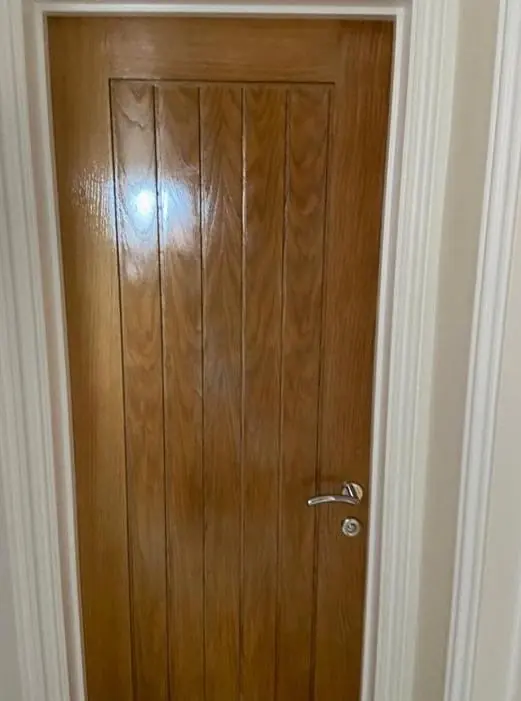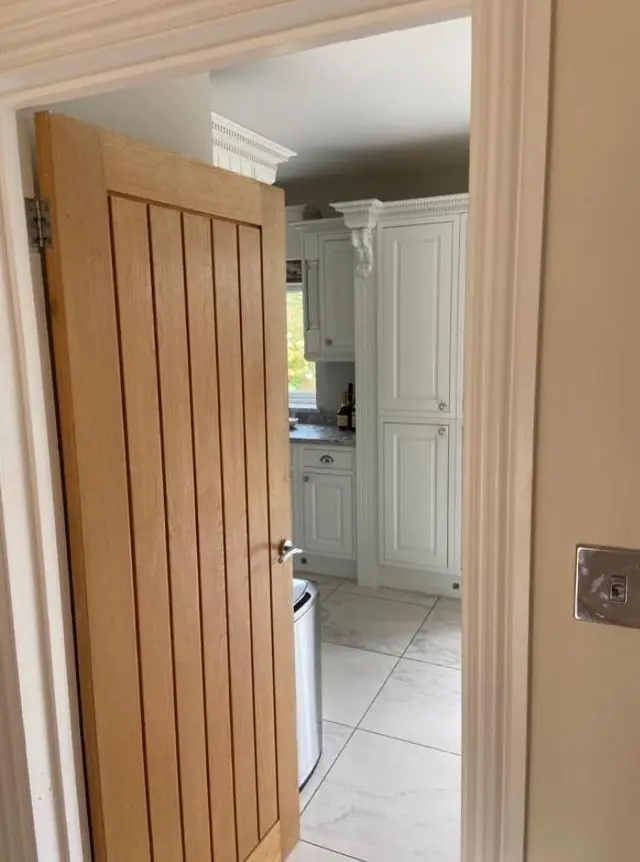
Dean paints doors, skirtings, architraves, casements and sash windows in Spratton, a conservation village on the A5199 about 6.5 miles north of Northampton town centre. Much of the woodwork in the older houses carries generations of paint, so the job is mostly preparation done with care for the old fabric.
Ledged doors and deep skirtings in the old cottages
The oldest houses in Spratton date from the late 17th and early 18th centuries. Datestones on Yew Tree Lane read 1684 and 1725, and Olde House Farm was built of ironstone in 1691. Joinery from that era, and from the repairs made in the centuries since, looks nothing like a modern door set. Expect plank and ledged doors with uneven boards, deep moulded skirtings fitted to walls that are not straight, and timber casements sitting inside stone mullions. Each has its own problem. Boards shrink and open up at the joints, skirtings stand off a wavy lime-plastered wall, and casements are hemmed in by stone that must not get paint on it.
Our main door, skirting and woodwork painting page sets out the standard preparation sequence. On these houses the order is the same, but every step takes longer because the surfaces are older and far less even.
Many layers of paint, and when to take them off
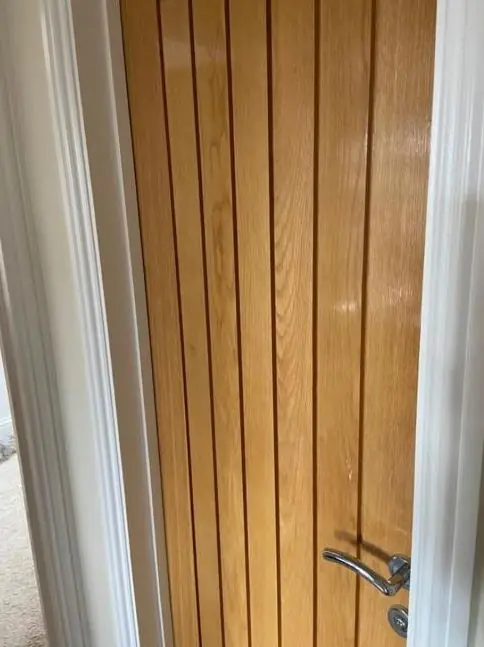
A door that has been painted every decade or so for a century or more loses the detail of its mouldings and starts to bind in its frame. Not all of it needs stripping. We usually take back only the edges that stick, any flaking patches and the mouldings that have filled up, and leave sound paint in place. Old layers in houses of this age can contain lead. We test before abrading, work wet, and bag the waste rather than spreading dust through the house.
Thatch survives on several of these houses: 2 Yew Tree Lane and The Fir Tree at number 10, Home Farmhouse on Smith Street, and the ironstone cottage at 7 Manor Road. We do not use heat guns or any flame tool on or near a thatched building, inside or out. Old paint comes off with scrapers, chemical strippers or wet abrasives instead. That is slower, and we allow for it in the time we quote.
Casements in stone surrounds and Georgian sashes
Stone-mullioned windows with timber casements, and some with leaded lights, need tight cutting-in so no paint lands on the stone or the lead cames. Loose putty and soft timber at the bottom rails are made good first. Paint over a failing putty line simply fails with it.
The later Georgian houses are different again. Spratton House on Church Road, built in 1793, and Northbank House on Manor Road have timber sashes with glazing bars. Every bar has to be cut in on both faces, and the paint on the sash edges must stay thin enough for the window to keep running. We use paints made for sashes and leave the windows free to move as each coat dries.
- Plank doors: fill or leave open joints depending on how much the boards still move with the seasons
- Skirtings on uneven walls: flexible caulk only where the gap is small, scribing or a shadow line where it is not
- Casements: putty and timber repairs before primer
- Sashes: thin coats, staff and parting beads kept clean
Listed houses and what like-for-like means
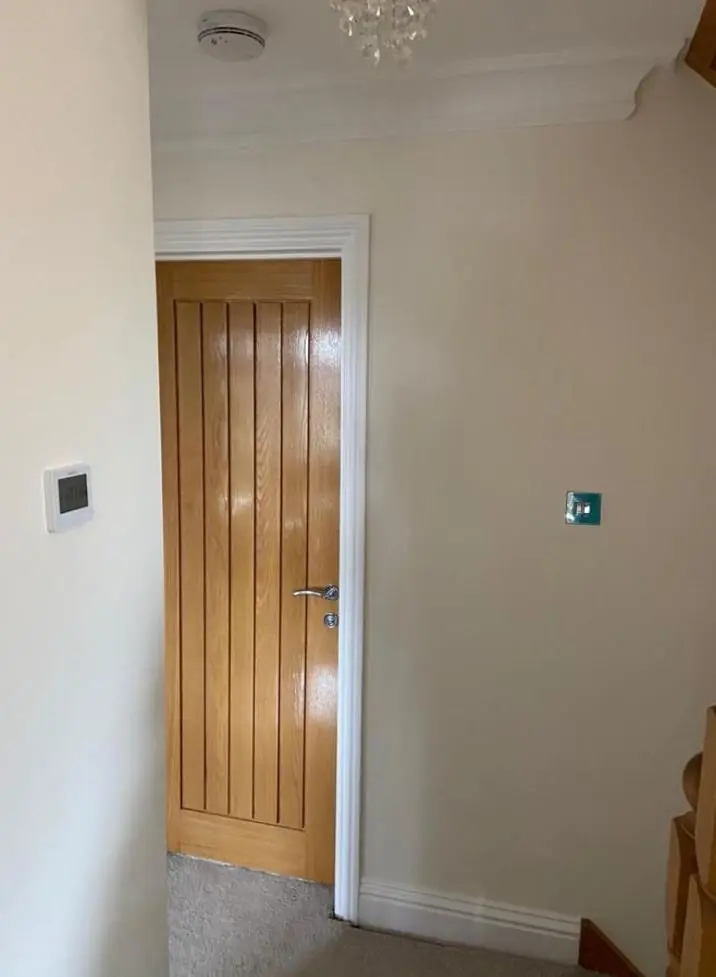
Spratton’s core is a conservation area, covered by an appraisal and management plan that West Northamptonshire Council adopted in 2021. A number of the houses are Grade II listed. Repainting joinery in the same type of paint and the same colour is normally treated as like-for-like redecoration. Changing the colour of a front door or windows on a listed house, or removing original joinery, may need listed building consent. Owners should confirm that with the council before we start. If it helps, we can write down the paint type and colour we plan to use on, say, a 1725 front door at The Fir Tree, so you can describe the job to the council accurately.
For other jobs on these houses, see the Spratton area page.
Last updated by Dean, DH Painter & Decorator.