We hang wallpaper and lining paper in Far Cotton homes, about 0.9 miles south of Northampton town centre across the Nene. On the older terraced streets that often means lining uneven walls first, and in riverside homes it means confirming the walls are dry before any paste goes on.
Older terrace walls rarely take paper straight
The terraced streets that grew after the railway reached Far Cotton in 1845, such as Clinton Road, Thirlestane Road and Southampton Road, have walls that have been patched, papered, stripped and repapered for generations. Once the old layers come off, you usually find a mix of original plaster, newer skim repairs and blown areas that sound hollow when tapped.
A good wallpaper shows every hollow and ridge underneath it, particularly a plain or lightly textured design under a side light. So on these walls Dean usually:
- strips back to a sound surface and cuts out any plaster that has come away from the wall
- fills and sands the patches flush
- hangs lining paper horizontally, so its joints never line up with the finish paper’s joints
It adds a day to the job, but it is the difference between paper that looks flat and paper that shows the wall’s history.
Paste and damp walls don’t mix
Far Cotton sits on low ground on the south bank of the Nene, and the community council lists parts of it as at risk of flooding. The Good Friday flood in 1998 forced residents out of their homes, and a leak or a burst pipe can leave the same problem on a smaller scale.
Wallpaper paste is water-based, and most modern papers, vinyls especially, slow down how fast a wall can breathe. Paper hung onto a wall that is still holding moisture can lose adhesion, open at the seams or show mould spots behind it within months. Before papering any ground-floor room that has been wet or replastered, Dean takes moisture readings. If they are too high, we paint the room with a breathable emulsion for now and come back to paper it later. That is better than hanging an expensive roll twice.
Which rooms suit which paper here
| Property | What tends to work |
|---|---|
| Terraces off St Leonard’s Road | Lining paper as standard. Small-repeat or textured papers hide the remaining irregularities, and one papered chimney breast keeps a small front room from feeling closed in. |
| Semi-detached houses on Towcester Road and Gloucester Avenue | The larger rooms suit full-room papers or a bold large-pattern feature wall. Wide pattern repeats need more rolls, so we check the order before you buy. |
| 2000s homes at Riverside Wharf and Cotton End | Usually flat plasterboard, so non-woven paste-the-wall papers go up cleanly. We seal the board first so the paper can be stripped later without tearing the facing. |
Stairwells and narrow halls
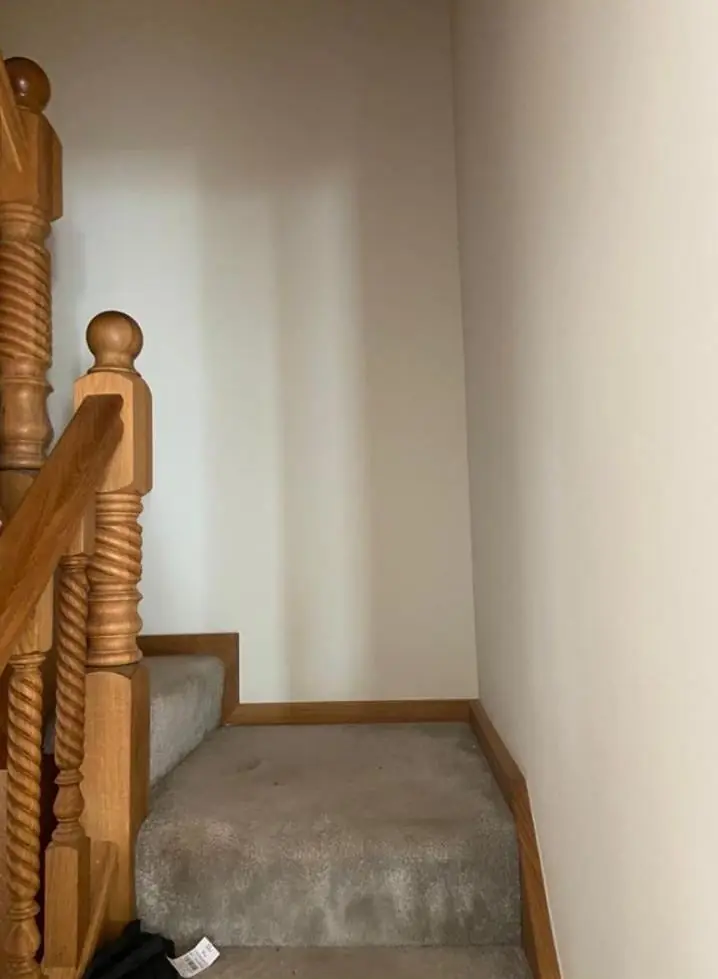
Papering a stairwell in an older Far Cotton terrace is one of the harder jobs in the area. The hall is narrow, the staircase is steep, and the longest drops run from the landing ceiling down to the bottom stair. Dean sets up hop-ups and boards to suit the stairs, cuts the long drops in the room below, and carries them up already pasted and folded.
The stairwell drop is usually the longest in the house, so we measure the full height at the deepest point before working out how many rolls you need. With a patterned paper, we add a spare roll so the match can be kept going round the turn of the landing without running short partway through.
In flats such as Cotton Court, we take the rolls and the paste table up through the shared stairwell, so the communal walls are sheeted where we pass. The full process, from stripping to the final trim, is on our main wallpaper hanging page. For other services in the neighbourhood, see the Far Cotton area page.
Last updated by Dean, DH Painter & Decorator.