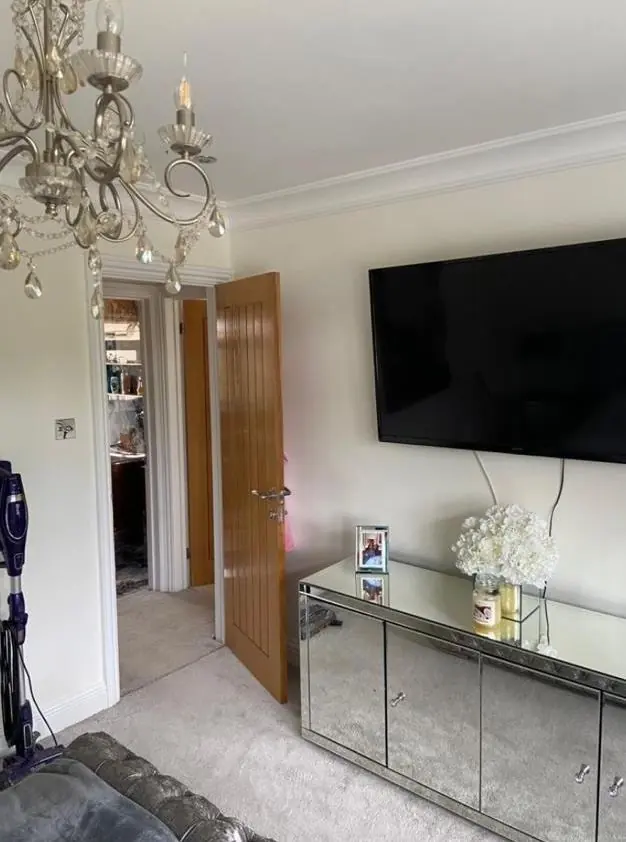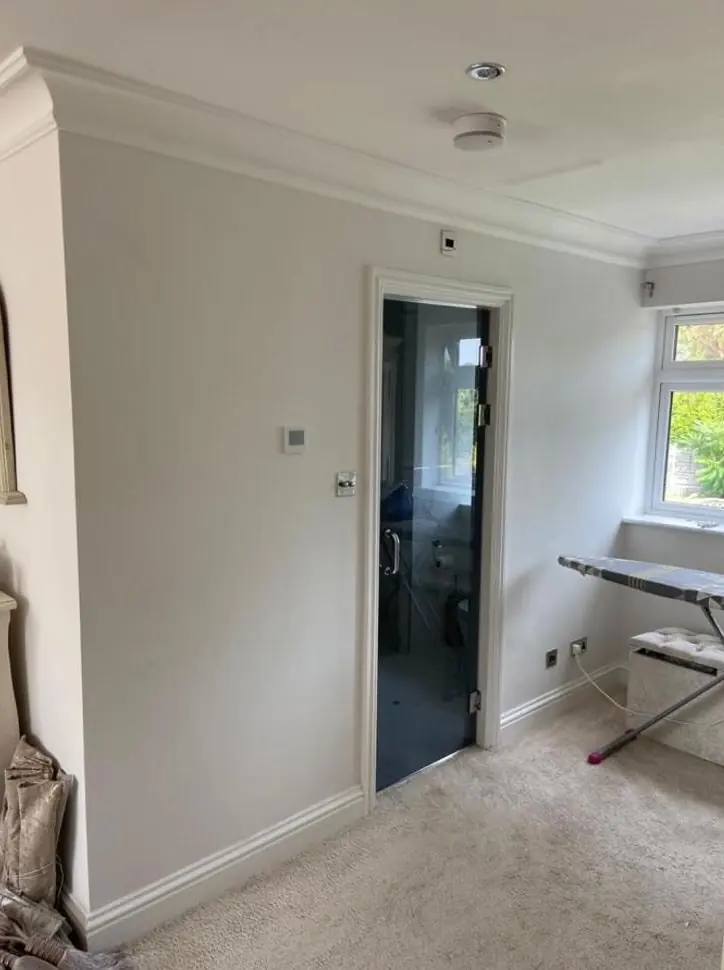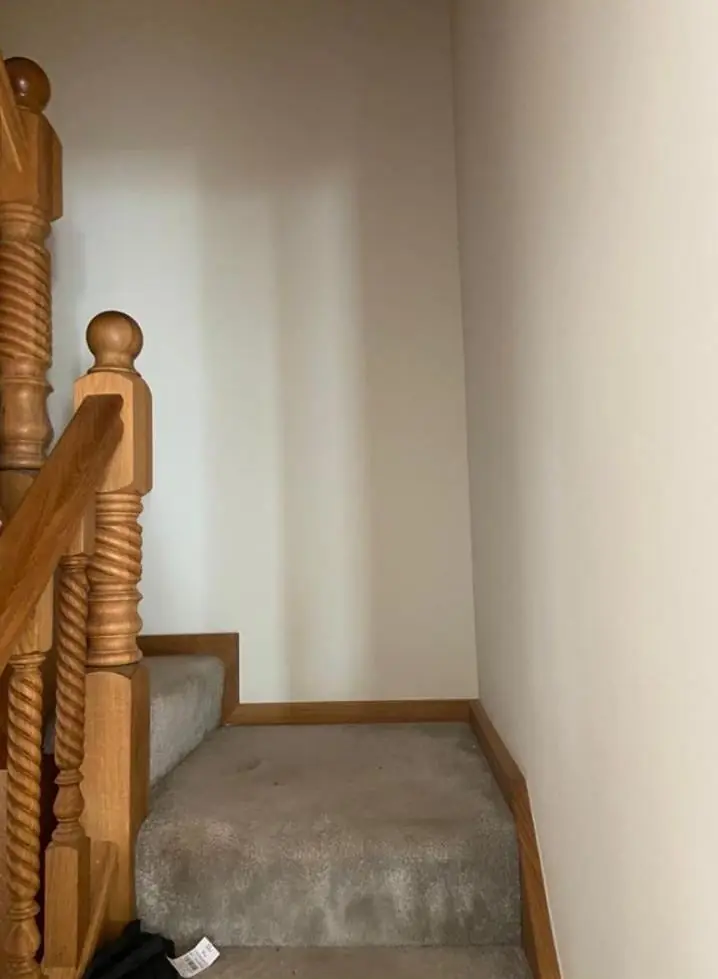
Dean gives colour and finish advice in Collingtree, the stone village 3 miles south of the centre of Northampton, as part of a decorating job. In the High Street conservation area that means joinery and door colours that suit the stone and the listed houses; at Collingtree Park it means planning large open rooms.
Joinery colours against limestone and ironstone
Almost everything that gives Collingtree’s High Street its look is unpainted: limestone walls banded with ironstone, continuous limestone garden walls, Welsh slate and, at the Wooden Walls of Old England, thatch. Paint in the conservation area is mostly limited to windows, doors, dormers and bargeboards, so those few painted surfaces carry a lot of weight. The advice Dean gives here starts with the stone.
Limestone reads as a warm cream-grey and ironstone as a rusty brown. Colours that sit well with both tend to be:
- Off-whites and warm stone shades for sashes and casements. Brilliant white can look stark and slightly blue against the stone.
- Deep greens, muted blues, dark greys and earthy reds for front doors.
- Black or a very dark green for gates, bracketry and other ironwork.
We paint a sample on the actual door or frame and look at it in daylight next to the wall, because a colour card gives no sense of how a shade reads against rubble stone.
Listed houses and the question of consent
The village conservation area, which dates from the late 1970s, holds ten listed buildings. They include Holmwood at 43 High Street, the Rectory with its six-panel door and fanlight, 44 High Street, Rose Cottage with its octagonal-bar casements, and 4 and 6 Barn Corner. On a listed building, changing an exterior colour, or swapping a traditional paint for a modern one, may need listed building consent. We found no Article 4 direction for the area in the sources we checked, but for a listed house the sensible course is to speak to West Northamptonshire Council before settling on a new colour.
Finish matters as much as shade. Old timber on these houses often carries oil or linseed paint, and a high-gloss modern coating can look wrong on a 17th-century casement. A soft sheen with a brushed finish usually looks more at home.
Choosing for rooms inside the old houses
Thick stone walls mean deep window reveals and small openings, so cottage rooms take in less light than their windows suggest. Pale but warm shades help, and flat or chalky finishes on lime plaster soften the gentle unevenness of the walls instead of glinting off every ripple. Rooms facing Barn Corner’s mature trees, or the parkland around the church, can pick up a green cast from foliage in summer, which turns pale greys cool. A little warmth in the undertone corrects that.
Breathable paints for lime plaster come in a narrower range of colours than ordinary emulsions, so it helps to choose the product and the shade together rather than falling for a colour that only exists in vinyl.
More freedom at Collingtree Park
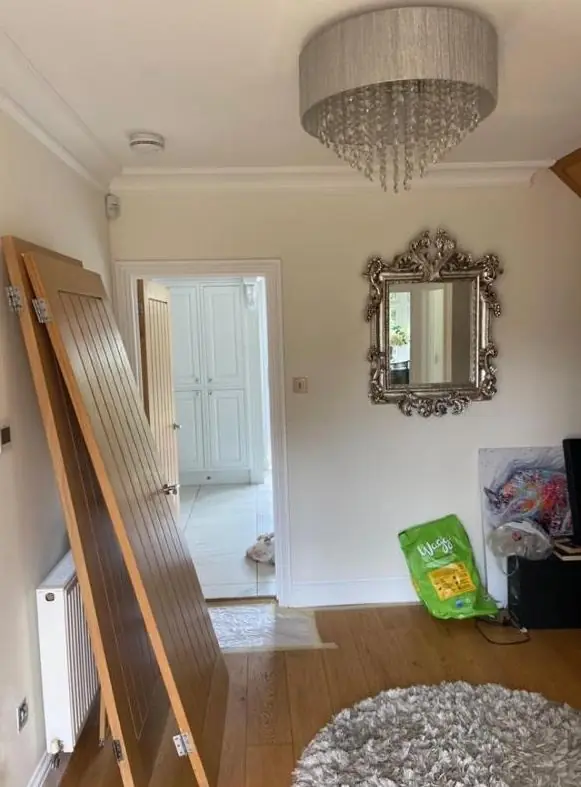
The golf-side houses at Collingtree Park are outside the conservation area and unlisted, so the choice is largely yours. The questions there are practical. In a big open-plan space, one colour across connected walls keeps things calm, while a second shade can mark out the kitchen from the seating area. Tall stairwells carry a deeper colour better than people expect, because the height dilutes it. Rooms looking out over the course take a lot of green reflected light too, which changes how neutrals read through the day.
Colour advice comes as part of a decorating job rather than as a separate design service. The general approach, including how light direction affects a shade, is on our colour and finish advice page, and there is more about the village on our Collingtree page. To arrange a visit, call Dean on 07539 779 036.
Last updated by Dean, DH Painter & Decorator.