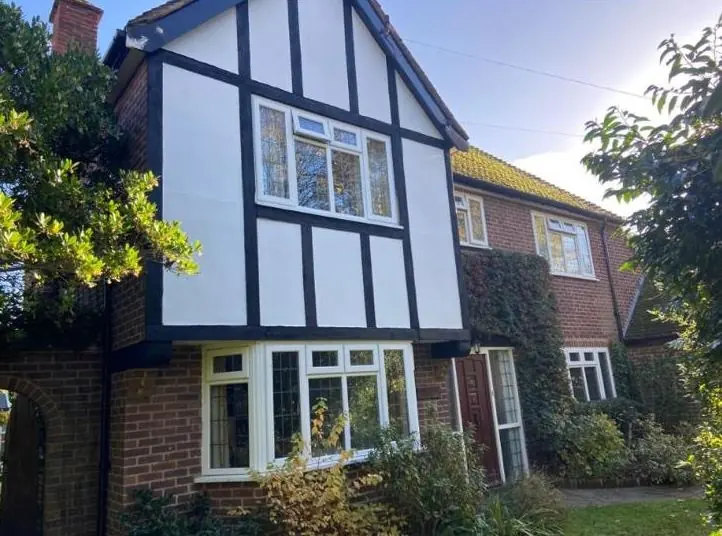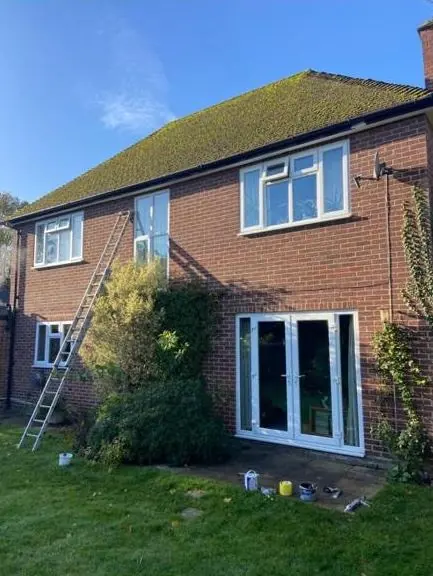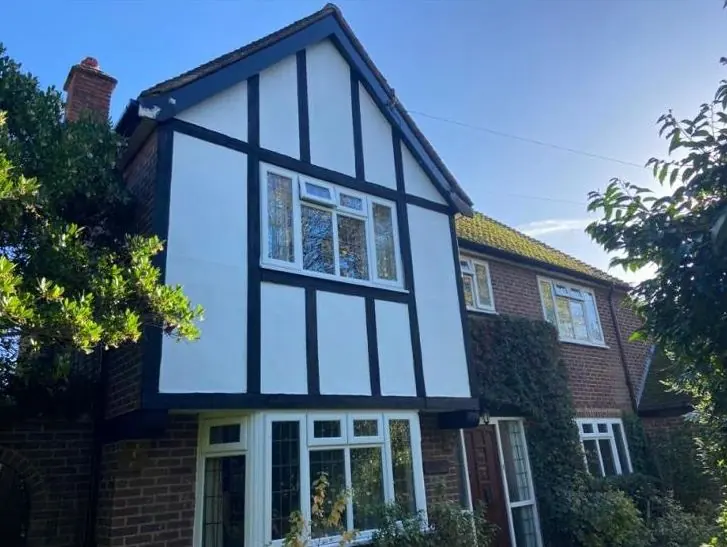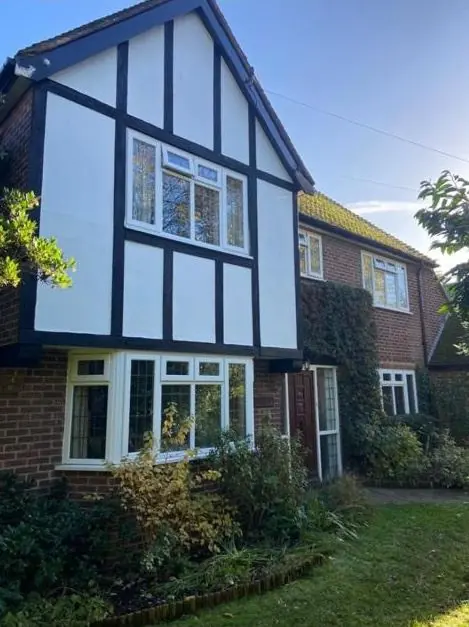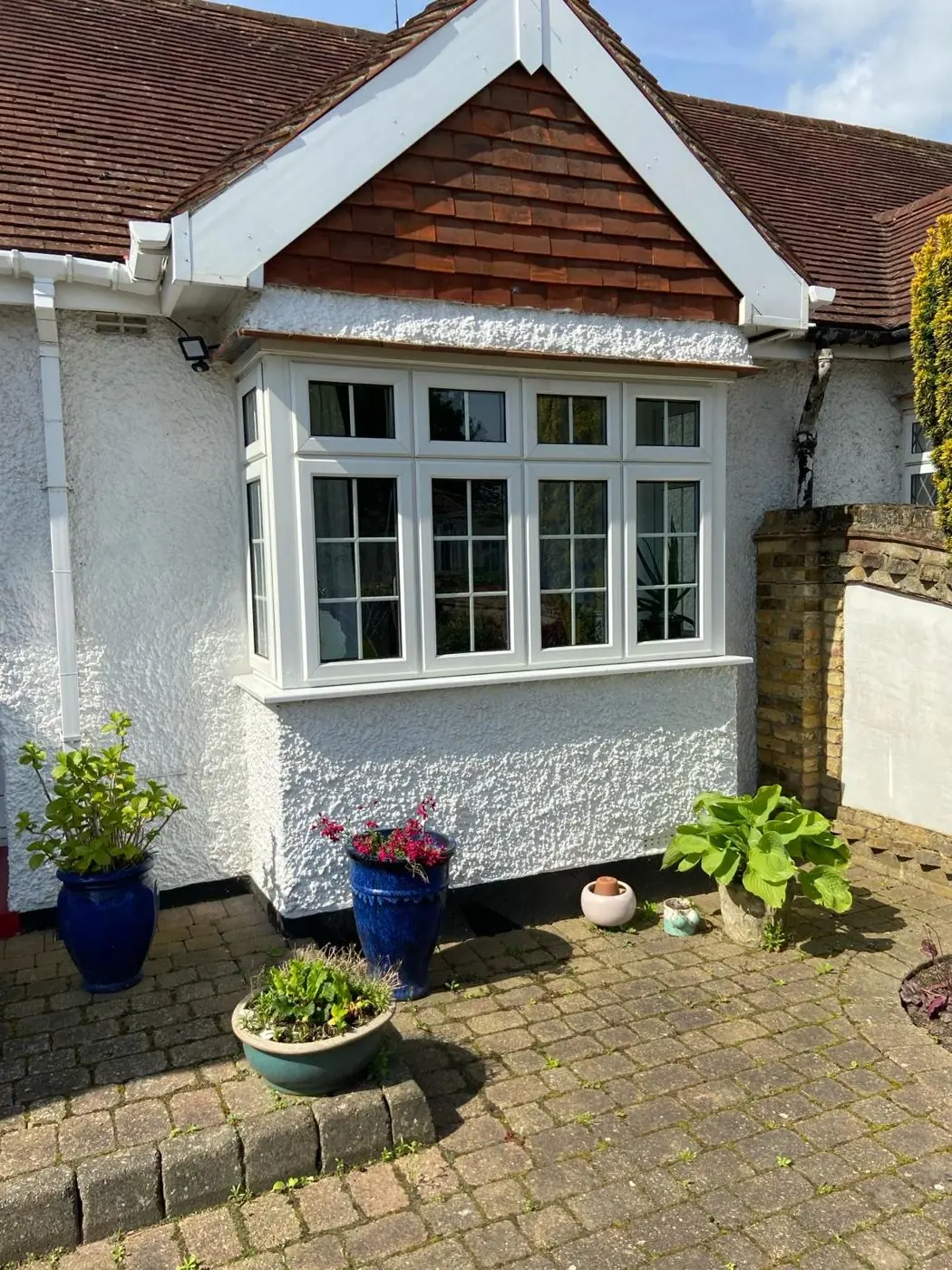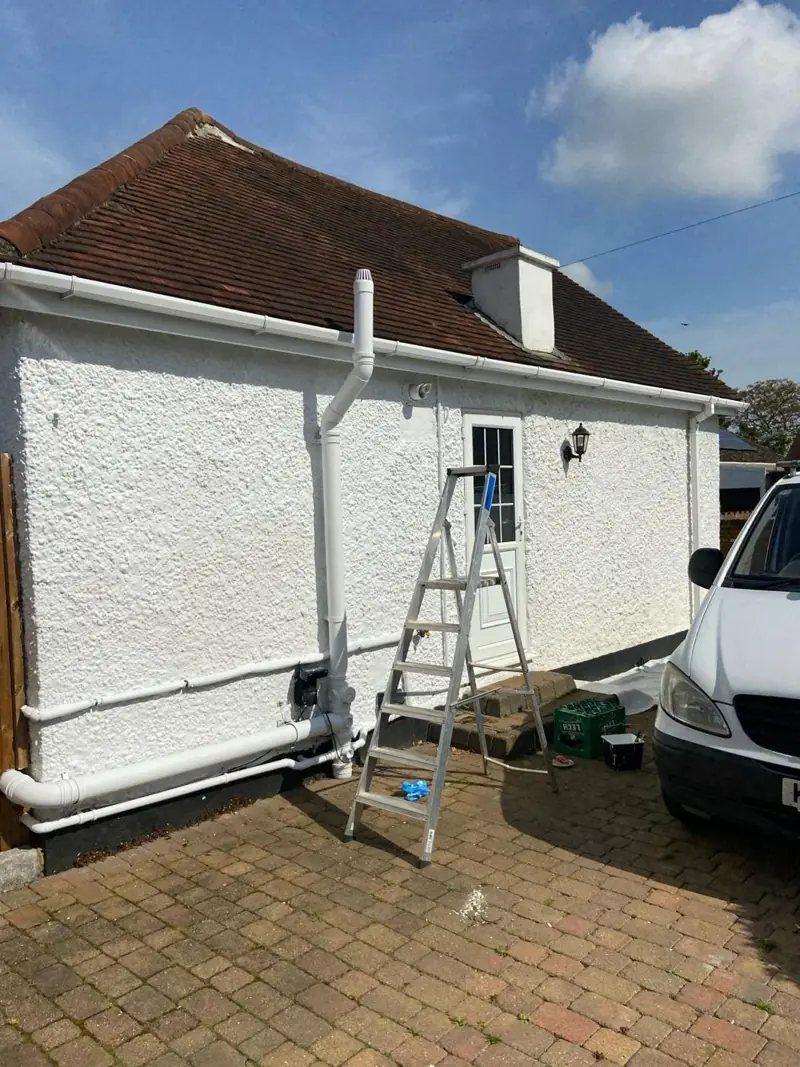
We paint render and previously painted masonry on houses in Collingtree, NN4, a parish 3 miles south of the town centre that borders M1 Junction 15. Much of the old village is bare limestone and ironstone, so Dean will tell you straight away when a wall there should be left alone or given a breathable finish instead.
Most of Collingtree’s walls should not be painted
Masonry painting in Collingtree starts with a short conversation about what not to paint. The historic village is local limestone, frequently striped with bands of ironstone, laid as coursed rubble, squared rubble or ashlar. Holmwood at 43 High Street has an ashlar front in alternating limestone and ironstone courses. The pub, The Rectory, 44 High Street and the cottages at 19, 21 and 23 High Street are rubble with stone dressings. None of that was built to carry paint.
Soft stone like this needs to breathe. Moisture rising and soaking in from the weather has to escape through the face of the wall, and an acrylic masonry paint stops that. Water then sits behind the film, frost works on it, and the surface of the stone can blow off along with the paint. On listed walls inside the conservation area, a coating would also very likely need listed building consent. So if your house is one of the pre-1875 stone buildings, our honest advice is usually to leave the walls as they are and spend the money on the joinery.
When a breathable finish is the right answer
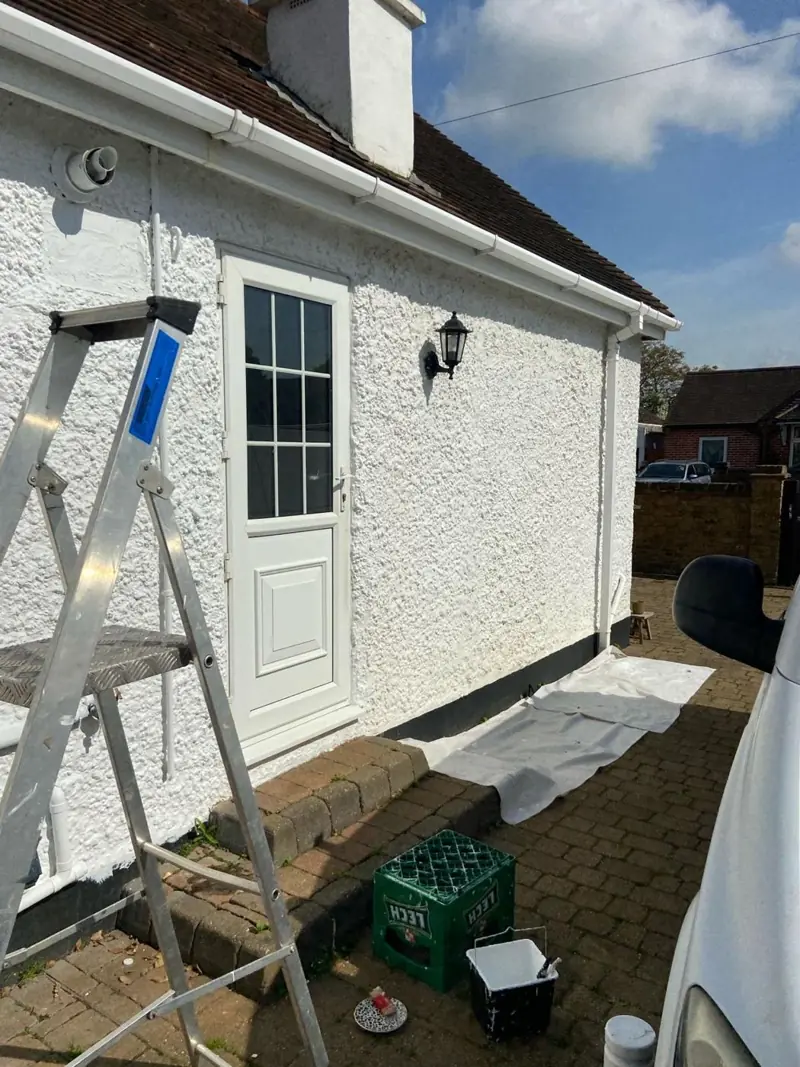
Sometimes stone or brick has already been painted, or a wall has patches that need protecting. In those cases the choice is between a mineral silicate paint and a traditional limewash, both of which let moisture pass. We do not put a modern acrylic over an old lime-based coat. The limestone garden walls that line the High Street fall under the same thinking: they are part of the conservation area’s character, and bare is normally right.
The Victorian outbuildings at Glebe Farm are described as neat brickwork. Good brick of that age should stay unpainted. Where Victorian brick somewhere in the parish has already been painted and is now flaking, we scrape back the loose material and recoat with a breathable masonry finish, never a sealing one.
Rendered houses that can take masonry paint
The later houses are where conventional masonry painting fits. The sources we rely on do not record what the late 20th-century houses or the larger Collingtree Park homes are built of, so we look at each one rather than assume. Where a house has rendered panels, a rendered gable or a rendered extension, a standard system works well:
| Wall | What we normally recommend |
|---|---|
| Bare limestone or ironstone, pre-1875 | Leave unpainted |
| Previously painted old stone | Breathable mineral paint or limewash |
| Victorian brick, unpainted | Leave unpainted |
| Modern sand and cement render | Two coats of breathable masonry paint |
Traffic film, trees and preparation
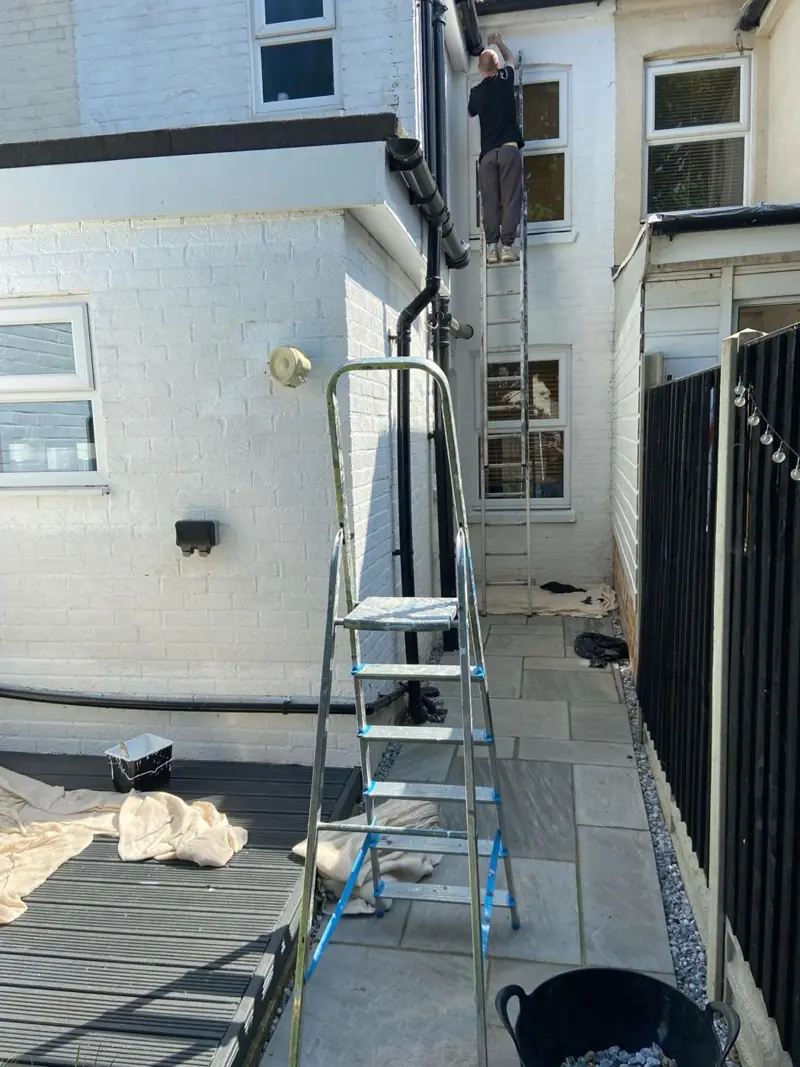
Two things about Collingtree’s setting affect preparation on rendered walls. Junction 15 of the M1 is close by on the south-west side and the A45 lies to the east, so exterior surfaces collect a grey traffic film that stops paint bonding unless it is washed off. And the golf course, the mature trees at Barn Corner and the parkland around the conservation area keep some elevations shaded and damp, which brings algae. We wash down, apply a fungicidal treatment and leave it to work, stabilise any chalky areas, and fill cracks before the first coat.
Our render and masonry painting page sets out the full process, and our guide to painting render and roughcast covers products in more depth. For everything else we do in the village, see the Collingtree page.
Last updated by Dean, DH Painter & Decorator.