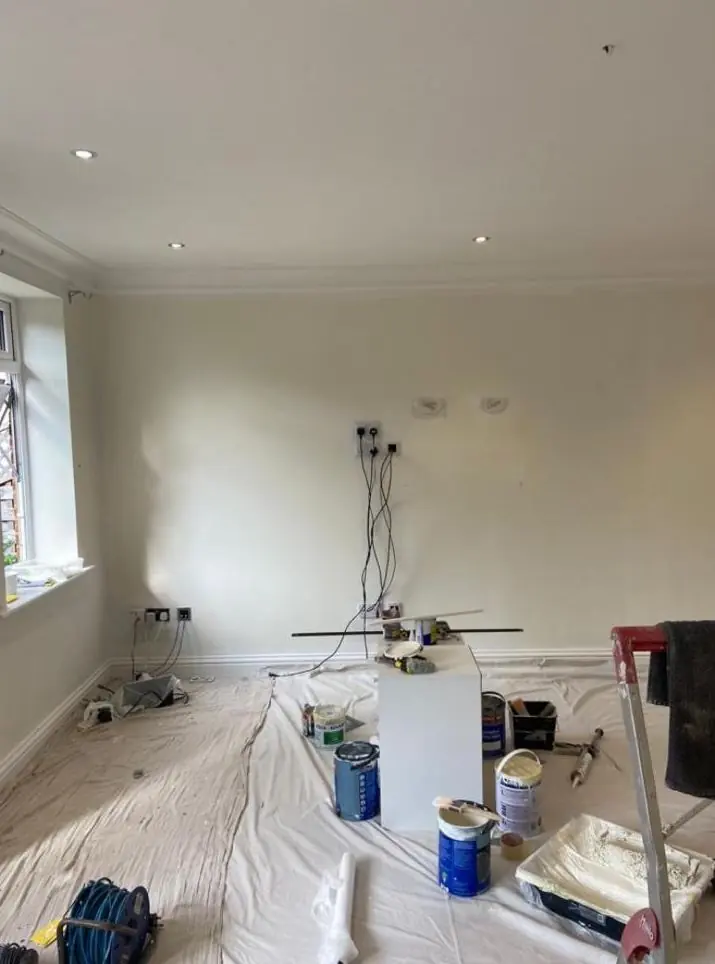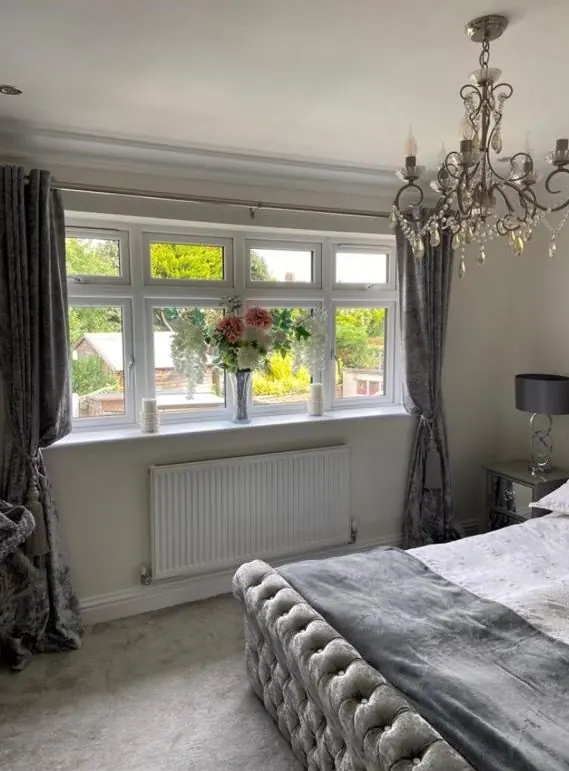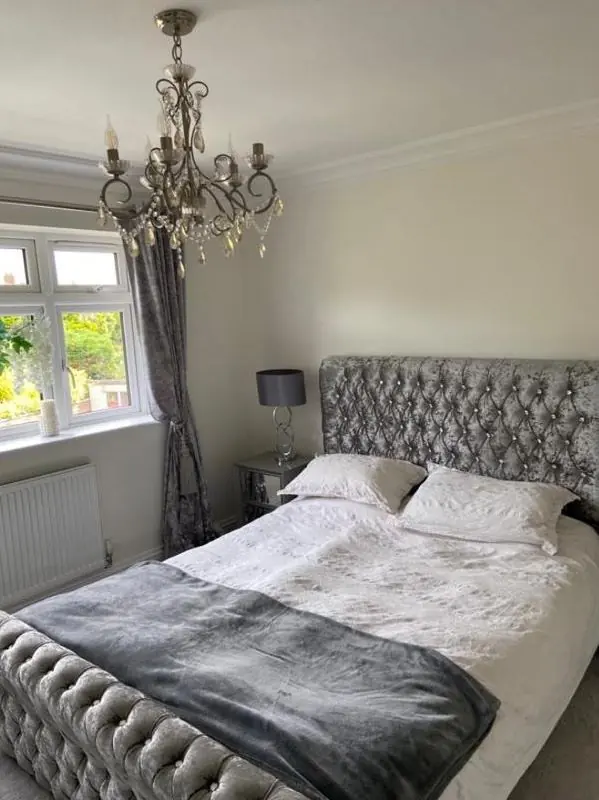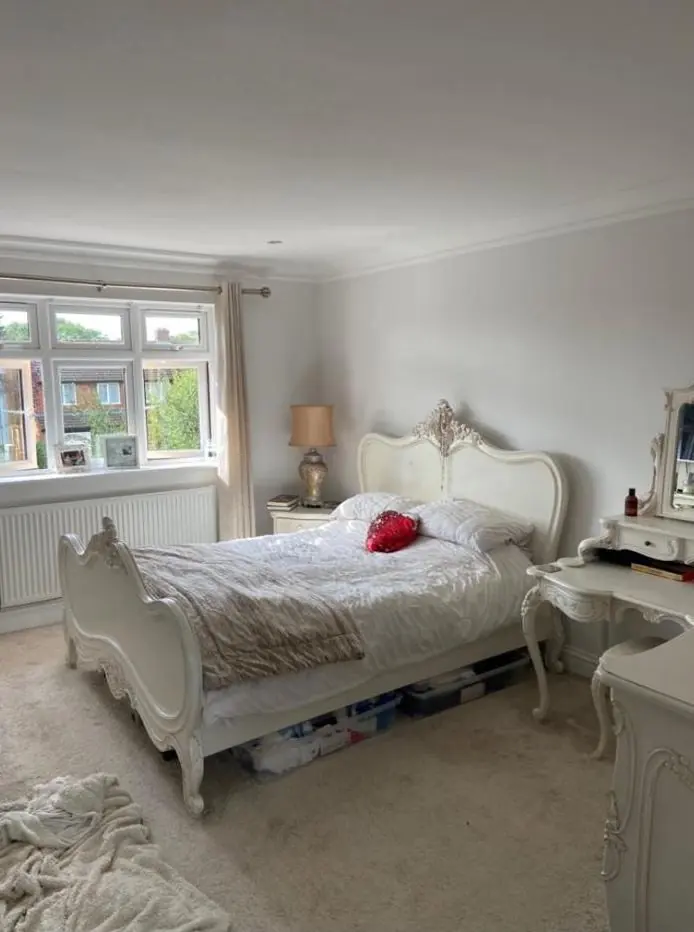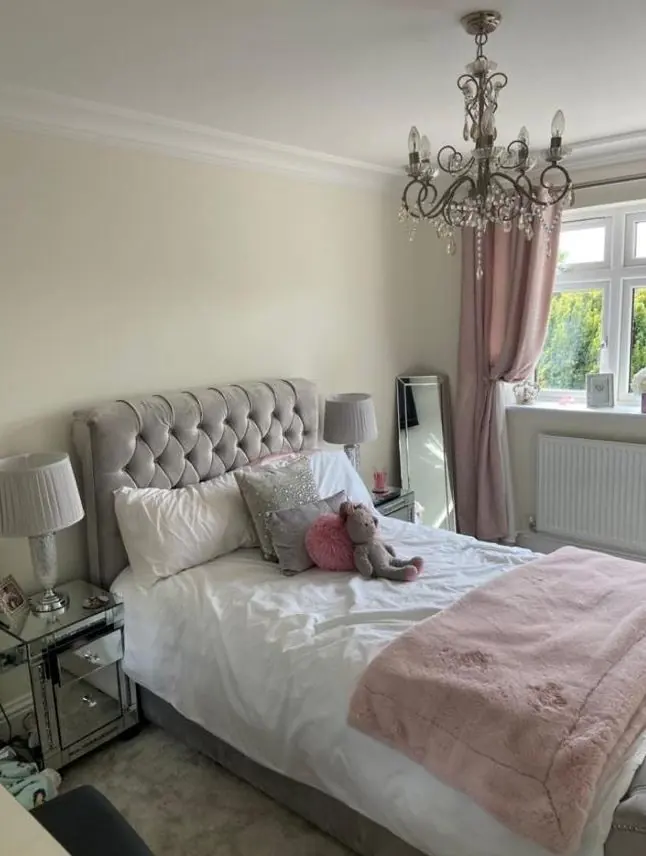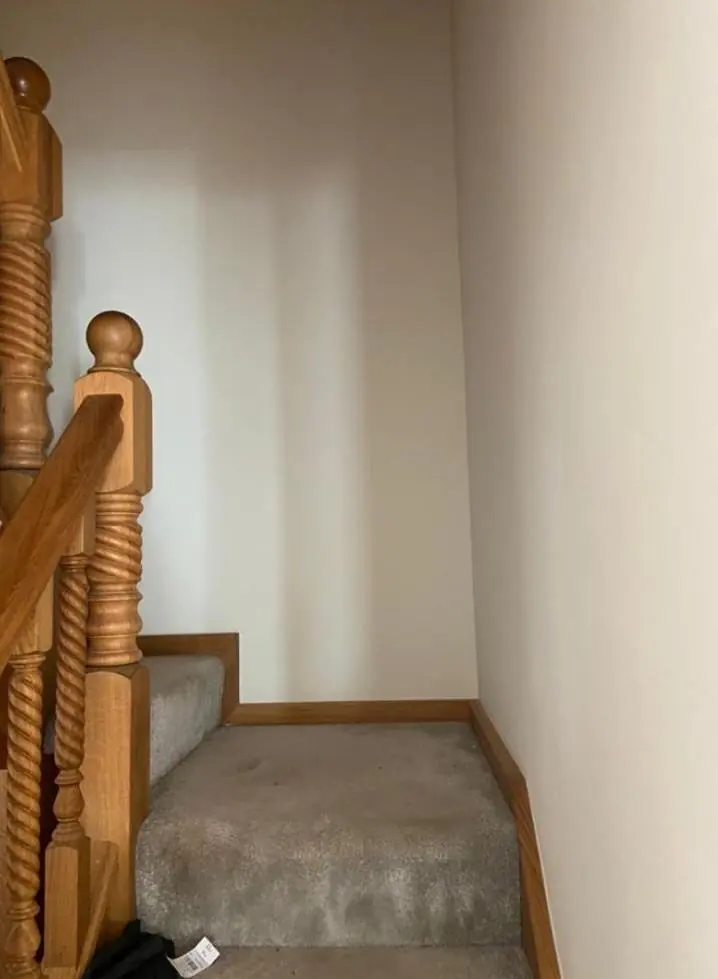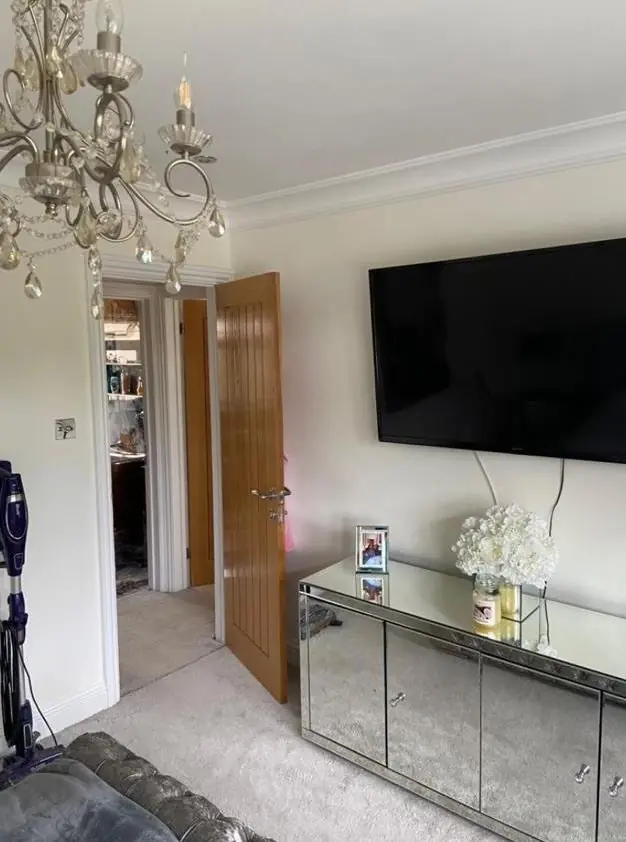
Dean gives colour and finish advice alongside decorating work in East Hunsbury, the NN4 suburb of Merefield, Blacky More and Collingtree Park, 1.9 miles or so south of Northampton's centre. Most of it is about replacing original magnolia interiors in the area's 1980s and 1990s houses, and choosing door colours that suit their brick fronts.
Moving on from magnolia
Magnolia was the default interior colour of the 1990s, when much of East Hunsbury was built, and updating it is one of the usual reasons colour comes up here. Where it survives, it is either the original coat or the same shade reapplied over the years. It’s warm, and it hides marks, but it makes rooms look dated, and next to modern white uPVC windows and doors it looks yellow.
The way out isn’t to jump to the coolest grey on the chart. Rooms with magnolia often have pine or golden oak furniture, beige carpet and cream tiles that were chosen to go with it. A cold grey makes those look orange. A warm white or soft off-white usually gives the clean look people want without fighting what is already in the room. If you want colour, muted greens, clay pinks and warm stone shades sit well with a lot of what a 1990s house still contains.
Dean brings this up at the quote stage, with sample pots tried on the actual walls. A colour card looks quite different from a whole wall at the end of a lounge-diner.
Through-rooms with a conservatory on the end
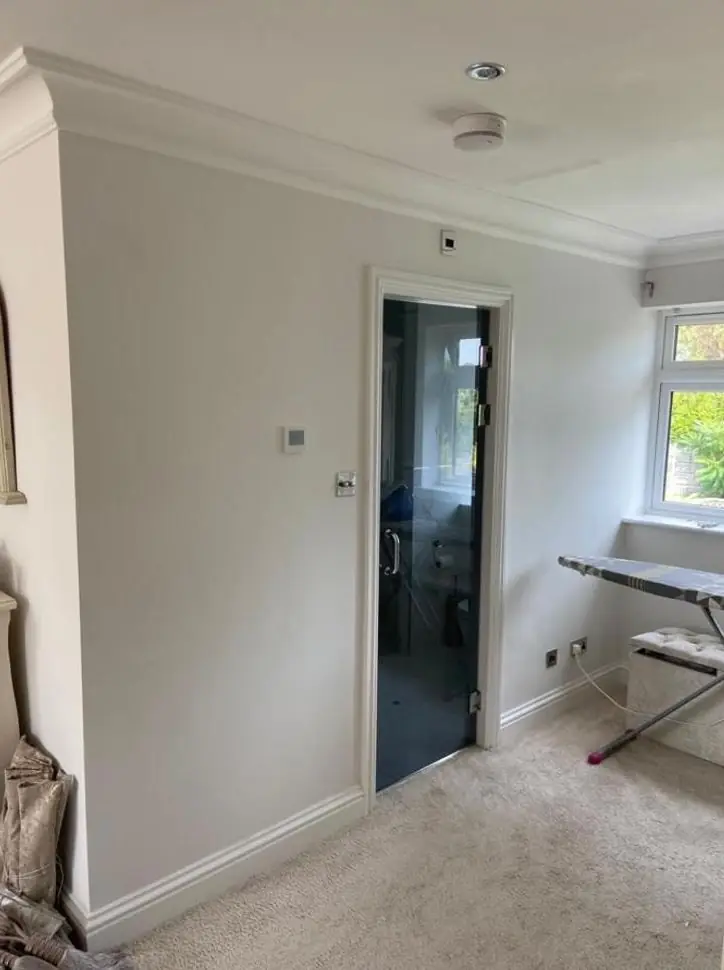
One layout that shapes colour decisions in East Hunsbury is the lounge-diner with a conservatory added at the back, an addition that turns up in local sales listings. The conservatory cuts the daylight the dining end used to get, so the back of the room becomes the darkest part of the house, while the conservatory itself floods with light. One colour has to work at both ends. Practical ways to handle this:
- Choose a mid-tone with a little warmth, which won’t wash out in the bright part or go muddy in the dim part.
- Use a single colour along the through-room and change it only at a natural break, such as the conservatory opening.
- In the conservatory, avoid strong colours on walls that get hours of direct sun, because many pigments fade unevenly.
Sheen: the decision people forget
With two primary schools and several parks within the suburb, East Hunsbury hallways tend to take school bags, bikes and muddy boots, so the finish matters as much as the colour. Flat matt looks good on a lounge wall but marks quickly in that kind of hall. We usually suggest a durable matt or a washable eggshell for halls, stairs and kitchens, and keep the flattest finish for ceilings and bedrooms. On old softwood skirtings and doors, satin reads more modern than high gloss and yellows less over time.
Front doors and garage doors against brick
Outside, the houses here are mostly facing brick and tile, and the brick should be left unpainted. That leaves the front door and the garage door as the two places where colour shows. Where a garage sits on the front of the plot, its door is often the biggest painted surface on the front elevation. Some suggestions:
| Brick tone | Front door shades that tend to work | Garage door approach |
|---|---|---|
| Red or orange-red brick | Deep green, navy, charcoal | A quieter version of the door colour, or off-white |
| Buff or yellow brick | Slate blue, dark grey-green, aubergine | Mid grey or stone |
| Mixed or brindled brick | Charcoal, black-green | Match the fascias for a calmer front |
The estate streets are not in a conservation area, so there are no conservation-area rules on door colour, although if you have a covenant on your deeds, it’s worth checking it. The listed Wootton Grange buildings on Towcester Road are a separate matter: changes there may need listed building consent.
Colour advice comes with the decorating work. Find out more on our colour consultation in Northampton page, or read about the suburb’s housing on our East Hunsbury hub.
Last updated by Dean, DH Painter & Decorator.