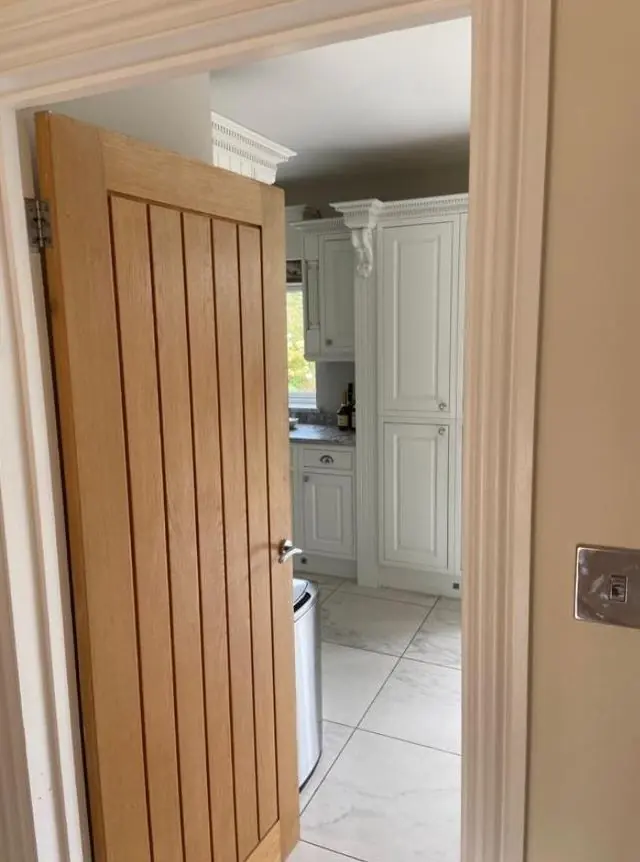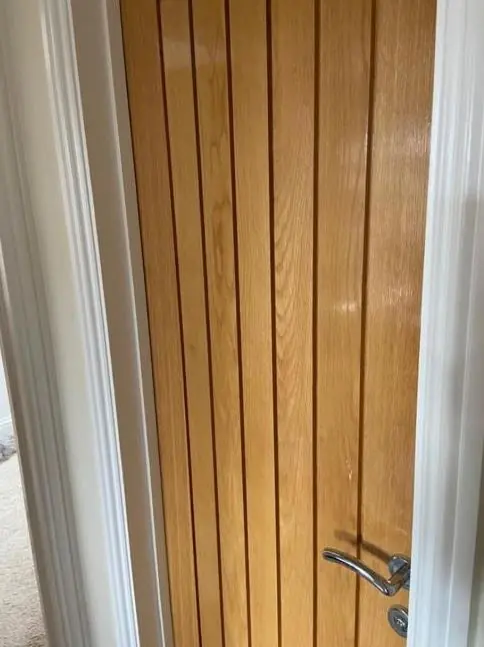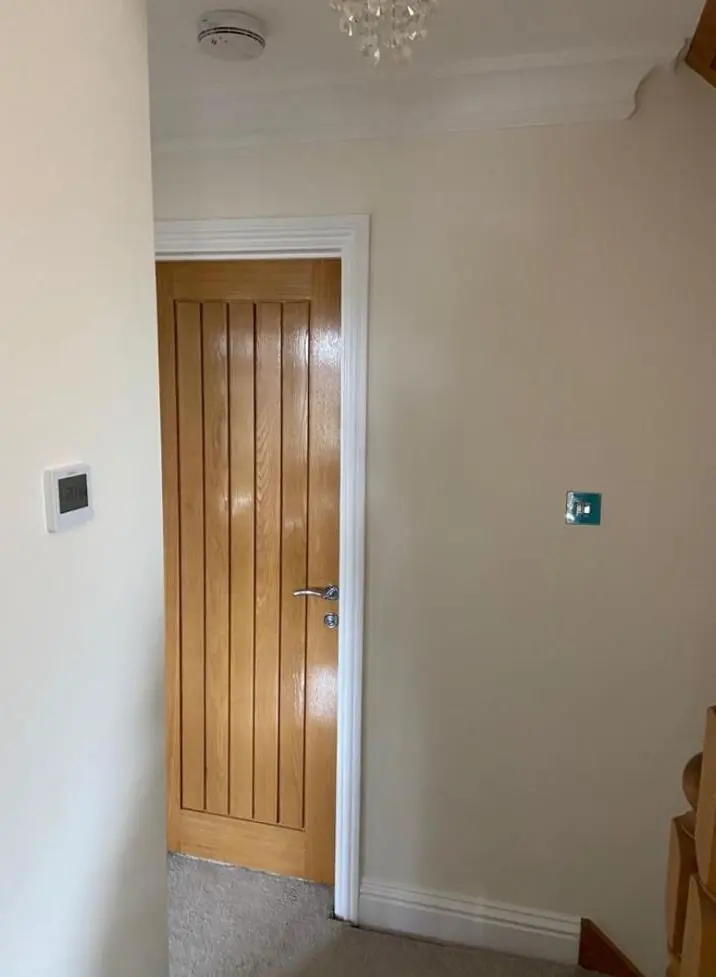
Dean paints internal doors, skirtings, architraves and frames in Collingtree, the stone village and golf-side estate on the town side of M1 Junction 15, 3 miles from the centre. Period joinery in the conservation area and the many doors in larger Collingtree Park houses are handled differently, and we explain why below.
Two very different sets of joinery in one parish
Collingtree packs two building eras into a small area. Along the High Street, the listed houses date from the 17th to the early 19th century: coursed and squared limestone and ironstone rubble, sash and casement windows, and inside them the joinery that went with those houses. The Rectory, listed Grade II, has a six-panel front door with a fanlight over it. North of the village, the houses built around Collingtree Park golf course are large and modern, with many internal doors and long runs of skirting. Painting woodwork in one is a different job from painting it in the other, and we price and plan each on its own terms.
Period doors and skirtings: what is underneath matters
In a house that has stood since the 1600s or 1700s, a door or skirting board may carry a century or more of paint. The bottom layers can contain lead, the middle layers are often oil gloss that has gone brittle, and the top may be a modern water-based coat that never bonded properly. Before we put any new paint on, we test, then decide how far back to go:
- Sound old paint is cleaned, keyed by hand and overpainted, keeping the crisp edges of the panel mouldings.
- Flaking or crazed areas are taken back with wet abrasives or a chemical stripper, never dry-sanded where lead is suspected.
- Paint buildup that has softened panel detail can be stripped locally so the beads and fielding read clearly again.
- Heat guns are used cautiously, and never on joinery close to thatch.
Old skirtings in cottages also meet walls that are rarely straight, often lime plaster over rubble. A rigid acrylic caulk run along a moving lime wall tends to crack again within a season, so we keep caulk to a minimum on those joints and use a flexible filler only where it will hold.
Finishes that suit a listed interior
Ten listed buildings stand in the Collingtree Conservation Area. Repainting existing joinery like for like is usually routine, but stripping out original features or changing their character can need listed building consent; owners of those houses should ask West Northamptonshire Council before anything more than a repaint. For finishes, a six-panel door like the Rectory’s looks right brushed in an eggshell or a traditional oil-based paint with a low sheen. A high-gloss spray finish looks wrong on hand-made joinery. Brush marks laid off neatly along the grain are part of how period woodwork should look.
Collingtree Park: volume and consistency
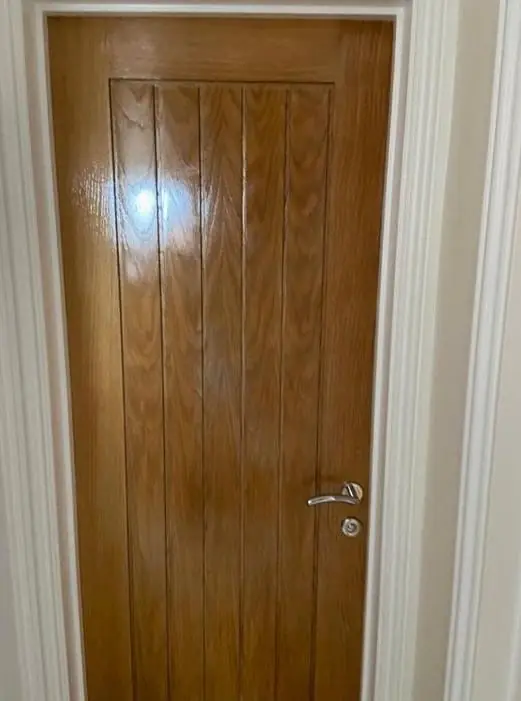
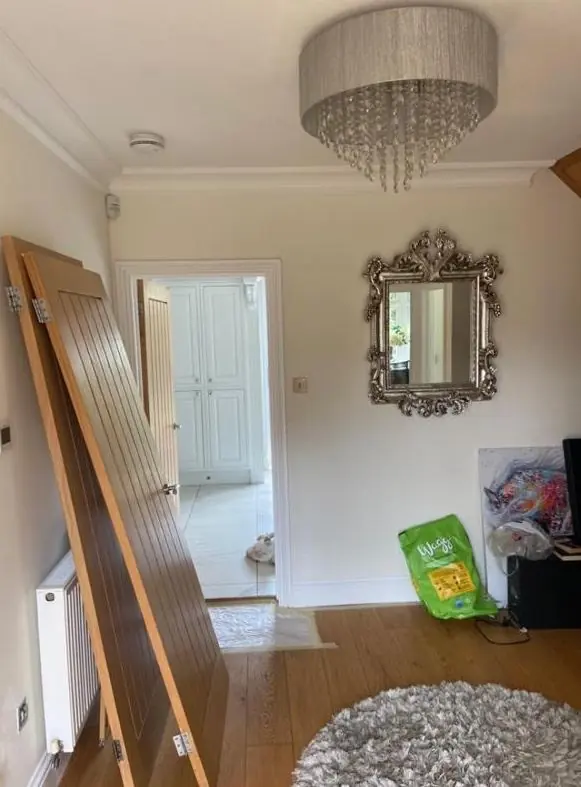
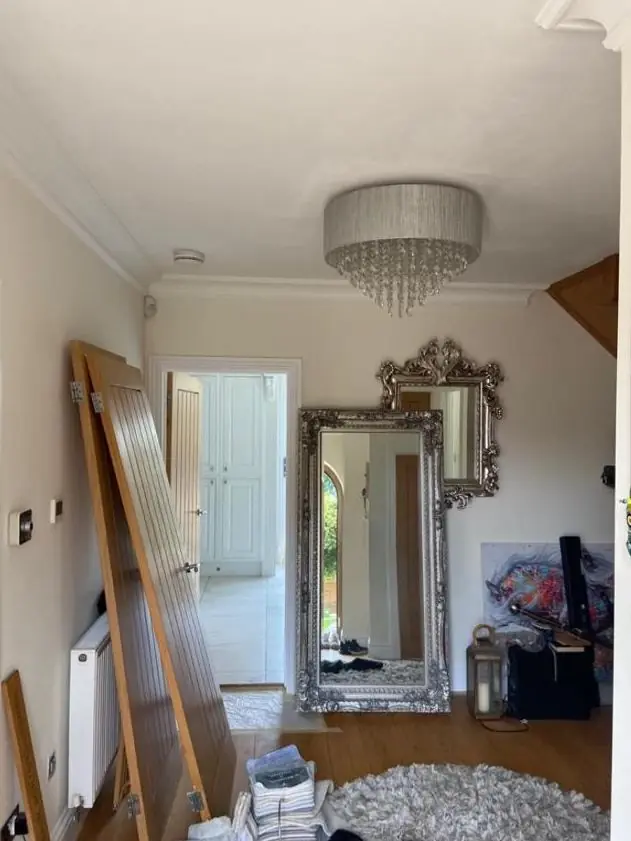
The golf-estate houses bring the opposite challenge. A large detached house can have a long list of internal doors and skirting that runs unbroken through open-plan ground floors and up a tall stair. Here the work is about consistency: the same sheen and colour on every door face, clean lines where skirting meets new flooring, and a schedule that keeps the house usable. We usually work room by room, doing the doors in batches so each set can harden before it is rehung or shut against a frame. Water-based satin or eggshell suits these homes well, as it stays white and dries fast enough to allow two coats a day in warm rooms.
Arranging the work
The High Street is a dead end, shut off by the motorway at its southern end and by the old Grange grounds to the north, with continuous stone garden walls and several houses set close to the road. For interior woodwork that mainly affects where the van can wait while we unload dust sheets and paint. Collingtree Park traffic all comes in off Windingbrook Lane or Rowtree Road, so we allow for that when timing the day. For general preparation methods and paint systems, see our door and skirting painting page.
Last updated by Dean, DH Painter & Decorator.