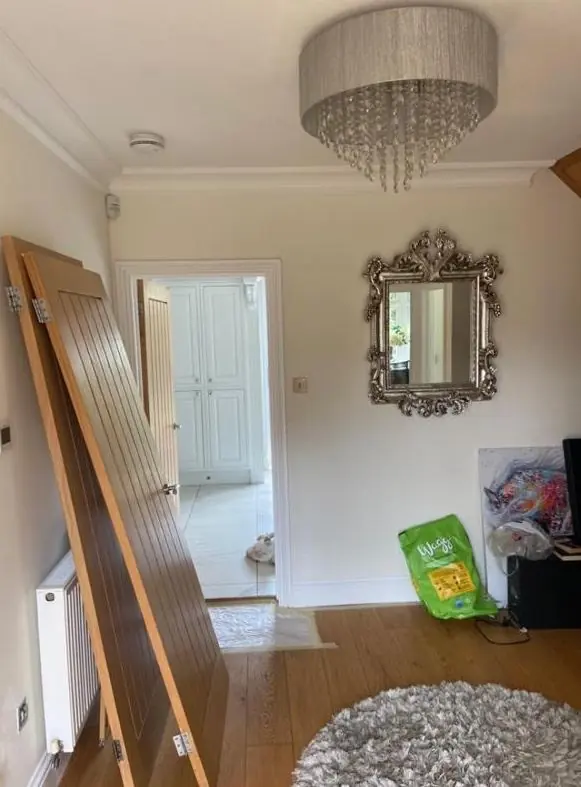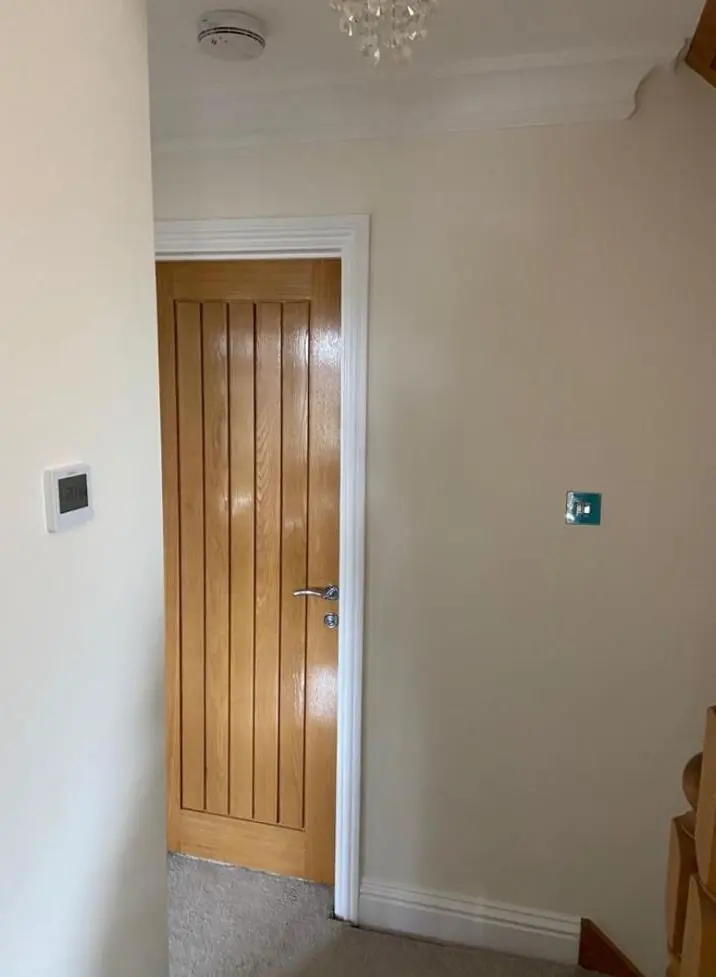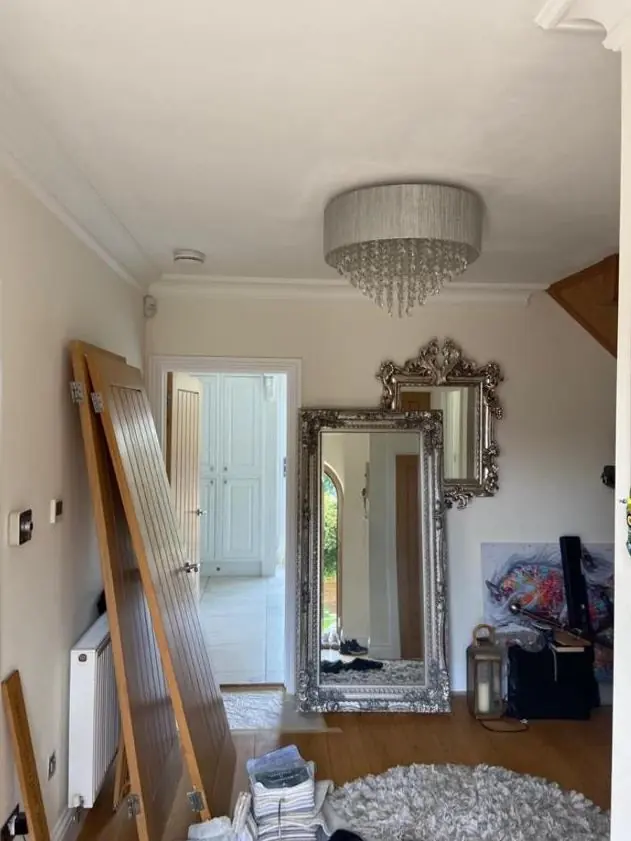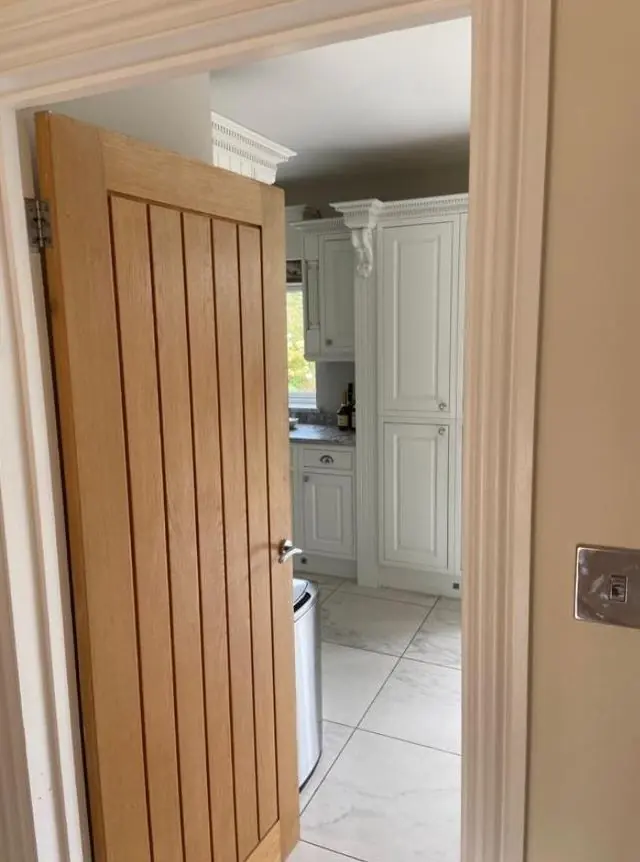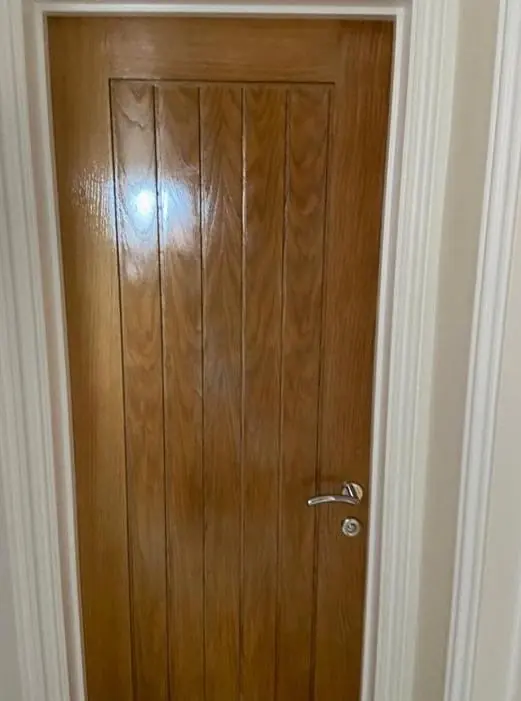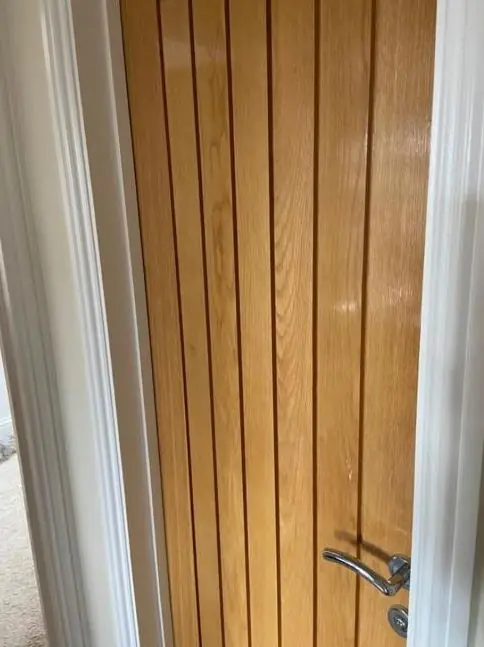
Dean decorates hallways, staircases and landings across Collingtree, NN4, three miles south of the town. The village has two extremes: tall open stairwells in the large golf-side houses and tight, steep stairs in the old stone cottages, and we plan access, materials and timing to suit each.
Height at one end of the parish, tight turns at the other
Stairwells in Collingtree come in two very different shapes. The large modern golf-side houses have tall halls and stairwells, where the top of the landing wall can be well out of reach of a stepladder. In the High Street, the 17th and 18th-century cottages and houses have staircases that are narrow and steep, sometimes turning on winders with low headroom at the turn. The hallway decorating method is the same in principle, but the equipment and the order of work change completely.
Tall stairwells in Collingtree Park
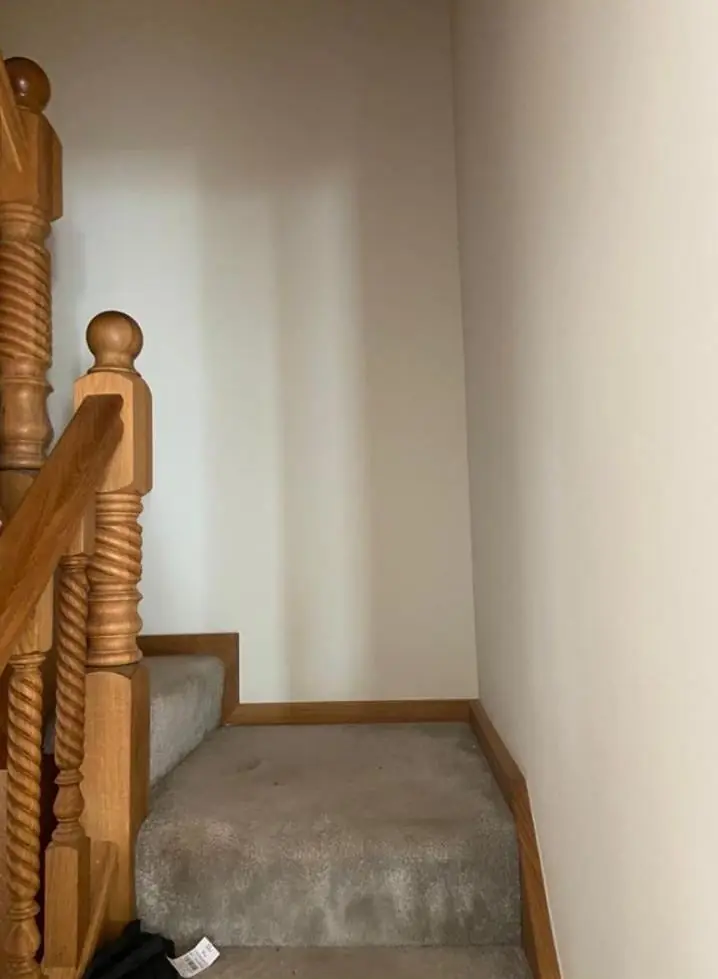
For a tall landing wall we use a stair platform or a small tower that sits on the treads and the landing, so we can stand level and work at full reach. A ladder leaning on a freshly painted wall is no way to do the job. That lets us cut a sharp line where the wall meets the ceiling at height and roll long walls in one wet edge, so there are no lap marks where light from a big hall window hits them. In practice, the order of work on these houses usually goes like this:
- Protect the stair carpet or treads, banisters and the hall floor, then set up the platform.
- Fill and sand any cracking at the junction of ceiling and wall, which is common in tall stairwells.
- Paint the ceiling and the highest walls first, then strike the platform and work down.
- Finish the spindles, handrail, newels and stringers last, once the high work is done and no more equipment needs to come through.
Halls in these family homes take a lot of daily traffic, so a durable matt or scrubbable emulsion on the lower walls is often worth the extra cost.
Winders and lime plaster in the old village
Inside the listed High Street houses, walls of coursed limestone and ironstone rubble are often lime plastered, the plaster following the stone rather than running flat. Two things follow from that. First, a modern vinyl emulsion can trap moisture in a lime wall and blister, so we use breathable paints where the plaster is original. Second, a narrow cottage stair leaves no room for a platform, so we use short, adjustable ladder systems and boards that fit the winders, taking care not to mark old treads. Handrails and balusters in these houses may carry heavy old paint, which we prepare in the same careful way as other period joinery.
Wallpaper, colour and the light
A hall at Collingtree Park lit by a tall window takes strong colour or a patterned paper well, but a long drop of paper down a double-height wall needs careful setting out so the pattern lines up at the landing. In the cottages, small windows and thick walls make the stairs darker, so lighter tones and a soft sheen on the woodwork help. If the house is in the conservation area, the inside is still yours to decorate as you like unless it is listed, when changes to historic features should be checked with West Northamptonshire Council.
Getting set up
Towers and stair platforms arrive in sections, so we need somewhere to unload. In the old village, where the street is closed at both ends and lined with stone garden walls, that means agreeing where the van can stop briefly. On the Collingtree Park roads off Windingbrook Lane there is usually more room, though we still check first. More on our general approach is on the hallway, stairs and landing decorating page, and our cost guide sets out why stairwell work is priced the way it is.
Last updated by Dean, DH Painter & Decorator.