DH Painter & Decorator covers Collingtree from our Northampton base, about 3 miles south of the town centre in NN4. The parish has two very different kinds of house: listed stone cottages in the High Street conservation area, and large modern houses at Collingtree Park, and we plan work around each.
A stone village at the southern edge of Northampton
Collingtree is a small village and civil parish, with its own parish council, at the far southern edge of the Northampton built-up area. It is in the NN4 postcode district, about 3 miles south of the town centre, with the M1 running along its south-west side and Junction 15 close by. Dean travels out from our Northampton base for work here and comes to see the house before writing a quote.
The parish splits into two parts that need very different decorating. The old village is a single High Street, recorded in the Domesday Book, whose form has hardly changed since about 1800 and whose oldest houses date from the 17th century. North of it, where Collingtree Grange stood until the 1960s, are Collingtree Park Golf Club and the large modern houses built alongside it. That sets Collingtree apart from neighbouring East Hunsbury, which is mostly a 1980s and 1990s estate, and from the newer housing and commercial area at Grange Park.
Painting the High Street houses
The conservation area, designated in the late 1970s, is centred on the High Street and takes in Barn Corner, the winding lane west of the church. Its buildings are mostly earlier than 1875 and built of local limestone, often banded with ironstone, behind a continuous run of limestone garden walls. Roofs are mostly Welsh slate with stone-coped gables. The village pub, the Wooden Walls of Old England, keeps its thatch, while the pair of cottages at Barn Corner swapped theirs for pantiles.
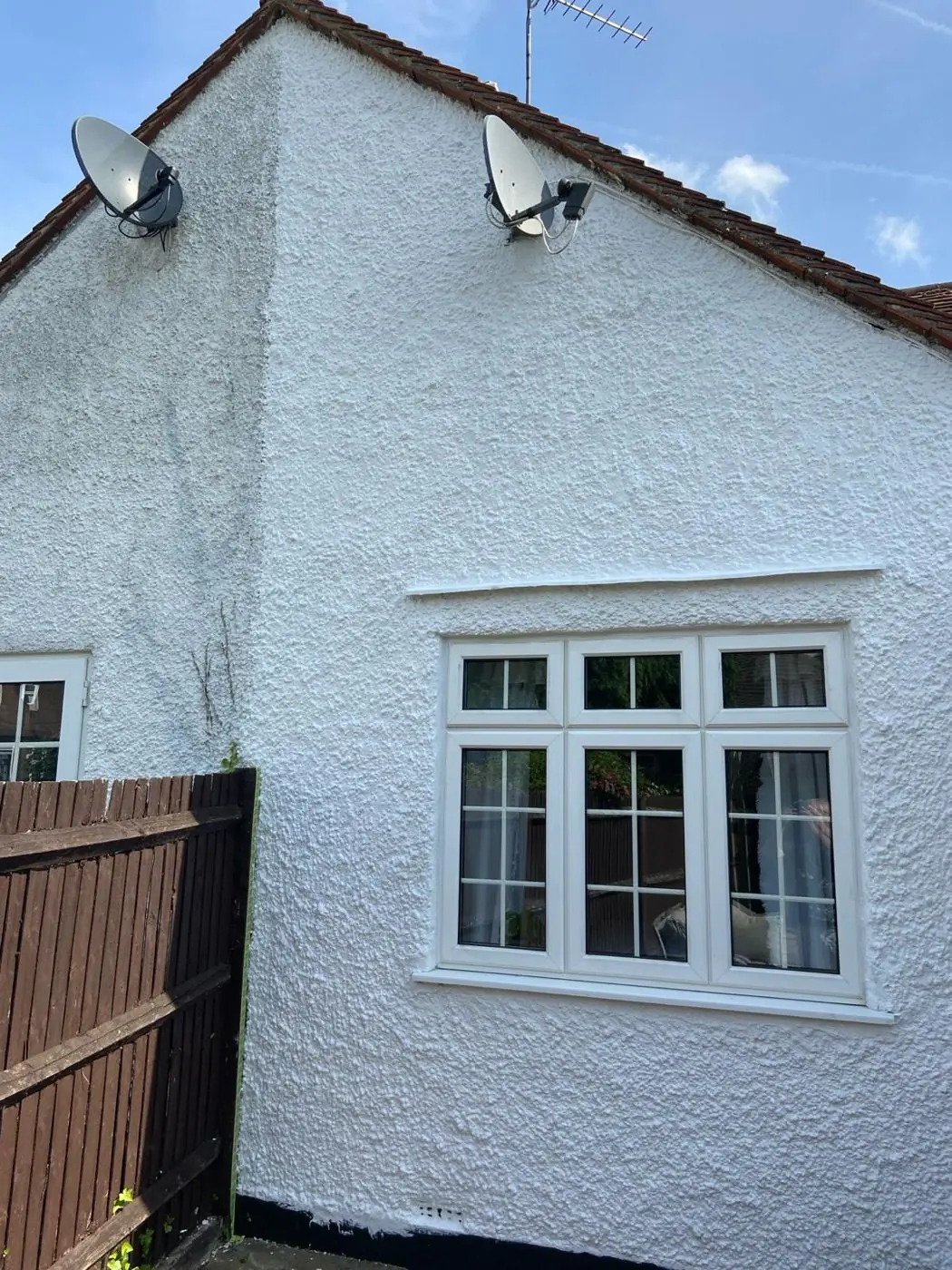
For a decorator, that means the walls are mostly left alone outside. Limestone and ironstone rubble and ashlar should stay unpainted, or be treated only with a breathable limewash or mineral system, because acrylic masonry paint traps moisture in soft stone. If a stone wall has already been painted and the coating is failing, our render and masonry painting page explains the breathable options. The painted parts of these houses are the timber:
- Sashes at the Rectory and 44 High Street need easing, and stripping where paint has failed, then repainting so they still open.
- Holmwood’s stone-mullioned leaded lights and the octagonal glazing bars at Rose Cottage are brushed bar by bar, often in linseed or oil-based paint suited to old timber.
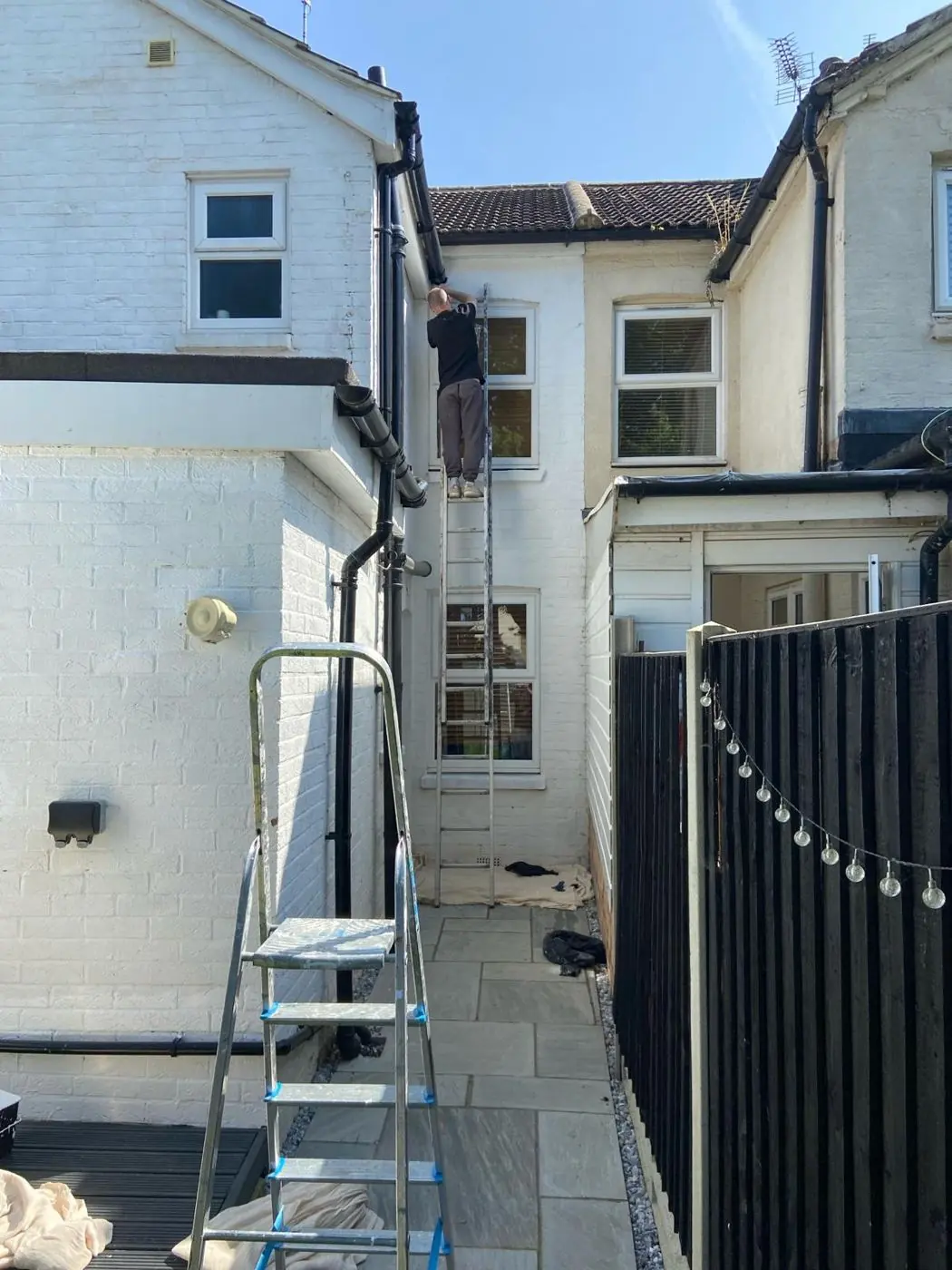
- Bargeboards and dormer cheeks under Welsh slate take the place of the uPVC fascias on a modern house, and dormers need a proper tower rather than a long ladder.
- Around thatch, we protect the eaves and never use open-flame stripping.
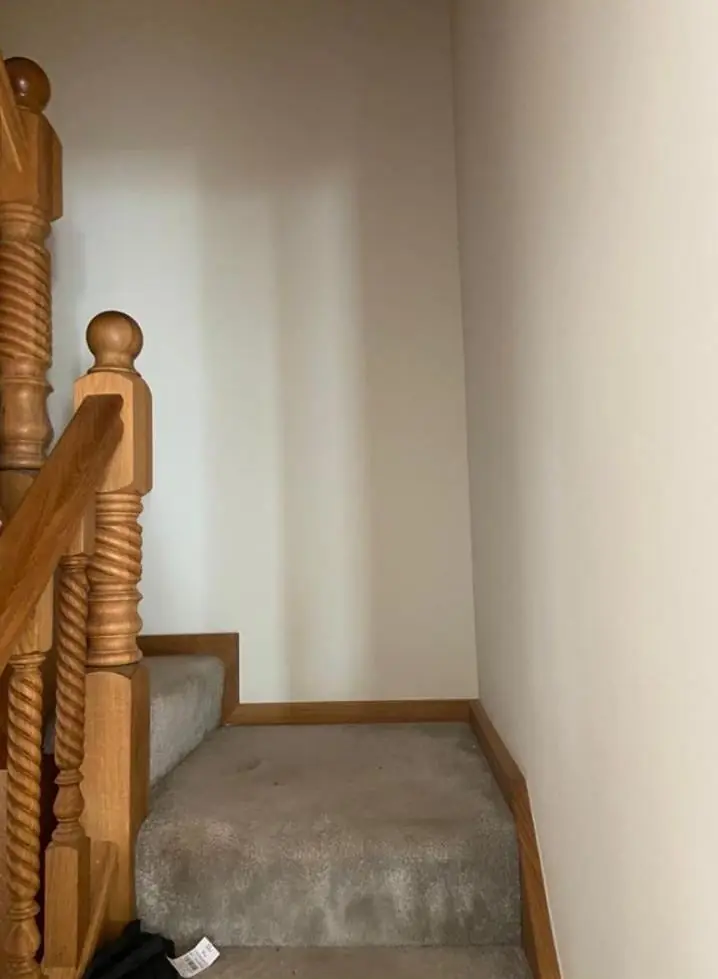
Inside, cottage walls are usually lime plaster on stone, which suits breathable paints rather than vinyl emulsions. Cottage stairs are narrow and steep, often with awkward winders, so these rooms take more hand work than their floor area suggests. Our interior painting page covers the general process.
Listed buildings and colour choices
There are ten listed buildings in the conservation area, including the Grade II* Church of St Columba, Holmwood at 43 High Street, the Rectory, 44 High Street, 19 to 23 High Street, Rose Cottage, 4 and 6 Barn Corner and the pub. Altering the outward colour or materials of a listed house can require listed building consent from West Northamptonshire Council, which is worth settling before a date is booked. No Article 4 direction turned up in the sources we checked. The colour guidance Dean gives for the village starts from the stone: warm off-whites for frames, deeper heritage shades for doors, and black or dark green for ironwork. The church’s own chancel is plastered and painted, a reminder that old lime plaster throughout the village needs paints that let it breathe.
Collingtree Park: large modern houses beside the golf course
Collingtree Park Golf Club, designed by Johnny Miller, was laid out on the old Grange land, with large modern houses alongside it on roads such as Turnberry Lane, Shoal Creek, Lake Walk and Lodge Avenue. Access to the estate is from the East Hunsbury side, along Windingbrook Lane or Rowtree Road, and there are just four ways in and out. Only the entrance lodges and gateway of the Grange itself survive.
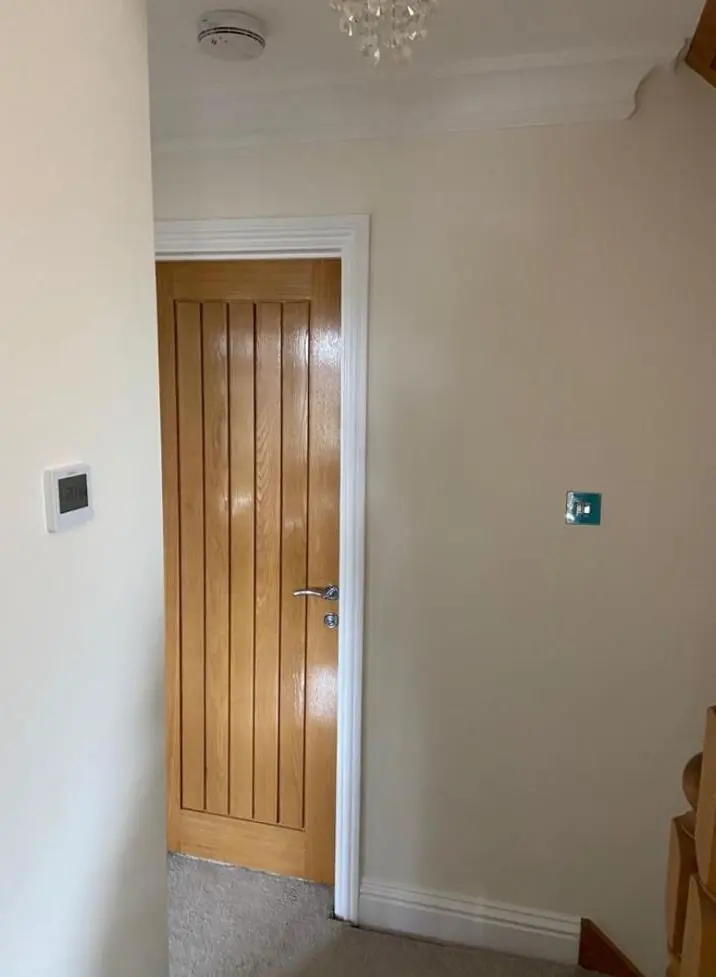
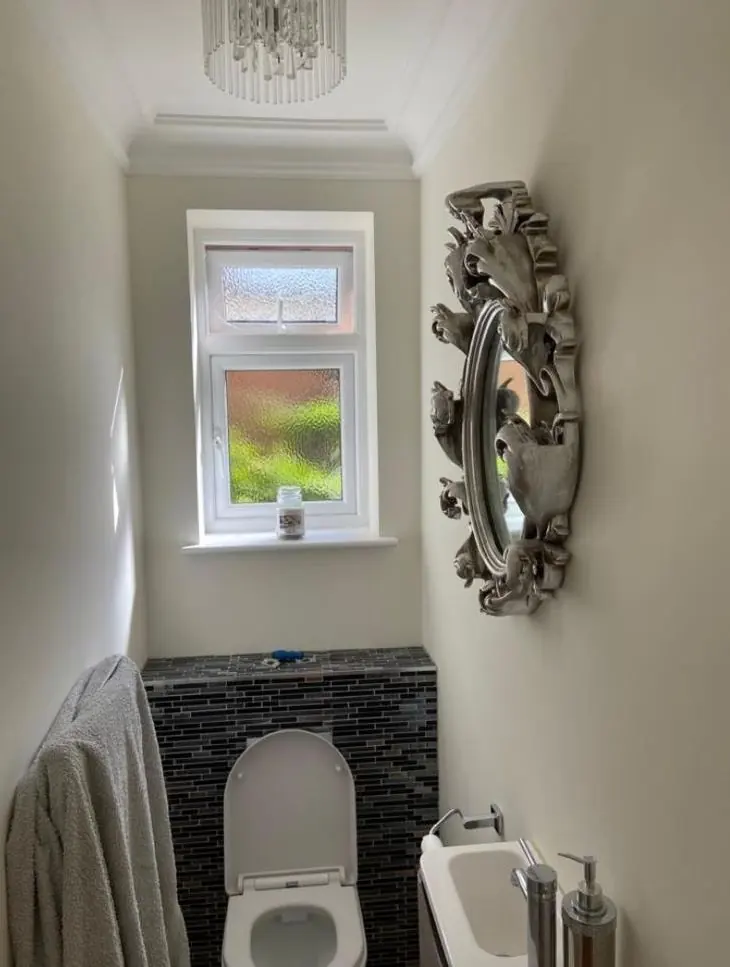
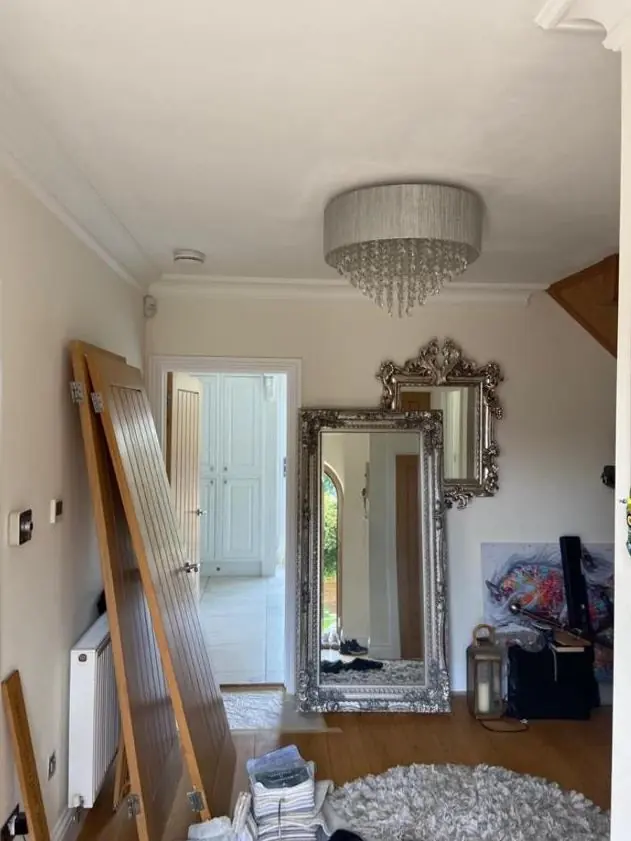
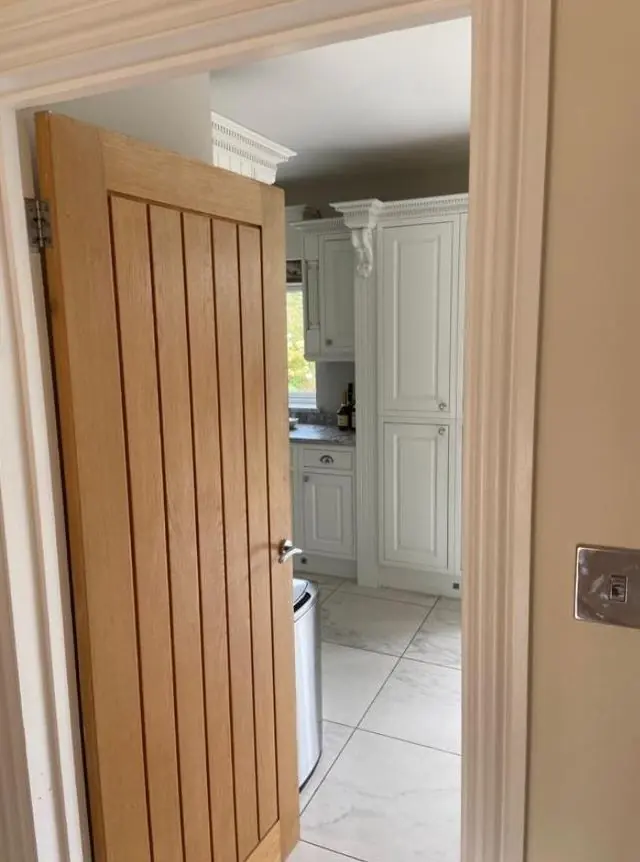
These houses bring a different set of jobs. Open-plan ground floors and high ceilings mean long walls where lap marks show, and tall halls and stairwells need access towers or stair platforms to reach the landing walls safely, which our hallway, stairs and landing service covers. Outside, golf-side plots and mature trees bring leaf litter, shade and algae to timber fascias, fences and window frames, so cleaning and treating them comes before any coating. A Tree Preservation Order protects trees at the golf club house, which gives a sense of how much greenery surrounds the estate.
Brook, trees and motorway grime
Wootton Brook runs through a small valley past the golf course on the north side on its way to the River Nene, and parkland and farmland surround the old village. Shaded elevations under trees and near the brook take longer to dry, so exterior work there needs a dry spell and a moisture check before painting. Traffic on the M1 to the south-west and the A45 on the eastern side leaves grime that settles on frames, sills and painted surfaces, so washing down before painting matters here. Our exterior painting page explains the preparation in more detail.
Extensions, loft conversions and new plaster
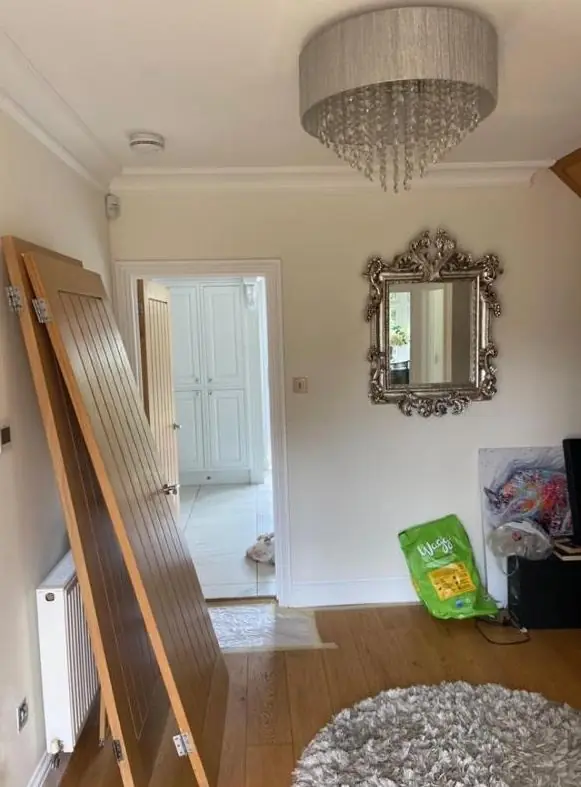
Collingtree’s planning record includes loft conversions and extensions, such as the loft conversion over a garage applied for at 7 Chestnut Avenue. New plaster needs a diluted mist coat before decoration so the paint grips instead of peeling, as our new plaster and extension painting page explains.
Pub, hotel and club premises
There are no shops on the High Street, so we do not offer shopfront painting in Collingtree. Commercial buildings here are the listed thatched pub, the Hilton hotel with its sports club on Watering Lane, the golf club house and a care home in Collingtree Park. Work on these is scheduled around opening hours, and the pub’s listed frontage needs consent-aware colours and signage. See our commercial painting page for how we plan that kind of job.
Access on a closed-off village street
The M1 cuts the High Street off to the south and the golf course and Grange land close it to the north, so it is a dead-end street rather than a through route. Continuous stone boundary walls, with several listed houses close behind them, limit where ladders, towers and the van can go. We agree parking and material drops with you before the job starts. For a written quote, call Dean on 07539 779 036.
Last updated by Dean, DH Painter & Decorator.