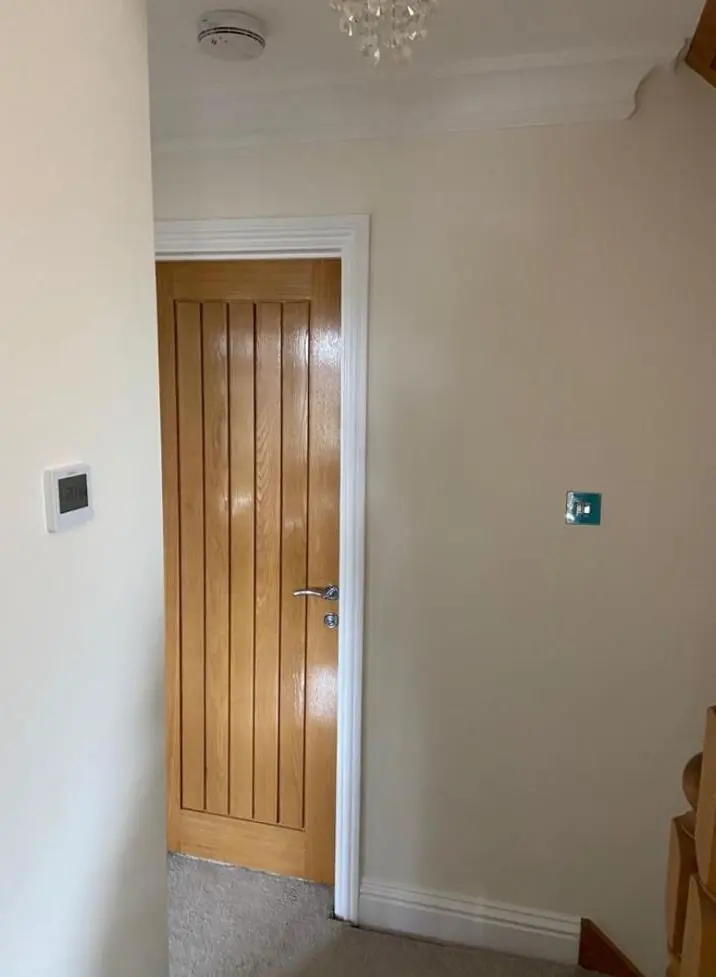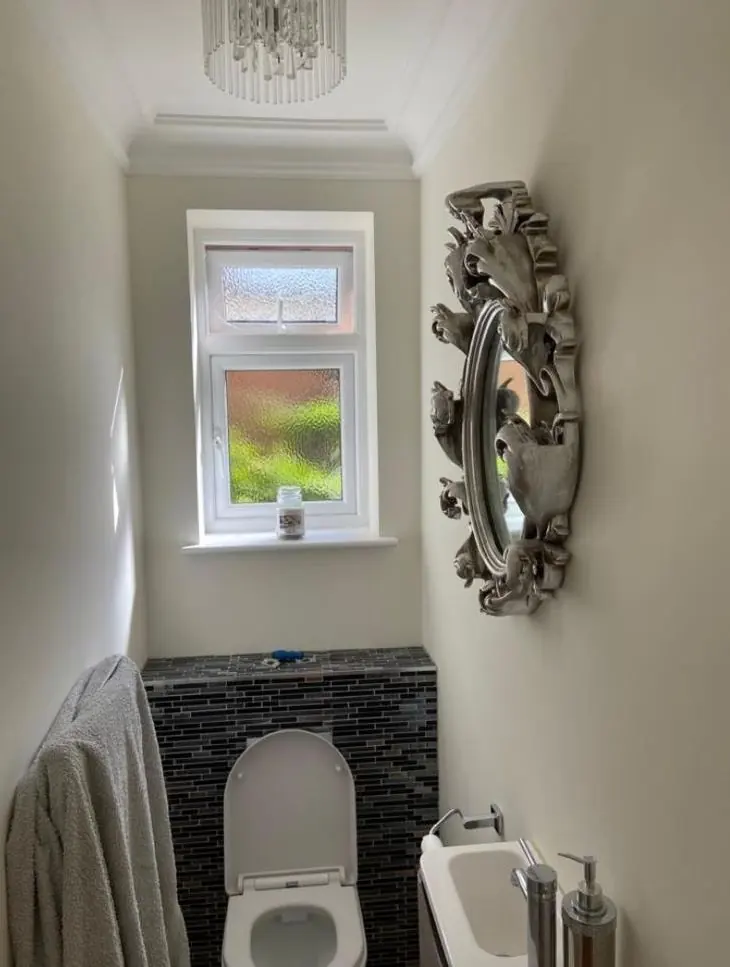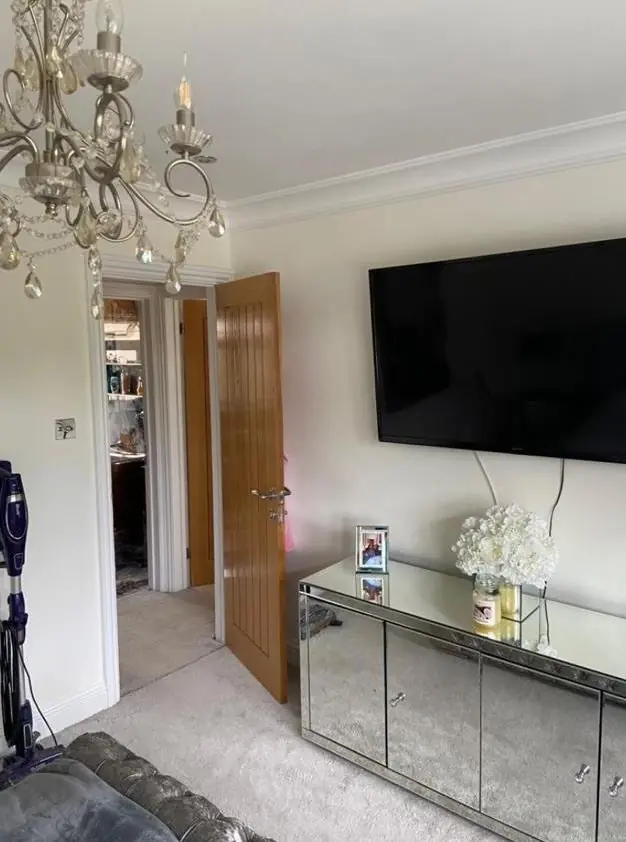
DH Painter & Decorator carries out decorative paintwork in Collingtree, at Northampton's southern edge some 3 miles from the centre. In the listed High Street houses that means restrained, traditional work on period doors and joinery; in the larger Collingtree Park homes it means panelling, two-tone schemes and feature walls.
Period detail worth picking out in the old village
The listed houses on Collingtree’s High Street keep the kind of joinery that suits traditional decorative work. Their list descriptions mention the Rectory’s fanlit six-panel door and pedimented sash dormers, stone-mullioned leaded casements at Holmwood, and casements with octagonal glazing bars at Rose Cottage. Inside, period joinery such as panelled doors, skirtings and architraves has usually had many coats of paint since it was made.
Decorative work in these houses is mostly about restraint. That can mean picking out the mouldings of a panelled door a shade deeper than the stiles, painting a fanlight’s glazing bars to contrast with the frame, or bringing back the crisp edge of a moulding buried under layers of paint. It is fine brushwork, and none of it should shout louder than the house.
Traditional paints and graining on old timber
Much of the original woodwork in the conservation area will have been painted with oil or linseed-based paints. Modern acrylics can sit badly over those and tend to look flat and plasticky on 17th and 18th-century joinery. Where a door, a set of shutters or a run of panelling calls for a period look, we can work with:
- Linseed oil paint: slow to dry, but flexible and kind to old timber as it moves.
- Oil-based eggshell, brushed out so a faint brush texture shows, which reads as traditional.
- Woodgraining: the old craft of painting softwood to look like oak or another hardwood, built up from a base coat, a scumble glaze and graining tools.
Old paint layers may contain lead, so we test before sanding and use wet abrading and dust control where it is present. Open-flame stripping is ruled out near thatch, which matters at the pub and at Barn Corner. On a listed house, removing original finishes or features, rather than repainting them, can need the council’s consent, so we talk that through before anything is stripped.
Feature finishes for the larger rooms at Collingtree Park
Golf-estate homes leave room for bolder decorative work. Big reception rooms, tall halls and long landings suit treatments that would swamp a cottage room:
| Finish | Where it tends to suit |
|---|---|
| Wall panelling, new or existing, painted in one colour | Dining rooms and long hall walls |
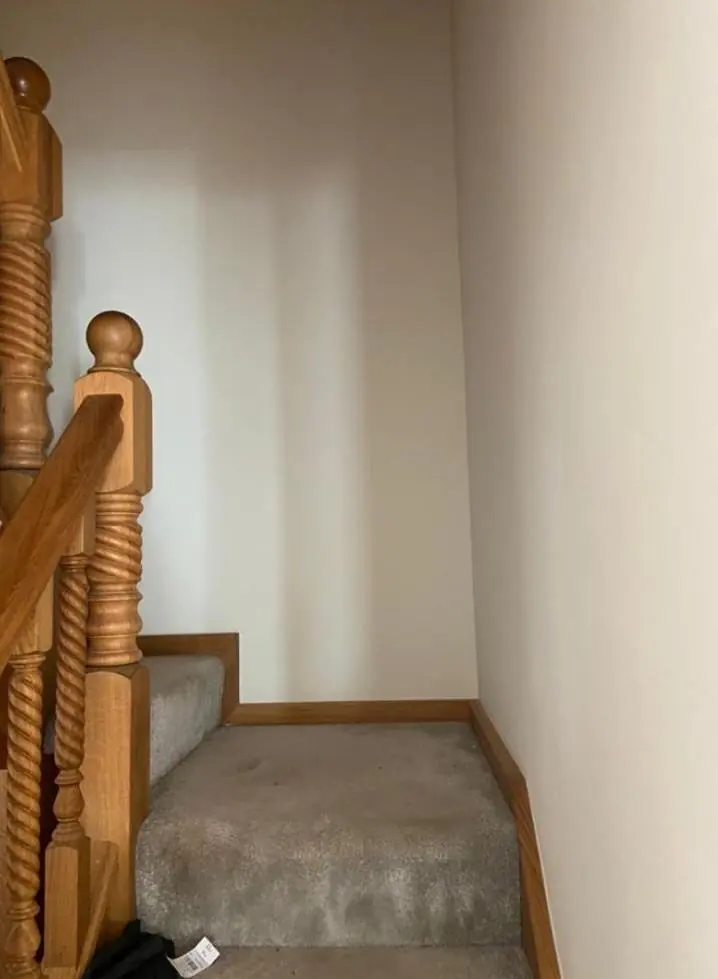
| Two-tone split at dado height | Stairwells, where the lower half takes the knocks |
| Colour-washed or layered glaze effect | A single chimney breast or the wall behind a dining table |
| Contrast colour on a ceiling or inside a recess | Tall rooms where the ceiling is part of the view |
Panelling fitted in a modern house only looks right if its joints, pins and mitres disappear, so we fill, caulk and sand it before any colour goes on. In open-plan spaces we keep any effect to one defined wall or zone, so the room still reads as a whole.
What we would steer you away from on old walls
Some effects simply do not belong on lime plaster over solid stone. Glazes, metallic coatings and wax finishes form a sealed layer that stops the wall drying out, and on a cottage wall that holds any damp they will bloom or flake. In the older High Street houses we keep the decorative interest on the joinery and use breathable paint on the walls. Our main decorative finishes page describes each technique in more detail, and our Collingtree page covers the village as a whole. To talk through an idea, call Dean on 07539 779 036.
Last updated by Dean, DH Painter & Decorator.