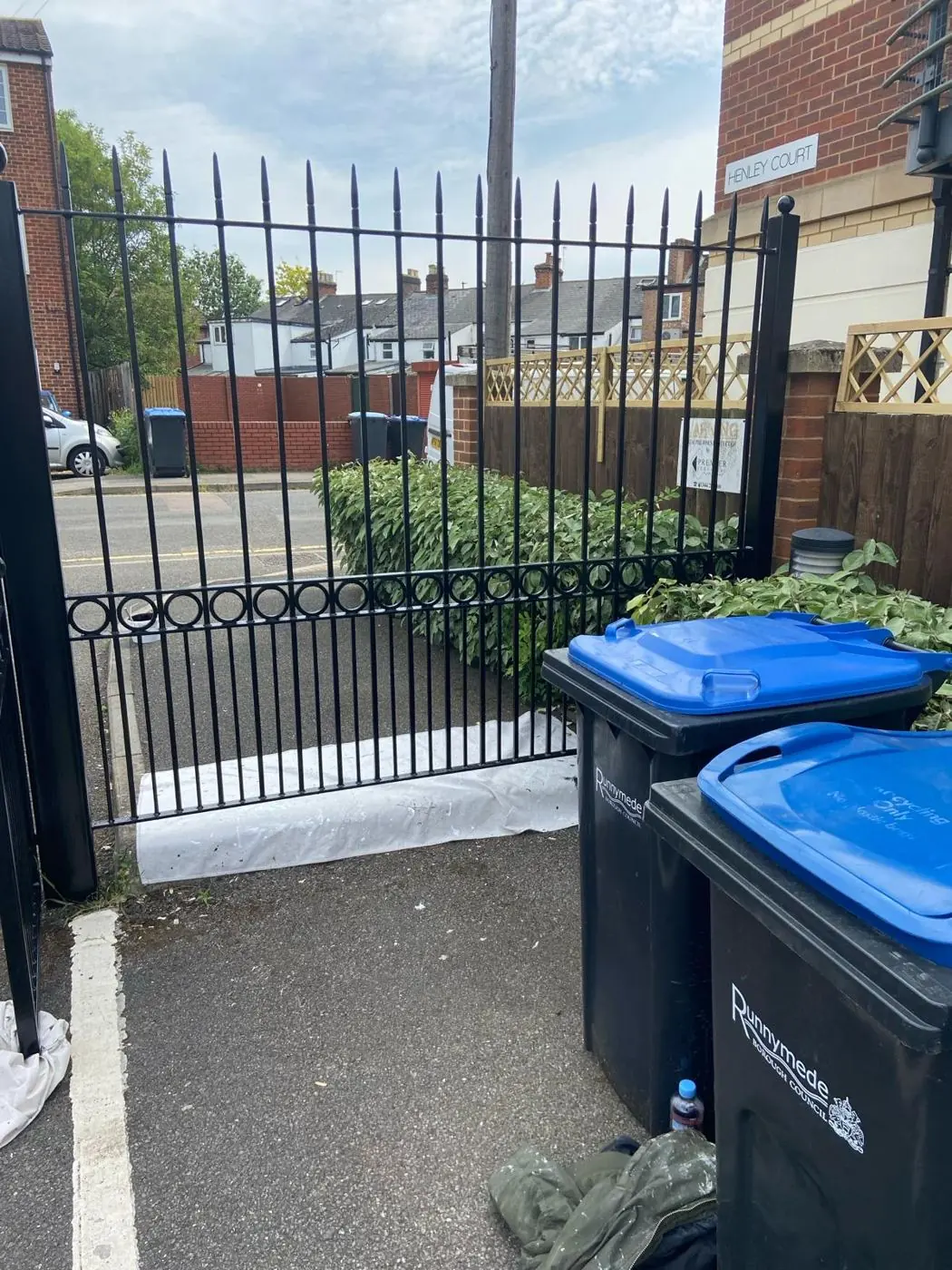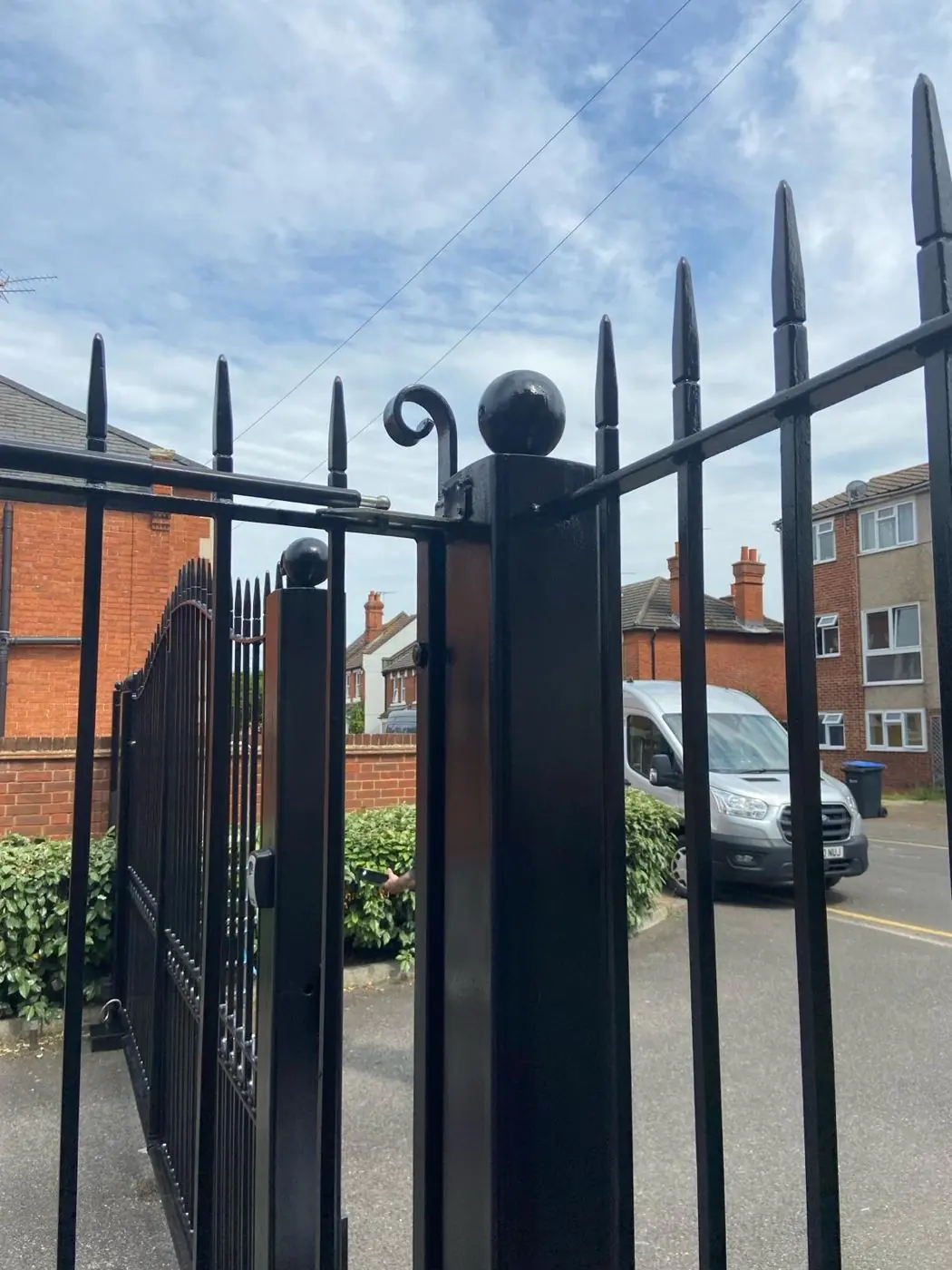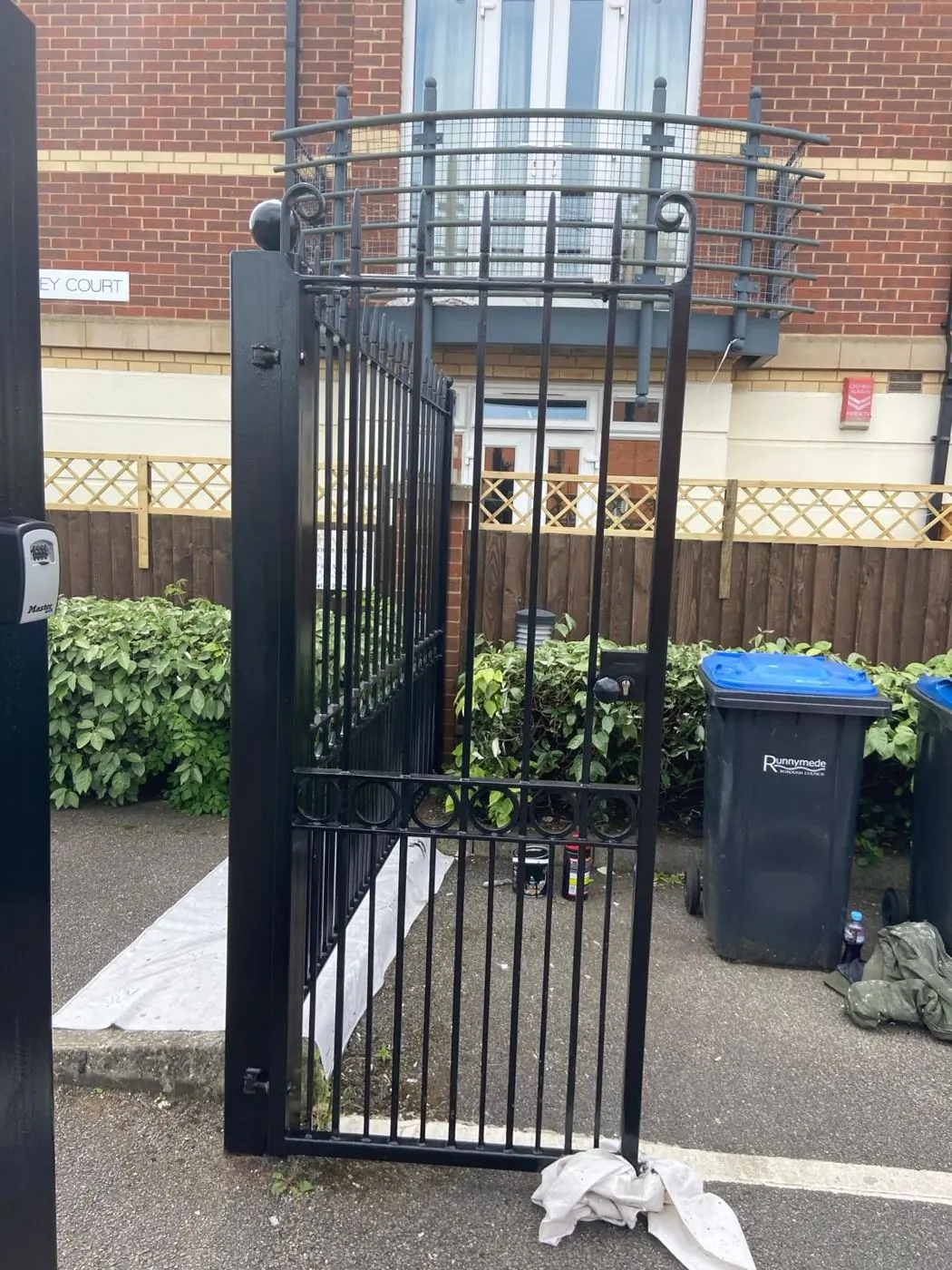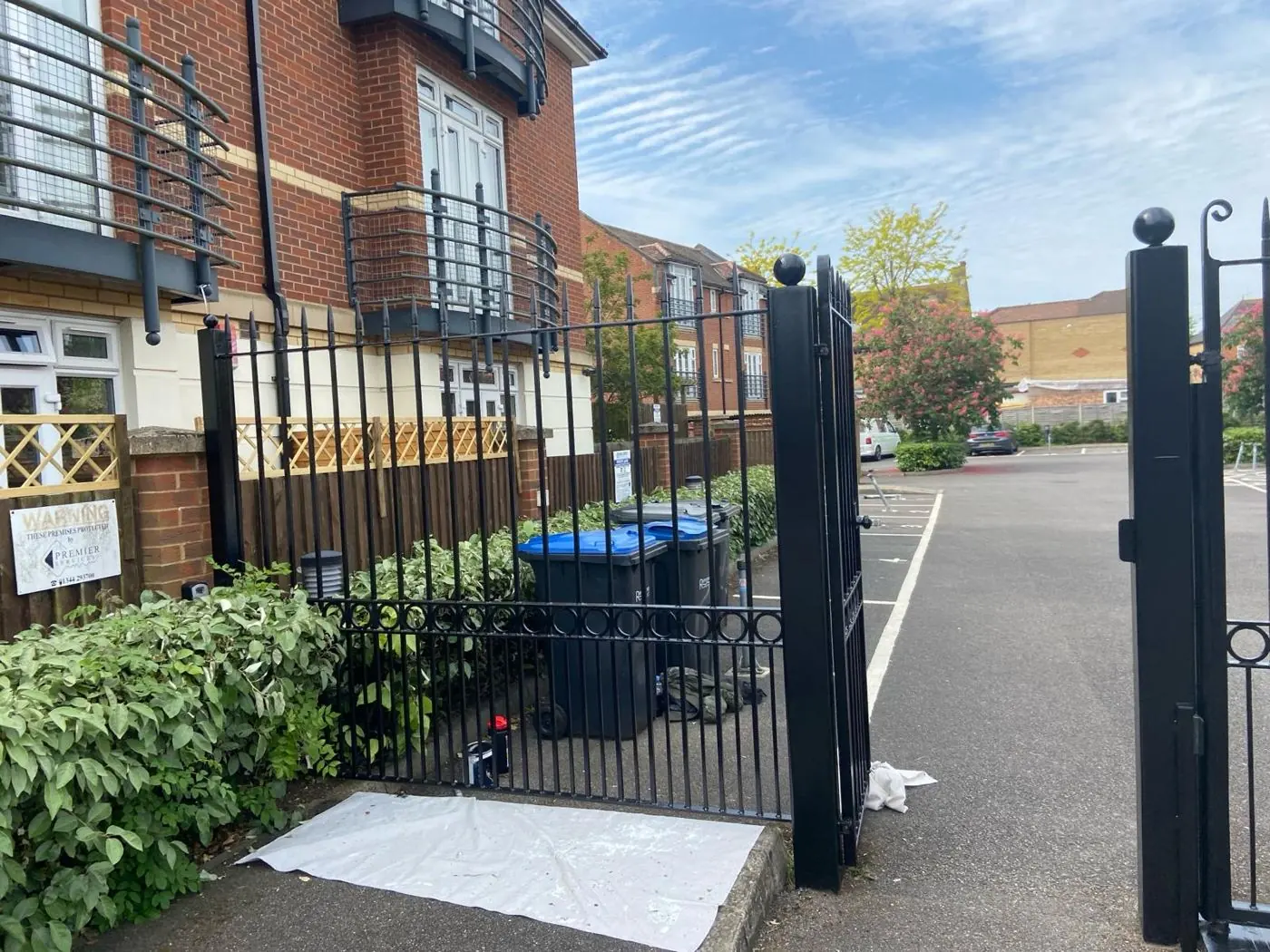
Dean prepares and repaints metal gates, railings and ironwork in Collingtree, NN4, on the southern edge of Northampton about 3 miles from the centre. That covers gates at the larger houses as well as older ironwork in the conservation area, where colour and method need more care.
Where the metalwork is in Collingtree
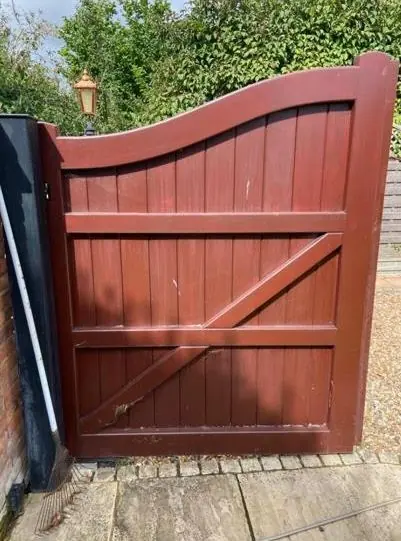
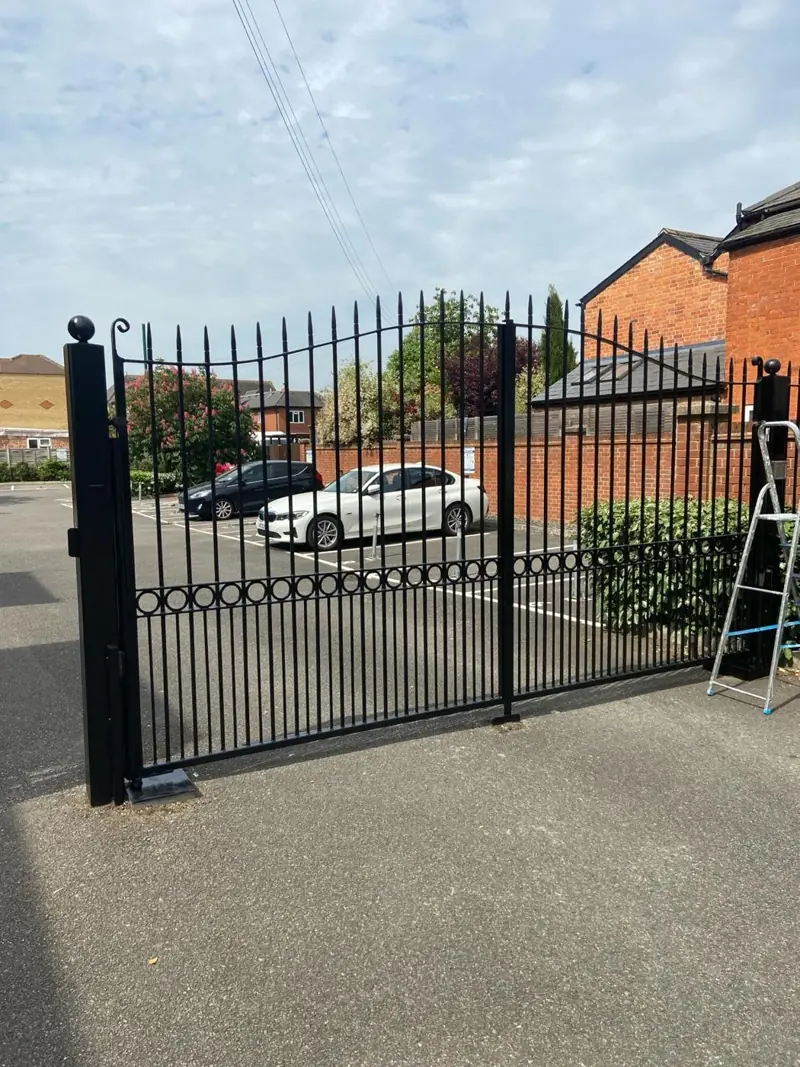
Collingtree is a village of stone walls rather than iron railings, so metalwork is scattered rather than continuous. The old High Street is bounded by limestone garden walls, not railed front gardens. Ironwork turns up instead as gates, bits of detail and fittings on individual buildings. The larger houses in the parish, including those at Collingtree Park and the later detached houses around the village, are where driveway and side gates are most common. These are the gates most likely to need rust treatment and a durable topcoat every few years.
At the historic end, the parish has some ironwork details, such as the former wrought-iron sign bracket at the pub. The listing for The Wooden Walls of Old England also records an outbuilding with a corrugated iron roof. Anything attached to a listed building is treated as part of it, so a colour change there should be checked with West Northamptonshire Council first.
The Grange gateway and heritage colours
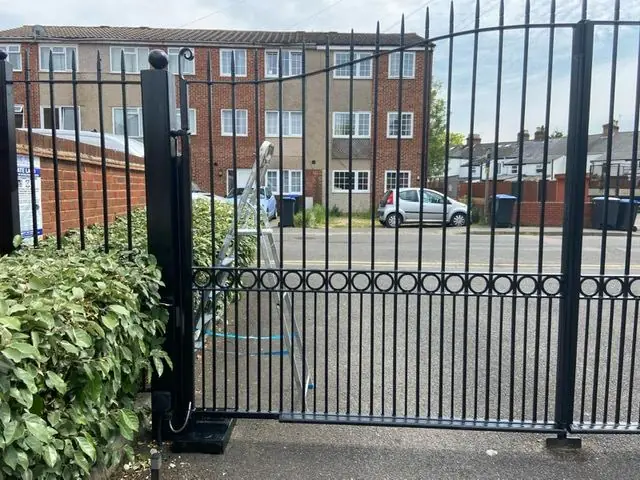
Collingtree Grange, built in 1875 for the brewer Pickering Phipps, was demolished in the 1960s, but its entrance lodges and gateway survive. Remnants like these, and any older gates and metalwork on the period houses, call for a different approach from a modern steel gate:
- Old wrought iron often carries many layers of paint. We remove what is loose rather than taking everything back, which can damage thin sections.
- Cast iron is brittle, so it is cleaned with hand tools and wire brushes, never hammered.
- Colours are kept traditional, usually black, a dark green or another muted shade, in keeping with the conservation area.
Where metal is fixed into stone piers or walls, rust at the base can expand and crack the stone around it. We clean the fixing points as far as we can reach and seal them, and tell you if the stonework needs a mason.
Driveway gates at the larger houses
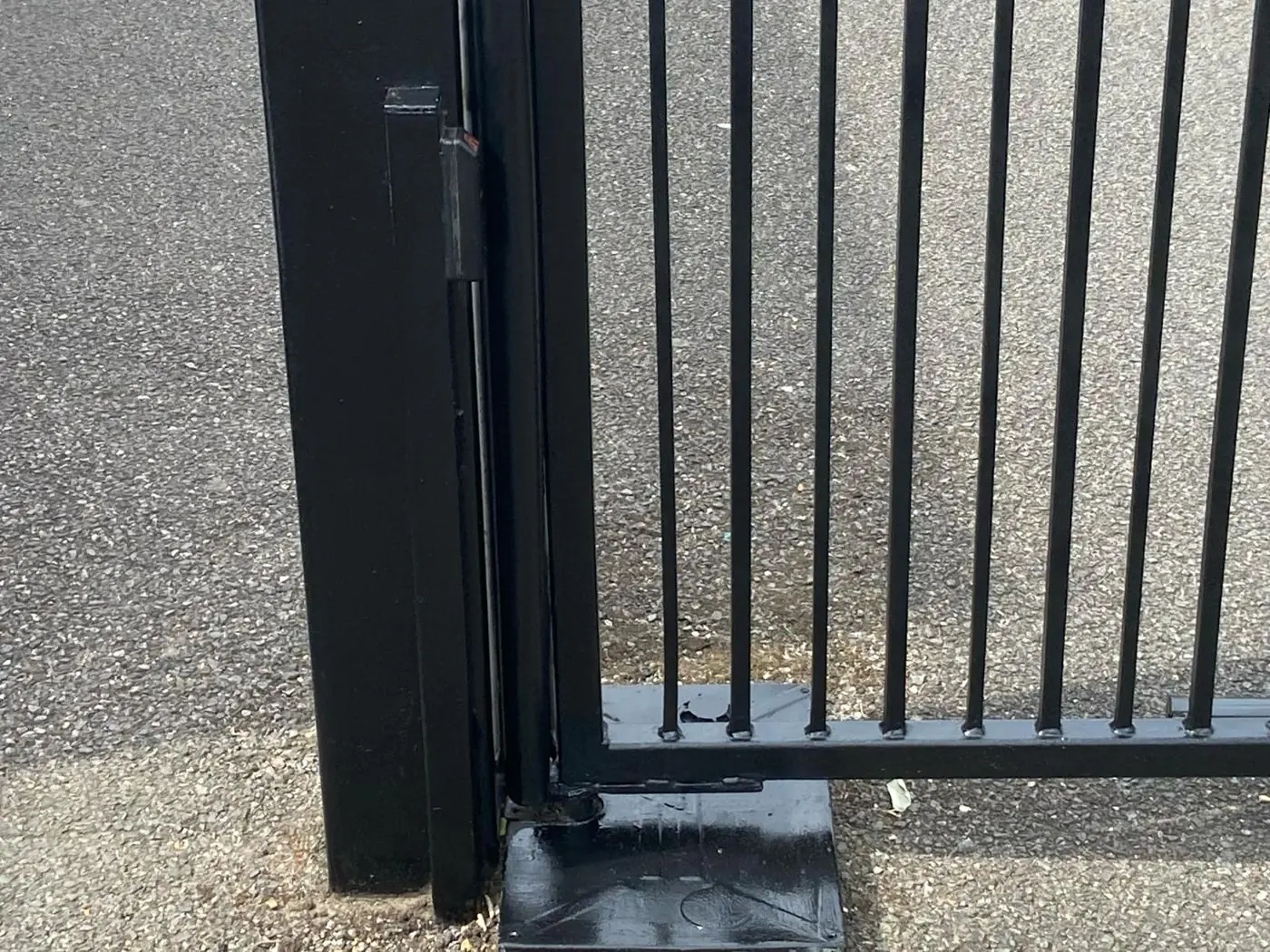
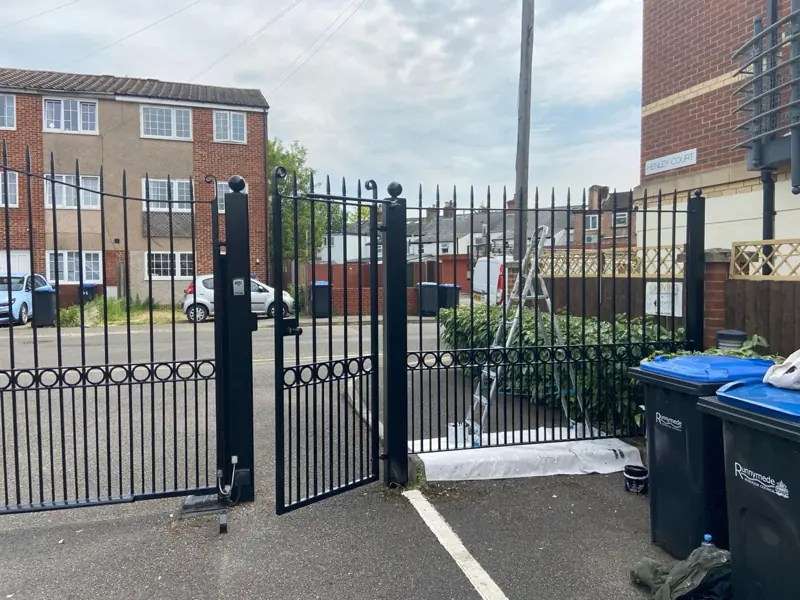
Modern driveway gates are usually mild steel, sometimes galvanised. Mild steel rusts quickly once its coating is broken, and galvanised steel will not hold ordinary paint without a primer made for it. We identify the metal first. Then the order is the same each time: scrape off flaking paint, wire brush back to sound metal, treat any pitting that cannot be fully cleaned, prime bare spots straight away, and finish with two coats of a durable exterior metal paint. Moving parts, hinges and latches are kept working, and automated gates are isolated before we start.
What the setting does to metal here
The parish sits between the M1, which runs along its south-west side, and the A45 to the east. Gates near the roads pick up a greasy traffic film that has to be washed off, or new paint will not bond to it. At Collingtree Park the trees and the golf course setting keep some gates in shade and damp, and leaves collect at the base of gates and railings, which is exactly where rust starts. We clear and dry these areas before painting.
Access matters too. The High Street has no through traffic and is walled along its length, so we plan where to park and how to keep the road clear while a gate is being worked on.
Our main metal gate and railing painting page covers metals, primers and finishes in more detail, and the cost guide explains what affects the price. See our Collingtree page for the rest of the village.
Last updated by Dean, DH Painter & Decorator.