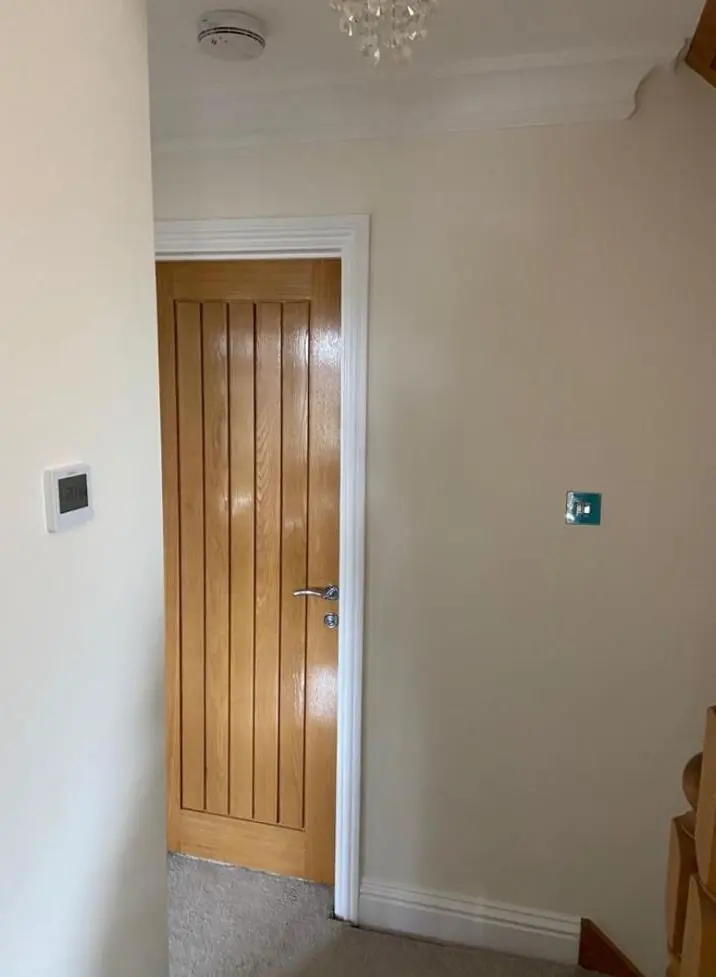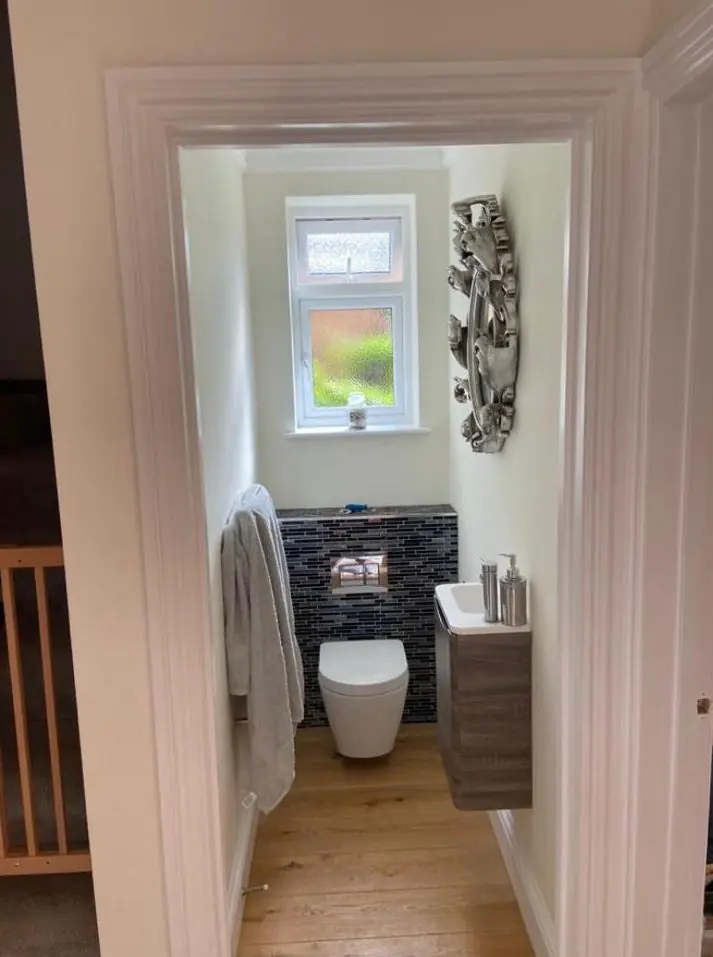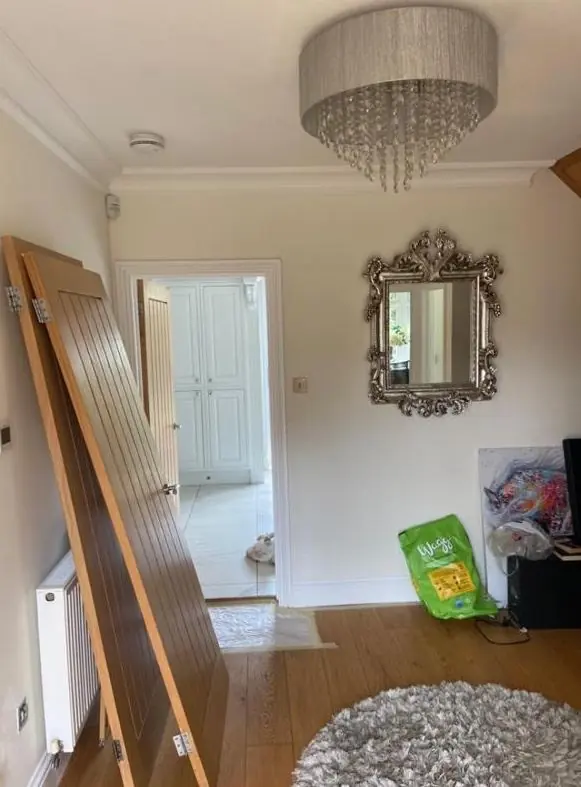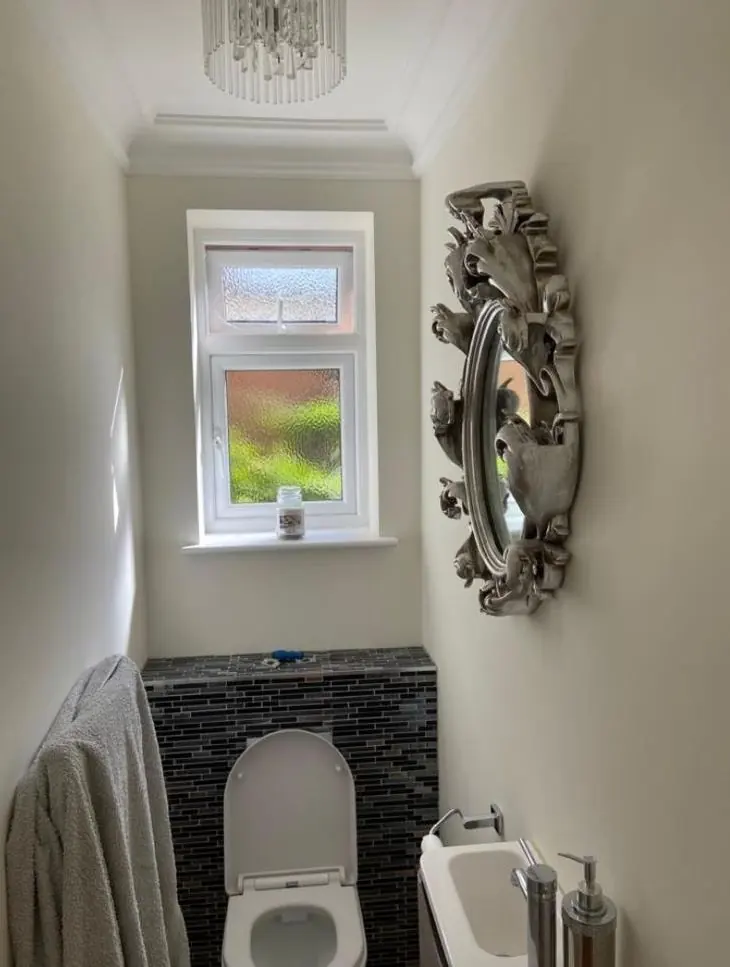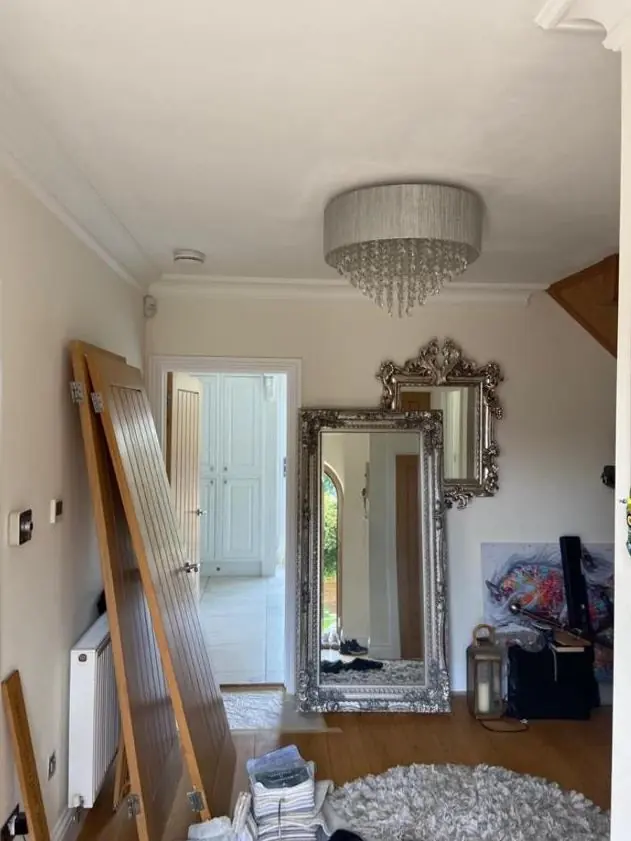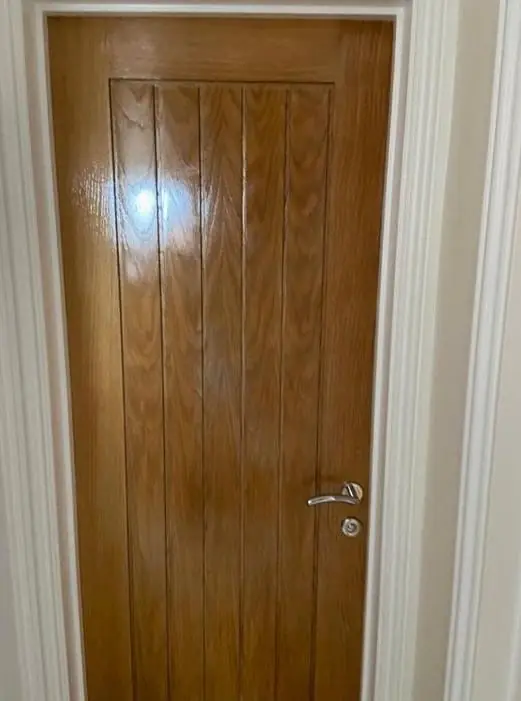
DH Painter & Decorator paints internal doors, skirting boards, architraves, banisters and garage-side doors in East Hunsbury, NN4. Dean works from Northampton, about 1.9 miles north of the suburb, and quotes free for anything from one landing of doors to every piece of joinery in a detached house.
Thirty-odd years of gloss on estate softwood
Nearly every house between Mere Way and Wootton Brook dates from the same two decades of building. The joinery inside those houses was fitted to a builder’s budget: machined softwood skirtings and architraves, and either moulded hardboard-faced or plain flush doors. After three or four decades most of it has been glossed several times, often by different owners using different products, so the woodwork now carries a thick, slightly yellowed build with runs on the door panels and rounded-over edges on the skirting mouldings.
Oil-based gloss yellows as it ages, and it does so fastest where there is little daylight, behind doors and along the hall. In a house where the walls have just been repainted bright white or a pale grey, that yellowing is suddenly obvious. The fix is not another coat of the same. It is a proper key, the right primer and a different top coat.
How we take tired estate woodwork back
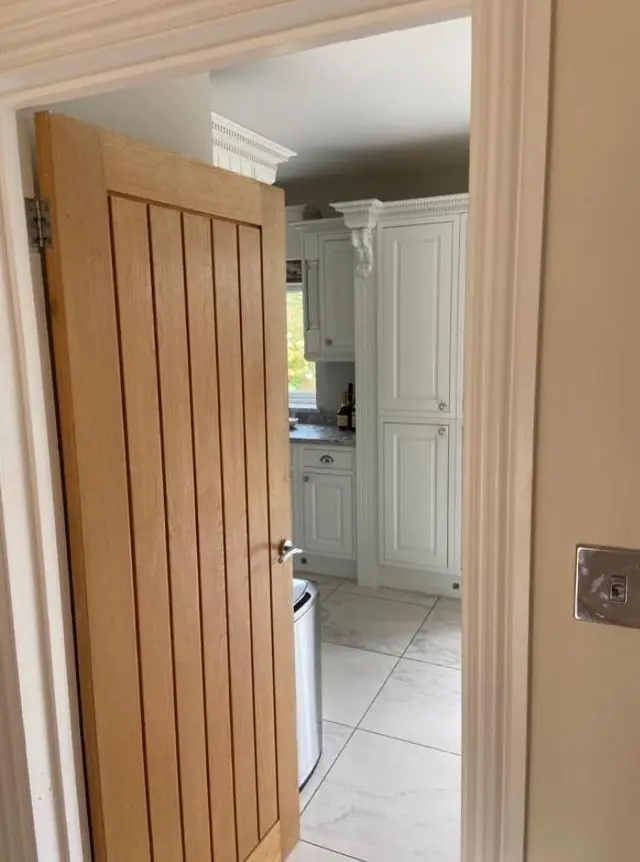
- Wash and degrease handle areas, door edges and the skirting runs beside kitchens and back doors.
- Test the old coating so we know whether the layers are sound enough to paint over or need taking back in places.
- Flatten the build-up by sanding drips and sags on panels and easing paint that has clogged hinge knuckles and door stops.
- Fill and caulk the gaps that open where skirting meets wall as a house this age settles, and the dents left by hoovers and toys.
- Prime with a bonding undercoat suited to old oil paint, then lay off two finish coats.
The detailed method, product choices and drying times are on our main door and skirting painting page. What matters here is that this stage takes most of the time on the job, and on 1980s woodwork it is where the result is decided.
Satin, eggshell or gloss in a family house
East Hunsbury is mainly owner-occupied family housing: detached and semi-detached homes with garages, open-plan lounge-diners and conservatories added later. That mix suggests a few practical choices. Water-based satin is a popular replacement for old gloss because it stays white and wipes clean, which suits skirtings in a hallway that sees a lot of feet. Eggshell gives a flatter look that sits well beside modern grey or sage walls in a lounge-diner. Traditional gloss is still a reasonable choice for anyone who wants that look, and an oil-based undercoat under it lasts well on doors that get kicked.
Two estate details are worth planning for:
- Conservatory and sun-room thresholds. Where a timber door frame or skirting meets a uPVC frame, the cutting-in has to be clean and the uPVC protected, because solvent and abrasive marks on white plastic do not come out.
- Integral and attached garages. The connecting door into a garage is often a fire door with closer and seals. We paint around the intumescent strips and closer rather than over them, and we keep the door’s fire-rating labels clear.
Wootton Grange and older joinery
A small part of East Hunsbury is much older. The listed farmhouse at Wootton Grange keeps timber casements with mullions and transoms and a Doric-pilaster doorway, and the Grangewood Park Residents Club occupies converted listed farm buildings. Historic joinery like this is a different job from estate softwood. Original timber should be repaired and repainted rather than stripped wholesale, with breathable, compatible coatings, and any change to appearance may need listed building consent from West Northamptonshire Council. We can talk this through with an owner before work is planned.
For the rest of the suburb, see our East Hunsbury area page, which covers the housing and how it affects decorating more generally.
Last updated by Dean, DH Painter & Decorator.