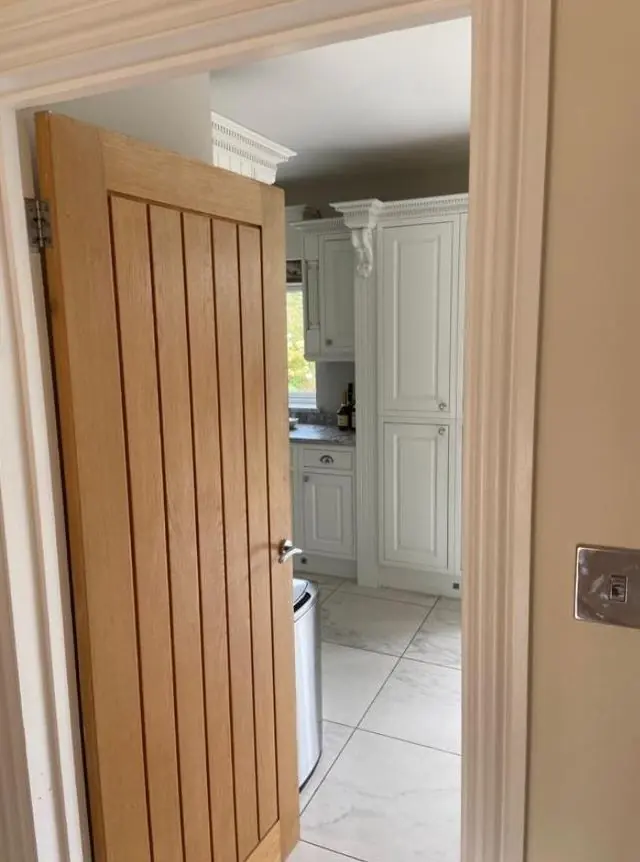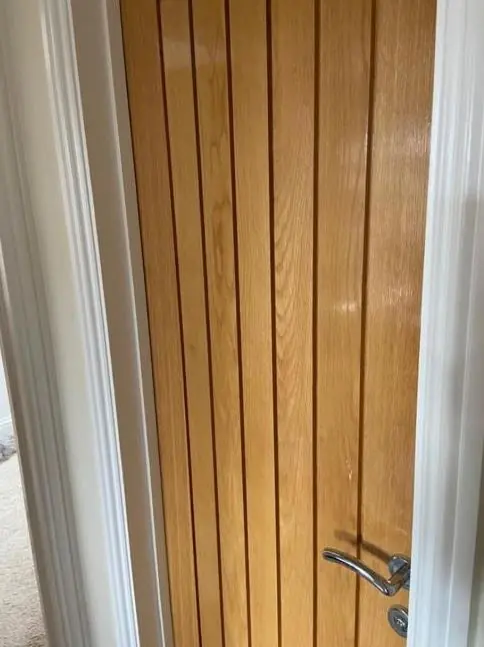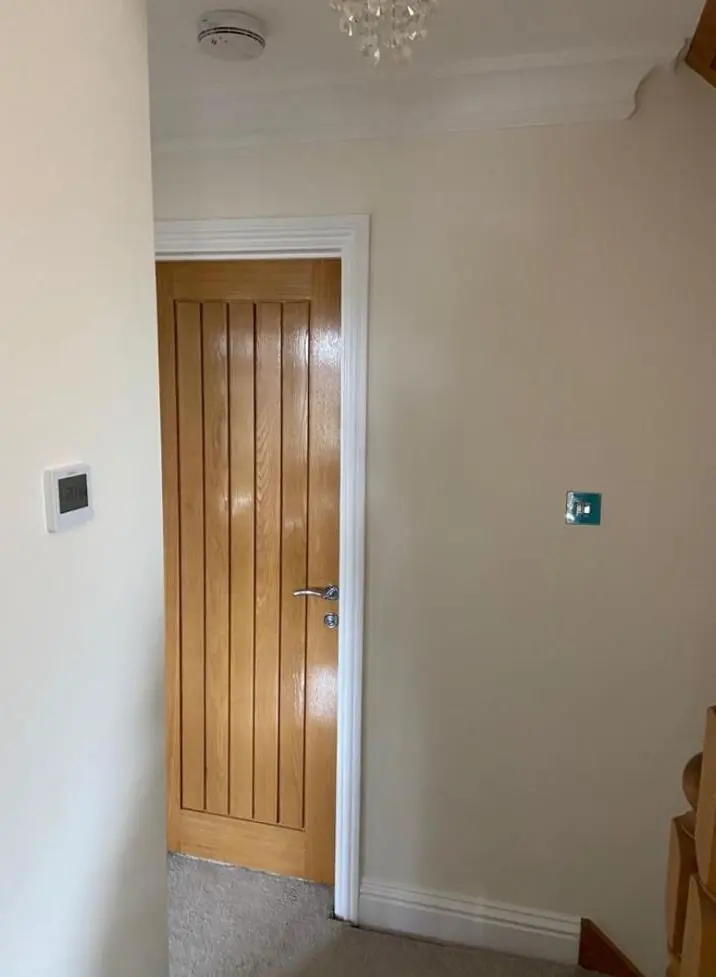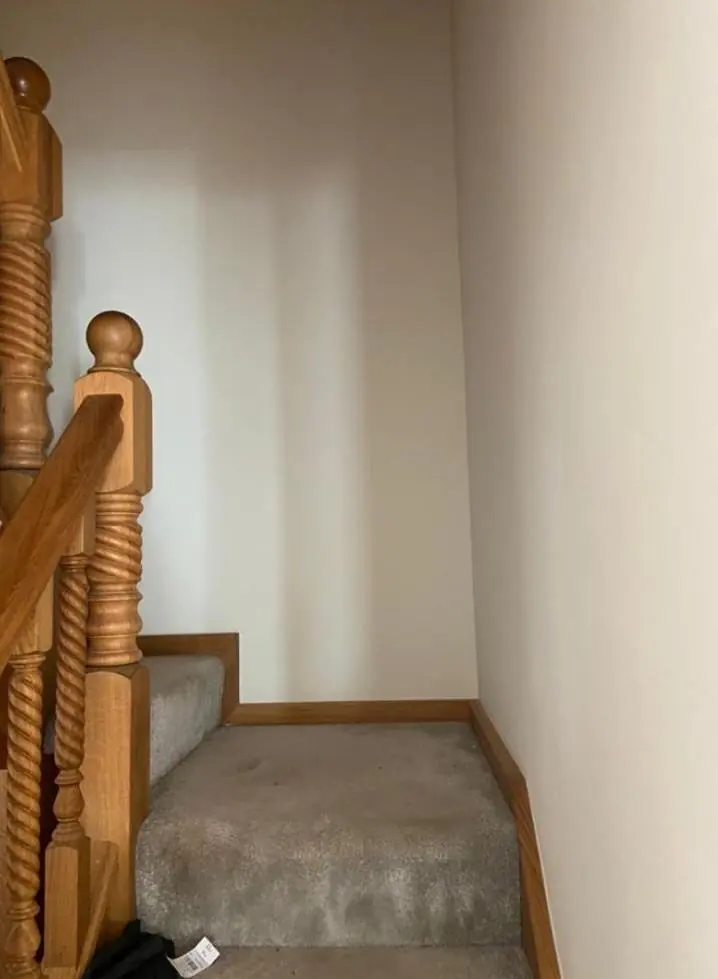
DH Painter & Decorator paints internal doors, skirting boards, architraves and stair woodwork in West Hunsbury, NN4. Dean works from Northampton, about 2.1 miles north-east of the estate, and gives free quotes for woodwork on its own or alongside a room repaint.
Why the woodwork in Shelfleys houses has gone cream
Most of West Hunsbury, still signed as Shelfleys in places, went up between 1970 and the early 2000s, with the bulk of the detached and semi-detached houses dating from the 1980s and 1990s. Houses from that period were usually finished with softwood skirtings, architraves and internal doors, coated in oil-based gloss. Thirty or forty years on, that gloss has often yellowed, especially in hallways and on landings that get little direct sun, and it has been touched up so many times that the edges of door panels have rounded over with build-up.
A common aim with houses of this age is to swap the yellowing gloss for a water-based satin that stays white. That is a sensible change, but it can’t be done by simply painting over the old coating. Water-based paint will not grip well on shiny oil gloss, so the preparation is what decides how long the new finish lasts.
From oil gloss to water-based satin, step by step
- Degrease first. Door edges near handles and the tops of skirtings in kitchens and family rooms carry grease and dust that stop any paint bonding.
- Key the surface. Every face is sanded to dull the old gloss. Runs and sags from earlier coats are taken back flat.
- Prime for adhesion. A bonding primer goes over the old oil coating so the satin has something to hold on to.
- Fill and caulk. Settlement gaps between skirting and wall, and open mitres on architraves, are filled or caulked so the finished line is clean.
- Two coats of satin. Laid off in the direction of the grain on panelled and flush doors alike.
The full method, including how we deal with knots bleeding through, is on our main door and skirting board painting page.
How much woodwork a West Hunsbury house holds
Agent listings on the estate cover everything from a three-bed detached bungalow in Whaddon Close to five-bed detached houses in Bramble End and Fienesgate. The amount of joinery climbs steeply with house size, which matters when you are deciding whether to do the woodwork in one go or room by room.
| Property in listings | Woodwork that usually adds up |
|---|---|
| Detached bungalow, e.g. Whaddon Close | All doors off one hallway, so a single-day disruption to the whole house |
| Three-bed semi with conservatory, e.g. Merryhill | Internal doors, stair spindles and string, plus the frame into the conservatory |
| Four- or five-bed detached with double garage | Long skirting runs, galleried landing balustrade, en-suite doors and the door through to the garage |
| House with annex, e.g. Bramble End | A second set of doors and skirtings that may be newer and need a different primer |
On a big detached house we often suggest doing the downstairs and the stairs first, then the bedrooms, so no part of the house has wet paint everywhere at once.
Garage doors, annexes and extension joinery
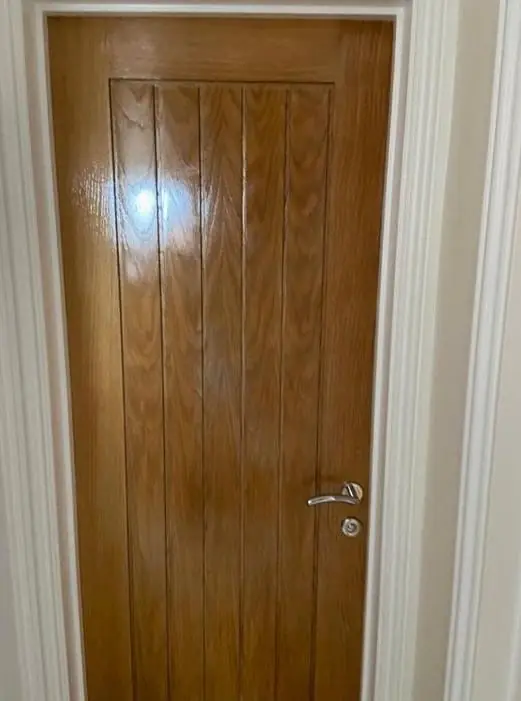
Many West Hunsbury houses have an integral or attached garage, and the internal door from the house is often a fire door. We paint those without removing or painting over the intumescent strips or smoke seals in the frame, and we keep self-closers working. Where a garage has been converted into a room, its new skirting and door lining are usually bare or factory-primed timber, so they get a knotting and primer coat before matching the satin elsewhere in the house.
Extensions and annexes are common here, and their joinery is often a different profile and age from the original 1980s softwood. We match the sheen across both so the newer doors don’t look brighter than the old ones. If you are also redecorating the walls, see what else we do on the estate from our West Hunsbury area page.
Last updated by Dean, DH Painter & Decorator.