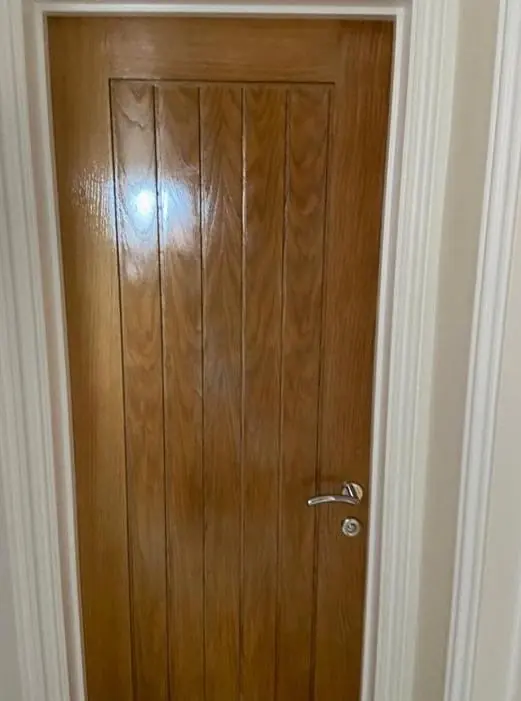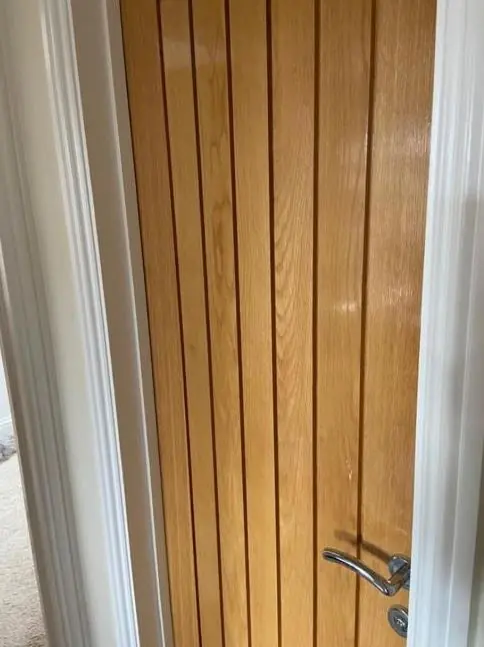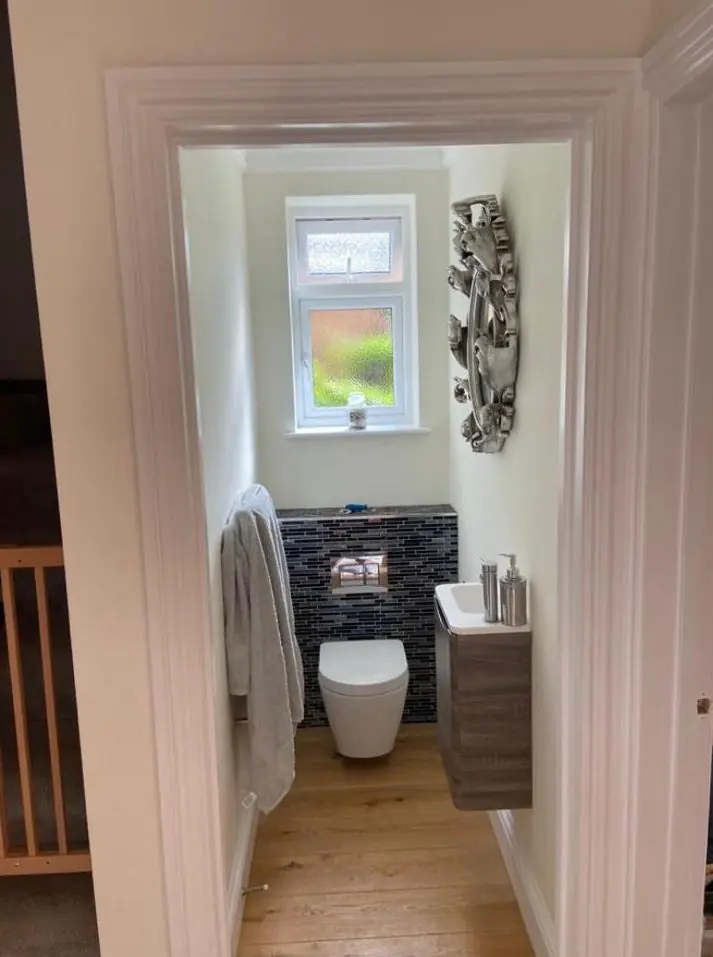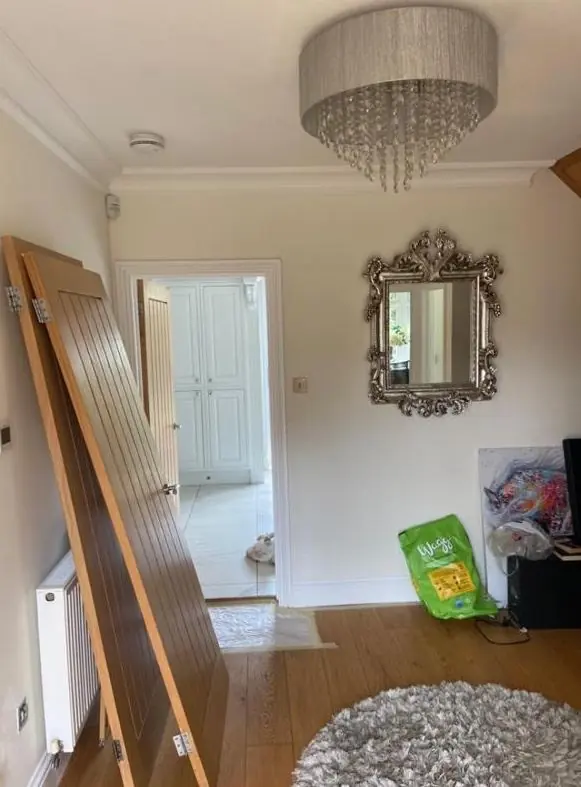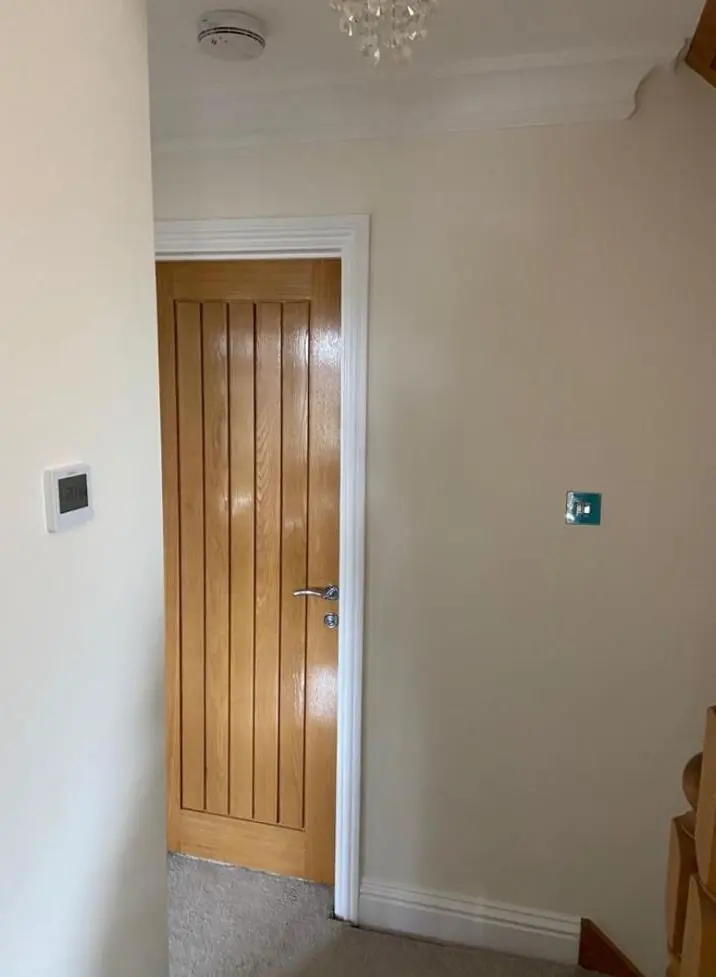
DH Painter & Decorator decorates hallways, staircases and landings in East Hunsbury's two-storey family houses, NN4, about 1.9 miles from Northampton town centre. Dean covers the walls, ceilings, spindles, handrails and doors on the stairwell, and quotes free after a look at the space.
What a typical East Hunsbury stairwell looks like
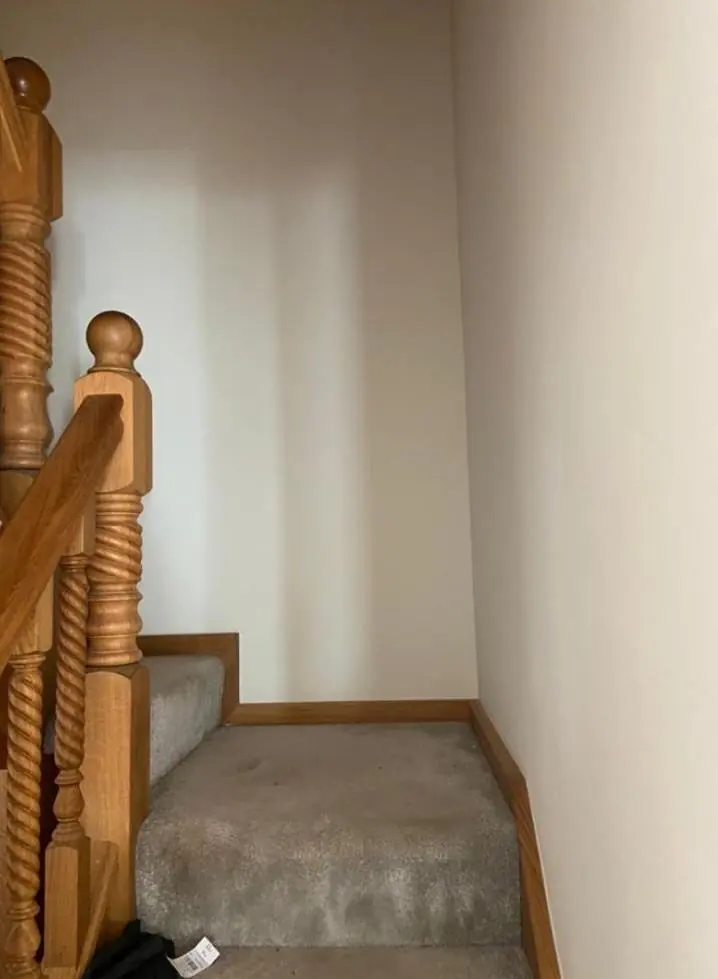
The houses in East Hunsbury’s cul-de-sacs were built in the 1980s and 1990s as two-storey family houses. Their staircases are mostly straight flights or quarter-turn stairs with a short landing, under standard ceiling heights. That is good news for access. The tall wall above the flight can usually be reached safely from an adjustable stair platform and a stair ladder, so a full scaffold tower is rarely needed, and the staircase stays usable at the end of each day.
Larger detached houses, including some on raised plots, may have a wider landing with a gallery rail or a window halfway up the flight. Those need a little more setting up, and we look at the exact layout before quoting rather than assuming a standard stairwell.
Artex and woodchip above the stairs
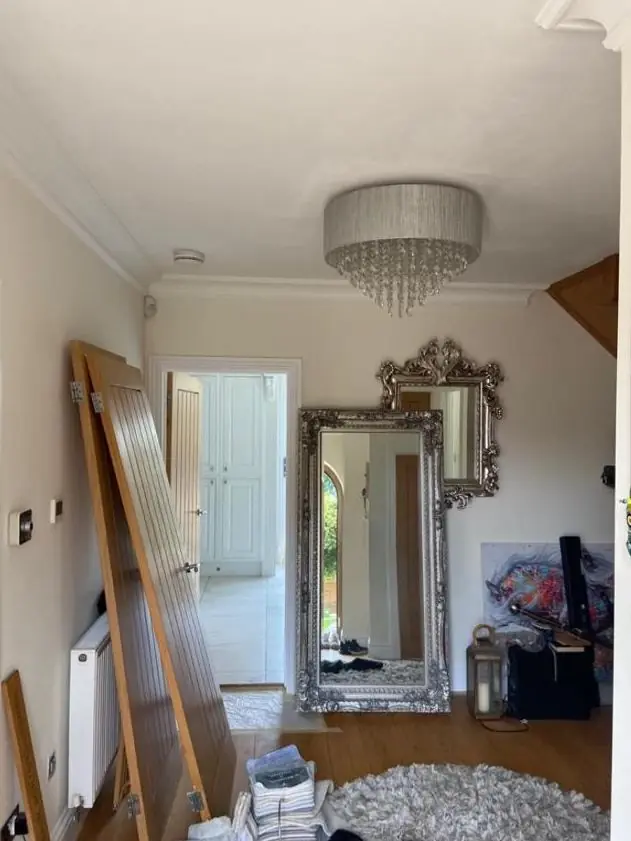
Houses of this age often still have the original textured ceiling on the landing and stairwell, and woodchip paper on one or more walls. Both affect the plan:
- Textured ceilings can be repainted as they are, which is the quickest route, or skimmed smooth by a plasterer before we decorate. Any textured finish put up before the year 2000 may contain asbestos, so they should not be sanded or scraped until a sample has been tested.
- Woodchip can be painted over if it is well stuck, but the lumps show every repair. Stripping it often reveals blown or damaged plaster underneath, especially on the long stairwell wall, so it is sensible to allow for filling or patch skimming.
- Lining paper is a good middle option on walls that are sound but cracked or patchy.
Whichever route is chosen, the cutting-in line between a textured ceiling and a flat wall is the detail people notice most on a landing, so we take time over it.
Finishes for a hallway that takes the school run
This is a suburb of family homes within a short walk of several parks, open spaces and two primary schools. Hallways here see buggies, bikes, football boots and dogs back from the park. Ordinary contract matt marks easily in that setting. We suggest a scrubbable matt or a durable eggshell on hall walls, especially the lower section and the wall beside the stairs where hands trail, and a hard-wearing satin or gloss on spindles, newel posts and skirtings. A painted or varnished handrail is wiped every day, so it needs a tough finish too.
Colour also has a job to do. Where a hall gets little daylight from the front door, a lighter shade on the walls with a slightly deeper tone below a dado or on the woodwork can brighten the space without showing every scuff. Our colour advice covers this in more depth.
Keeping the house running while we work
Most homes here have a driveway, so a van and equipment can be parked off the road without blocking a cul-de-sac. Inside, we sheet the stair treads and hallway floor, mask the banisters, and set the platform so the stairs stay passable when the family needs them. Ceilings and the high wall are usually done first, then the walls, then the woodwork, so nothing above drips on finished surfaces below. The full method, including the access equipment we use, is on our hallway, stairs and landing decorating page.
For other work in the area, visit our East Hunsbury page.
Last updated by Dean, DH Painter & Decorator.