We decorate hallways, stairs and landings throughout Wootton, roughly 2.4 miles south of Northampton town centre in NN4. The parish has two quite different problems: cramped, steep stairs in the 17th and 18th-century cottages of the old village, and high stairwells in three-storey townhouses on the modern estates.
Narrow cottage stairs and three-storey stairwells
The difficult part of a staircase is reaching the walls and ceiling above it. How we do that in Wootton depends on which part of the parish you live in. In the old village, many houses are low two-storey stone cottages, some with rooms in the roof lit by attic dormers. Their stairs are often narrow, steep and boxed in between solid walls, with little room to stand a platform. On the estates around the village, especially the three-storey townhouses, the stairwell runs up through two flights and the top-floor landing sits a long way above the hall floor.
Our main hallway, stairs and landing decorating page describes the equipment and the order we work in. Below is how it applies here.
Getting staging into a stone cottage
For the narrow stairs in cottages along Green Lane, Church Hill and High Street, we use adjustable stair platforms that sit on the treads, plus short staging boards, so nothing leans on a wall that might be centuries old. Before booking we measure the stair width and the turn at the top, because some of these staircases are too tight for standard kit and need smaller units carried in by hand.
Getting equipment to the door is part of the plan. High Street houses front straight onto the footway, with double yellow lines and a raised pavement outside 44-50, and the lanes around The Green are narrow and sunken. We arrange where the van will go and when we will carry equipment in before the first day, so platforms are not left blocking the pavement.
Solid walls, damp and the paint that suits them
Wootton sits on a slope down to Wootton Brook with a high water table. The 1880s map shows 16 wells in the village, and a stream that once ran along Water Lane is now culverted. Hallways in solid-walled stone cottages are often the coldest, dampest rooms in the house, especially where the hall is on a north-facing elevation. Covering old lime plaster with vinyl emulsion traps moisture and leads to blistering and flaking. In these houses we use breathable mineral or clay-based paints, wash off loose distemper where we find it, and leave walls to dry properly between coats.
If the cottage is one of the village’s 25 listed buildings, remember that listing covers the inside as well. Removing old finishes from a historic staircase or panelling, or changing its character, can need consent, so check with the council first.
Townhouse landings on Wootton Fields and Simpson Manor
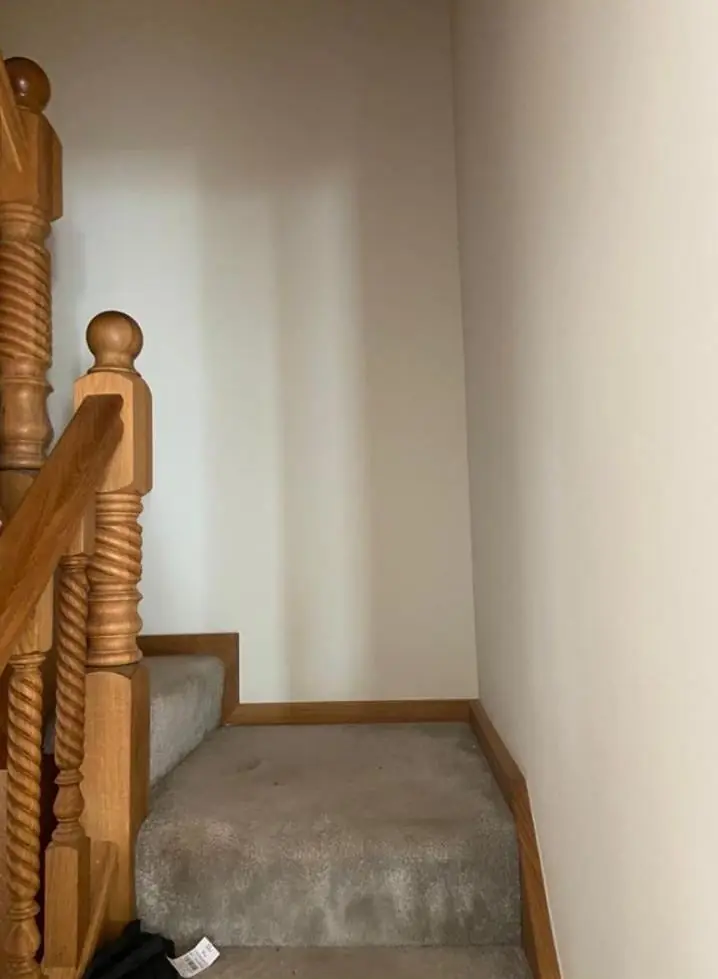
The modern homes need different decisions. Three-storey townhouses, such as the four-bedroom one listed to rent on Turners Court, have a tall void over the stairs, long runs of spindles and handrail, and three landings’ worth of doors and skirtings. We use a combination stair platform and podium steps to reach the top wall safely, and we often paint the ceiling and upper walls first, then the spindles, then the lower walls and woodwork.
- Walls: a scrubbable matt or soft-sheen emulsion, because estate hallways take bikes, school bags and pushchairs.
- Spindles and handrail: keyed and painted in a durable water-based satin, or stained and varnished if they are hardwood.
- Stairs kept usable: one side of each tread is kept clear and dry so the household can still get upstairs at night.
Hallways often get done together with other rooms. See our Wootton page for everything else we take on in the parish, and the cost guide for what affects the price of a stairwell.
Last updated by Dean, DH Painter & Decorator.