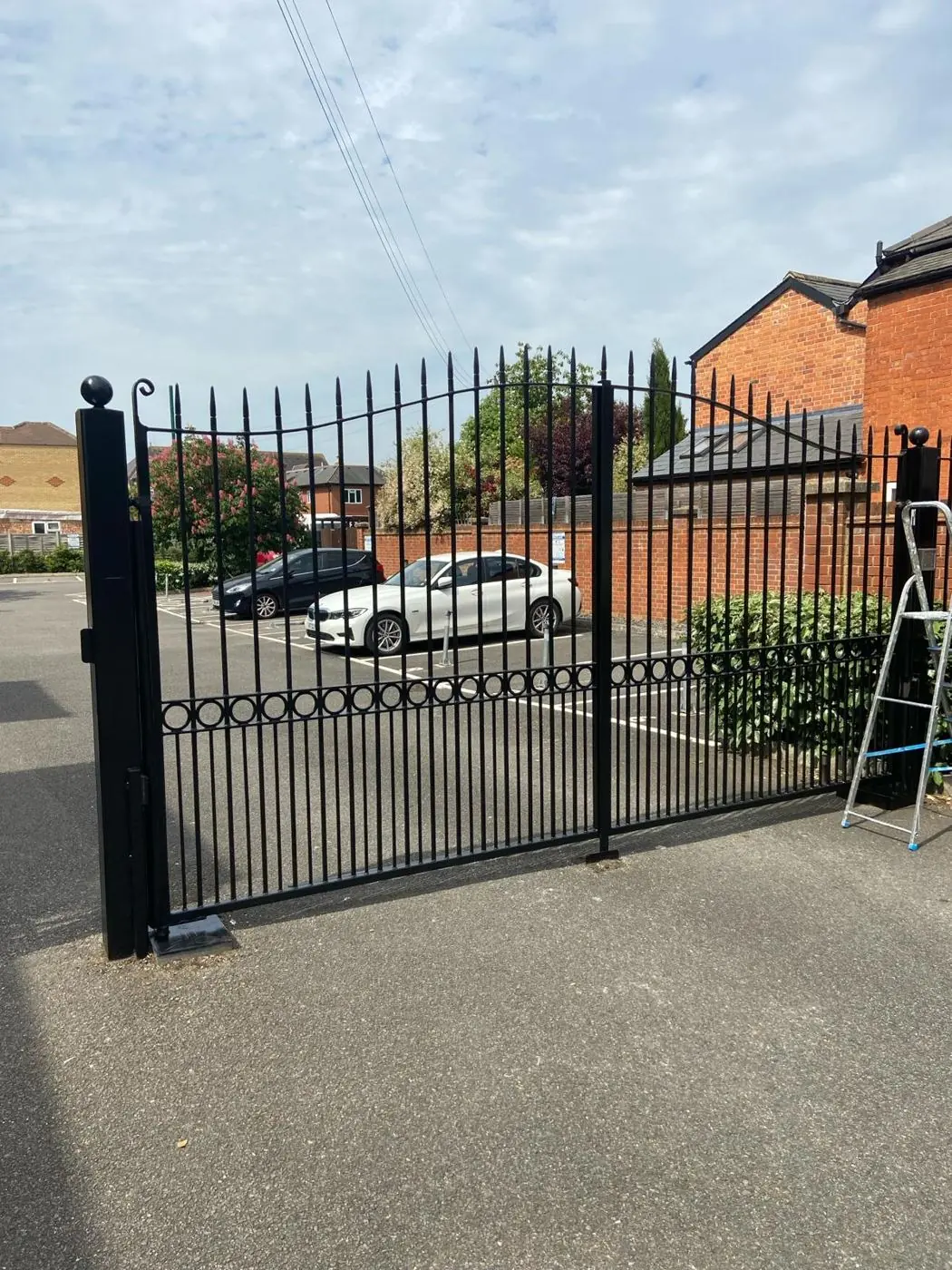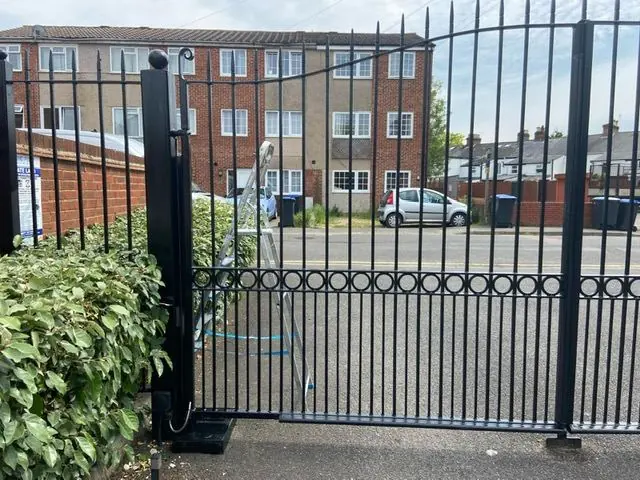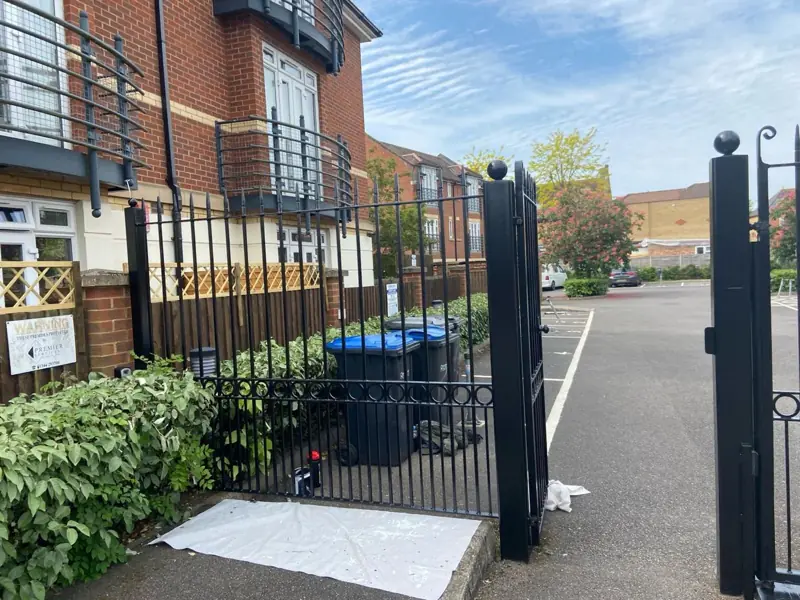
DH Painter & Decorator repaints metal gates, railings and ironwork in Creaton, which lies 7.8 miles north of Northampton. Much of the village's ironwork is old wrought iron hung on ironstone walls and piers. We take rust back to sound metal, protect the stone and use a paint system suited to the age of the iron. Quotes are free.
Wrought iron behind Creaton’s stone walls
The larger houses in Creaton stand in big plots behind walls and trees. Among them are Creaton House, built of coursed ironstone, the 1604 Manor House and Highgate House. Once a coaching stop on the turnpiked Welford Road and now a conference centre, Highgate House has ornate wrought iron gates and gate piers that are the clearest example of historic ironwork in the village. Other larger houses have metal gates set into their ironstone boundary walls. A modern driveway gate on a newer plot is a different job again, usually mild steel or galvanised.
Before we quote, we work out which metal we are dealing with. Wrought iron is fibrous and has usually been painted many times. Cast iron finials and panels are brittle, so they cannot be hammered or chipped hard. Mild steel and galvanised steel each need their own primer. The main metal gate and railing painting page explains these differences in detail.
Where iron meets ironstone
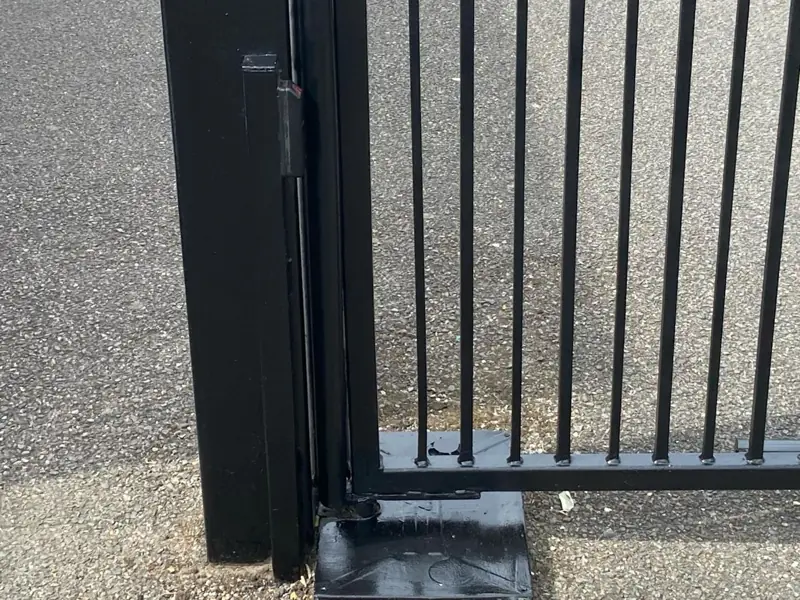
The weak point on most old gates is where the metal goes into the stone: hinge pins leaded into piers, railing feet set in a coping, and latch keeps fixed into the wall face. Water collects there, rust forms, and rust takes up more space than the iron it came from. Over time that pressure can crack the stone or push out the mortar. We clean out these joints as far as we can reach, treat the rust and seal the metal before painting. If a pier has cracked or the pointing has failed, we tell you before we paint. The conservation area appraisal asks for lime mortar in any repointing, so we would not run cement round a hinge to tidy it up.
Ironstone and the soft orange/red brick in Creaton both stain easily. Rust run-off and paint splashes are hard to remove from their surface, so we mask the stone round every fixing and sheet the base of the wall before wire brushing or painting.
Which paint system suits old iron
| Ironwork | Our approach |
|---|---|
| Historic wrought iron gates and piers | Hand scrape and wire brush to sound metal, rust-inhibiting primer, traditional oil-based or micaceous iron oxide finish |
| Cast iron finials or panels | Gentle hand cleaning, no impact tools, primer worked into the detail |
| Modern mild steel driveway gates | Remove rust spots, prime bare metal, two coats of exterior metal paint |
| Galvanised gates and rails | Degrease, primer made for galvanised surfaces, then topcoat |
On a gate that may have early lead-based paint in its lower layers, we keep preparation to wet and hand methods and contain the debris, rather than sanding it dry.
Exposure, trees and choosing a colour
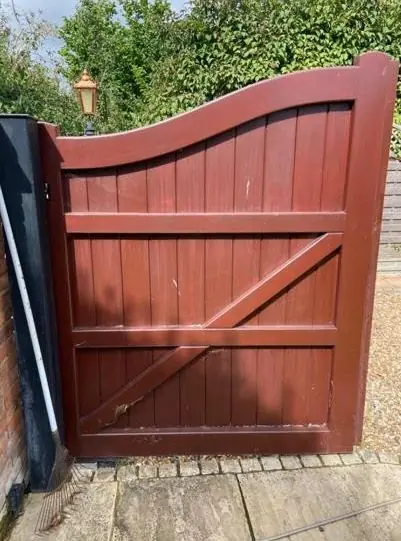
Gates on the eastern side of the village face open land from a ridge at about 125 metres, so they take wind-driven rain, and condensation sits on the metal on cold mornings. We paint ironwork in dry, settled spells and leave enough time between coats for the oil-based paint to harden. Gates under the protected trees round The Green collect leaf litter and sap, which hold moisture against the bottom rail. That rail and the hinge side are where we expect to find the worst rust.
The appraisal’s colour guidance is about windows, not ironwork, but the same idea applies in the conservation area: stay close to what was there before. Old paint layers often show the original colour. If your house is listed, check whether a change of finish needs consent. For other outside work in the village see the Creaton area page, and our guide to choosing a painter and decorator lists what to ask at any quote.
Last updated by Dean, DH Painter & Decorator.