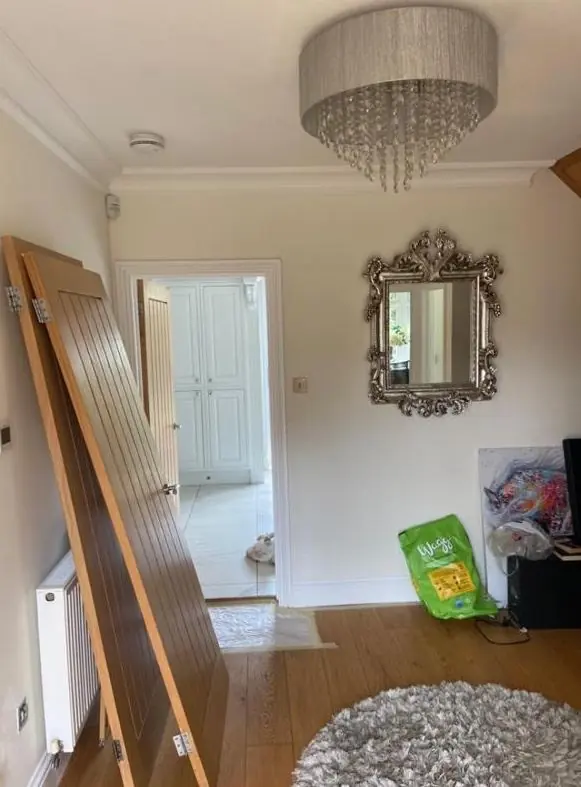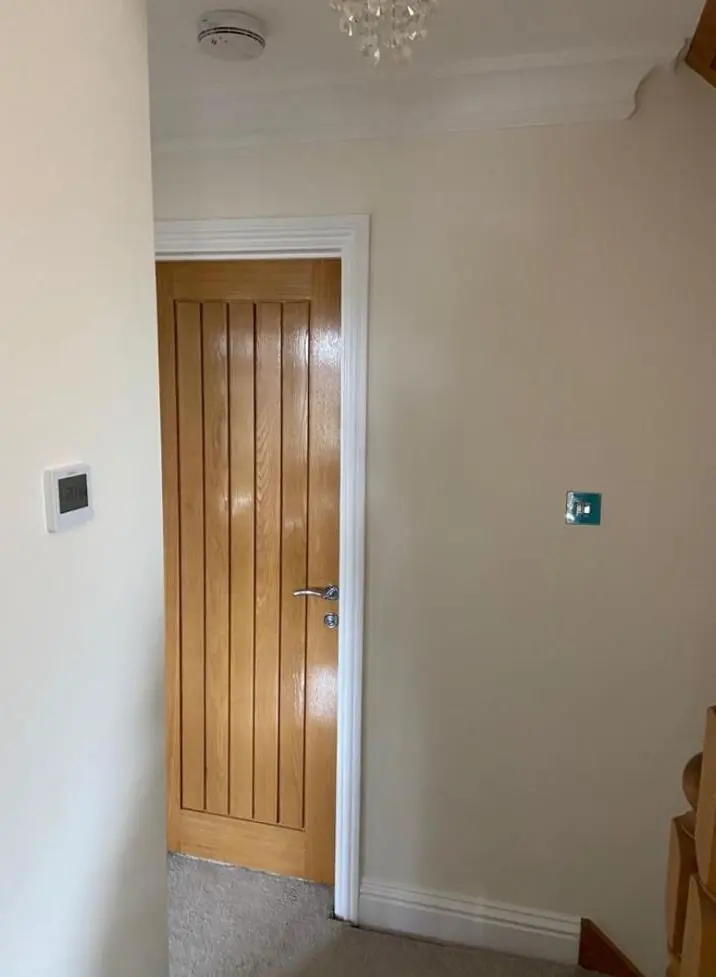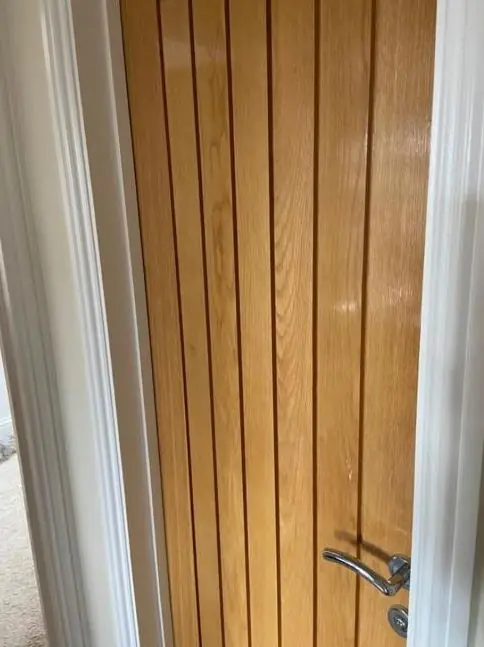
Dean applies limewash, heritage finishes and hand-painted detail in Creaton, a conservation village in NN6 some 7.8 miles north of Northampton. The work suits the cob and ironstone cottages and the larger period houses around The Green, and is planned around what each wall and any listing allows.
For many homes, decorative finishes means a feature wall or a paint effect. In Creaton the most useful decorative work tends to be older: limewash, flat traditional finishes and the careful picking-out of period detail. That follows from what the village is built of. Our main decorative finishes page covers paint effects and panelling in general; this page sticks to what suits Creaton’s buildings.
Limewash: the decorative coat cob and ironstone were built for
Cob walls survive at 10 and 12 The Green, on High Street at Lilac Cottage, The Old Cottage and Cob Cottage, and probably at 10 to 16 Welford Road. Several cob buildings are already rendered. Ironstone forms most of the rest of the historic core. Both need finishes that let moisture through, and the conservation area appraisal favours lime-based finishes on pre-1919 buildings and warns that masonry paints are often unsuitable.
Limewash meets that need and is also decorative in its own right. Built up in several thin coats, it gives a soft, chalky depth that varies slightly across the wall, which a flat modern paint cannot copy. Indoors it can be tinted with earth pigments. The practical points:
- It goes on thin, often four or five coats, and each must dry before the next.
- It needs a clean, porous surface, so existing modern paint may have to come off first.
- It dries much lighter than it looks wet, so we test a patch first.
- It rubs a little and is refreshed over the years instead of being stripped and redone.
Outside, on cob that is already rendered, a breathable lime-based maintenance coat is the sympathetic choice. The appraisal discourages painting or rendering walls that are bare now, so we would not suggest limewashing a stone face that has never been coated.
Period rooms in the larger houses on The Green
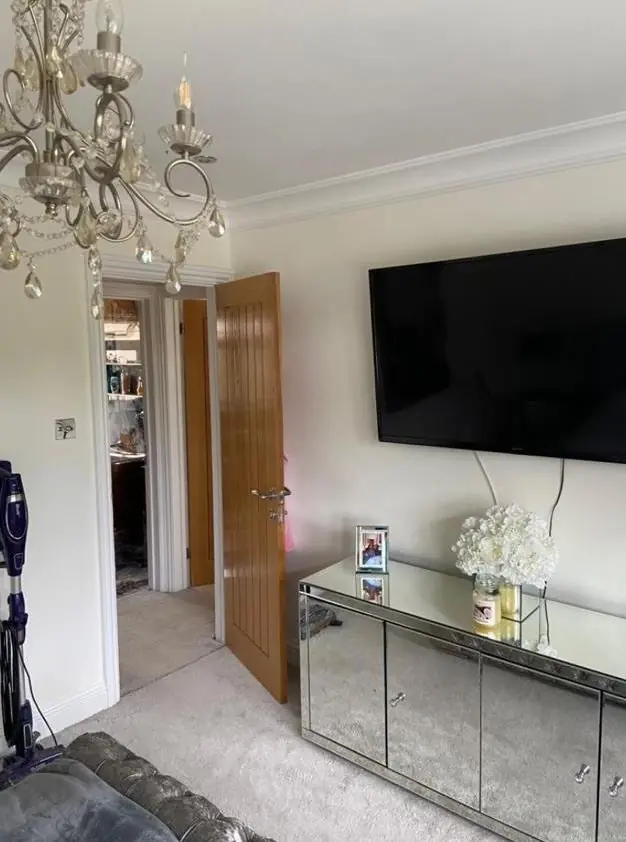
The higher-status houses sit in large plots behind walls and trees: the Manor House of 1604, Creaton House in 18th-century coursed ironstone, and others around The Green and on Welford Road. Interiors in houses of this kind may suit heritage-style decoration such as picking out cornices, panel mouldings or fire surrounds in a second colour or sheen, or flat chalky finishes that sit right in older rooms. We look at what is there before suggesting anything. The aim is to show off original detail, not to add effects the house never had.
The Manor House and 10 and 12 The Green are Grade II listed, and a long list of other buildings is locally listed. Changing finishes in a listed building may need consent, so unless you have approval the job stays like-for-like.
Alms houses, lintels and other exterior detail
Some of the village’s character comes from small painted details. The 1899 alms houses at 7 to 11 The Green have mock-Tudor timber framing in their gables. Timber lintels across the village are painted black or white. Picking out timber like this with clean lines against stone is precise work. On this exposed ridge, with views east and north, it also needs a durable exterior system applied in settled weather.
Feature walls in the modern houses
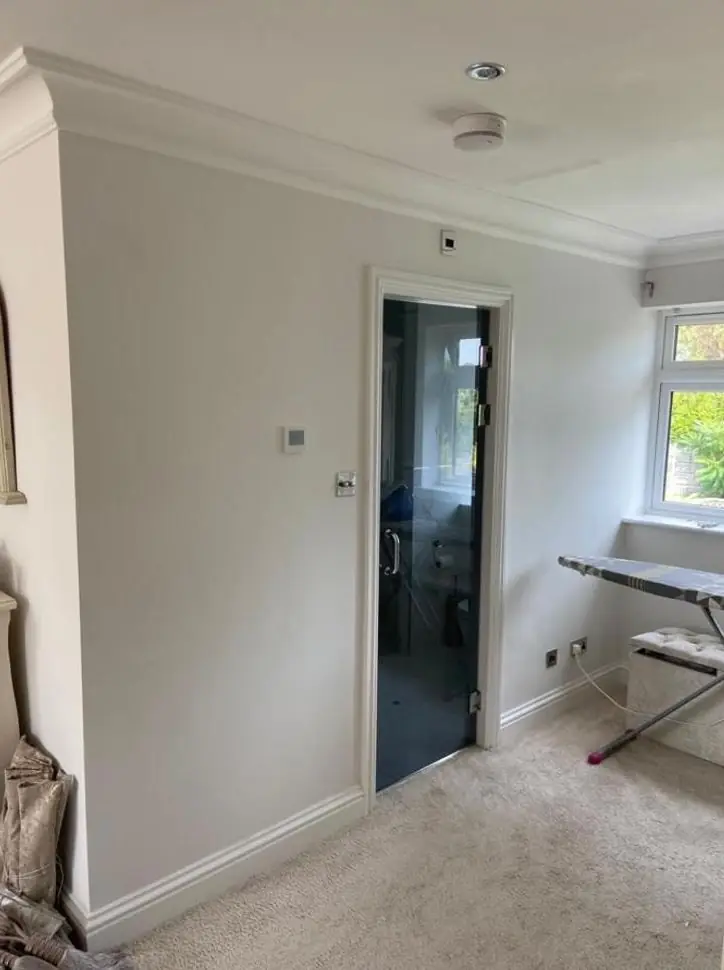
In the post-1950 homes, from Brixworth Road round to Court House Close, there are no heritage limits indoors. Two-tone colour splits, painted panelling and paint effects are all open to you there, with the same preparation underneath as any other wall.
For the rest of our work in the village, see the Creaton page.
Last updated by Dean, DH Painter & Decorator.