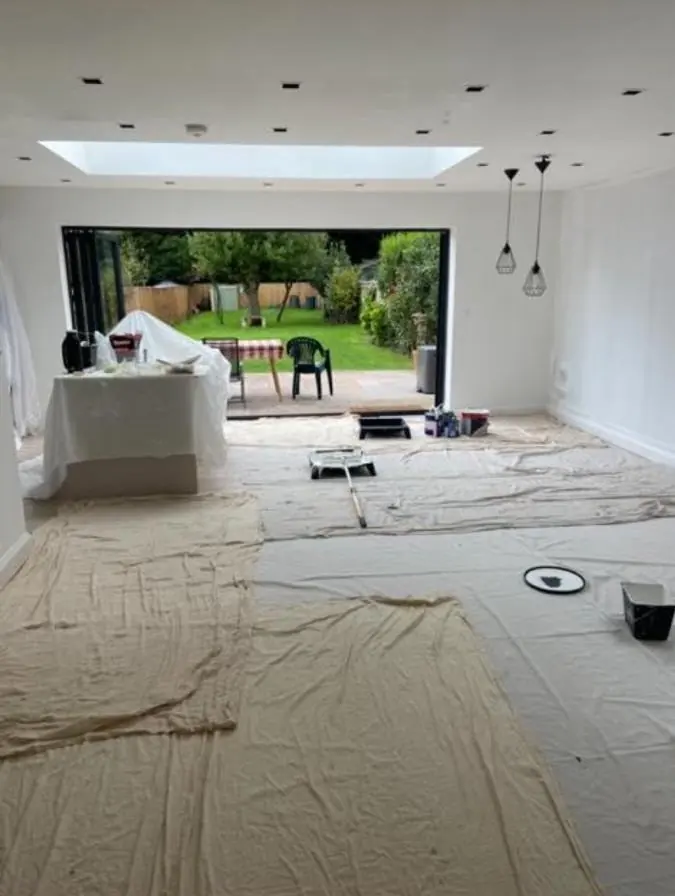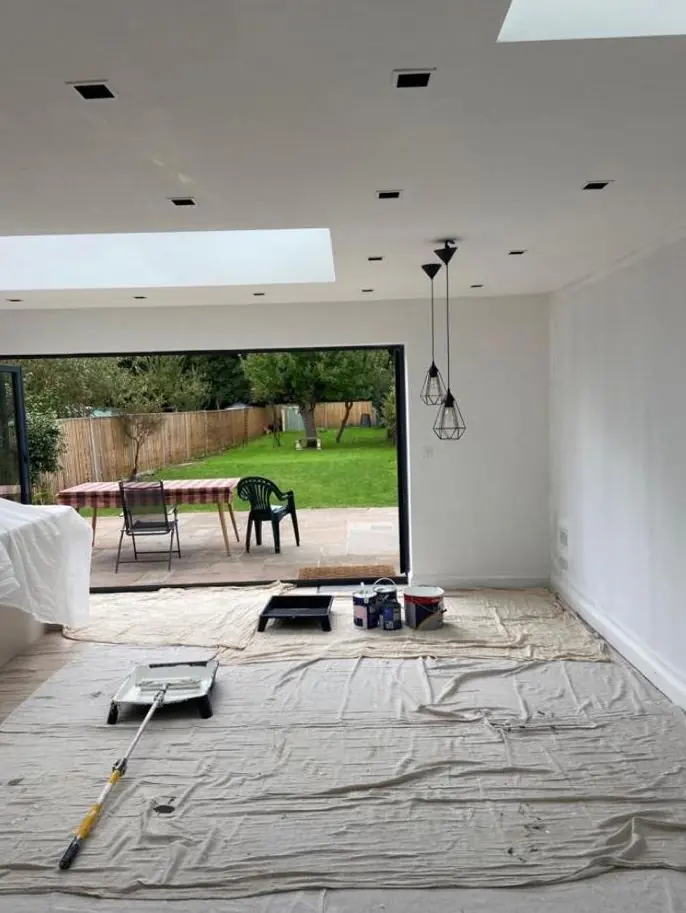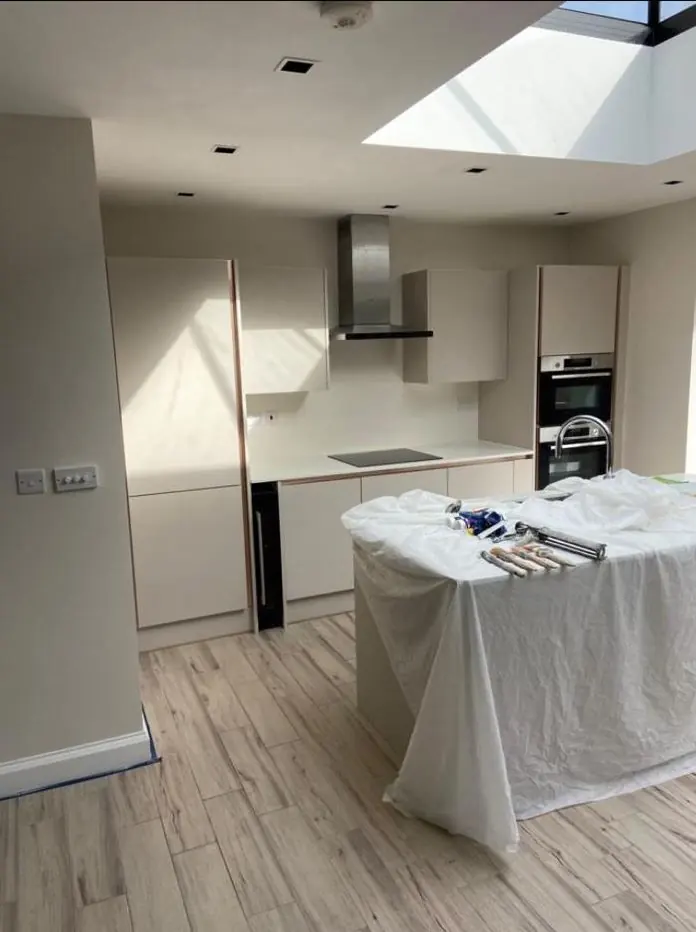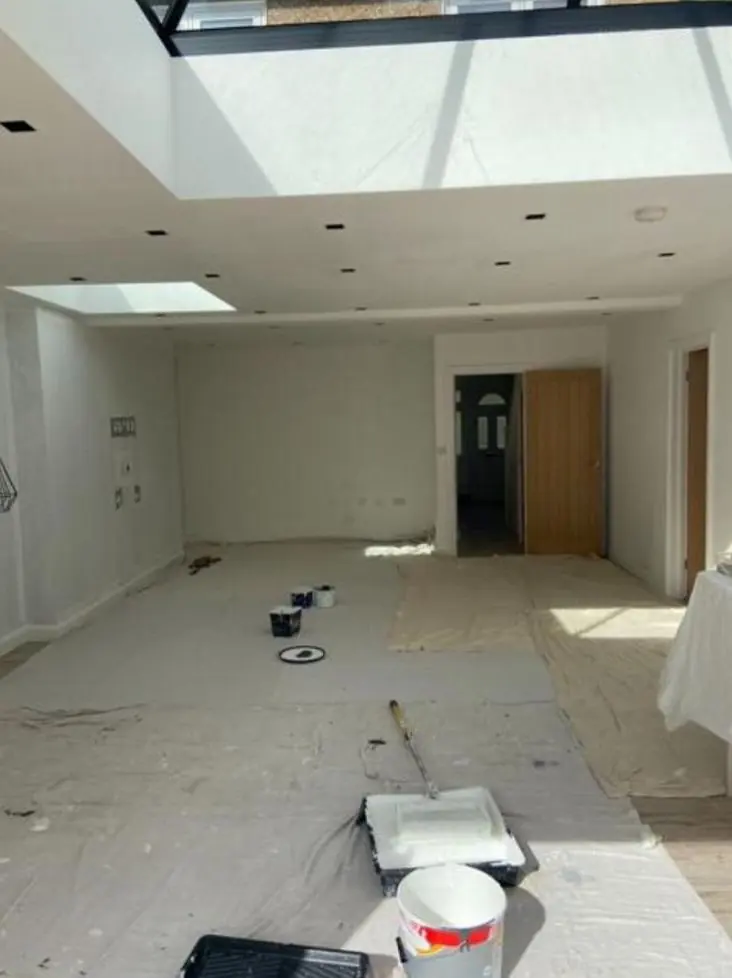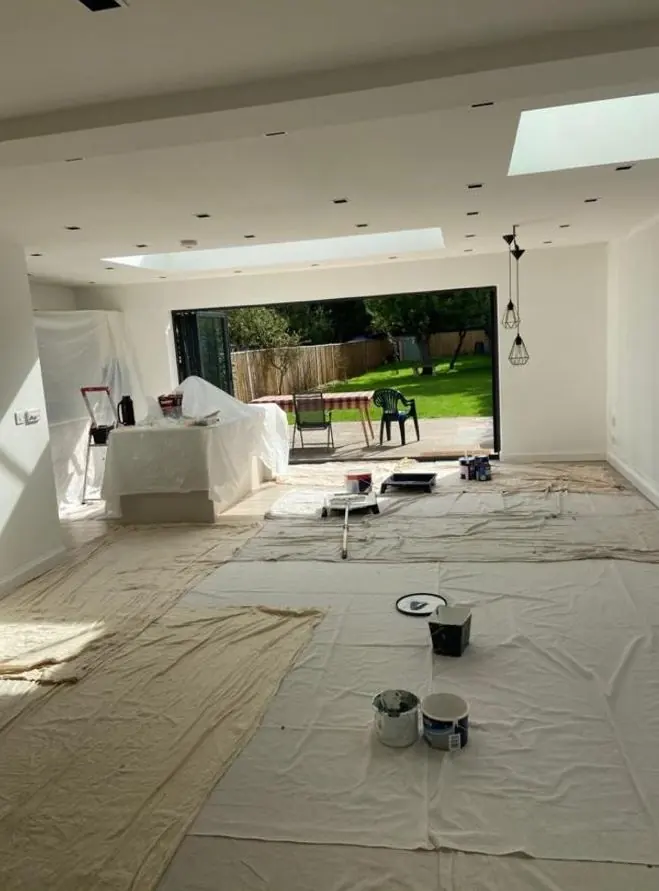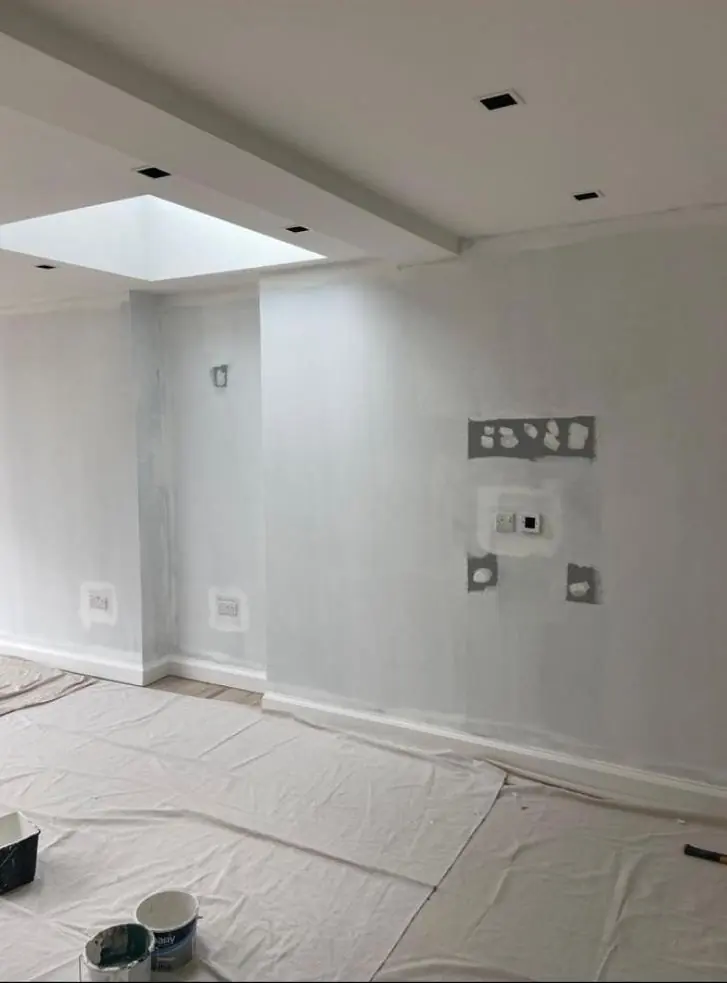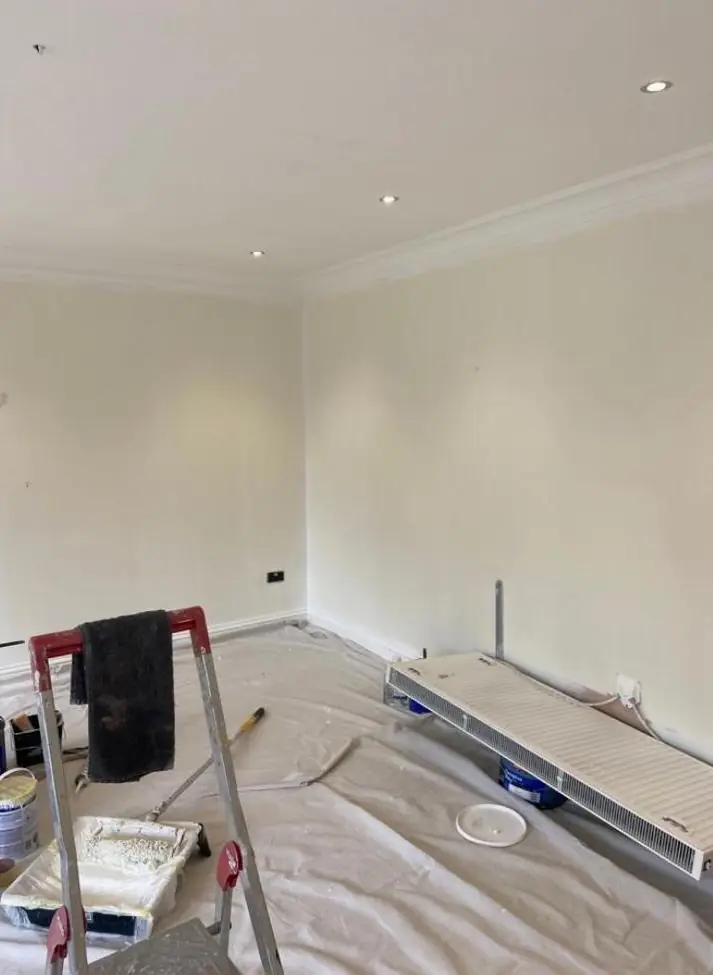
We decorate new plaster, extensions and re-skimmed rooms in Creaton, about 7.8 miles from Northampton town centre. That means checking the plaster is dry, applying a mist coat, then finish coats, with extra thought wherever a new extension joins an older ironstone or cob house.
Where new plaster turns up in Creaton
Fresh plaster in Creaton comes from a few directions. There is the recent infill, such as the terrace of three at 1-3 Litchfield Lane, built in ironstone with slate-like tiles. Extensions to post-war houses, such as those on The Jetty or Court House Close, are another. Older cottages in the conservation area may also have a room re-plastered or a rear extension added. The conservation appraisal expects extensions there to be sympathetic in design and generally no more than two storeys, which keeps most new rooms modest in height.
The junction between new gypsum and old walls
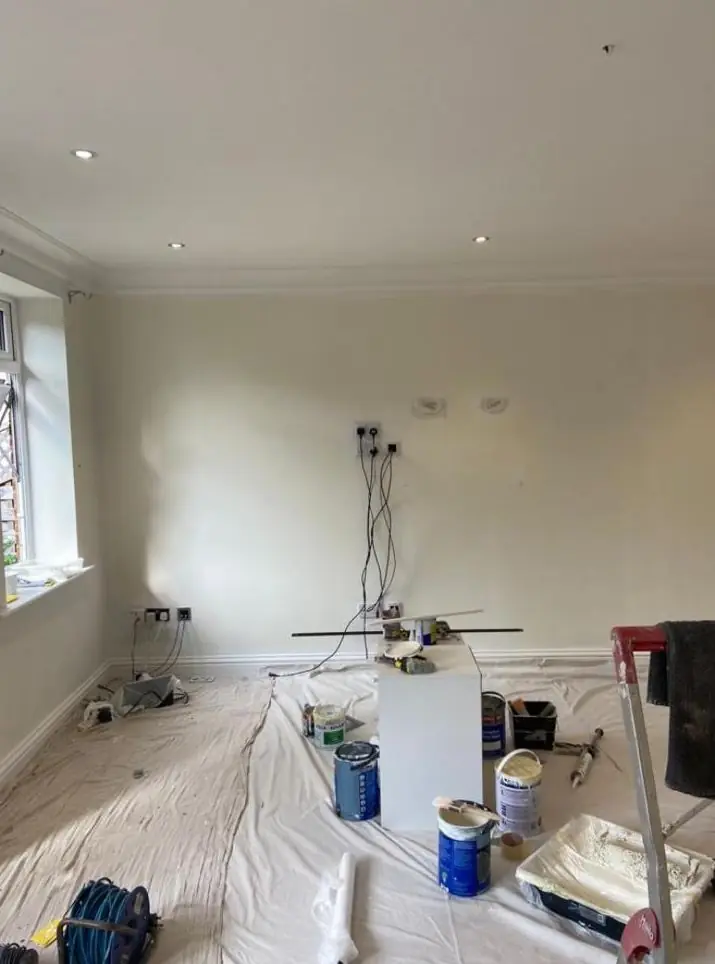
This is the part of the job that is particular to a village like Creaton. When an extension is opened into an ironstone or cob cottage, one wall of the room may be new gypsum plaster while the original walls are older lime plaster or cob. They behave differently:
- New gypsum plaster needs to dry out fully, then take a diluted mist coat so the finish coats grip rather than peel.
- Old lime plaster or cob needs to keep breathing, so a vinyl emulsion that suits the new wall is the wrong product for the old one.
- The joint between them is where hairline cracks tend to appear as the new structure settles, so we leave the caulking and filling until after the mist coat shows where they are.
Our usual answer is a breathable paint across the whole room, so the new and old walls finish in the same sheen and colour without trapping moisture in the old work. Where the cottage is listed, as the cob pair at 10 and 12 The Green is, any change to finishes may need listed building consent, so the plaster and paint should be agreed before work starts.
Drying times on an exposed ridge
Creaton sits at about 125m on a ridge that faces east and north, and a new extension there can be cold through the winter months. New plaster dries more slowly in a cold, unheated shell, and painting too early is the main reason mist coats fail. We check the walls are an even, pale colour all over, including corners and window reveals, before the mist coat goes on. If the builder is still running the heating in or the windows are not yet fitted, we would rather come back than paint on damp plaster. Our guide to mist coats on new plaster explains the signs to look for.
New woodwork, and fitting in with the builder
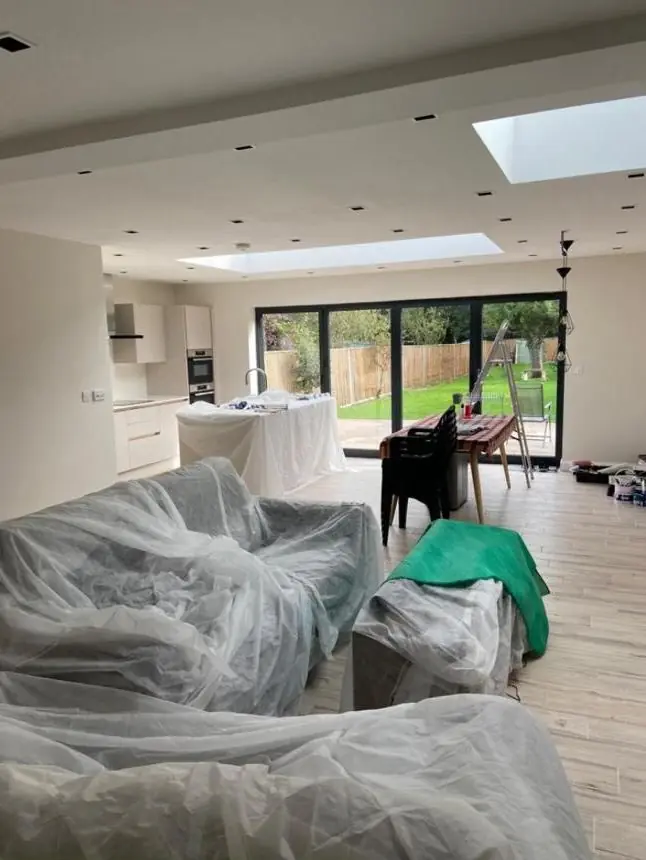
Extensions usually bring new skirtings, architraves and doors, often in MDF or primed softwood, which we seal and finish once the walls are done. Where Creaton cottages keep painted timber lintels or older plank doors in the original part of the house, matching the new woodwork to the old finish is something we plan for. Access matters too: Litchfield Lane is a gravel lane, High Street has little off-road parking, and builders’ skips and vans often share the space, so we agree timings with the builder in advance.
Outside, new extensions and infill in the village often repeat the local detail of timber lintels, as the Litchfield Lane terrace does. New exterior timber should be primed on all faces before it goes up if possible, then finished in the black or white the conservation guidance expects, using an exterior oil or alkyd paint able to take the weather off the ridge.
The full step-by-step for decorating a new extension is on our new plaster and extension painting page, and our Creaton area page has more on the village’s housing.
Last updated by Dean, DH Painter & Decorator.