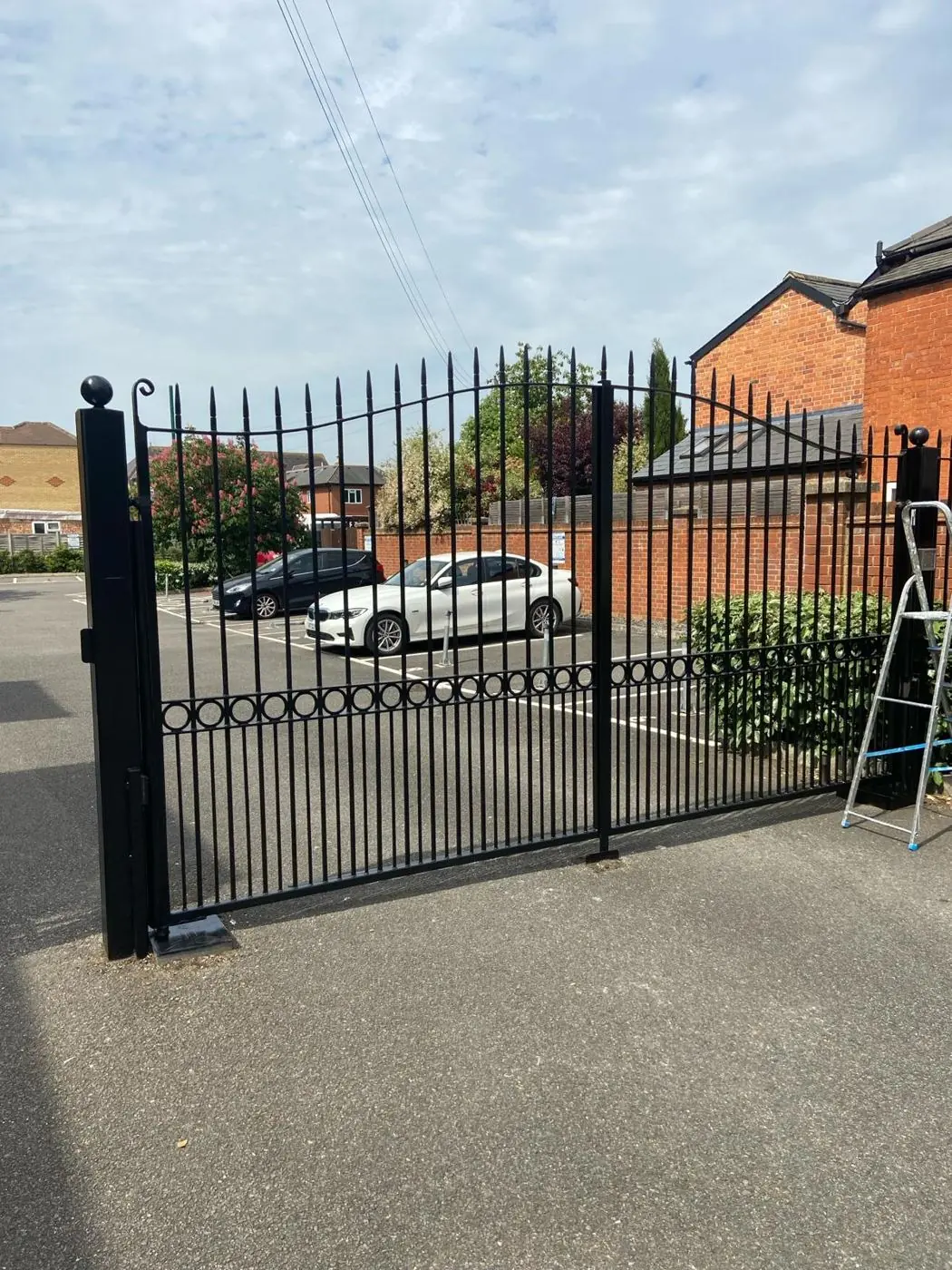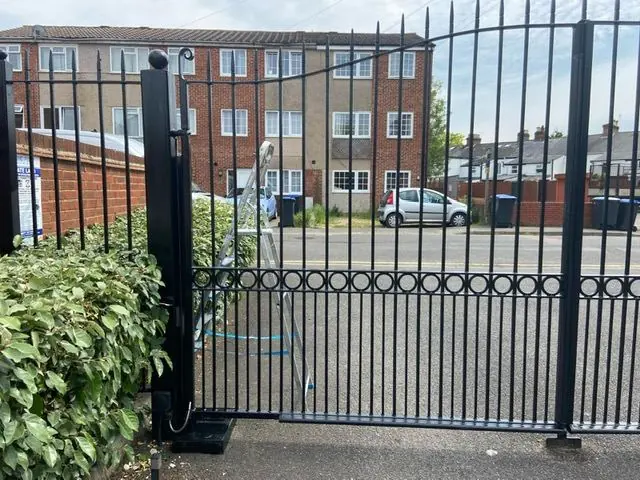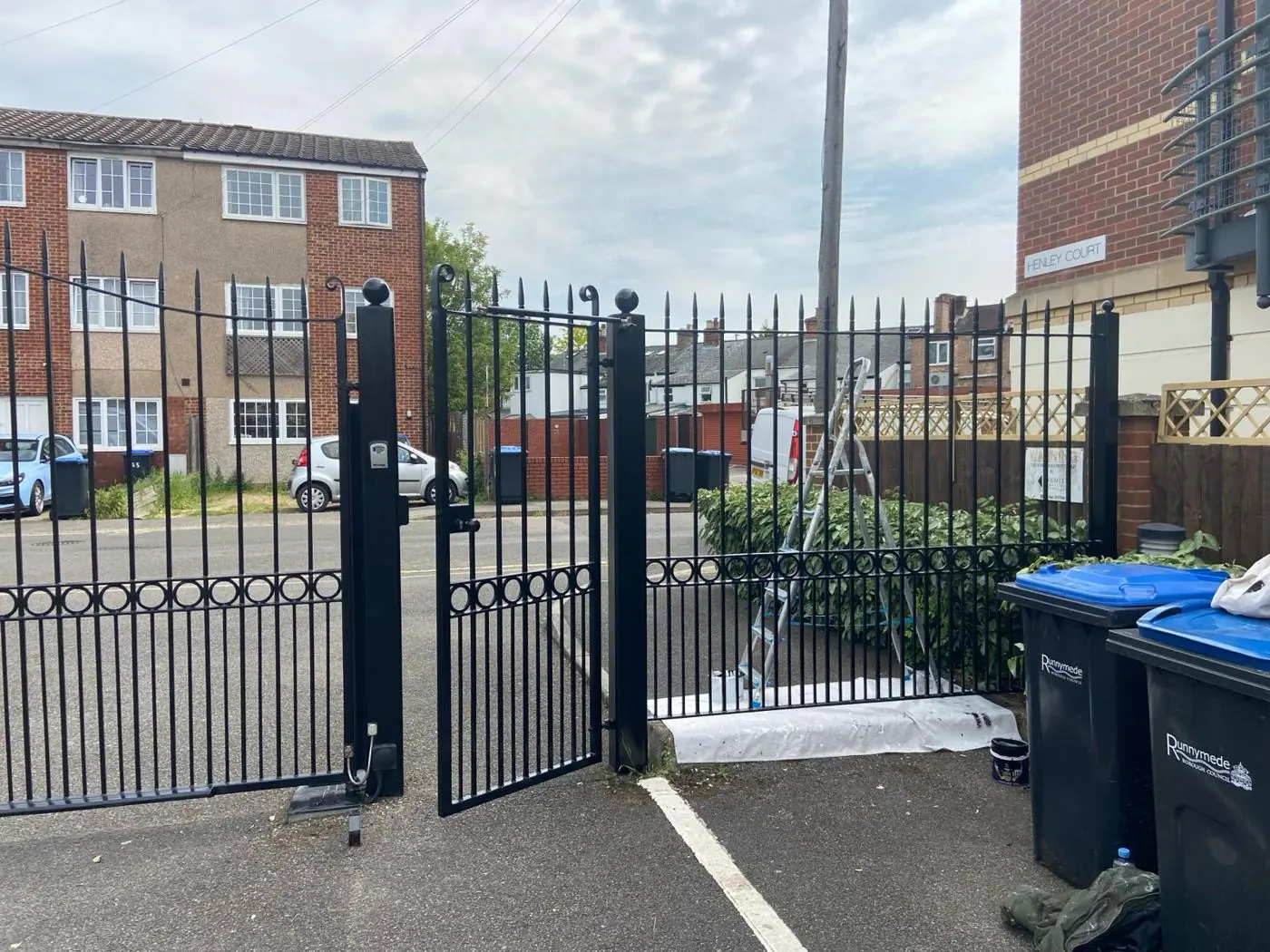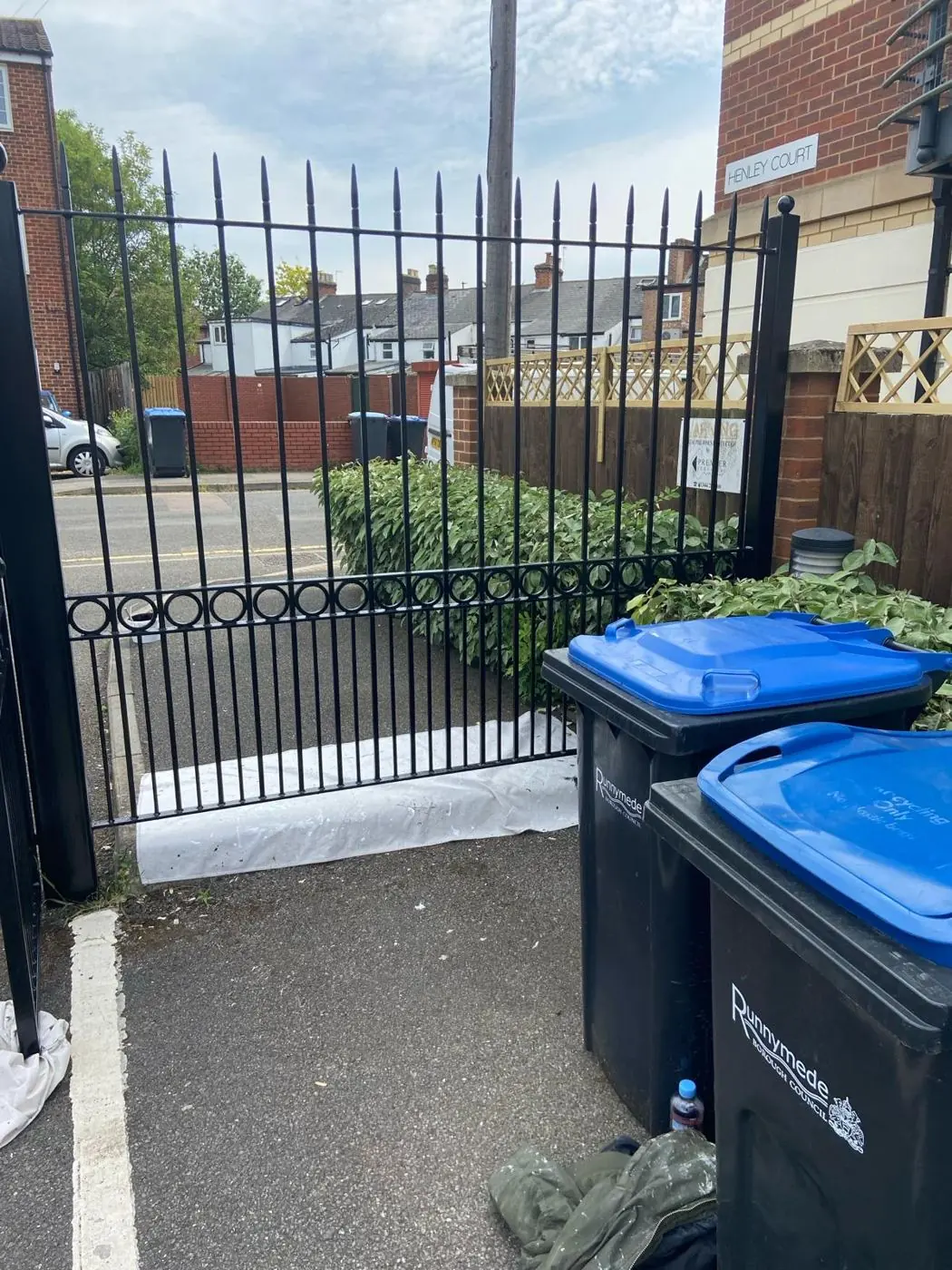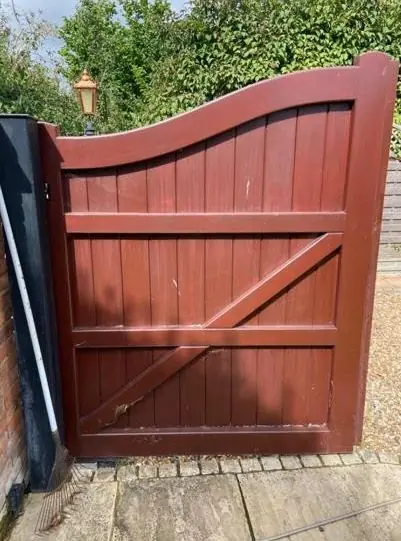
DH Painter & Decorator repaints iron gates and railings in Spratton, NN6, about 6.5 miles north of Northampton town centre. Older houses on Church Road and Manor Road may have ironwork set into stone boundary walls, so Dean treats rust at the fixings carefully and keeps to colours that suit the conservation area.
Ironwork set into stone
In Spratton’s historic core, the boundary is often a stone wall, and any metal gate or railing is fixed straight into it. Where older houses along Church Road and Manor Road have ironwork, it is typically hung on pins or leaded into sockets cut in ironstone or lias. That junction is where trouble starts. Water sits in the socket, the iron rusts, and rust takes up more room than the metal it replaces. Left long enough, it can crack the stone around the fixing.
So the first part of any job here is looking closely at where the metal meets the wall. We clean rust out of the joint as far as we can reach, prime the bare iron straight away, and make sure the paint is brought right down to the stone without smearing onto it. If a fixing has already split the stone, that is a job for a mason or blacksmith, and we will say so before we paint.
Old iron and many layers of paint
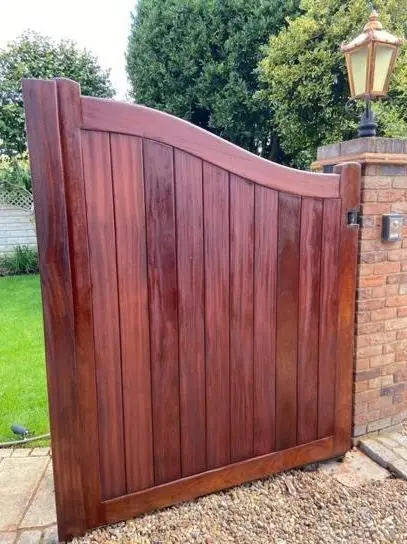
Gates and railings on houses of this age are often wrought or cast iron that has been repainted many times. Thick, built-up paint hides detail and can trap rust underneath. We test how well the old layers are holding, take loose and flaking coats back to a sound edge, and wire-brush rust spots to bright metal before priming. Cast iron is brittle, so we avoid heavy hammering on decorative pieces. Different metals need different primers; that side of the trade is covered on the main metal gate and railing painting page.
Dark heritage colours for the conservation area
Spratton’s old centre is protected as a conservation area, and the 2021 appraisal behind it placed houses and structures in four of its streets on a local heritage list. Against that backdrop ironwork looks right in traditional dark colours: black, very dark green or a deep blue-grey, usually in a gloss or satin finish. Bright or metallic shades look out of place against ironstone and lias. A gloss finish also sheds water faster than a flat one, which matters on metal that spends much of the winter damp.
Keeping the colour the same is simple upkeep. Going from black to, say, a bright blue on a gate facing the street is something to raise with West Northamptonshire Council beforehand, and a Grade II house may need consent for it, which the owner should check.
Gates in exposed spots
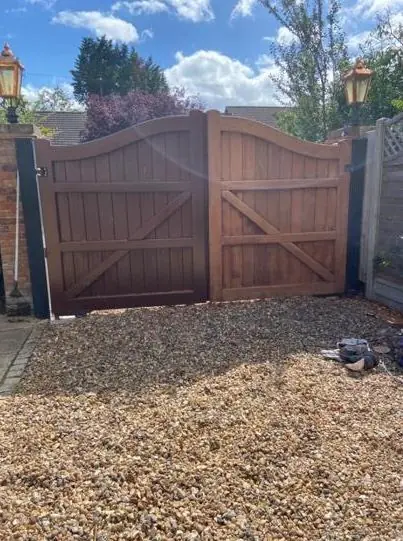
Spratton is a rural village with open farmland round it, and the church stands on high ground at its centre. Metal on exposed boundaries gets wet and dries out repeatedly, which is exactly what drives rust. We try to paint ironwork in a dry spell, and we pay most attention to the parts that stay wet longest:
- The bottom rail and the feet of railings, where rain and splash collect.
- Hinge pins, latches and drop bolts, which wear the paint off with use.
- Horizontal top edges and any hollow sections where water can sit.
Hinges and latches are freed off and left working, not painted solid. On a gate that swings across a gravel or stone path, we also look at whether it drags, since a scraping bottom rail loses its paint within weeks and rusts first. Ironwork is often worth doing alongside front doors and windows; the Spratton painting and decorating page covers the rest of what we do in the village.
Last updated by Dean, DH Painter & Decorator.