
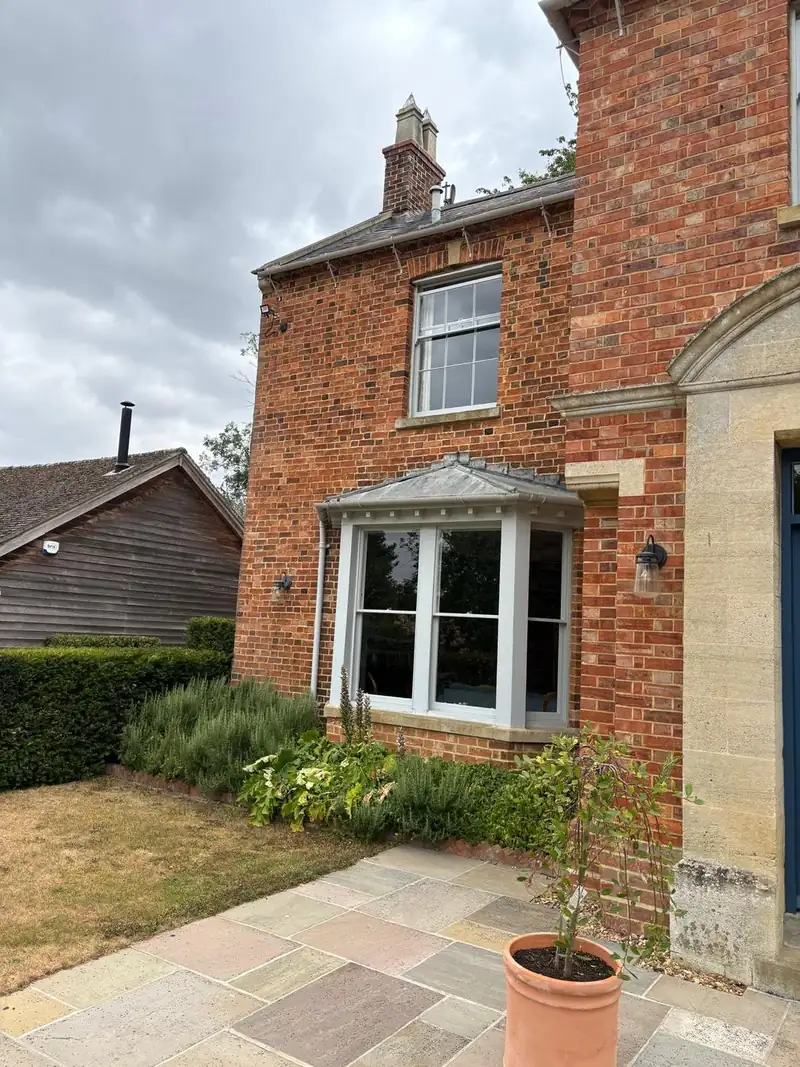
Render and masonry painting in Creaton is maintenance of walls that are already rendered or painted, using limewash or breathable mineral paints on pre-1919 walls as the conservation appraisal advises. Dean leaves bare ironstone and polychrome brick unpainted; Creaton is about 7.8 miles north of Northampton.
The 2021 Creaton appraisal records that a number of buildings in the village have been wholly or partly rendered, obscuring the ironstone, the orange and red brick and the detailing around doors and windows. It says rendering and painting external walls generally detracts and should be avoided. So render and masonry painting in Creaton is not about coating new walls. It is about looking after the rendered and painted walls that already exist, in a way that does not harm the old stone, cob or brick underneath.
Looking after render that is already there
Much of the render in the village sits on older buildings, including some of the cob cottages, where render has long been used to keep weather off an earth wall. The appraisal does not name any roughcast or pebbledash in the conservation area. Where a wall is rendered or painted already, the job is to keep it sound: cutting out and patching blown areas, cleaning off algae and dirt, and renewing the finish with a coating that will let the wall dry out.
The first step is always to find out what the render is. A lime render on cob or ironstone needs limewash or a breathable mineral finish. A cement render, often added later, is harder and less forgiving, and on an old wall it can trap moisture behind it; cracks in it let rain in and stop it getting out. We tap the wall for hollow areas, look at the cracks, and check what coating is on the surface before quoting, because the answer changes the products, the preparation and the price.
| Fact | Detail | Source |
|---|---|---|
| Rendered buildings | A number wholly or partly rendered, obscuring ironstone, brick and detailing (appraisal 8.4) | West Northamptonshire Council |
| Pre-1919 walls | Masonry paints often not acceptable; lime render or limewash more appropriate (appraisal 9.3) | West Northamptonshire Council |
| Pointing | Appropriate lime mortar; no ribbon or strap pointing | West Northamptonshire Council |
| Article 4 | None in force for Creaton on the council’s list (checked November 2026) | West Northamptonshire Council |
| Geology | Northampton Sand Formation ironstone under Boulder Clay | West Northamptonshire Council |
Why masonry paint is often wrong on a pre-1919 wall
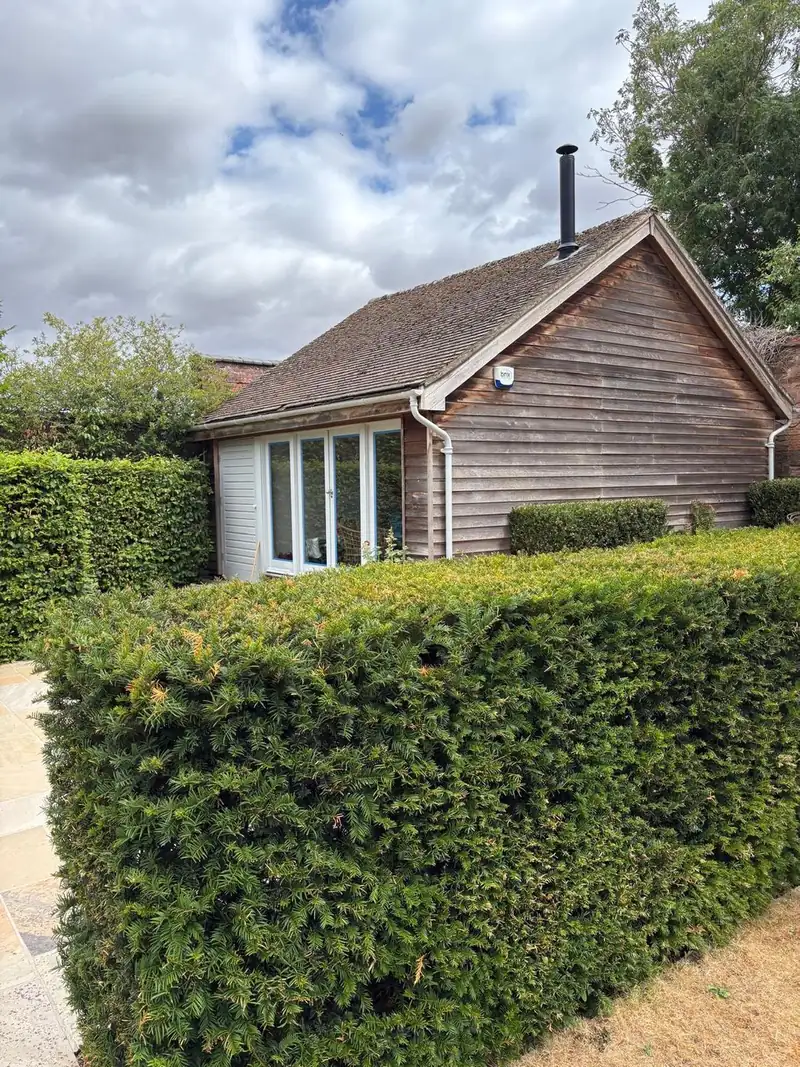
The appraisal says masonry paints are often not acceptable on pre-1919 buildings and that lime-based render or limewash is more appropriate. That is a technical point as well as a heritage one. Creaton houses built before 1919 usually have solid walls of ironstone, cob or soft local brick, with no cavity and no damp-proof course in the modern sense. They manage moisture by letting it evaporate from the surface. A modern acrylic masonry paint forms a film that slows that down; moisture builds up behind it, and the paint blisters, the render softens and, on cob, the wall itself can start to break down.
| Wall in Creaton | What the appraisal says | What we do |
|---|---|---|
| Bare ironstone | Painting or rendering should be avoided | Leave unpainted; paint the joinery only |
| Polychrome brick on High Street and The Green | Must not be painted, rendered or clad | Leave unpainted; mask carefully when painting near it |
| Rendered cob or stone, lime render | Lime-based finishes preferred on pre-1919 walls | Limewash or breathable mineral paint |
| Older wall with cement render or masonry paint | Masonry paint often unsuitable | Assess condition; advise before recoating |
| Post-1950 rendered house outside the core | Not covered by the pre-1919 advice | Standard breathable masonry paint system |
| Type | Share |
|---|---|
| Detached | 65.2% |
| Semi-detached | 24.4% |
| Terraced | 9.5% |
| Flat or maisonette | 0.5% |
Source: Census 2021 (ONS), accommodation type (TS044) tables via Nomis. The figures are for the census area that best fits Creaton, so its edges are not exactly Creaton’s.
Pointing in lime mortar, not ribbon or strap
The appraisal asks for pointing in an appropriate grade of lime mortar and warns against ribbon or strap pointing, the raised styles that stand proud of the stone. That matters to a painter for two reasons. Hard cement pointing around soft ironstone forces water out through the stone instead of the joints, and the stone faces spall. And when we are asked to paint a wall with failing pointing, painting over it only hides the problem for a season. Where pointing needs doing, we say so and leave it to a specialist in lime work before any finish goes on.
Is it worth taking old render off?
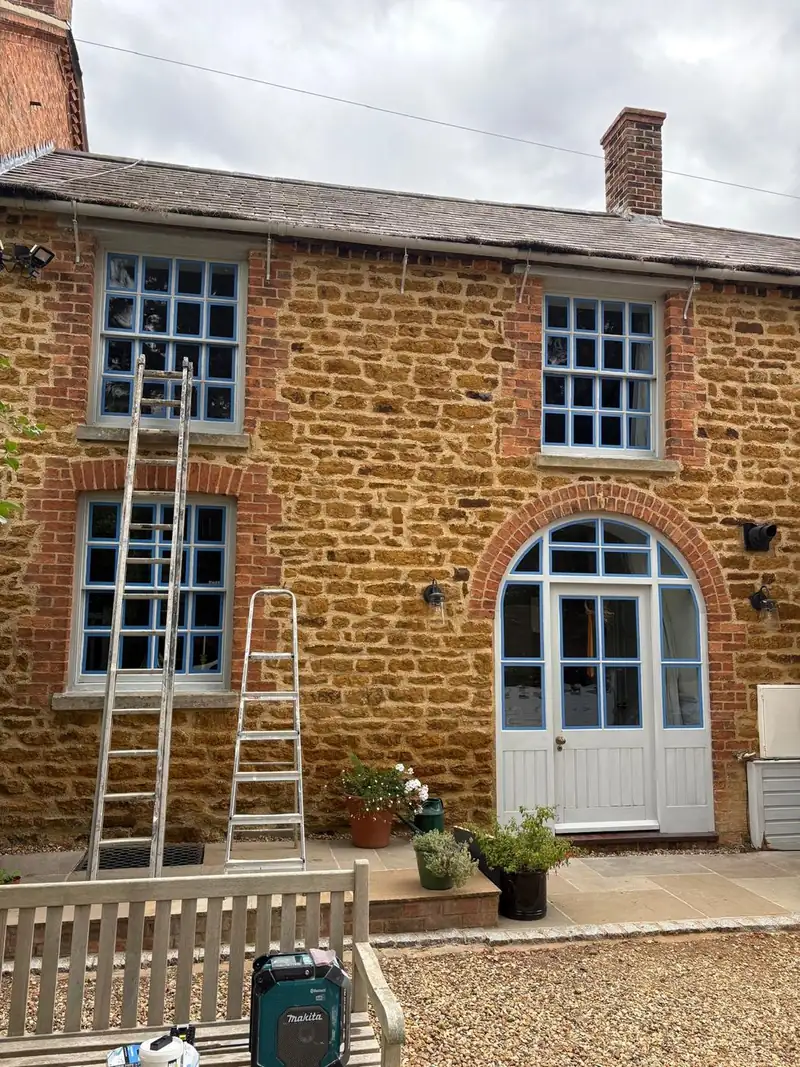
Sometimes, but not as a decorating job. The appraisal regrets render that hides good stone or brick, but removing cement render from an old wall can pull the face off the masonry with it, and on cob it can expose a wall that has relied on that render for decades. That decision belongs with a conservation-minded builder or surveyor, and on a listed building with the council. What we can do is maintain the existing render with the right finish until then. No Article 4 direction controls wall painting in Creaton now, although one was proposed in 2021 for named buildings. Our guide to painting render and roughcast covers product choice in more detail, and the main render and masonry painting service explains our method. Where the village’s rendered and brick walls are is covered on the Creaton page.
Sources
- Creaton Conservation Area Appraisal and Management Plan (adopted March 2021), West Northamptonshire Council (accessed 2026-11-16)
- Heritage and non-heritage Article 4s and Local Development Orders (LDOs), West Northamptonshire Council (accessed 2026-11-16)
- Creaton Conservation Area (DNN12276), Northamptonshire Historic Environment Record (accessed 2026-11-16)
Last updated .


