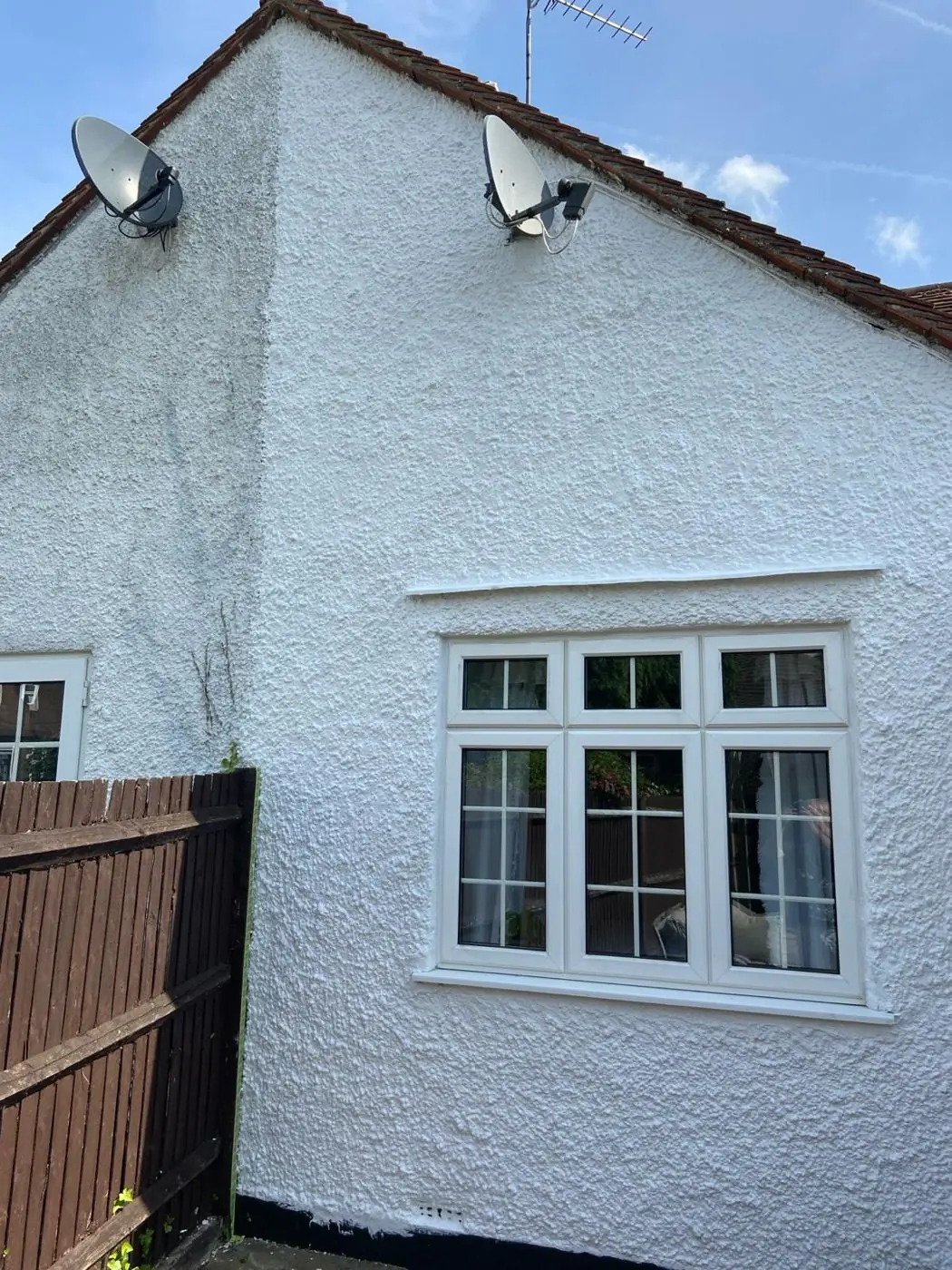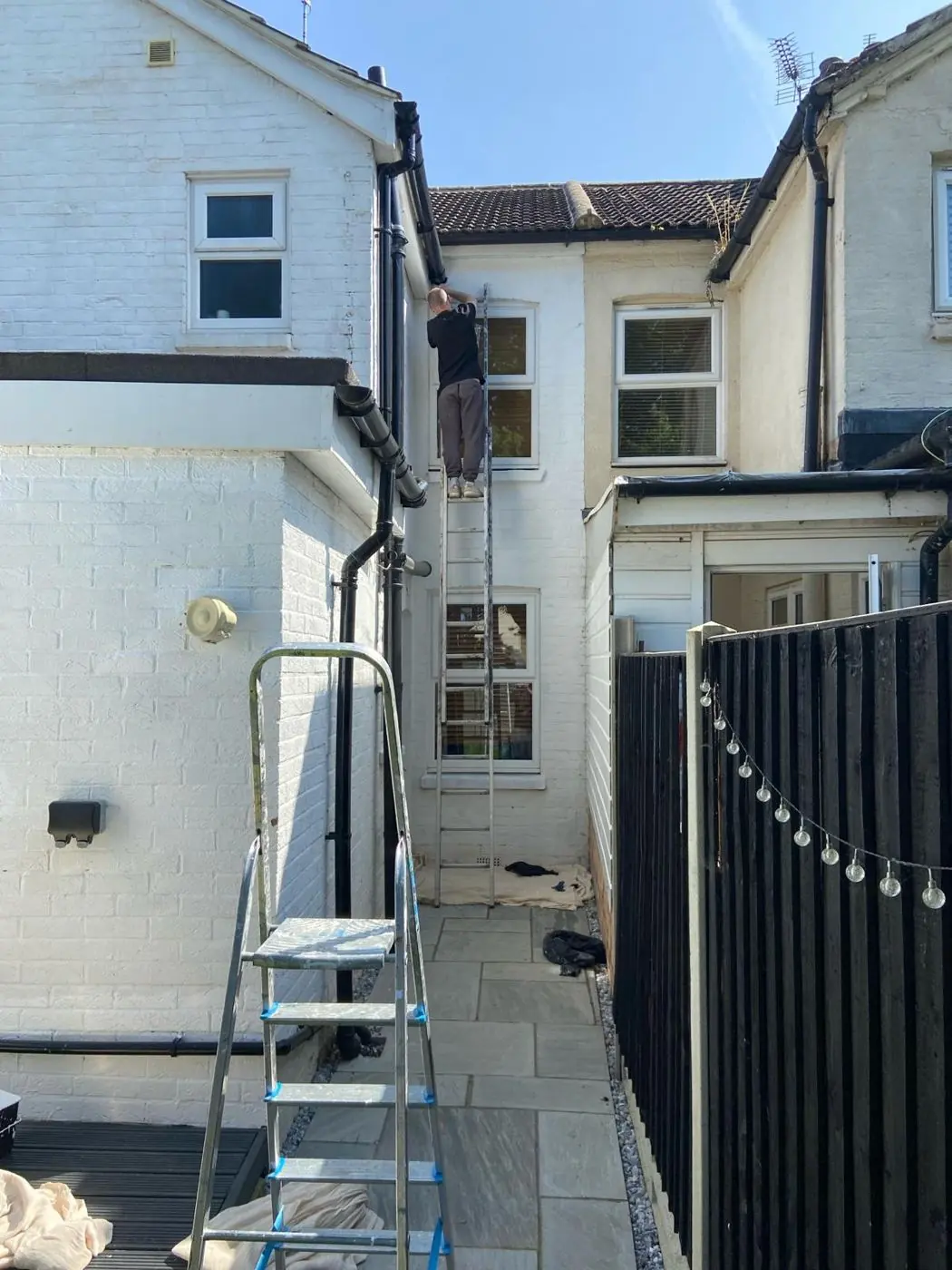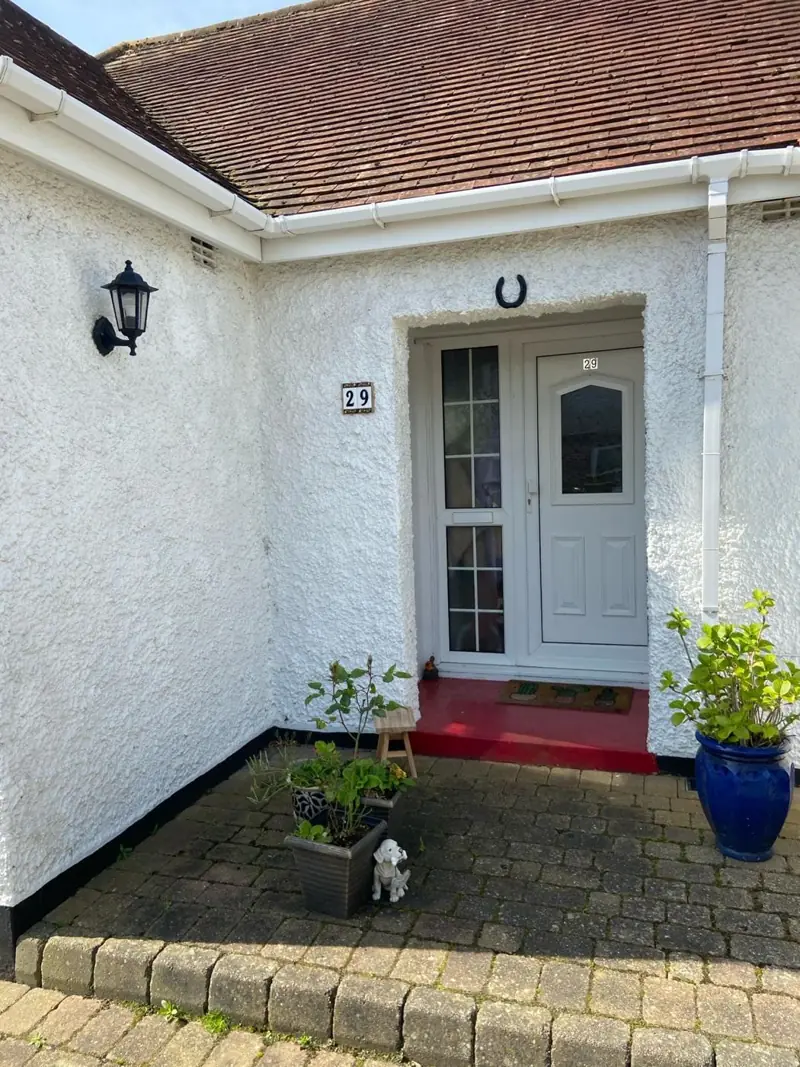
DH Painter & Decorator paints house exteriors in Creaton, in the NN6 district, 7.8 miles north of the centre of Northampton. Inside the conservation area we concentrate on windows, doors, lintels and surfaces that are already painted. Outside the core, on Brixworth Road and the newer closes, a full repaint is simpler. Quotes are free.
Joinery first: what Creaton’s 2021 appraisal means for outside work
Creaton’s conservation area appraisal and management plan dates from March 2021. It covers about 8.2 hectares around The Green, High Street, Violet Lane and parts of Brixworth Road and Welford Road, and it discourages painting or rendering exterior walls. Most of the old village is local ironstone, with orange/red brick repairs and gables from the two brickworks that operated in the parish in the 19th century. Those walls are meant to be seen. On a cottage in the core, an exterior job is therefore about everything fixed to the stone: casements, sashes, plank doors, door surrounds, bargeboards and the timber lintels that sit over so many openings here.
We still paint walls that were painted or rendered long ago, but with breathable finishes. The render and masonry page explains how we approach that. For the wider method and the products we use outside, see our main exterior painting service.
Black and white lintels, white casements, running sashes
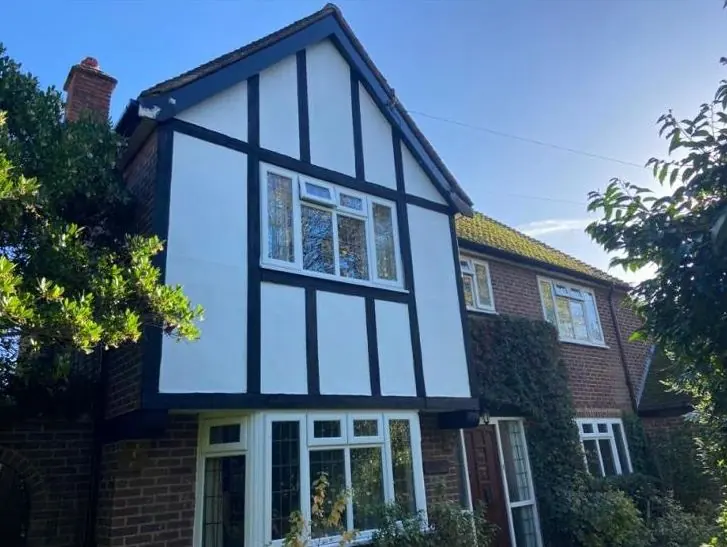
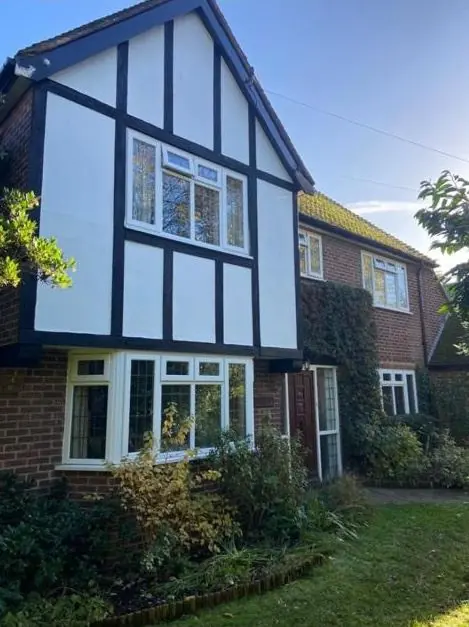
Painted timber lintels, finished in black or white, are one of Creaton’s details. They sit flush in the stonework, catch water on their top edge and tend to fail from the ends first. We scrape them back, let any damp timber dry, fill and prime the end grain, then build up an exterior oil or alkyd system. A water-based gloss would be quicker, but on old timber set into stone it does not move as well.
The appraisal also asks for painted window frames to be white, or a shade taken from the original paint. That narrows the choice, and we would rather tell you before you buy sample pots. Casements are the most common window in the village, and Georgian and Victorian sashes survive at houses such as Home Farm, The Old Bakery, The Old Rectory, the alms houses and 28 The Green. On a sash, the paint has to stay off the parting beads and the cords, and the meeting rails need to be eased so the window still slides after the coats have cured.
Weather on an east-facing ridge
The village sits along the A5199 at roughly 125 metres, with land falling away to the east and long open views north and north-east. Elevations facing that way take the wind and driving rain, and their paintwork breaks down sooner than the sheltered side. We plan exposed fronts for settled spells and avoid days when cold air off the open fields keeps the timber damp into the afternoon. Our guide to the timing of exterior painting sets out the temperature and dew point limits we work to.
Shade causes the opposite problem. Large trees on The Green, and the tree belts around the bigger houses, keep some walls damp and green. Several of these trees have Tree Preservation Orders, and work on any tree over 75mm in the conservation area needs six weeks’ notice to the council, so we position ladders around branches rather than asking for them to be cut.
Brixworth Road, The Jetty and Court House Close
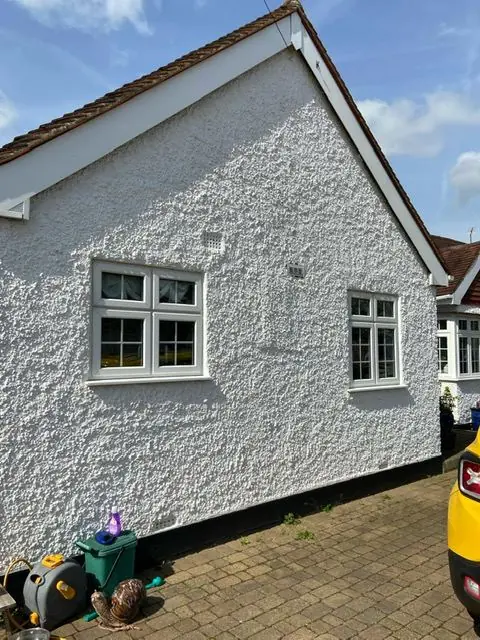
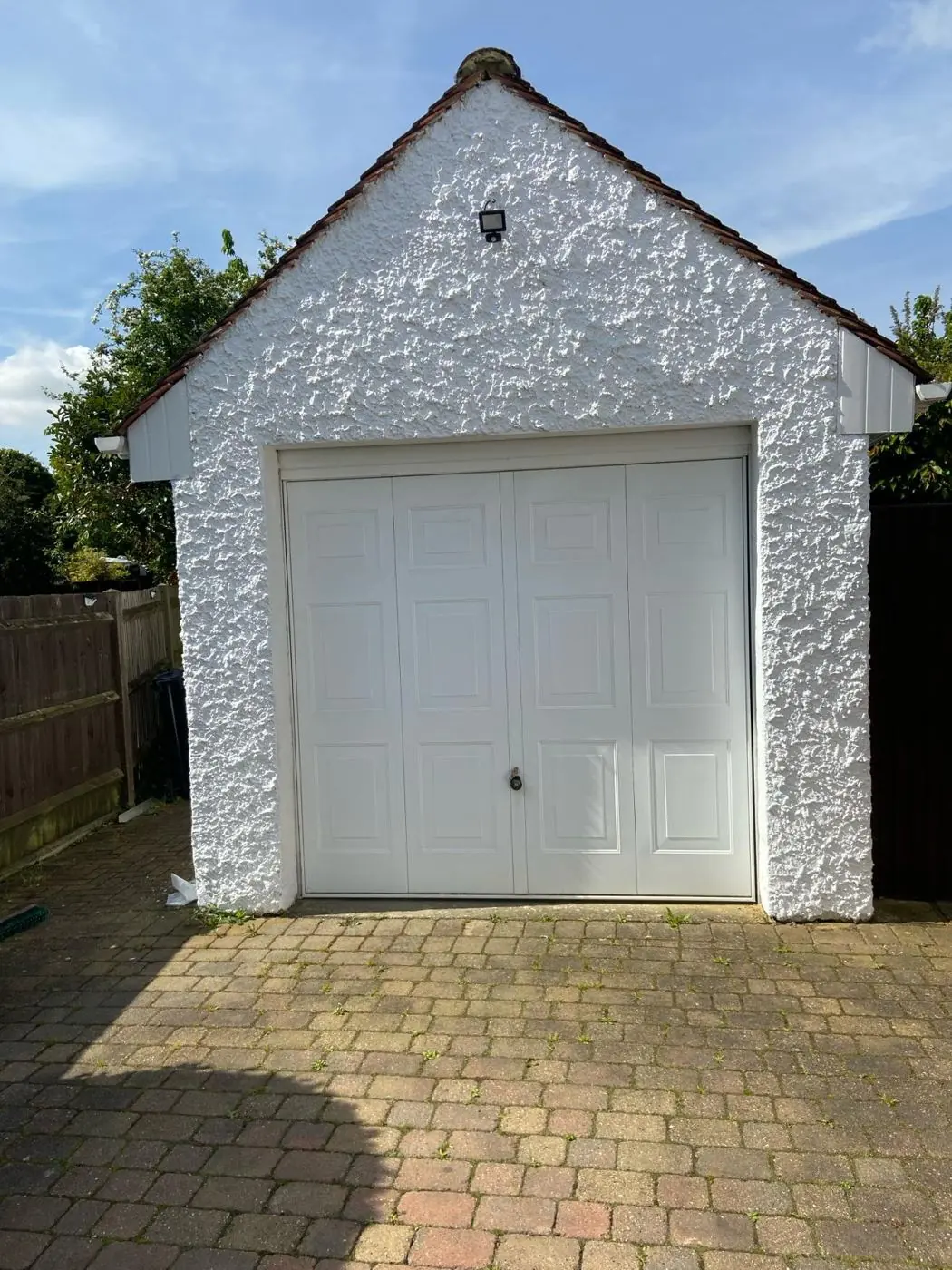
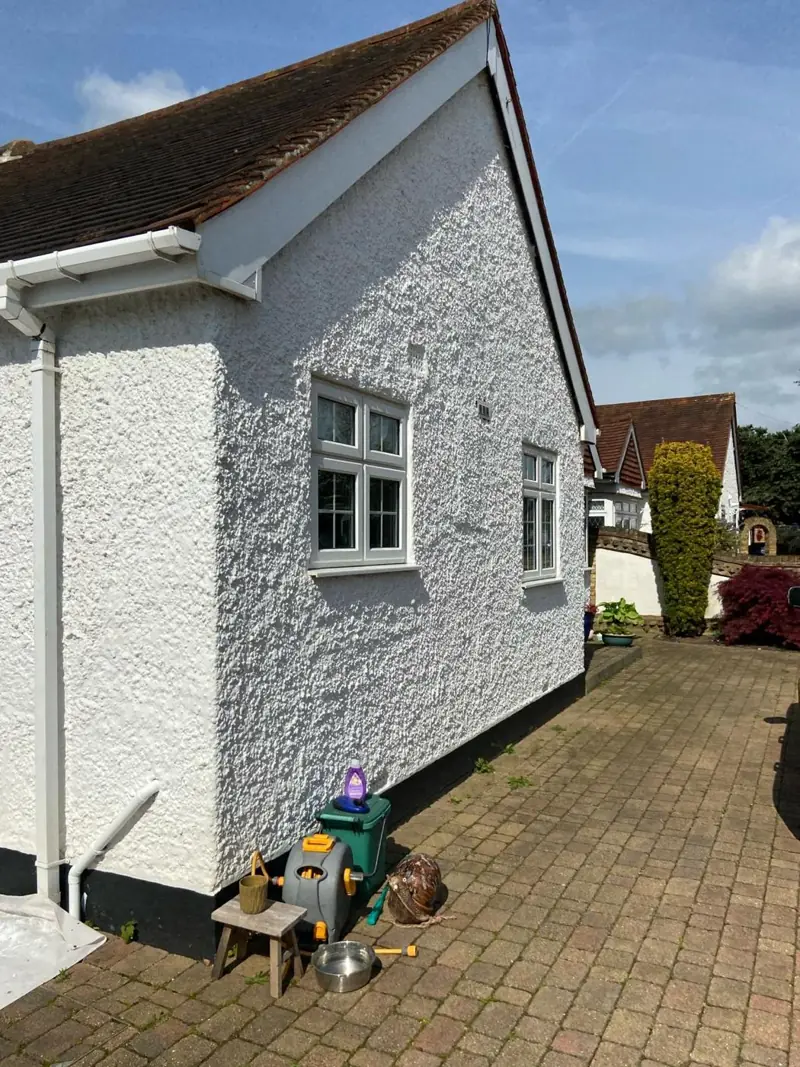
Unlike the older frontages, the houses put up after 1950, first on Brixworth Road and then in The Jetty and Court House Close, are set back from the street. Most lie beyond the historic core, though parts of Brixworth Road are inside the conservation area, so check which side of the boundary you are on. Away from the core a full repaint is straightforward: walls where they are already coated, fascias, soffits, front doors, garage doors and gates. The 1980s terrace at Home Farm Close mixes ironstone with red brick and square-headed brick lintels. We leave that masonry bare and paint the joinery.
Ladders on High Street’s street-front terraces
High Street is tightly built, with cottages right on the pavement line and little off-road parking. Before we start we work out where the van goes, which section of frontage gets a ladder each day and how to keep the footway passable. Telegraph wires over High Street and Violet Lane, and on the south-western edge of The Green, rule out some long-ladder positions. On the unkerbed lanes crossing The Green we use boards under ladder feet so the verge is not churned up.
For more on how outside work is planned around village houses, see the Creaton area page.
Last updated by Dean, DH Painter & Decorator.