
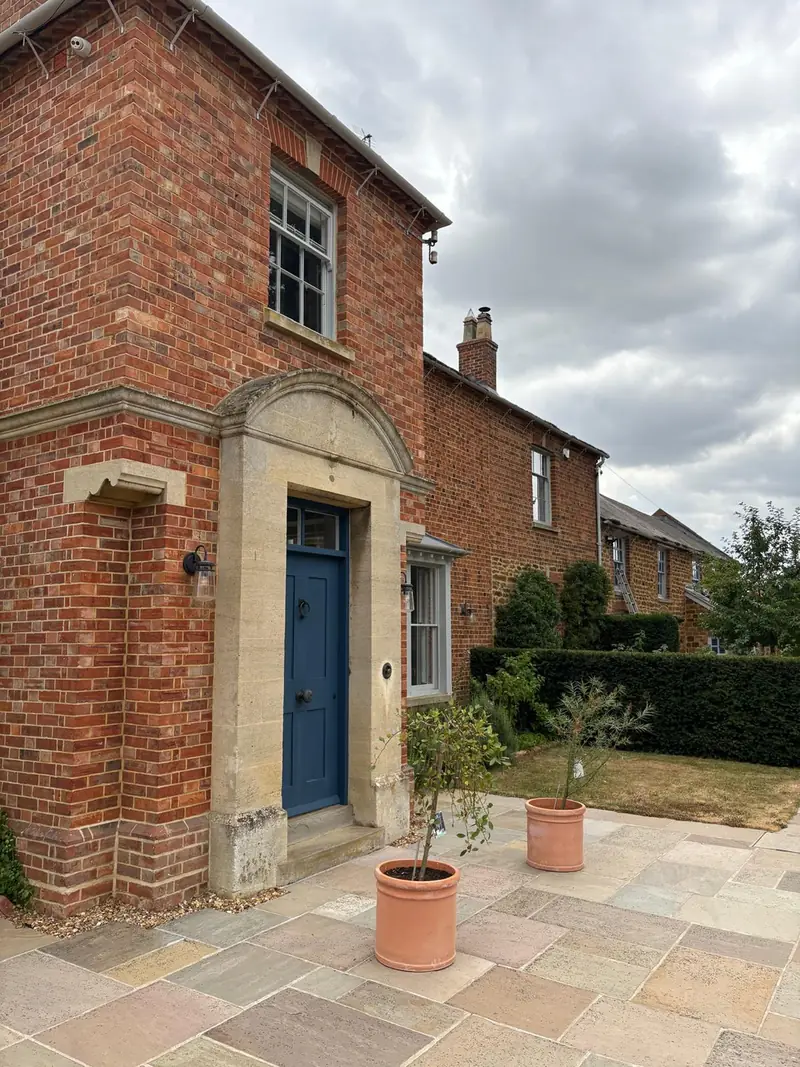
DH Painter & Decorator paints metal gates and railings in Guilsborough, NN6, about 9.3 miles north-west of Northampton town centre. The village has historic ironwork from the demolished Guilsborough Hall, gates in listed stone walls and roadside railings that take knocks from traffic, and Dean prepares and paints each with a system that suits its age.
| Fact | Detail | Source |
|---|---|---|
| Guilsborough Hall | Demolished 1959; Church Mount housing now on the site | Northamptonshire HER |
| Hall survivals | Gates and brick water tower in Guilsborough Park | Wikipedia |
| Listed wall west of Guilsborough House | Two pedestrian gates with plain arch heads | British Listed Buildings |
| Vehicle damage | Lorries mounting footways have damaged verges, the Village Green and a listed wall (Neighbourhood Plan) | guilsborough-pc.gov.uk |
Ironwork from a house that is no longer there
Guilsborough Hall was demolished in 1959, and the Church Mount housing now stands on its site. Some of its estate survives in what is now Guilsborough Park: the hall’s gates and its brick water tower, which stands on the mound of the Iron Age and Roman fort. Old estate gates like these are usually wrought or cast iron, and they have often been painted many times over the decades.
Old iron needs different handling from modern steel:
- Loose rust and flaking paint are removed by wire brush and hand tools, not aggressive blasting, which can damage thin decorative bars and old castings.
- Old paint layers on ironwork of that age are likely to include lead, so dust is controlled and waste bagged.
- Bare metal is primed the same day with a rust-inhibiting primer, before any moisture can form fresh rust.
- A traditional oil-based or alkyd system, in black or another dark colour, suits old ironwork and can be touched up later.
Before any repaint, old gates are checked for broken collars, loose finials and hinges rusted through. Repairs to wrought or cast iron are blacksmith’s work, and painting over a cracked casting only hides the problem for a while. Gates of this kind belong to whoever owns the land they stand on, so any work starts with them; we can look and quote for the owner. The brick water tower nearby is a separate case: it is brickwork, and bare brick is not something we would paint.
Gates in the listed wall west of Guilsborough House
The mid-18th-century wall about 15 metres west of Guilsborough House is listed in its own right. It is squared coursed lias banded with limestone ashlar, with ashlar coping and two pedestrian gates with plain arch heads. On a listed structure, gates are repainted like for like: same colour, same type of finish. Where a gate is hung on pins set into the stone, rust can swell the iron and crack the masonry, so we treat the pins and hinges carefully and keep paint and rust treatments off the stone. The Neighbourhood Plan picks out high stone walls as part of the Historic Core’s character, and many garden gates and railings on the older houses sit in or on them. Traditional black or very dark green suits ironwork against both the honey stone and the old brick.
Railings by the road: knocks from passing lorries
The Neighbourhood Plan reports lorries and other vehicles mounting the footways, damaging verges, the Village Green and heritage architecture including a listed wall. Railings and gates close to the road on the High Street, Nortoft and The Green are exposed to the same knocks. A dent or scrape breaks the paint film, and rust starts there and creeps under the surrounding paint. After an impact, it pays to repair it early: bent bars straightened or replaced by a blacksmith, then the damaged area cleaned to bright metal, primed and blended in, before the rust spreads along the rail. Where the road is gritted in winter, salt splash speeds up rust on the bottom rails of gates and railings near the carriageway and where bars go into stone or a plinth, so those points get an extra coat.
Steel fences and gates at the schools and surgery
West Haddon Road has institutional premises with modern steel gates and fencing: Guilsborough Academy, with about 1,200 pupils, and The Surgery. Galvanised steel needs a mordant wash or a primer made for galvanising before paint will stick; powder-coated fencing that has chipped is cleaned, lightly abraded and touched in with a compatible paint on a dry day, so the patch does not lift. Work at the schools fits the holidays, and railings are done in sections so the perimeter stays secure, with barriers and wet-paint signs left up until each section is dry. The main metal gate and railing painting page has more on rust treatment, the fence and gate staining page for Guilsborough covers timber gates, and the Guilsborough area page covers the village as a whole.
Sources
- Guilsborough Hall (site), Northamptonshire HER (accessed 2026-11-16)
- Guilsborough, Wikipedia (accessed 2026-11-16)
- Wall approximately 15 metres west of Guilsborough House, Guilsborough, British Listed Buildings (accessed 2026-11-16)
- Guilsborough Neighbourhood Development Plan, reviewed version May 2022, Guilsborough Parish Council (accessed 2026-11-16)
- Guilsborough Academy inspection reports, Ofsted (accessed 2026-11-16)
- The Surgery, Guilsborough: pharmacy listing, NPN (accessed 2026-11-16)
Last updated .


