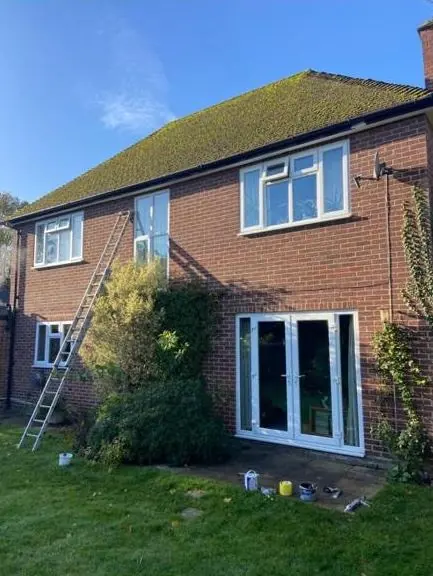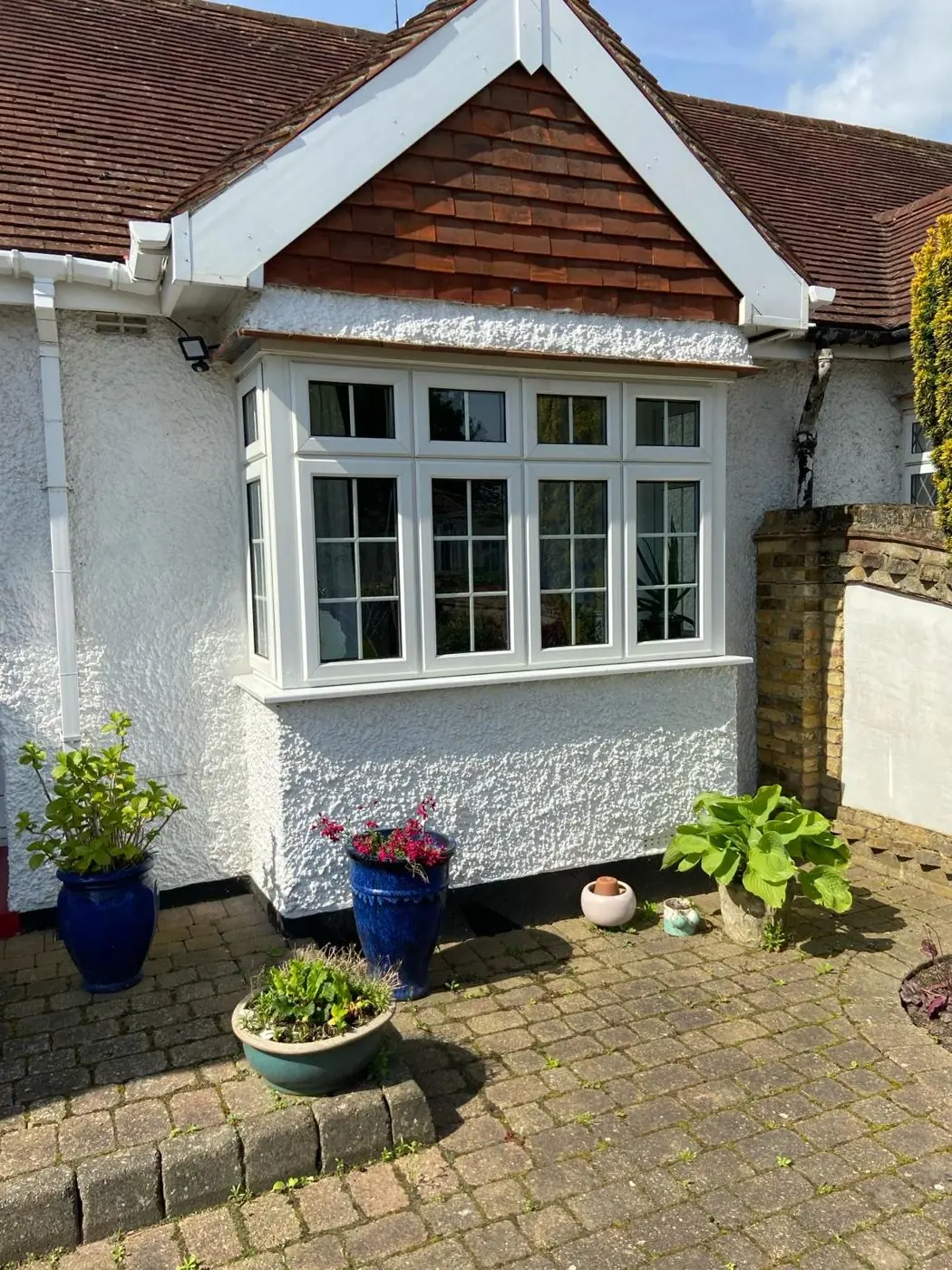
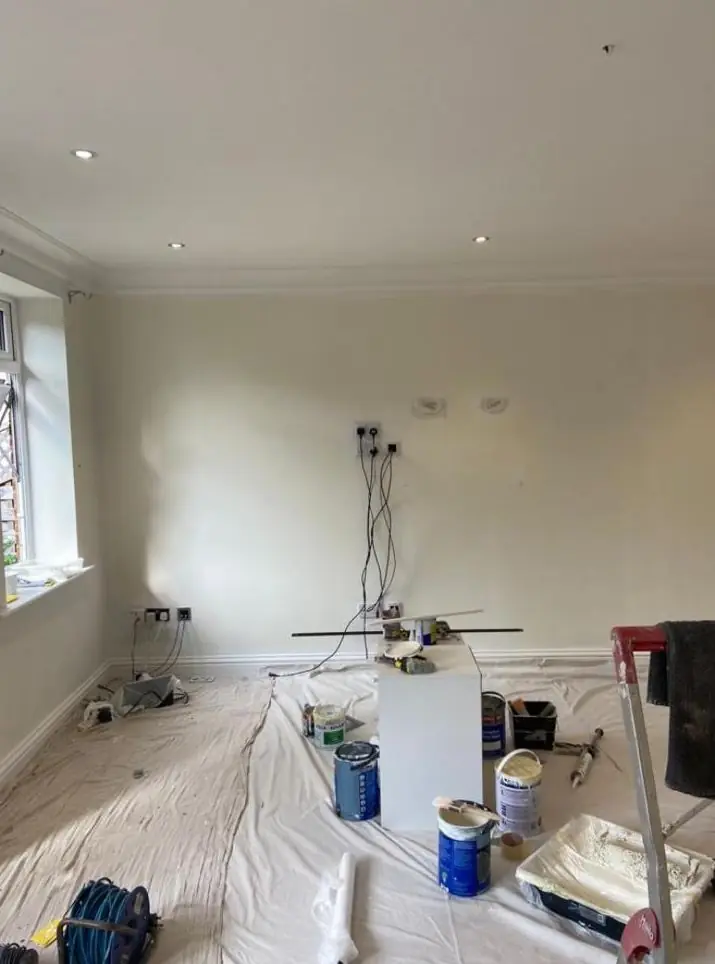
DH Painter & Decorator covers Creaton from our Northampton base, about 7.8 miles north of the town centre along the A5199. Dean, with over 30 years in the trade, paints and decorates inside and out, from cob and ironstone cottages in the conservation area to post-war houses on Brixworth Road.
A ridge-top village built from what was under it
Creaton sits on the A5199 Welford Road ridge at about 125m above sea level, with land falling gently east and long views east, north-east and north. It was recorded in the Domesday Book, and for centuries there were two settlements, Great and Little Creaton, whose deserted earthworks still lie south-east of Grooms Lane. The 2011 census counted 503 people in 196 dwellings, and most of those homes were owner-occupied.
The old village was built from local materials. The Northampton Sand Formation supplied ironstone, and two 19th-century brickworks, one near the A5199 and Hollowell Road junction and one north of Creaton Lodge, produced the orange/red brick seen in repairs, re-faced gables and whole buildings. Some walls are cob. Most roofs are Welsh slate, many of them replacing earlier thatch, and 18 The Green is the last thatched building left in the conservation area. For a painter, this mix is what sets Creaton apart: several quite different walls in a small space, each needing its own approach.
The conservation area and what it means for painting
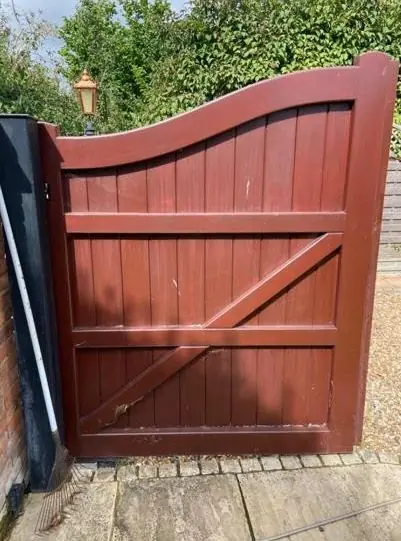
The historic core around The Green and High Street, about 8.2 hectares, is a conservation area. Its appraisal and management plan was adopted in March 2021 by Daventry District Council, now part of West Northamptonshire Council. Several of its points bear directly on decorating:
- Painting and rendering external walls should be avoided, so outside work is mostly joinery, ironwork and existing painted surfaces.
- Polychrome chequered brickwork, at The Manse, the United Reformed Church, Woodbine Cottage and 8 The Green, should not be painted or rendered.
- Masonry paints are often unsuitable on pre-1919 buildings, and lime-based finishes are preferred.
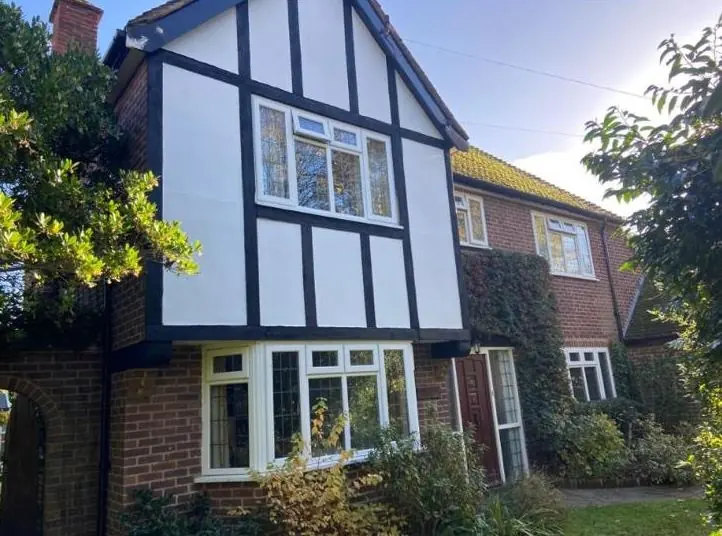
- Painted window frames should be white or a colour based on the originals.
- Work to trees over 75mm diameter needs six weeks’ notice, which matters when branches are in the way of a ladder.
Article 4 Directions covering exterior wall painting were proposed for named buildings, though at adoption they were only being explored. Check the current position with the council before changing a wall colour. Listed buildings, including the Manor House (1604), 10 and 12 The Green, Morningside Cottage and The Dial House, may need consent for changes to finishes.
Cottages, farmhouses and gentry houses
Most of the historic houses are two-storey ironstone cottages and terraces built right on the street or the edge of The Green, with casement windows and painted timber lintels in black or white. Inside, many have solid walls and lime plaster that need breathable paint. Our interior painting work in these houses starts with finding out what is already on the walls.
After enclosure in 1782, farms were run from inside the village, and several farmhouses were built to three storeys: Church House, Green Farm, Court House, The Old Bakery, Home Farm and 28, 34 and 38 The Green. Tall stairwells and some Georgian or Victorian sashes make these the most involved interiors in the village. Sash windows in some of them, and at The Old Rectory and the 1899 alms houses, have to be painted so they still slide afterwards.
Cob survives at 10 and 12 The Green, Cob Cottage, Lilac Cottage and The Old Cottage on High Street, and probably 10 to 16 Welford Road. Cob is moisture-sensitive, so limewash or vapour-permeable paints are the right finishes and vinyl emulsion is the wrong one. The larger houses, the Manor House, Creaton House and Highgate House, stand in big plots behind walls and mature trees.
Outside: joinery, lintels and ironwork on an exposed ridge
Because the conservation guidance steers away from painting stone and brick, most exterior painting in the old village means windows, solid panelled and plank doors, classical door surrounds such as those at The Manse and 6 Welford Road, timber eaves and the black or white lintels. These suit traditional oil-based or alkyd systems. The east- and north-facing ridge weathers paintwork faster, so we book outdoor jobs for settled spells of weather, usually from late spring to early autumn. Trees on The Green drop debris and shade walls, and that encourages algae, so washing down is often part of the preparation.
Some cob buildings are already rendered. They need breathable maintenance coats, not a plastic masonry paint; our render and masonry page explains the difference. Metalwork such as the wrought iron gates and gate piers at Highgate House needs rust treatment and traditional metal paint.
Post-war and newer houses
After 1950 the village grew along Brixworth Road, then The Jetty and Court House Close, with houses set back from the street. The 1980s brought 1 to 9 Home Farm Close in ironstone and red brick, and the conversion of the former Creaton Hospital, a TB sanatorium from 1910 to 1979, into 13 houses at Highfield Park. Recent infill includes 1 to 3 Litchfield Lane. Most of these lie outside the historic core (parts of Brixworth Road are inside it), so they have modern walls and fewer heritage restrictions, so standard emulsions, durable trim paints and feature walls all work. New extensions and infill may need a mist coat on fresh plaster first.
Commercial premises
Commercial work in Creaton is limited to a few small sites: the community shop on Welford Road, the Bricklayers Arms, the Highgate House conference centre, and the small industrial estate by Grooms Lane and the Twigden Barns units on Brixworth Road. Shopfronts and historic former shop windows on High Street, such as those at The Dial House and 27 High Street, fall under conservation guidance too. Highgate House began as an inn, with parts dating from 1663, and became a coaching stop after Welford Road was turnpiked in 1721, so any work on its older fabric calls for the same care as the houses on The Green.
Access and getting to you
Apart from the A5199, the roads are narrow lanes. There is little off-road parking, especially on High Street, where terraces open straight onto the street. Lanes cross The Green without kerbs, Litchfield Lane is gravel, and overhead lines run along Violet Lane, High Street and the south-west side of The Green. We plan van parking, ladder positions and any tower before the job starts. Creaton is about 7.8 miles from our Northampton base; nearby we also cover Spratton, Guilsborough, Brixworth and East Haddon. Our cost guide explains what goes into a quote, and Dean is on 07539 779 036.
Last updated by Dean, DH Painter & Decorator.