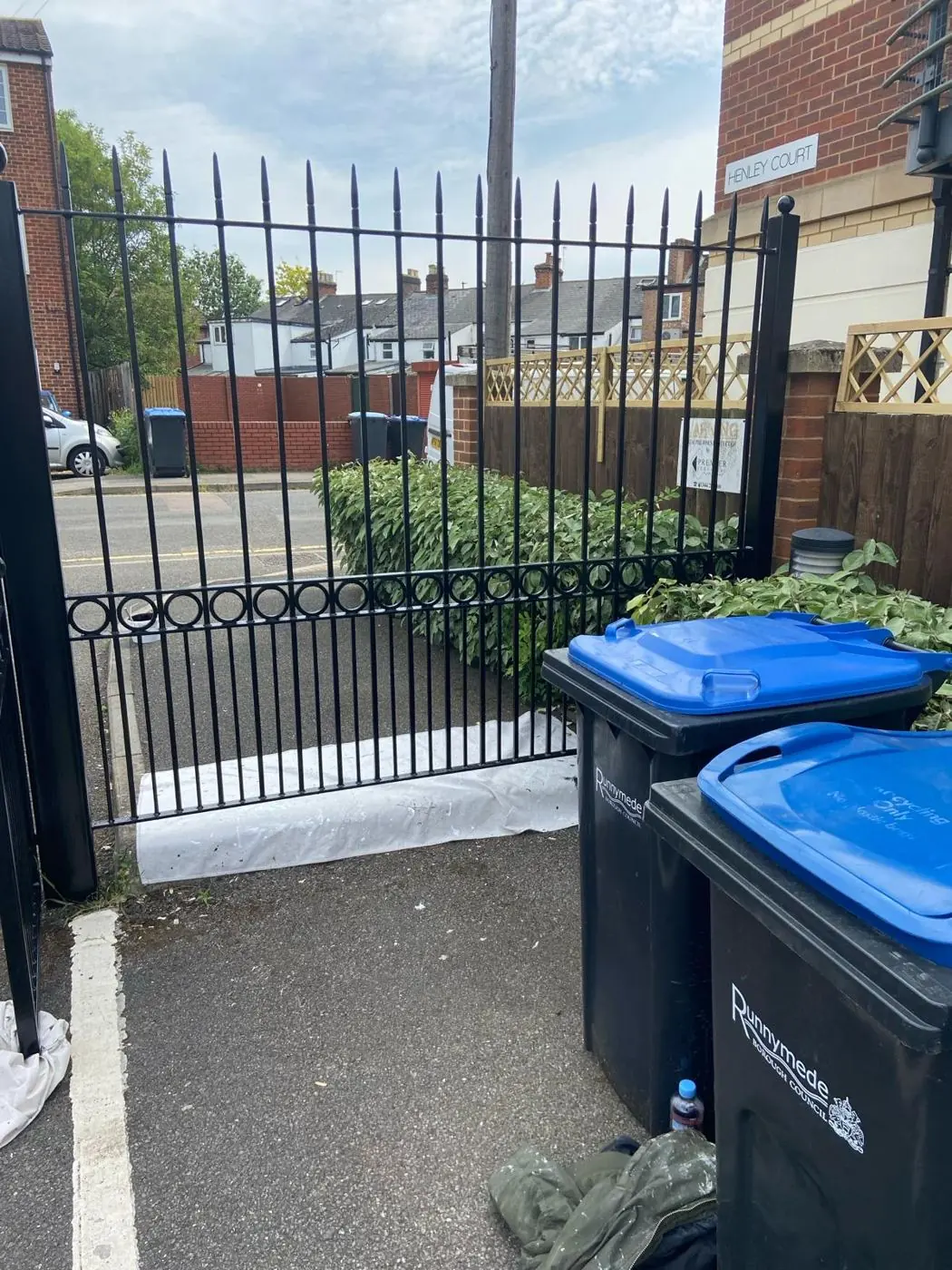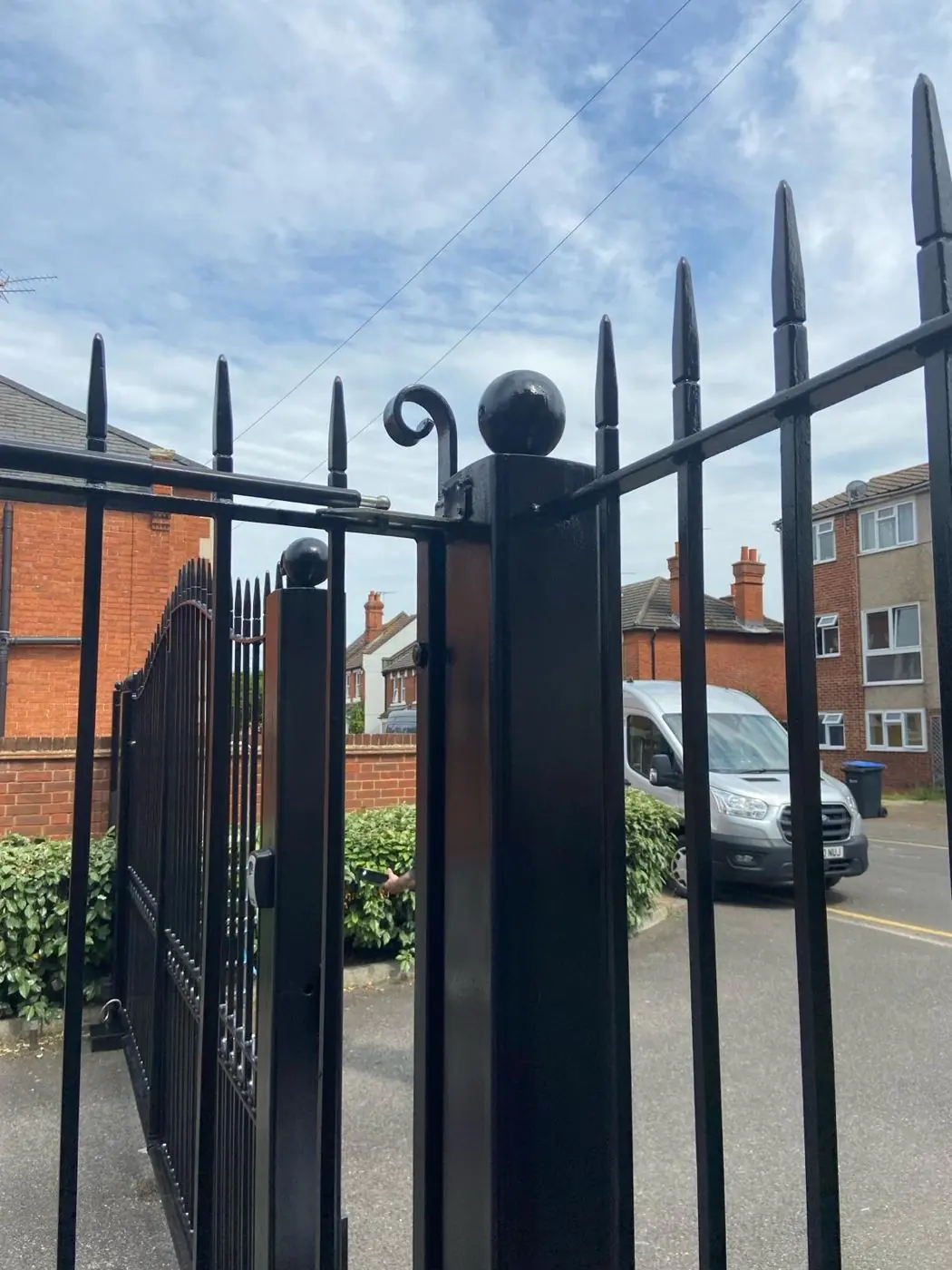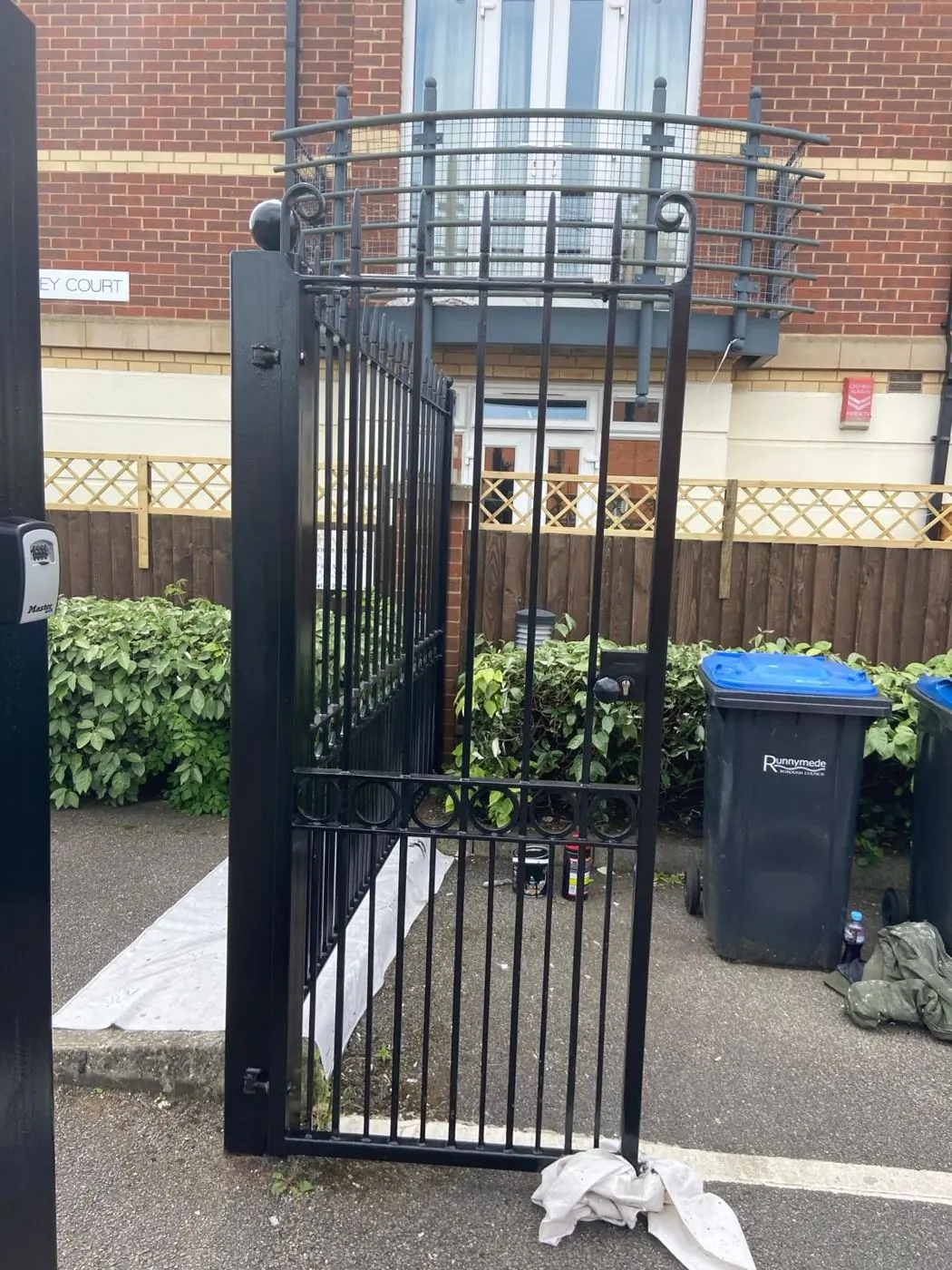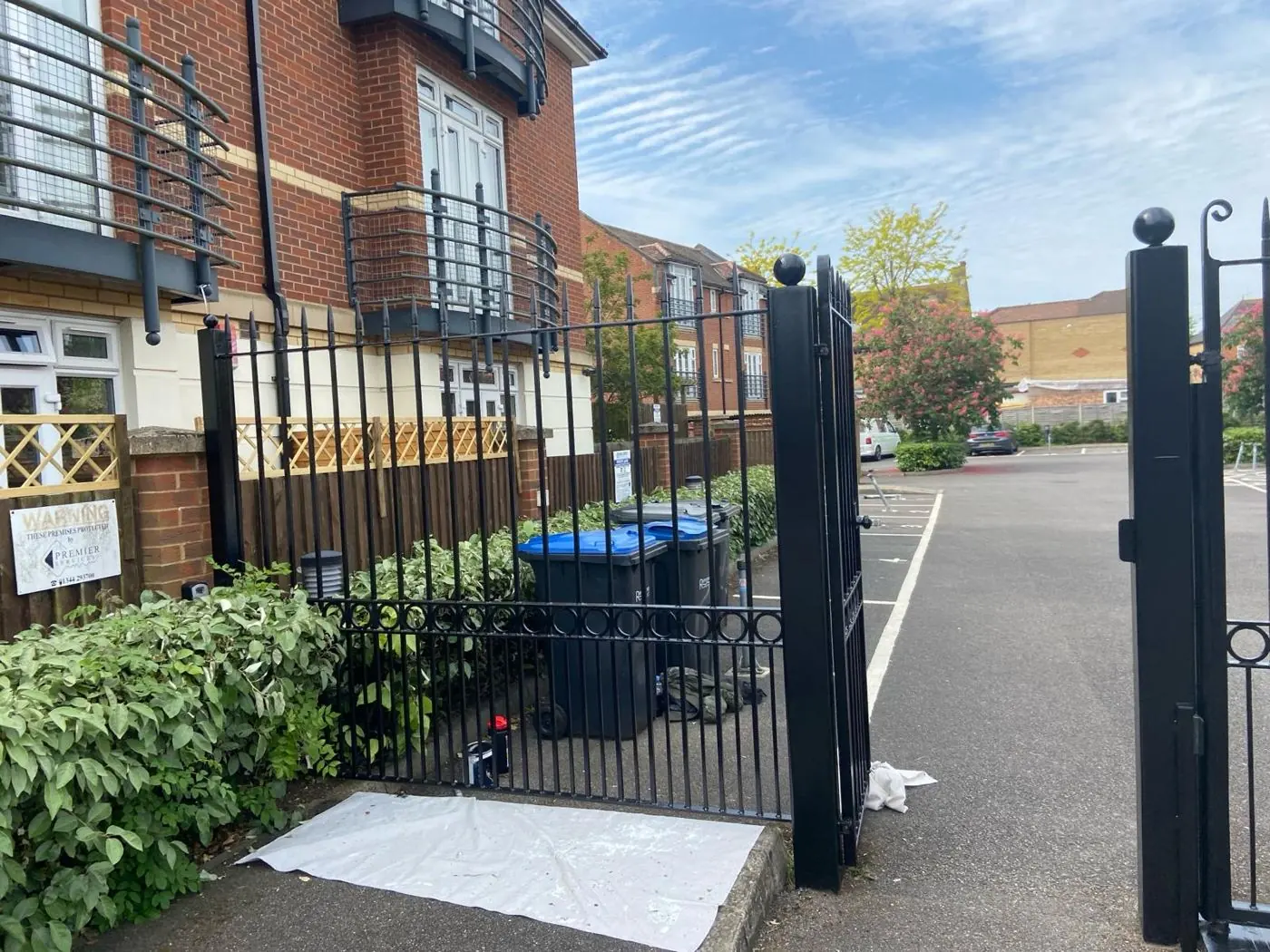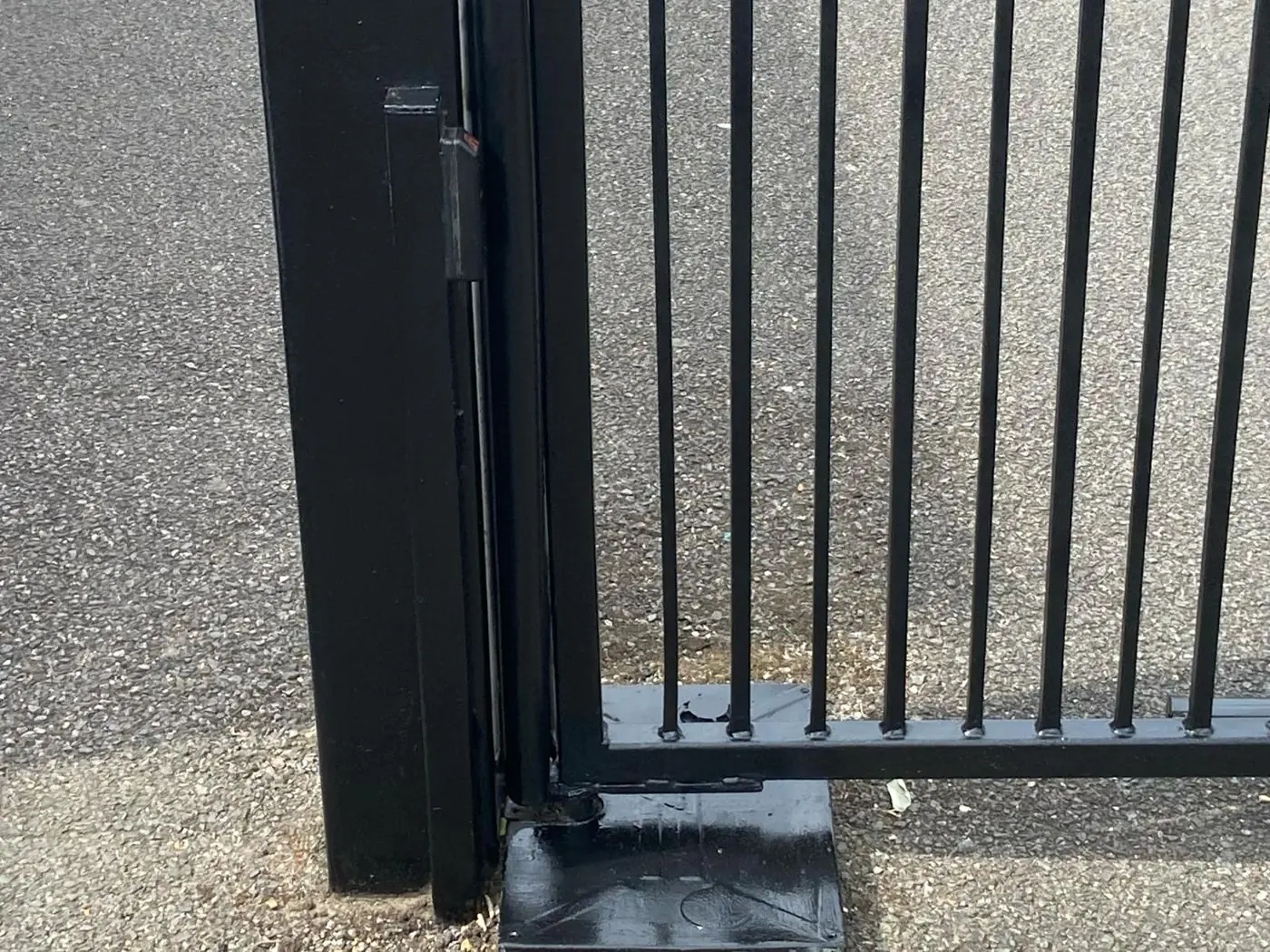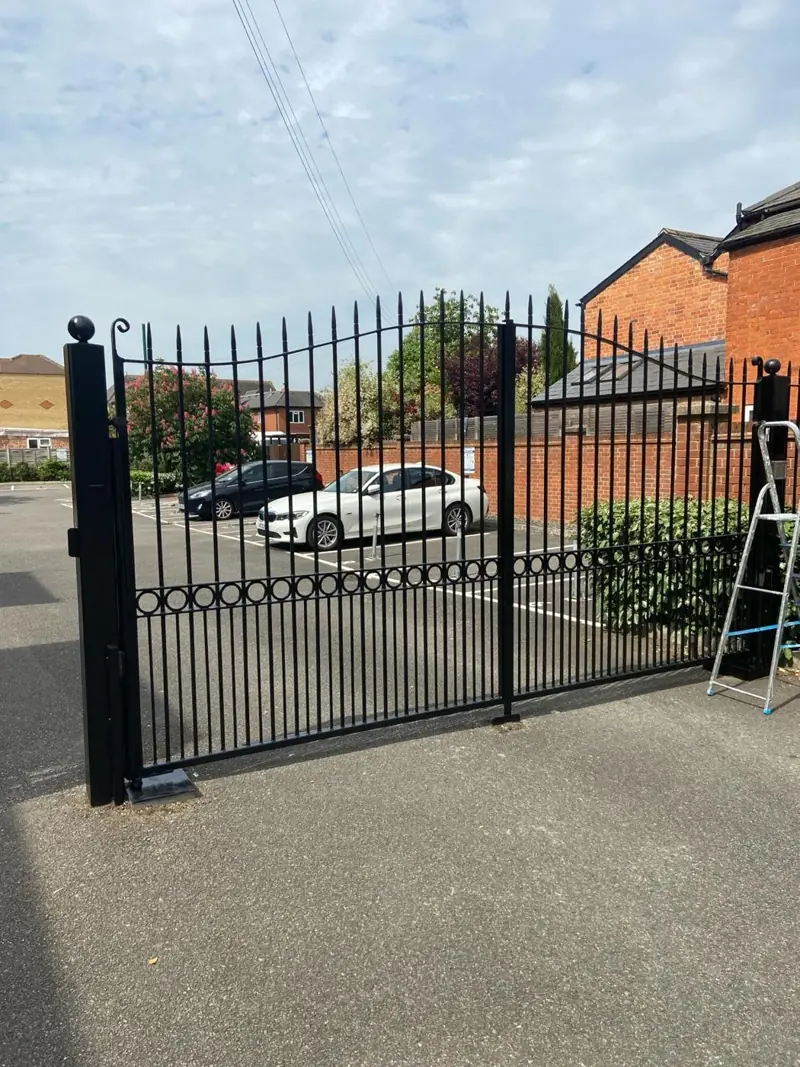
DH Painter & Decorator stains and paints fences and gates in Creaton, the NN6 ridge village 7.8 miles up the A5199 from Northampton. Most timber fencing here is on the post-1950 plots that spread out from Brixworth Road. In the older core, the work is usually a single gate set in a stone or brick wall. Quotes are free.
Hedges and walls in the core, fences on the newer plots
Walk round The Green and along High Street and you see few fences. Boundaries in the old village are hedges and walls of ironstone or orange/red brick, some of them very old. The cob boundary wall of Mulberry House on Violet Lane is one of them. Timber fencing appears mainly where the village grew after 1950: on Brixworth Road, The Jetty and Court House Close, where houses are set back from the road behind their own plots. That is where lap panels, feather-edge boards, posts and gravel boards need recoating every few years.
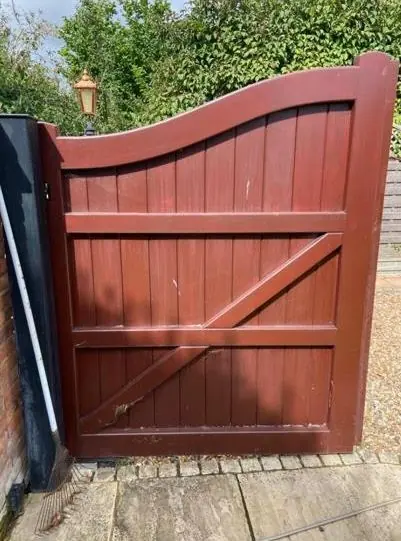
In the core, the timber is usually a gate: a ledged and braced side gate between two stone piers, or a plank door into a yard. Those deserve as much care as a front door, because the gate is the one piece of timber in a long run of stone.
Staining a gate without marking the stone
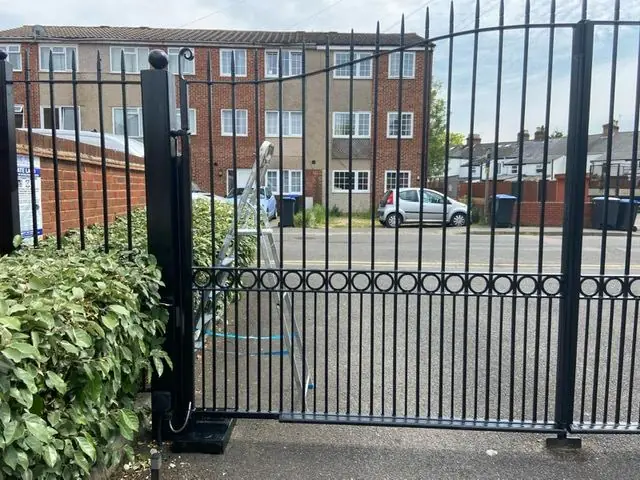
Ironstone from the Northampton Sand Formation is porous, and a dark spirit-based stain wicks into it fast. The same goes for soft local brick and lime mortar joints. Once it is in the stone, it cannot be scrubbed out. When a gate is hung on stone piers or butts against a wall, we take it off its hinges where we can and stain it on trestles. Where it has to stay hung, we mask the stone face, sheet the ground and cut in by brush rather than spraying. The hinge straps and latch get wire brushed and painted separately, so rust does not bleed through the new finish.
Exposure, shade and drying time
The village is strung along a ridge roughly 125 metres up, and the ground falls away eastward. A fence on the exposed side of a Brixworth Road garden dries quickly but loses its colour fast, because wind-driven rain and sun break down the surface of the stain. A fence in the shade of the big trees nearer The Green stays damp and grows algae and lichen. The preparation differs for each:
- Exposed runs: brush off loose fibres and grey surface timber, then apply a pigmented stain or fence paint with good UV resistance, working it into the end grain on posts.
- Shaded runs: kill growth with a fungicidal wash, let it work and dry, then stain. Staining over green growth makes the coat lift.
- New pressure-treated timber: allow it to dry out as the product guidance says before the first coat.
Settled weather matters more than the calendar. Our guide on the timing exterior work explains why we avoid cold mornings and evenings with dew.
Stain or opaque paint for a village edge garden?
A translucent stain shows the grain and wears away gradually, so recoating is a light job. An opaque fence paint covers old, patchy timber and holds colour longer, but once it starts to flake it needs more scraping. For gardens that back onto open fields on the east side of the village, a mid-tone stain tends to look right against hedging and stone. A black or very dark finish soaks up heat on a sunny exposed run, which can open the boards. We will show you the options at the quote. The main fence and gate staining page has more on products, and the Creaton area page lists the other services we offer in the village.
Last updated by Dean, DH Painter & Decorator.