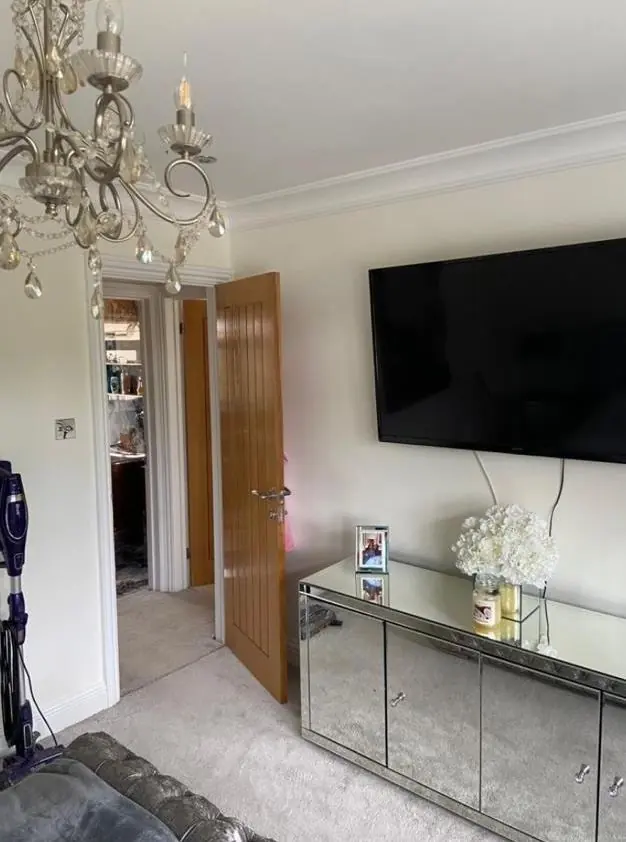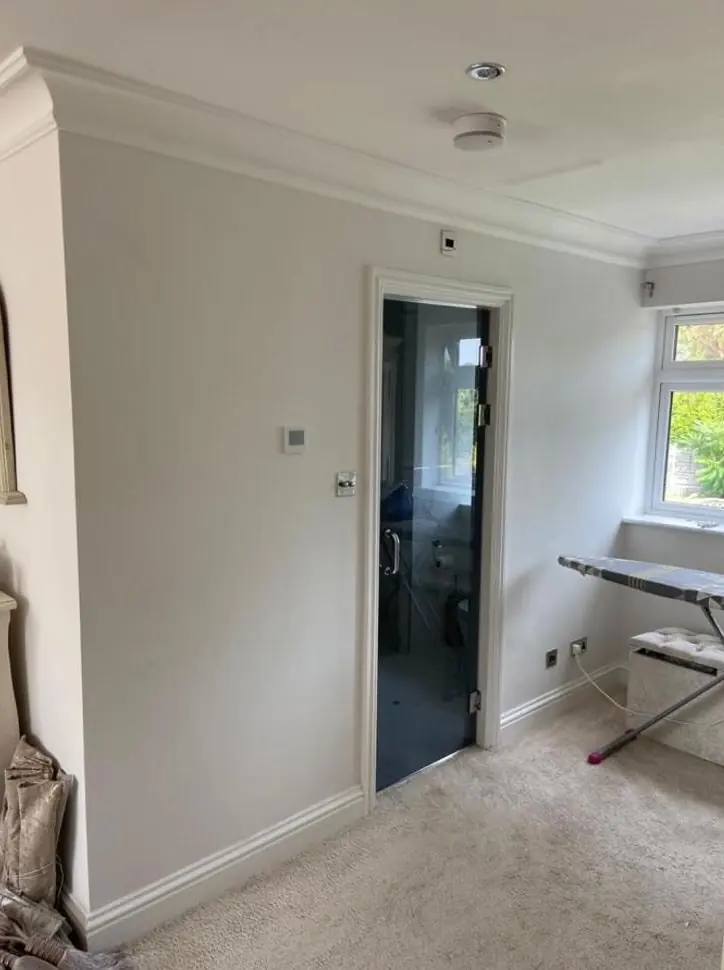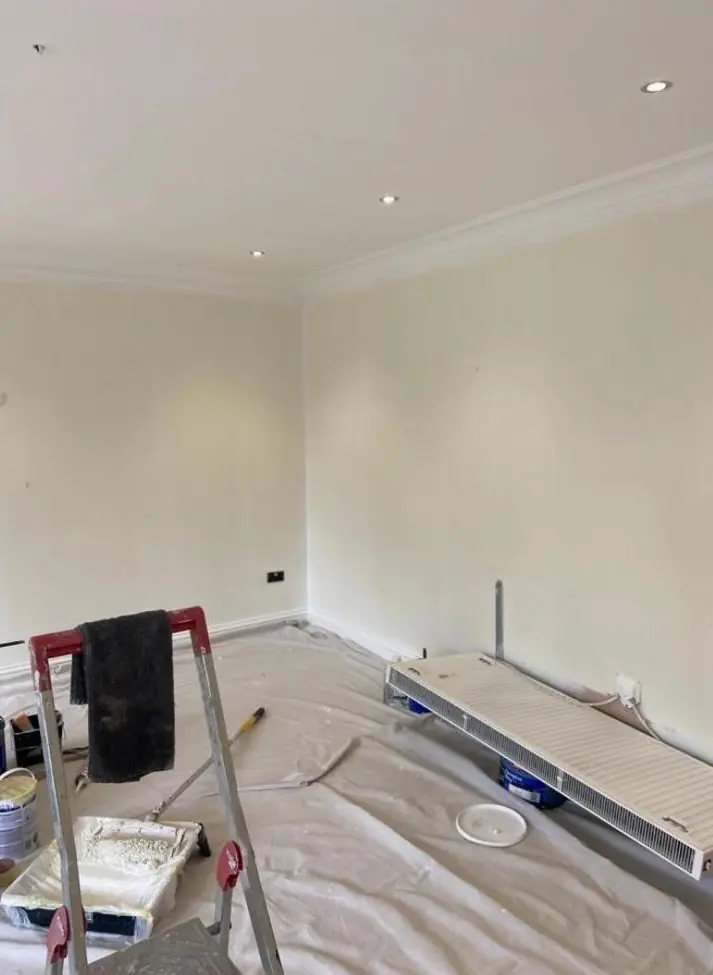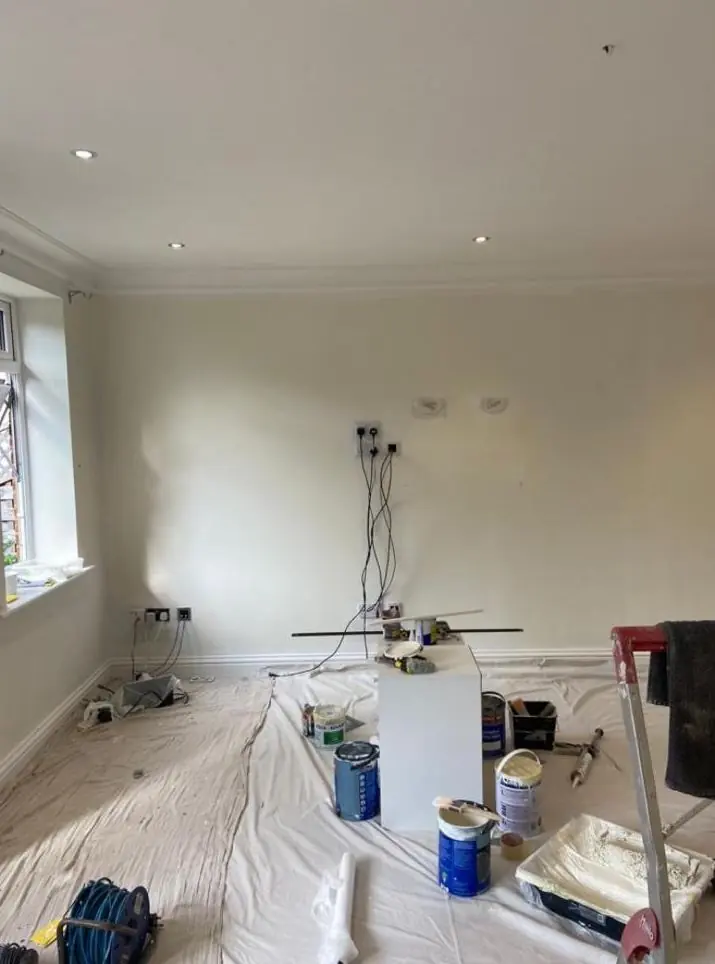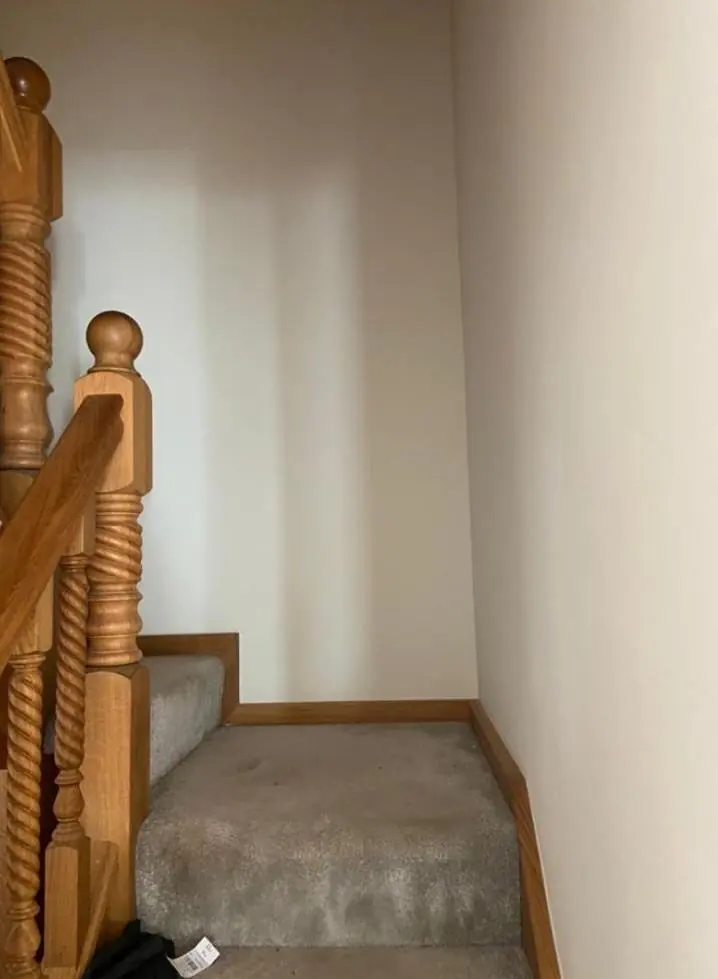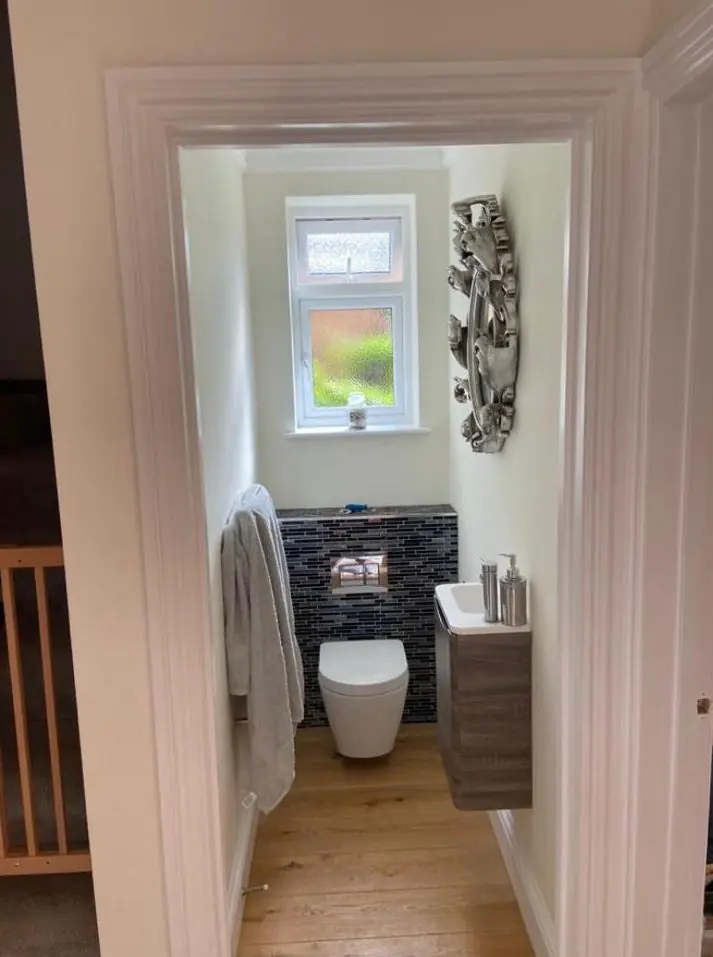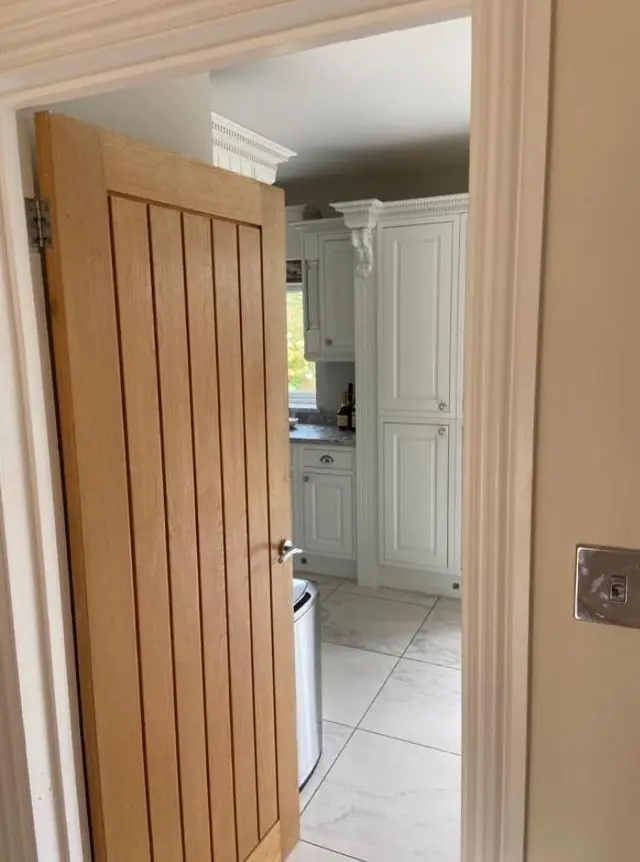
We hand-paint decorative finishes in East Hunsbury (NN4), the Merefield and Blacky More suburb under two miles south of Northampton town centre. Dean adds panelling, two-tone and colour-blocked walls and paint effects to the flat-walled rooms of its 1980s and 1990s detached houses, including homes on the Grangewood Estate.
Plain rooms without period detail
A Victorian terrace nearer the town centre often has cornices, picture rails and panelled doors to pick out. A house in Merefield or Blacky More usually has none of those. The 1980s and 1990s homes that make up most of East Hunsbury were built with flat plastered or plasterboard walls, simple softwood skirtings and plain ceilings. That’s practical, but in a long lounge-diner or a plain entrance hall it can leave a room without anything for the eye to settle on.
So decorative work here is mostly about adding detail rather than restoring it. The plain walls are a good base for that, since there’s no old moulding to work around and the surfaces are generally sound once old woodchip or tired emulsion has been dealt with.
Panelling on flat walls
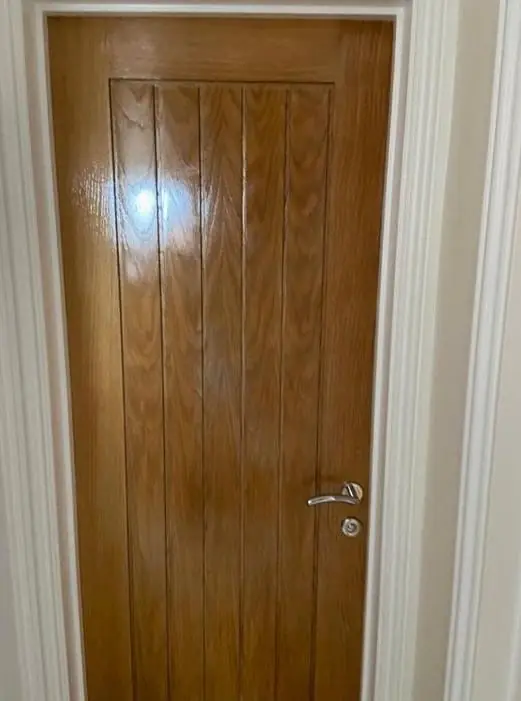
Wall panelling suits these flat-walled East Hunsbury rooms well: simple box frames or a shaker-style lower half in a hallway, a full wall of panels behind a bed, or a tall grid on a stair wall. A joiner or carpenter fits the MDF or timber strips. Our job is to make the finished result look like it was built with the house. That means:
- filling every pin hole and the joints at each mitre, then sanding flush so no lines show through the paint
- caulking along the wall edges of each strip so the shadow lines are crisp
- priming the cut MDF edges, which absorb paint differently from the faces
- painting the panels and the wall between them in the same colour and a durable finish, or in two close tones for more depth
Wall panelling sticks out into the room a little, so we check it against door architraves and the skirting before the colour goes on, especially in the narrower hallways of semi-detached houses.
Colour-blocking and two-tone walls
Paint-only effects need no carpentry at all. Popular options include a painted arch behind a bed or a desk, a deep colour taken halfway up a wall with a crisp line above it, and a colour that runs from the walls straight over the ceiling in a small room. These depend on sharp edges: we mark them out with a level, seal the masking edge so paint can’t bleed under it, and remove the tape while the final coat is still workable.
The original textured ceilings that many houses here still have make a difference to this kind of work. A colour taken over a textured ceiling, or a line cut against one, never looks as clean as on smooth plaster. It’s often worth getting a ceiling skimmed before deciding on a decorative scheme.
Larger detached homes and the Grangewood Estate
Bigger detached homes, along with those on Merefield’s Grangewood Estate (265 homeowners, with a residents’ club in converted listed farm buildings), are where a more ambitious finish is most likely to make sense: a dining room with a limewash-effect wall, a study in a deep colour with matching painted bookcases, or panelling carried up a stairwell. Rooms with a conservatory alongside get strong light, which shows the texture in a layered or brushed effect very well, but also shows every flaw in the wall underneath. We fill and sand to a higher standard for these finishes than for a plain emulsion coat.
Seeing the options before committing
Dean can paint sample boards of a finish so you can see it in your own room before anything is done to the wall. Every type of effect we offer is described on the main decorative finishes in Northampton page. For plain repainting of the rest of the house, see our interior painting service, and for the wider picture of local housing there is our East Hunsbury overview.
Last updated by Dean, DH Painter & Decorator.