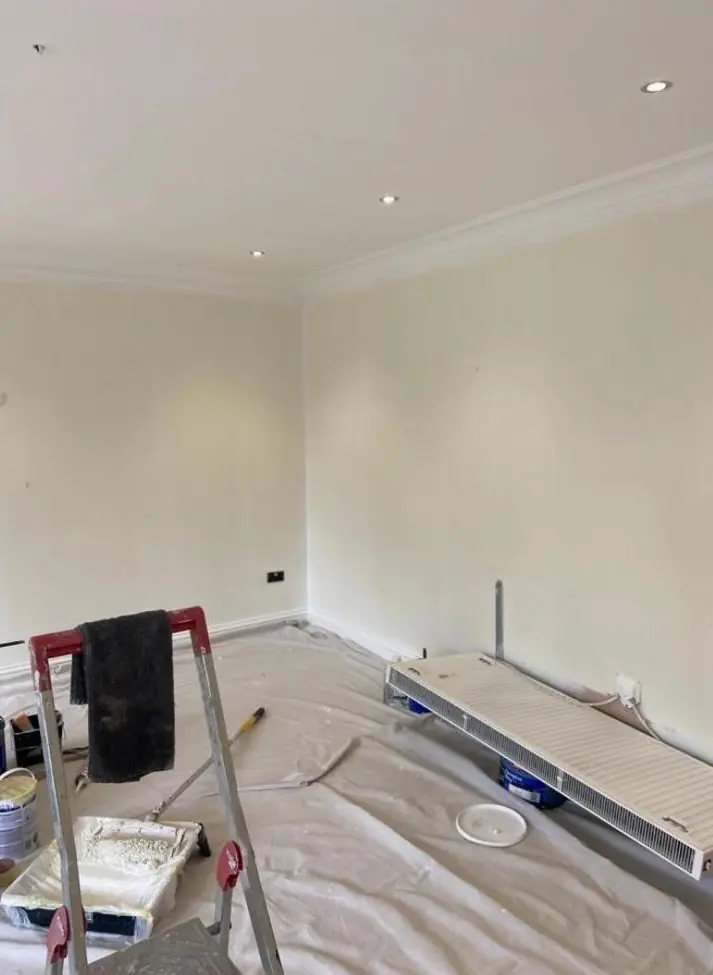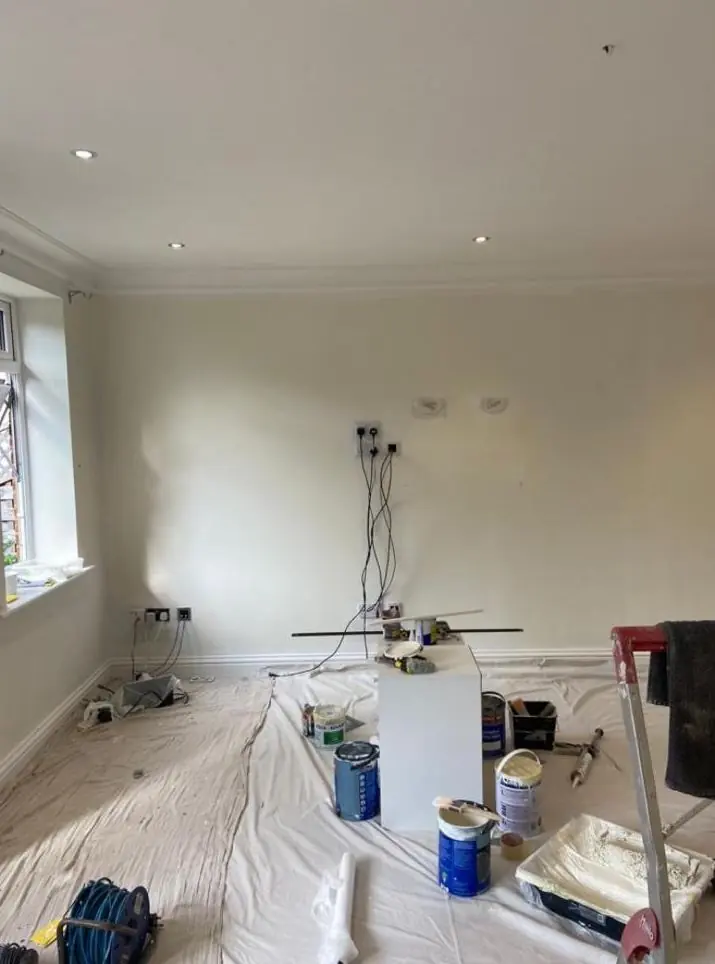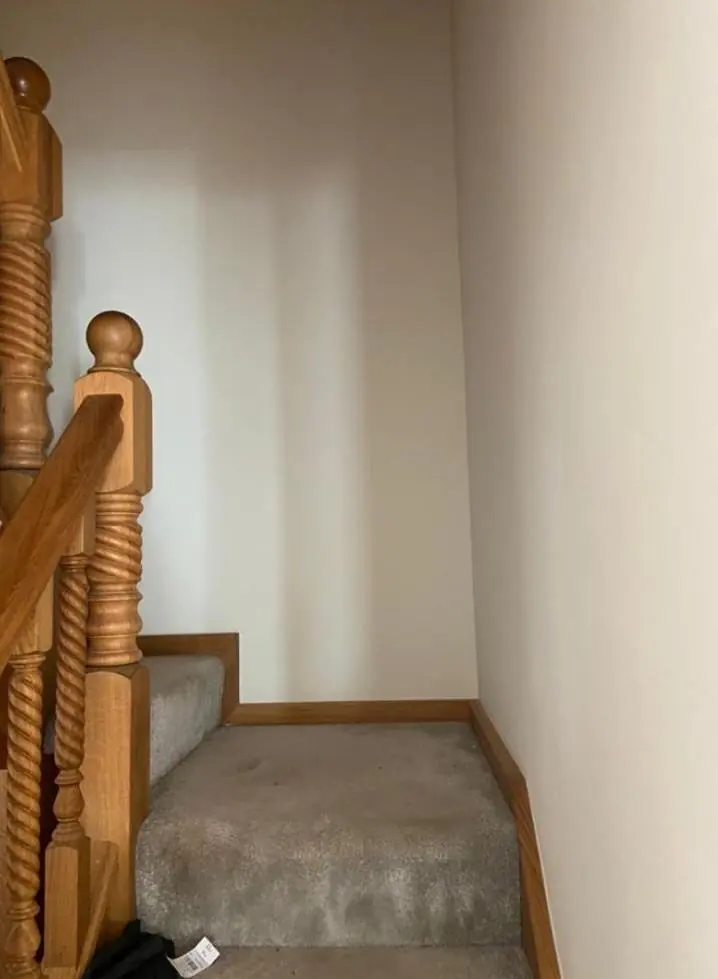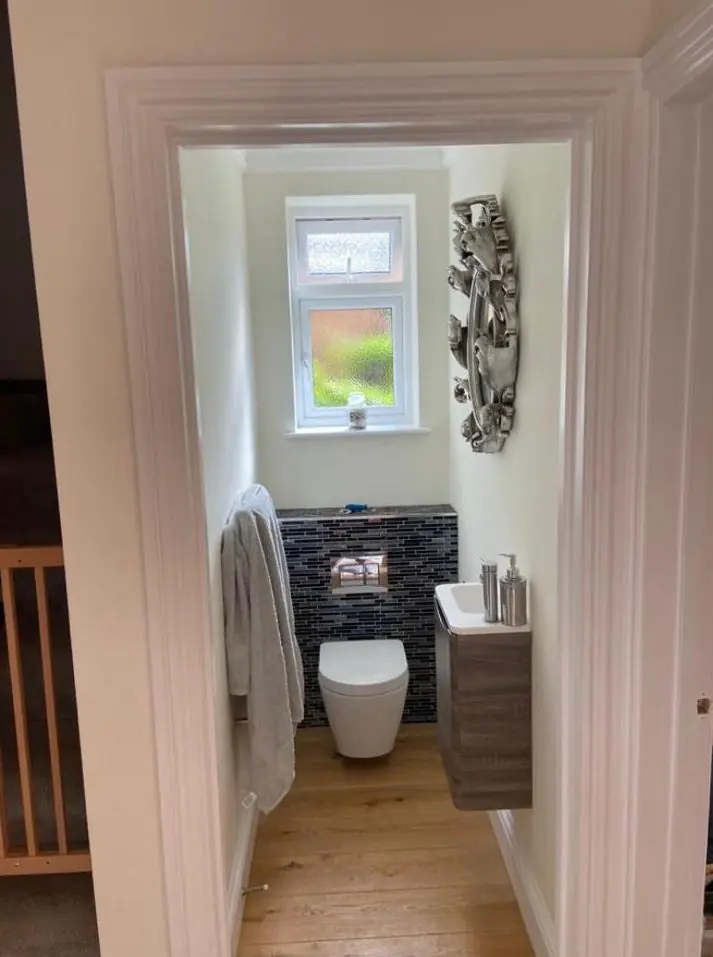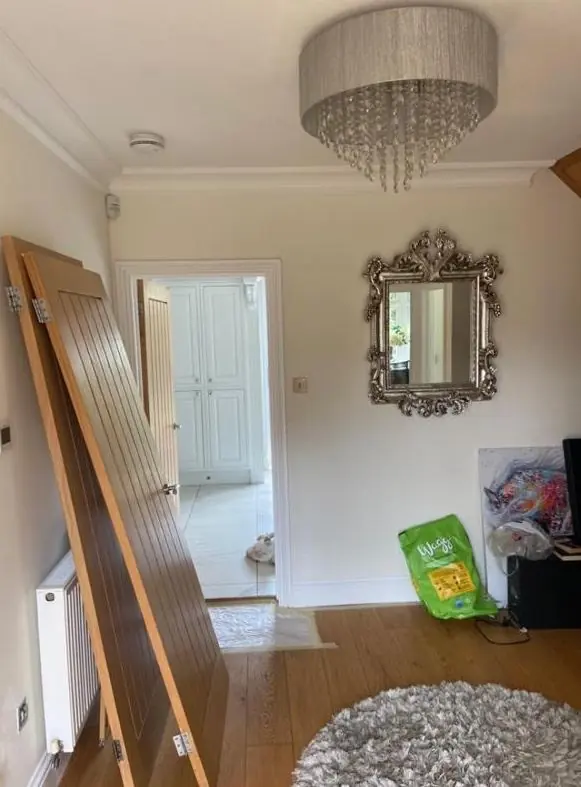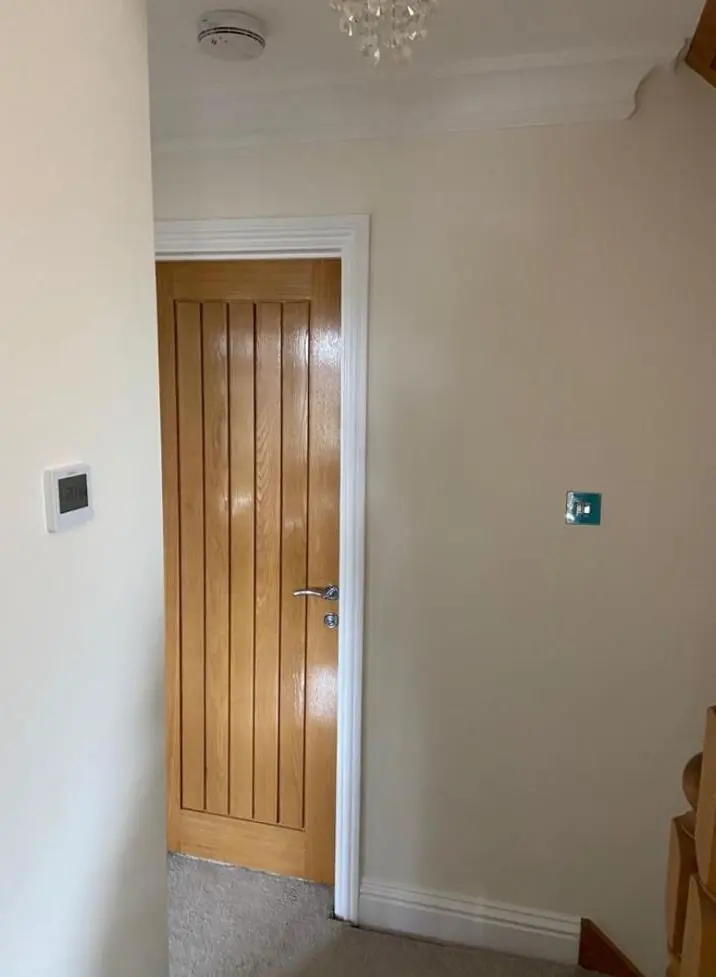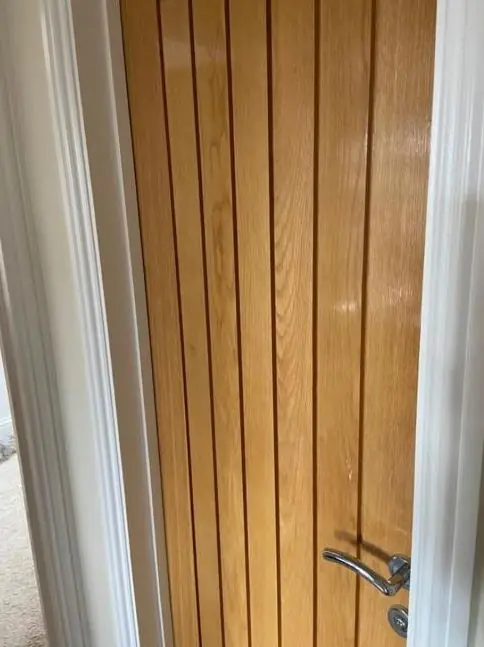
We apply decorative finishes in Wootton (NN4), about 2.4 miles south of Northampton town centre. In the conservation core that means heritage finishes such as limewash and colourwash on suitable surfaces; in the bigger modern homes it means feature walls, painted panelling and paint effects.
Finishes the old village already uses
Wootton’s historic core has its own decorative tradition, and it is a quiet one. Instead of applied ornament, a few buildings carry lime-based washes: colour-washed rubble at 20 High Street, colour-washed brick and stone on the former smithy and blacksmith’s cottage at 16 and 18 High Street, whitewashed brick at 11 Church Hill, and whitewashed roughcast and pebbledash on the Gothick former school at 52 High Street. All of these are listed, so any renewal starts with a conversation with the council about consent and is carried out like-for-like.
Limewash goes on in several thin coats over a dampened surface, builds a soft, chalky depth and lets the wall breathe. It wears away gradually instead of peeling, which is why it suits solid stone and old brick. Colourwash adds earth pigments for the gentle ochres and creams seen on older washed buildings. Neither should be mixed with modern masonry paint on the same wall.
Inside a period cottage
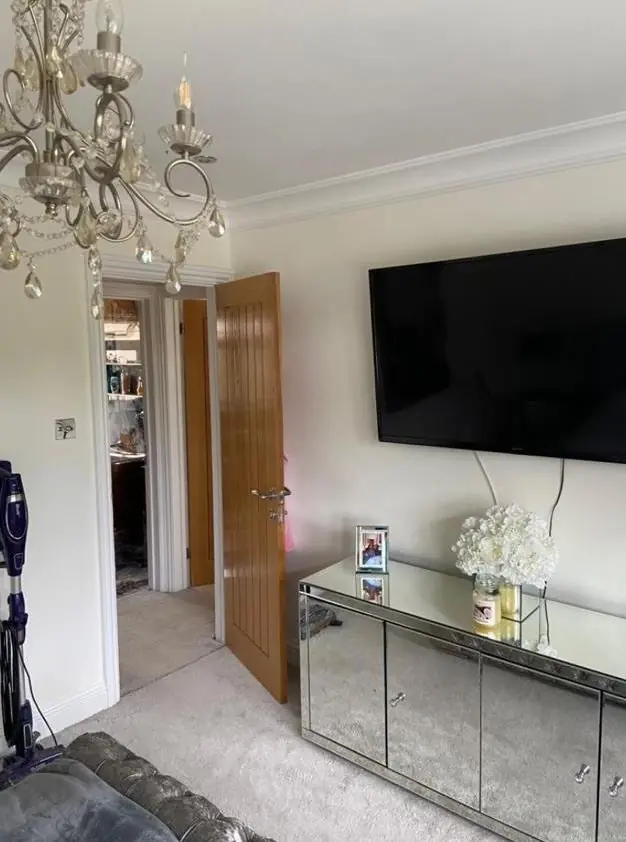
The same thinking carries indoors. In low-ceilinged cottages on Green Lane, Church Hill or Berry Lane, decorative work is usually about bringing out what is already there:
- limewash or distemper on lime-plastered walls, for a soft, matt, slightly uneven finish that copes with rubble walls and a water table close below;
- picking out old timber doors, door surrounds and window boards in a heritage colour;
- hand-applied effects such as a gentle colourwash glaze where flat modern emulsion would look out of place.
Listing covers interiors too. A new finish on historic plaster or joinery in one of the 25 listed buildings can need consent, so we ask owners to check first.
Feature work in the larger modern homes
The estates around the village, from Wootton Fields to Simpson Manor, leave more room for bolder ideas. Options that suit these rooms include painted wall panelling in a dining room or hall, a two-tone wall split at dado height, a deep colour drenched across walls, ceiling and woodwork in a snug, or a single textured or faux-effect feature wall. In a three-storey townhouse, a colour carried all the way up the stairwell with the spindles picked out in a contrast makes something of a space that is often left plain.
On new panelling, most of the work is preparation: filling pin holes and joints, caulking every mitre and sanding so the finish reads as one surface rather than a set of boards. Painted panelling also benefits from a durable eggshell or a hard-wearing matt, because it sits at the height where chairs, bags and shoulders rub against it.
Weather, trees and timing
Lime finishes outdoors depend on the weather. They need shelter from hard sun, frost and heavy rain while they cure, so exterior limewash belongs in the milder months. In Wootton the south-facing slope helps drying on south elevations, while walls shaded by the churchyard yews or the trees around Church Hill stay damp longer and pick up algae. Those need a biocide wash and time to dry before any finish goes on. Work to trees over 75mm in diameter in the conservation area needs six weeks’ written notice to the council, so branches cannot simply be cut back to make room for a ladder.
More on the techniques is on our decorative finishes page, and timing is covered in our guide to when to paint outside in the UK. The Wootton area page lists our other services in the parish.
Last updated by Dean, DH Painter & Decorator.