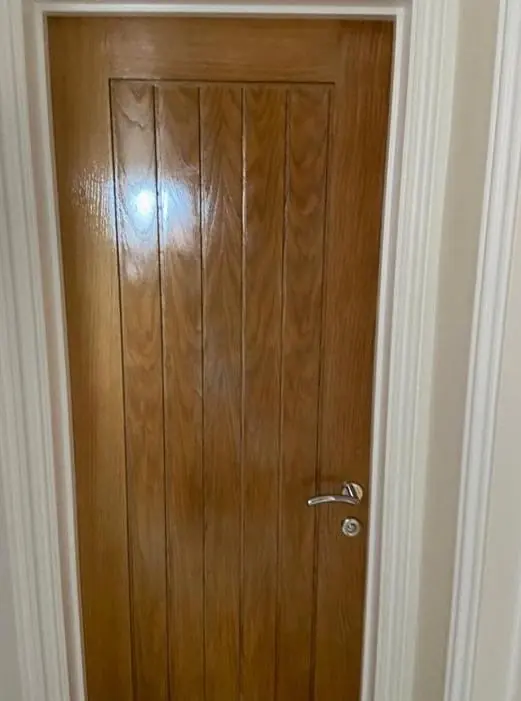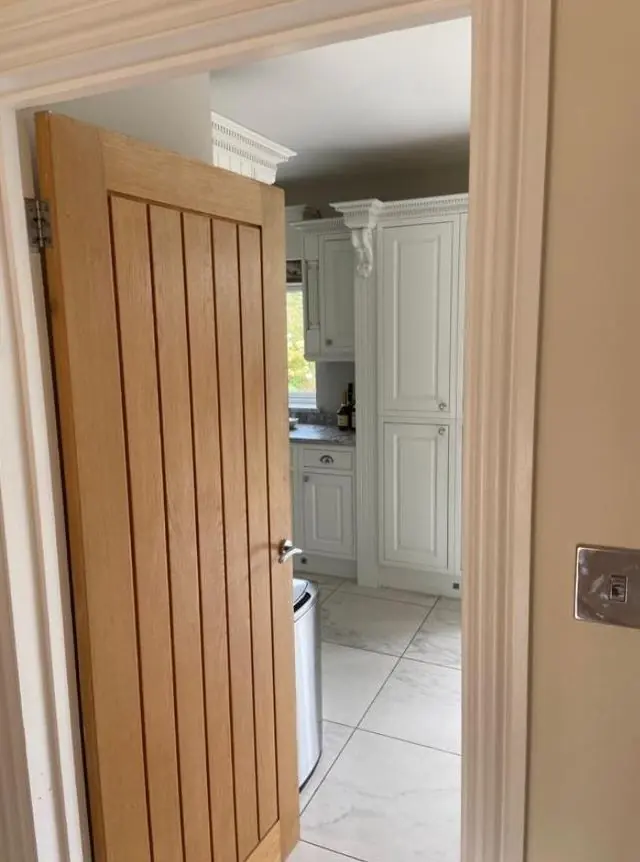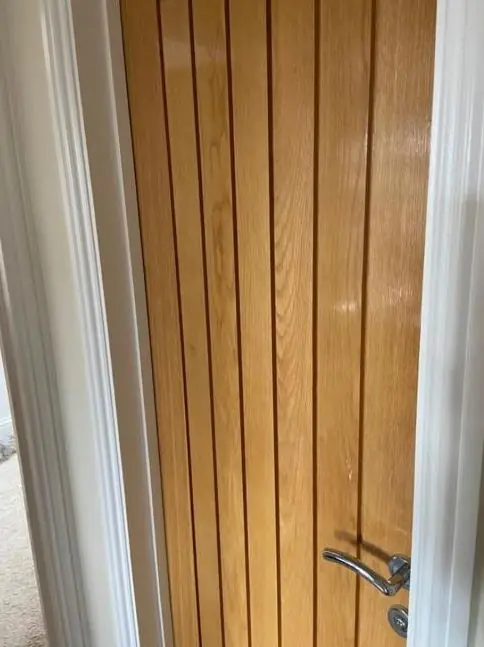
Dean paints internal and external doors, frames, architraves and skirting boards in Far Cotton, 0.9 miles south of Northampton town centre across the River Nene. Because parts of the area sit on low, flood-prone ground, ground-floor joinery is checked for swelling and soft timber before it is prepared and repainted.
Three kinds of house, three kinds of joinery
Far Cotton’s homes fall roughly into three groups, and the woodwork in each one fails in its own way. The older terraced streets, among them Abbey Road, Clinton Road and Thirlestane Road, date from the growth that followed the railway’s arrival in 1845, and their doors and boards usually carry many coats from many owners. The semi-detached houses on Towcester Road and Gloucester Avenue simply have more of it: wider halls, more doors and longer skirting runs. Then there are the estates built on brownfield land in the 2000s at Riverside Wharf, Cotton End and Southbridge, where the doors and trims still wear the builder’s original finish after 15 to 25 years.
The standard sequence of degreasing, keying, filling, knotting and priming is set out on our main door and skirting painting page. Here we cover what is different on the south bank of the river.
Low ground and the bottom inch of every door
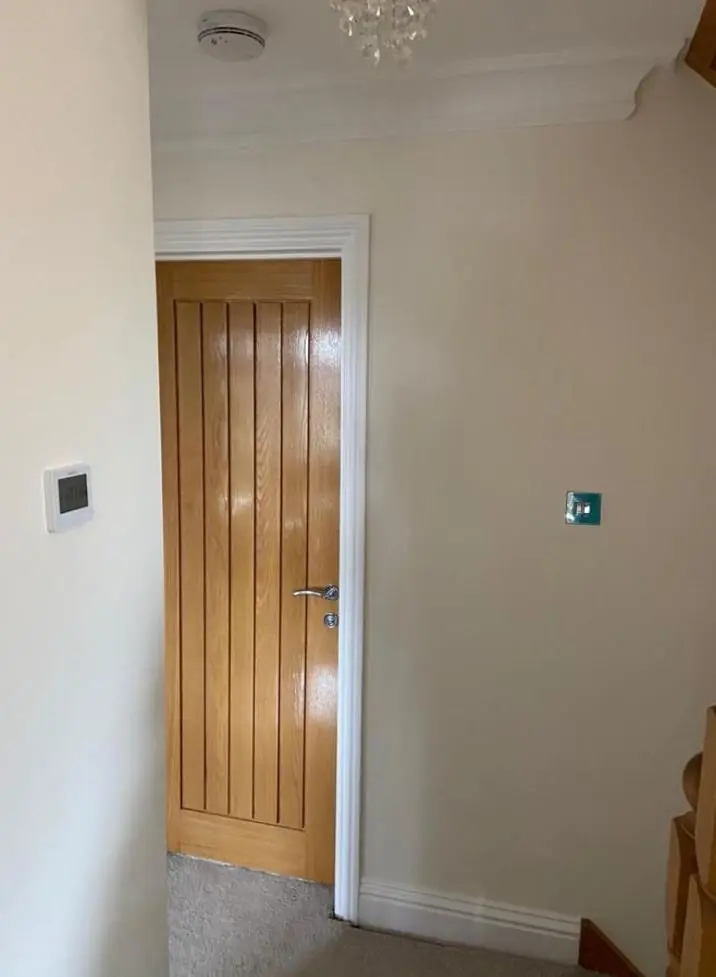
Parts of Far Cotton and Delapre are still flagged by the community council as flood-risk land, even after the banks were raised following the 1998 Good Friday flood. Even in a dry year, ground-floor timber near the river and the canal arm takes longer to dry out than joinery on higher ground away from the water. The damage turns up in the same places every time: the bottom rail of a back door, the end grain at the foot of a door frame and the lowest few inches of skirting on an outside wall.
So before Dean prices a ground-floor repaint here, he checks those spots. He probes the timber for softness, looks for paint lifting in blisters and takes a moisture reading where a board sits against a solid wall. The result decides the job:
- Dry and sound: prepared and painted in the normal way.
- Swollen but solid: left to dry, eased where it binds, and the end grain sealed so the door still closes once the new coats are on.
- Soft or rotten: we tell you before quoting and suggest a joiner cuts it out first, because paint over rot hides it for a season at most.
- Replaced after water damage: new boards and linings are primed on every face, back included, before they go on the wall where the order of works allows it.
Back doors and frames on homes close to the water get a microporous system that lets trapped moisture escape rather than pushing it out in blisters.
Estate trims reaching their first full repaint
On the riverside estates the joinery is typically factory-finished skirting and architrave, with doors that were given a quick builder’s coat. After two decades the problems are familiar: solvent gloss gone yellow in rooms that get little daylight, chipped door edges, and caulk that has opened up along the top of the skirting as the building settled. Going over to a water-based satinwood keeps the white from yellowing again, but it needs a proper key and a bonding primer on top of old oil-based paint or it will peel.
Flats such as River View and Mill House are leasehold. The outside face of a front door that opens onto a shared landing is often a fire door covered by the lease, so check with the management company before you change its colour. We never paint over intumescent strips or smoke seals.
Older terrace doors that will not shut
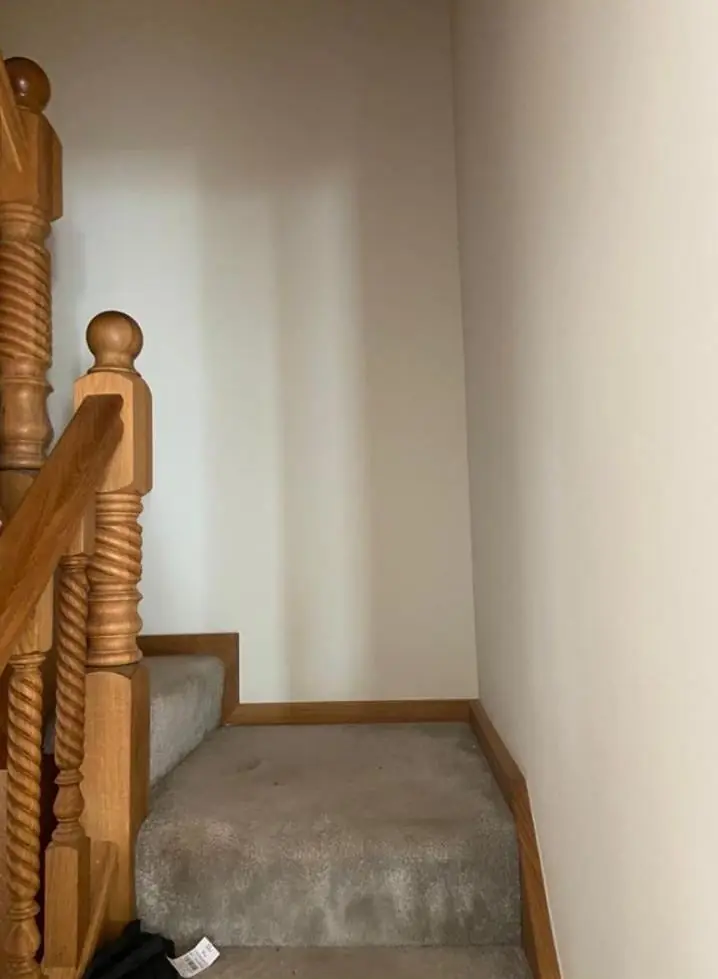
On the older streets, doors that stick usually have too much paint on their edges and in the frame rebates. Adding another coat makes this worse, so we take the edges back to a thin, sound layer first. Lower layers in houses of this age can contain lead, so we test before sanding and switch to wet methods if the result is positive. The rooms are compact, so we work room by room and you keep the use of the house.
Getting a price
Far Cotton is 0.9 miles from the town centre, so Dean can look at your doors and skirtings in person before pricing them. More about the area is on our Far Cotton area page, or call 07539 779 036 for a free quote.
Last updated by Dean, DH Painter & Decorator.