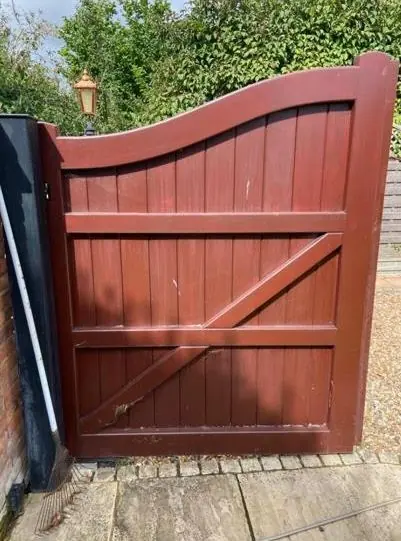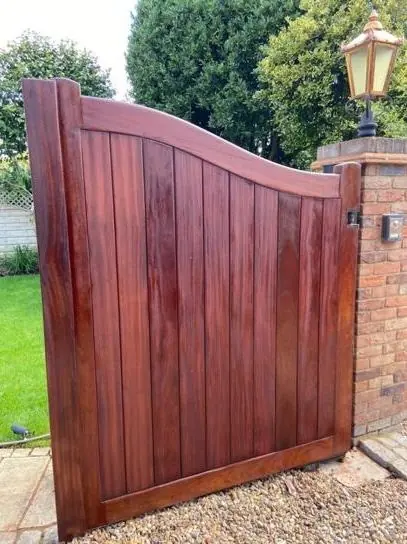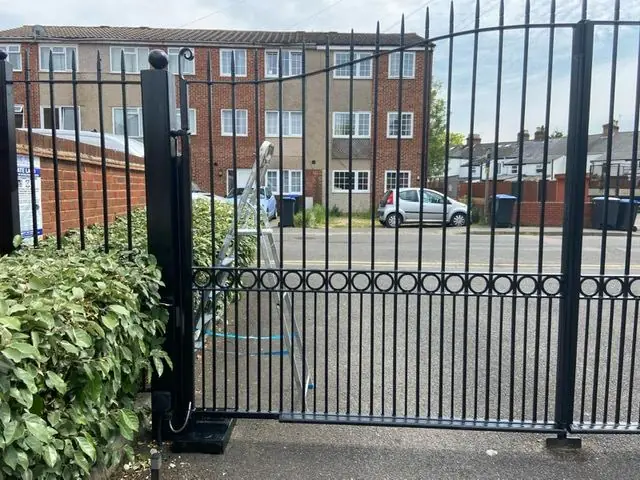
We stain and paint wooden fences and gates across Far Cotton, the suburb immediately south of the River Nene, about 0.9 miles from Northampton town centre. Dean preps the timber, checks posts and boards for rot, and recommends a stain or paint to suit how damp and shaded the spot is. Quotes are free.
Yard fences and back gates on the terraced streets
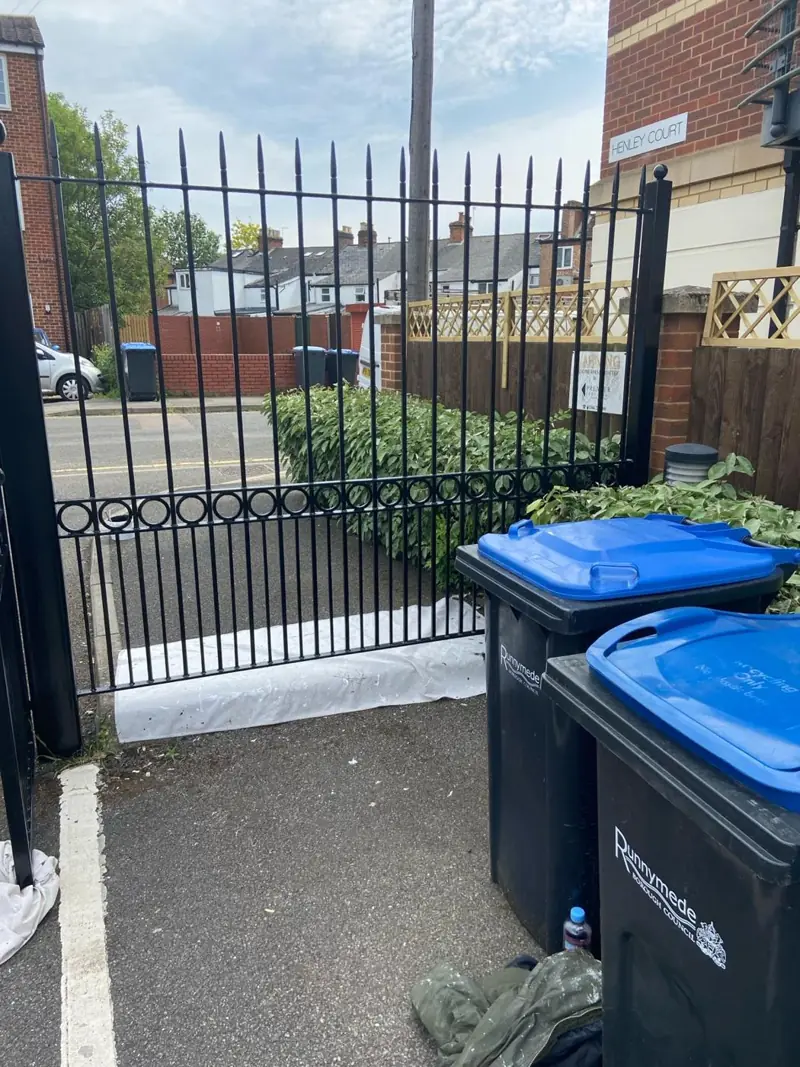
Behind the terraces on streets such as Southampton Road, Thirlestane Road and Penrhyn Road, garden timber tends to mean a small yard: a fence or boarded wall on each side and a wooden gate onto the rear alley. Those gates take the most punishment. They are opened every bin day, they sit at ground level where water splashes up, and in a shared alley they are rarely in full sun.
Many of these alleys are gated under the community council’s alley key scheme. That brings two practical points. First, we need the key to reach and treat the alley side of your gate and fence. Second, a fence between two yards has two faces, and the neighbour’s side can only be done with their agreement. We would rather raise that early than leave one side bare.
Gate hardware matters as well. Hinges, bolts and latches on yard gates are usually steel and often rusty, so we mask or remove them where we can and treat any rust before the stain goes on around them. A gate that has dropped on its hinges and drags on the ground will soak up water at the bottom rail however well it is finished, so it is worth having it rehung first.
Panel fences on the newer cul-de-sacs
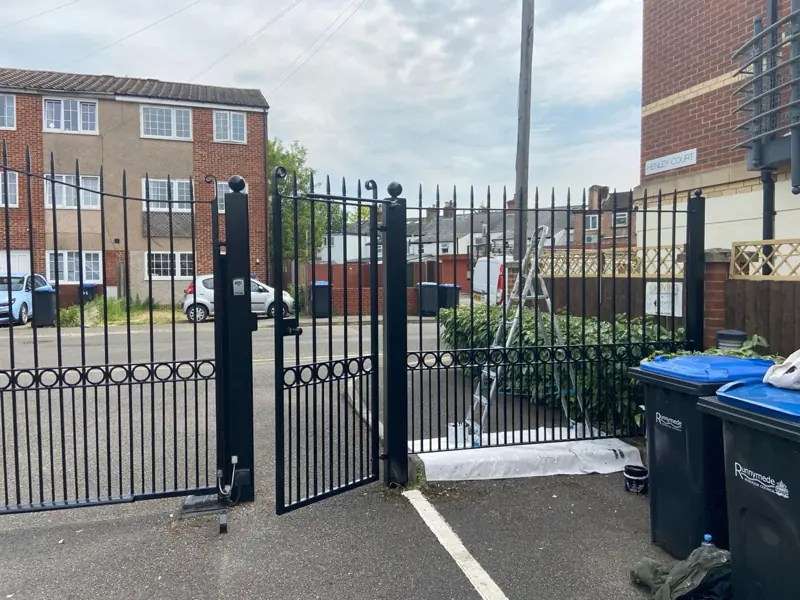
Newer streets such as Harvester Way, Leah Bank, Thomas Chapman Grove and Henry Bird Way are laid out as cul-de-sacs, and gardens there are more likely to be fenced with lap or feather-edge panels between concrete or timber posts. On the 2000s riverside estates, garden fences put up when the houses were built are now old enough for the original treatment to have worn away, leaving grey, dry boards.
Panels like these take stain well once they are clean and dry, but the gravel boards at the bottom and the tops of the posts are where rot starts. We check both before quoting, because there is little point staining a panel that is about to come down with a failed post.
Picking a finish for timber that never quite dries out
Far Cotton is low-lying, bounded to the north by the Nene and the canal, waterside trees, and the Delapre Abbey woods to the east. Fences in this setting stay damp longer after rain and grow algae on the shady side. That shapes the choice of finish:
- Microporous stain lets moisture out of the timber, so it fades gradually rather than peeling. It suits most yard fences and gates here.
- Opaque fence paint covers badly weathered or patchy boards and gives a solid colour, but it needs the timber properly dry before it goes on.
- Clear or lightly tinted oils suit a good hardwood gate where you want the grain to show, and need topping up more often.
Whatever is chosen, green growth is cleaned off and the wood left to dry first. Brand-new pressure-treated timber also needs time to dry before it will take a coat.
When to book
A run of dry days matters more for fences than for most outside jobs, because the timber has to be dry right through, not just on the surface. Near the river that usually means late spring to early autumn. Our guide to the timing exterior work explains the weather window in more detail.
For our full approach to garden timber, see the main fence and gate staining page. Other services in the suburb are listed on our Far Cotton page.
Last updated by Dean, DH Painter & Decorator.