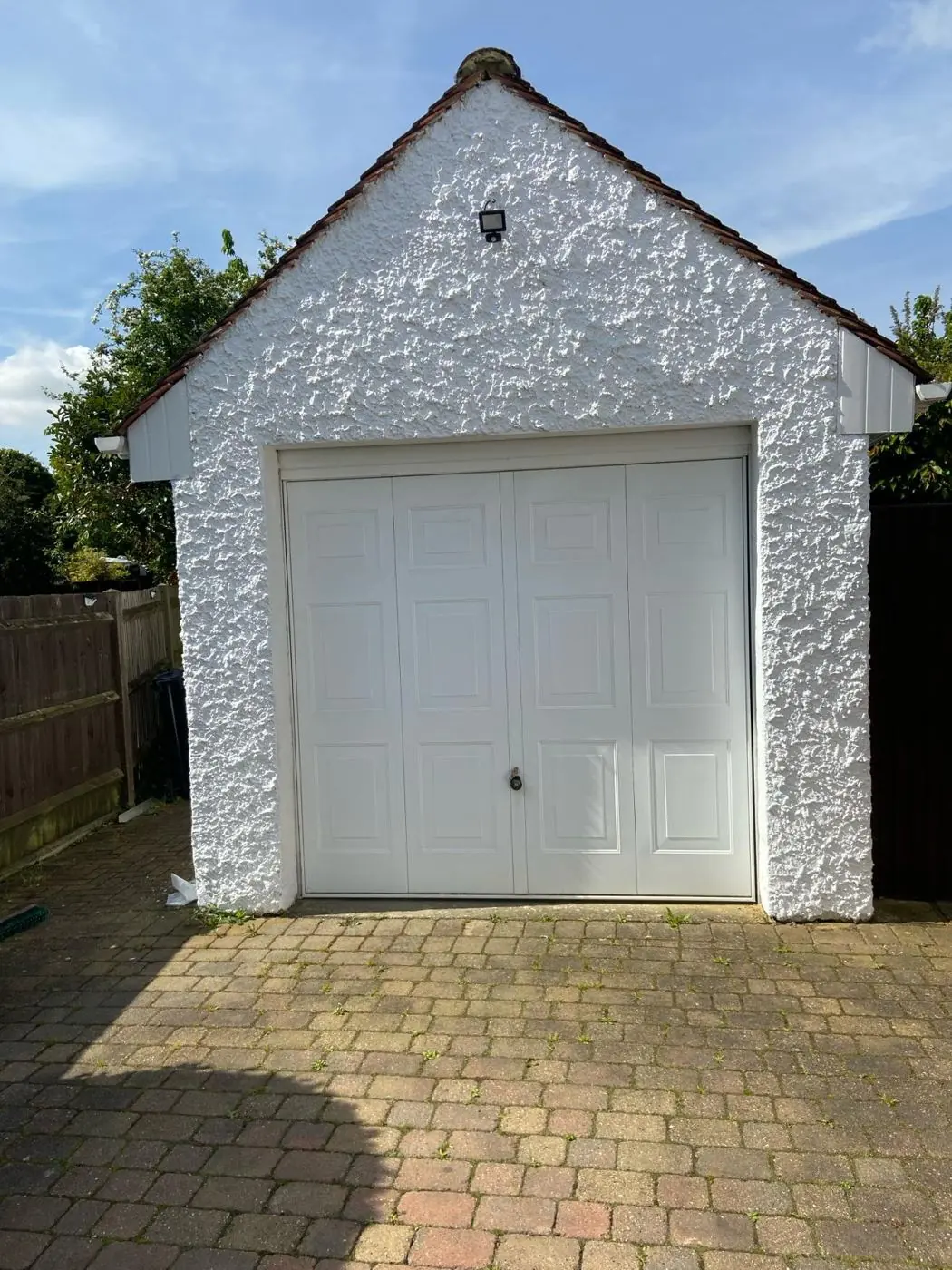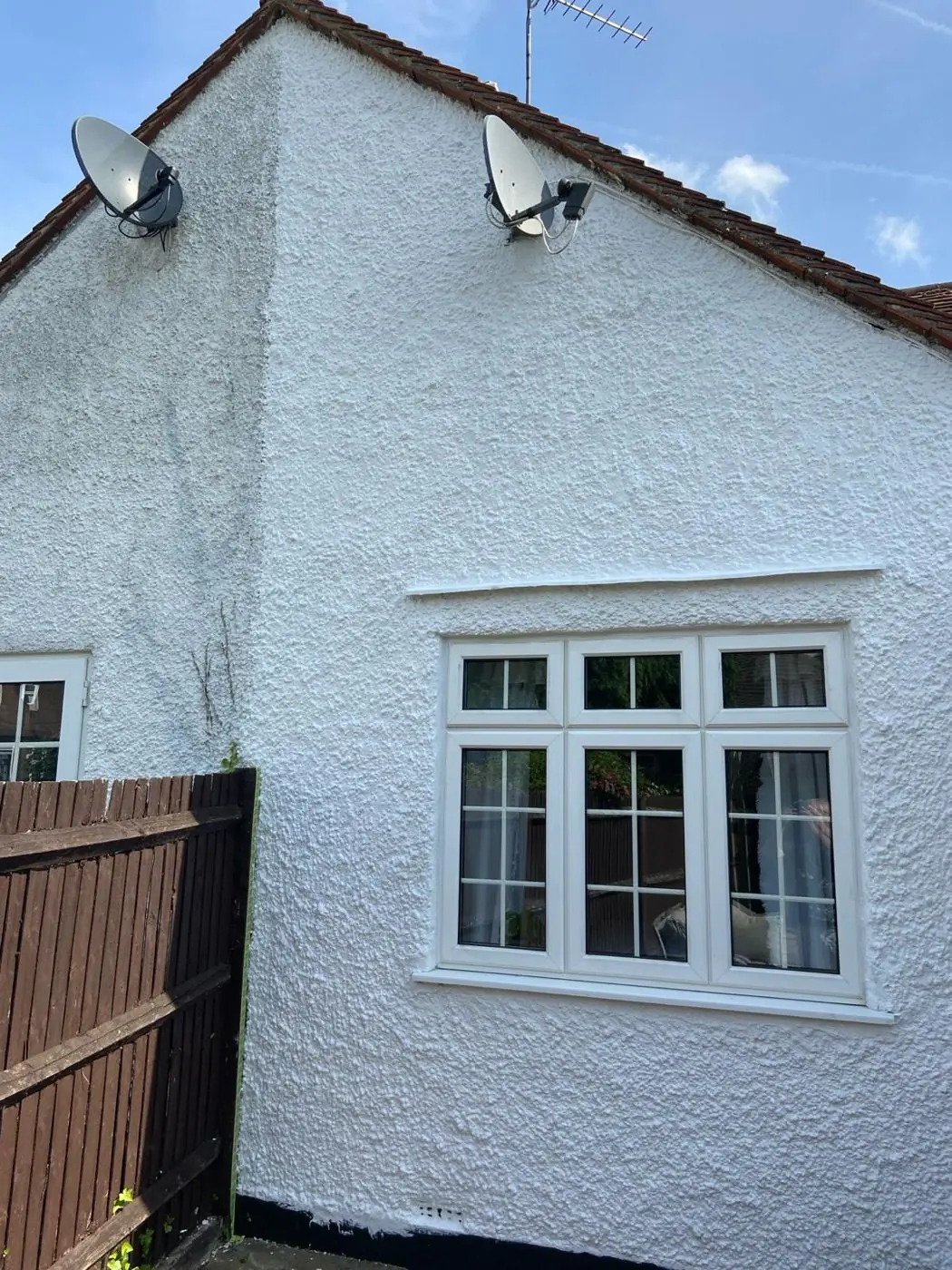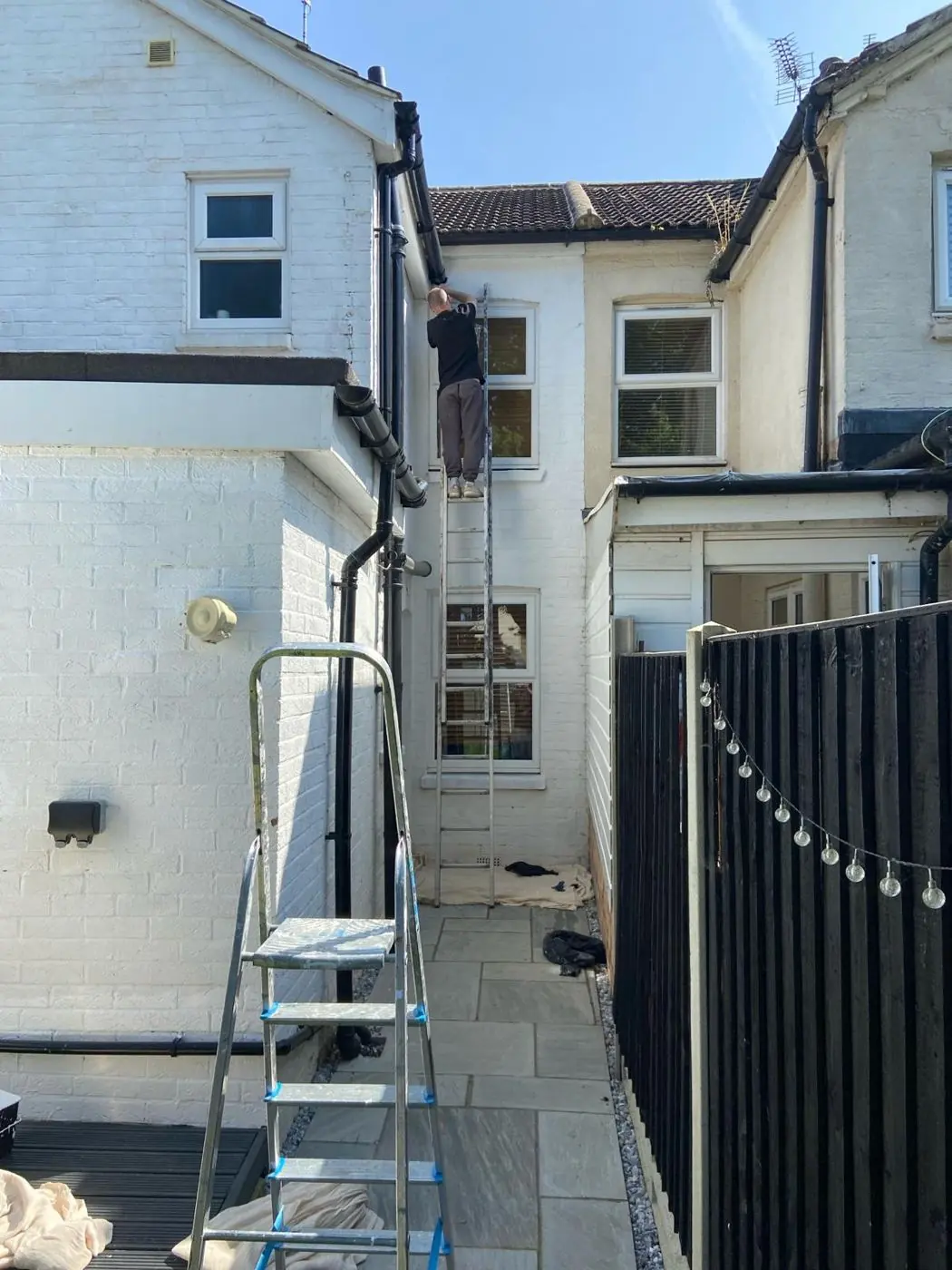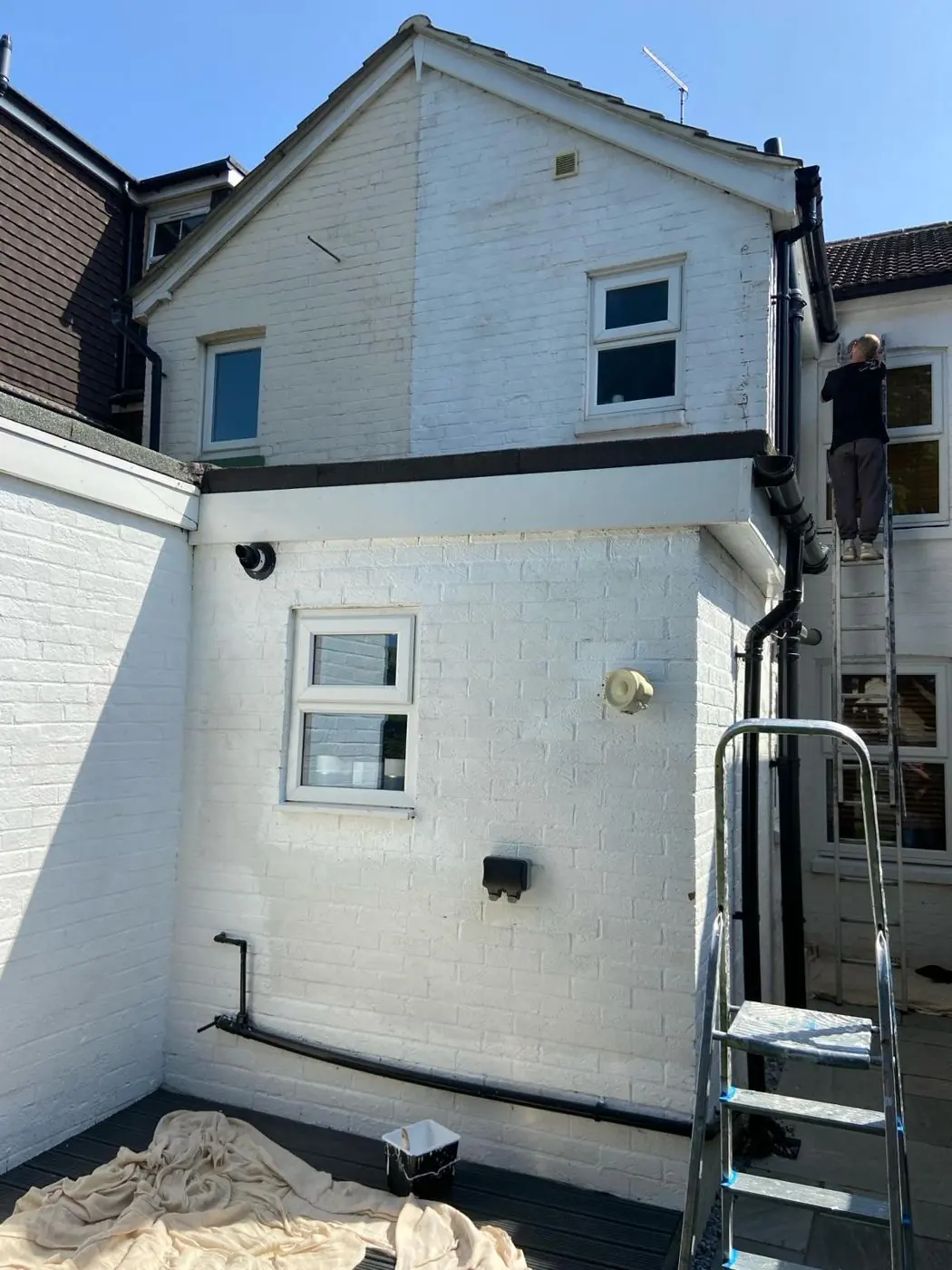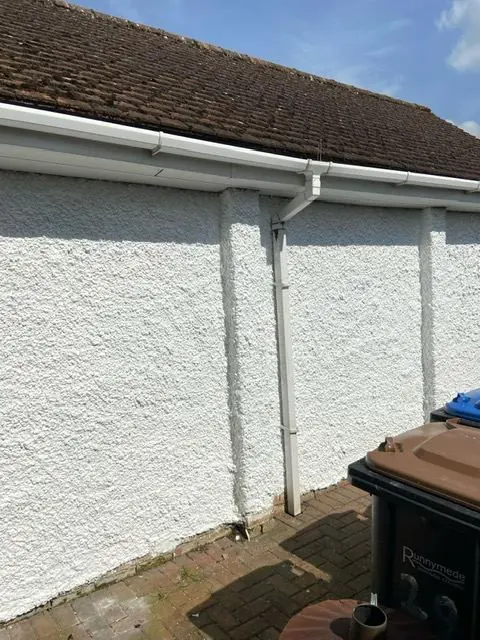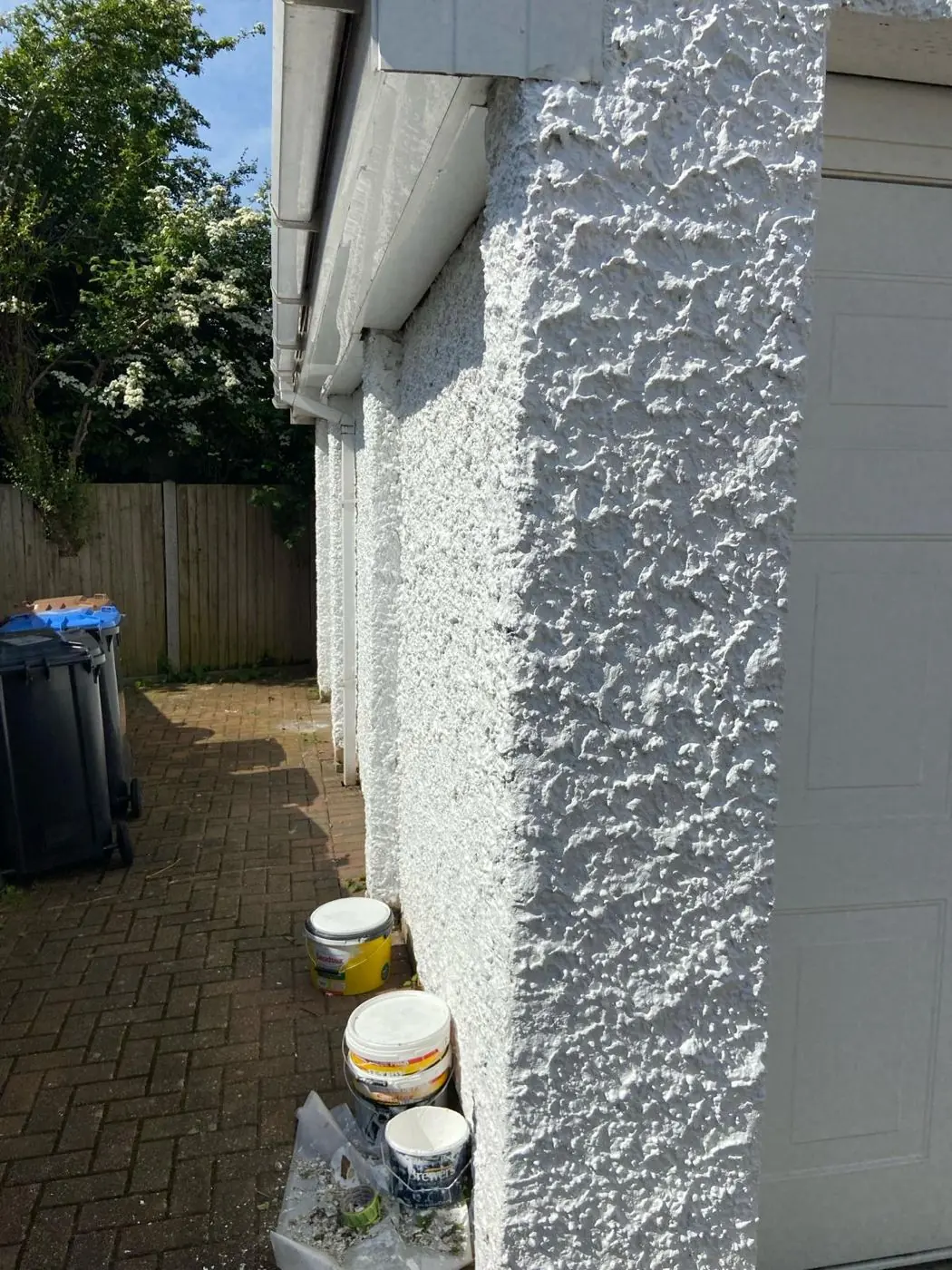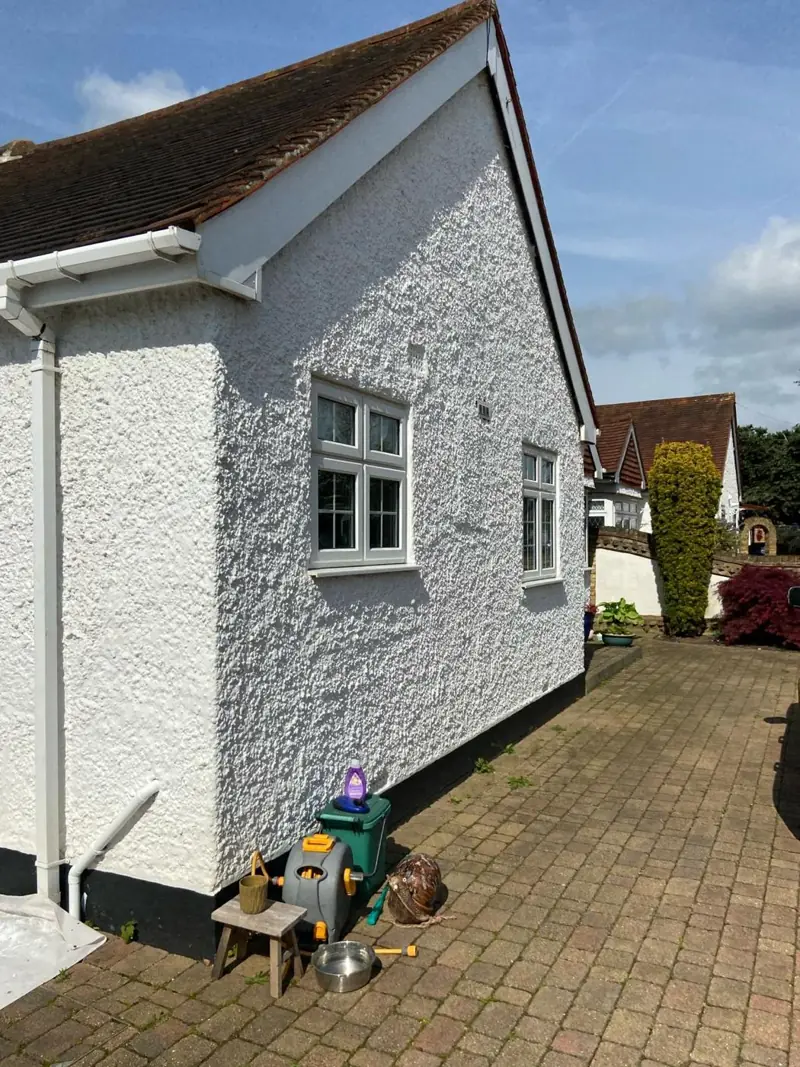
DH Painter & Decorator paints render, roughcast, stucco and colourwashed masonry in Wootton, 2.4 miles south of Northampton town centre. In the old village we use breathable finishes only, and we will tell you when a stone wall is better left unpainted.
Stone that should stay bare
Most of Wootton’s conservation area is coursed or squared rubble: warm, iron-rich sandstone and pale limestone, sometimes laid in alternating stripes, with ashlar at 4 and 24 High Street and at Old Rectory Mews. The 2010 appraisal is clear that coated stone is the exception in this county, and it cites 20 High Street, where the render came off to expose the rubble. So when someone in the village asks us to paint a stone wall, our first answer is often to leave it. An acrylic masonry paint seals rubble that was built to breathe, and on ground where the water table sits close to the surface, which the 16 wells on the 1880s map show, that moisture has nowhere to go. Blown paint and crumbling stone faces follow.
The walls that were made to be coated
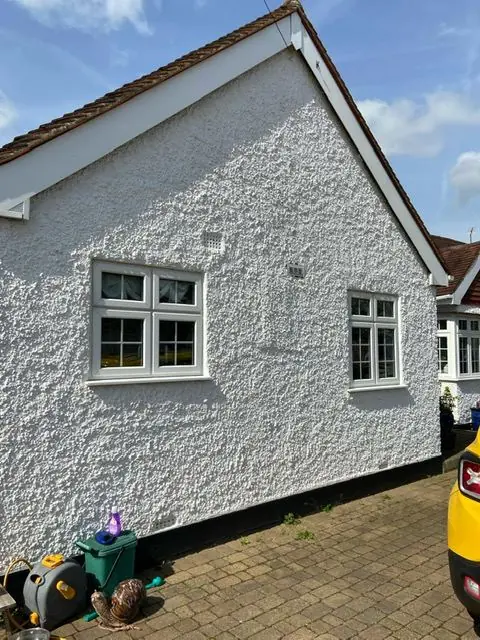
A smaller group of Wootton buildings were finished to take a coating, and these are where our render and masonry work is:
- 52 High Street, the early 19th-century Gothick former school, in whitewashed roughcast and pebbledash
- the stucco east front of 3 High Street, dated 1736, and the stucco over brick on the cottages at 4 to 8 Church Hill
- colour-washed rubble and brick at 16, 18 and 20 High Street
- the whitewashed brick of 11 Church Hill
Most of these are Grade II listed, and listing covers the finish. Renewing a limewash in the same tone is not the same as changing the colour or moving to a modern paint, so we ask owners to talk to West Northamptonshire Council’s conservation officers before we settle on a specification.
Matching the coating to a wet site
On historic colourwashed surfaces we use limewash or a traditional colourwash. Where a tougher breathable coat suits a rendered front, a mineral or silicate paint can work. The preparation decides how long either lasts. Stucco and roughcast of this age can be hollow behind a sound-looking face, so we tap-test, mark loose areas and have them repaired in a compatible lime mix before any coat goes on. Our guide to painting render and roughcast compares the coating types, and the method is on the main render and masonry painting page.
Wootton also needs care over timing. The village centre lies in a slight hollow on a south-facing slope, and limewash wants slow, even drying. We avoid strong sun on the south fronts and frosty spells on shaded north walls, and we may split a house into elevations worked on different days.
Boundary walls and copings
The appraisal treats the stone boundary walls, with their brick and stone copings, as the village’s defining feature, and conservation area consent is needed to demolish most of them. It also notes some have been patched with unsuitable mortar and recommends specialist advice for repairs. We don’t paint these walls, and we won’t paint over a hard cement patch to hide it. Where a wall sits under the churchyard yews or the sycamores outside the Yeoman of England, a gentle biocide clean is usually all the face needs, and we can tell you where repointing by a mason should come before any decorating next to it.
Homes on the later infill roads, such as Church View and Farmclose Road, and on the Wootton Fields and Simpson Manor estates are modern brick, and the masonry question there tends to be smaller, such as a painted garden wall. Our Wootton page covers the rest of the parish.
Last updated by Dean, DH Painter & Decorator.