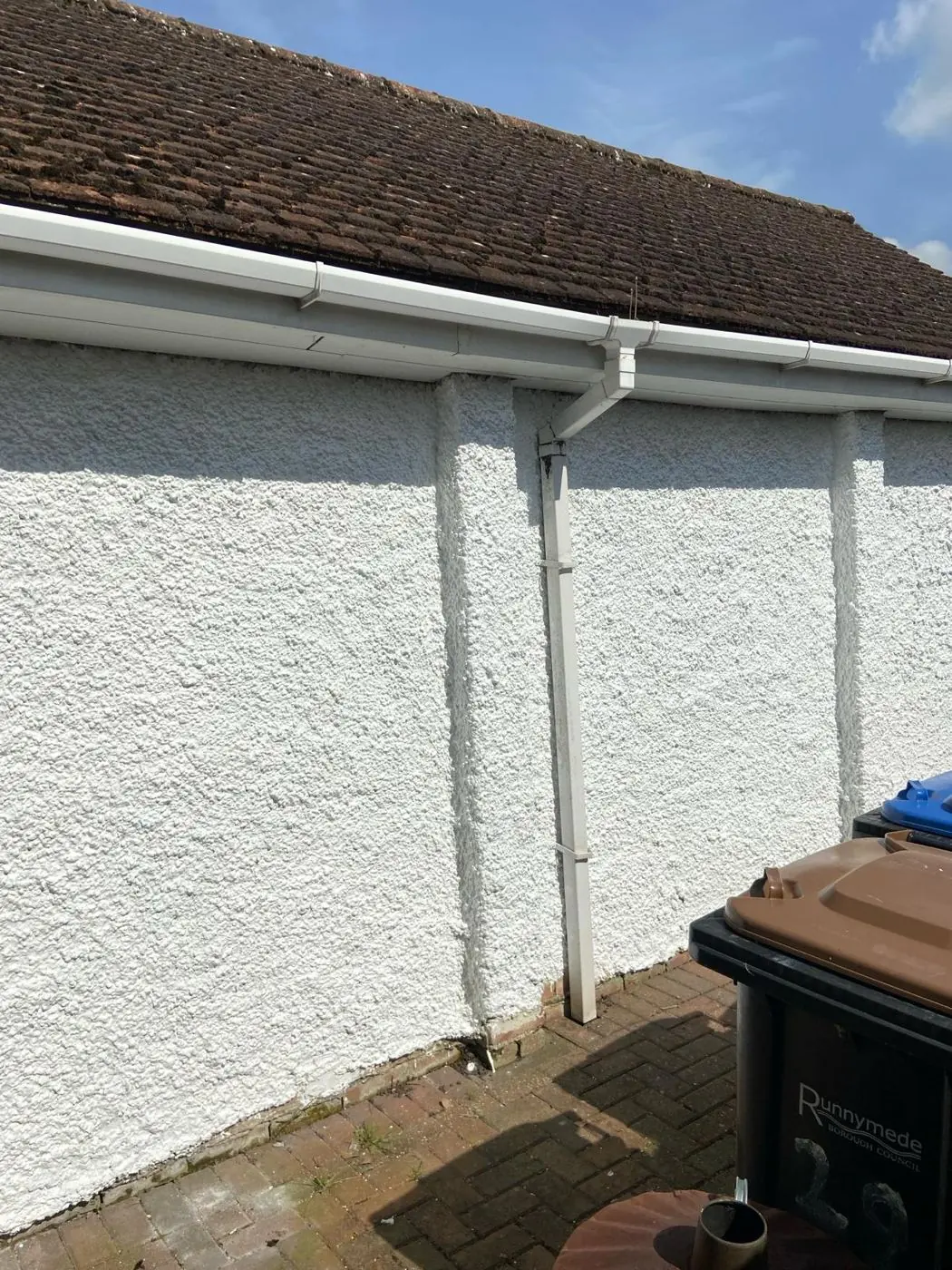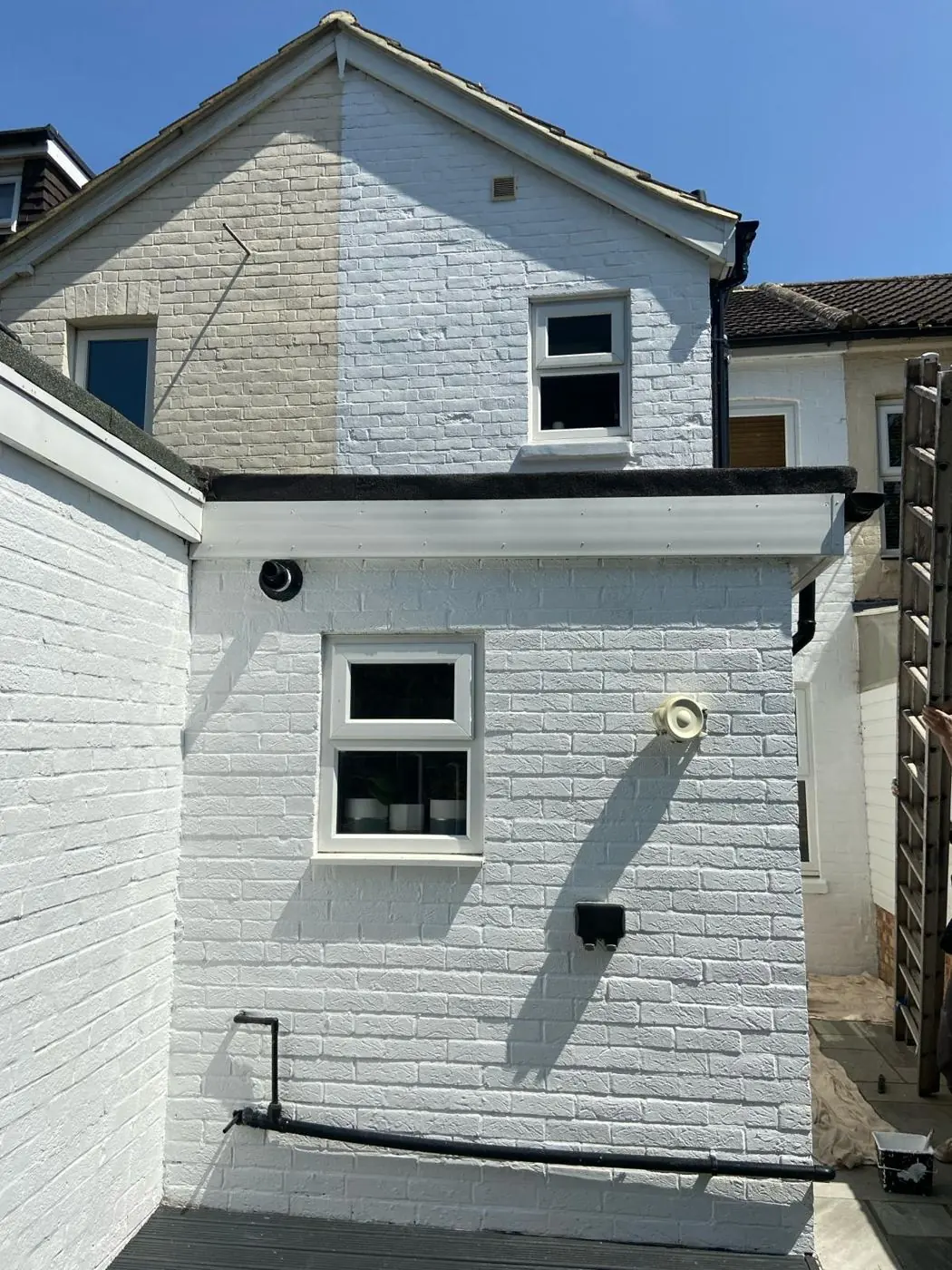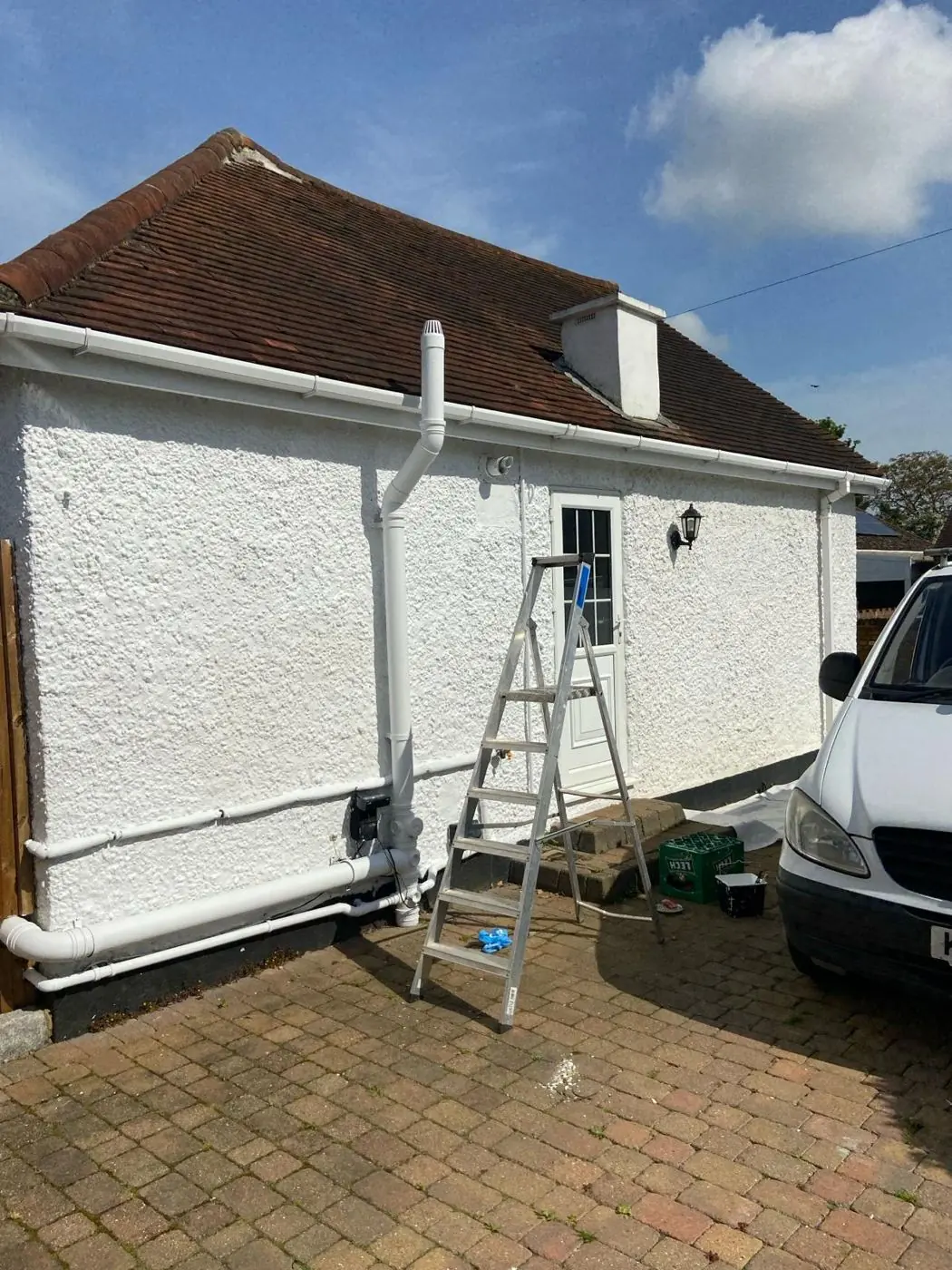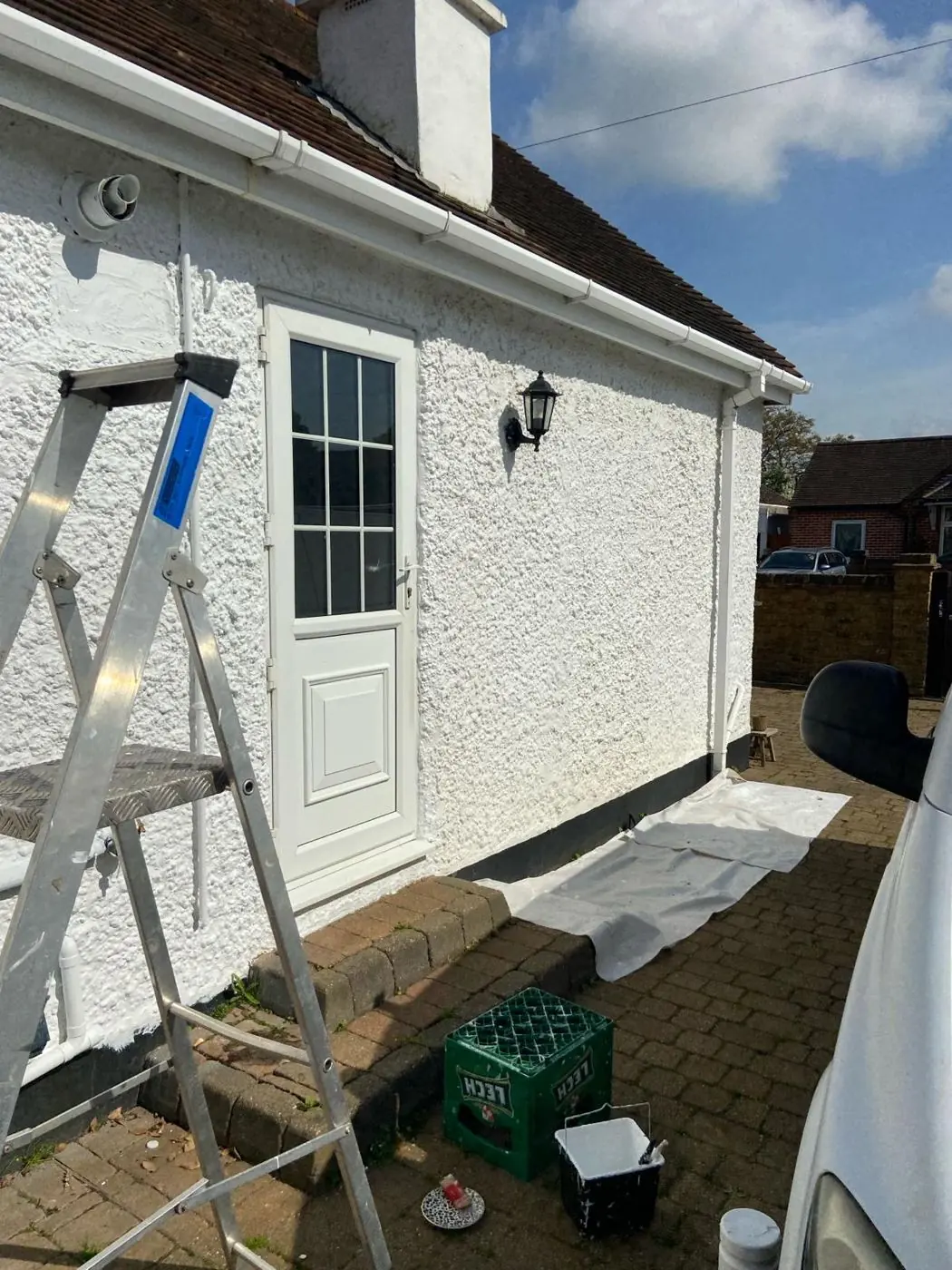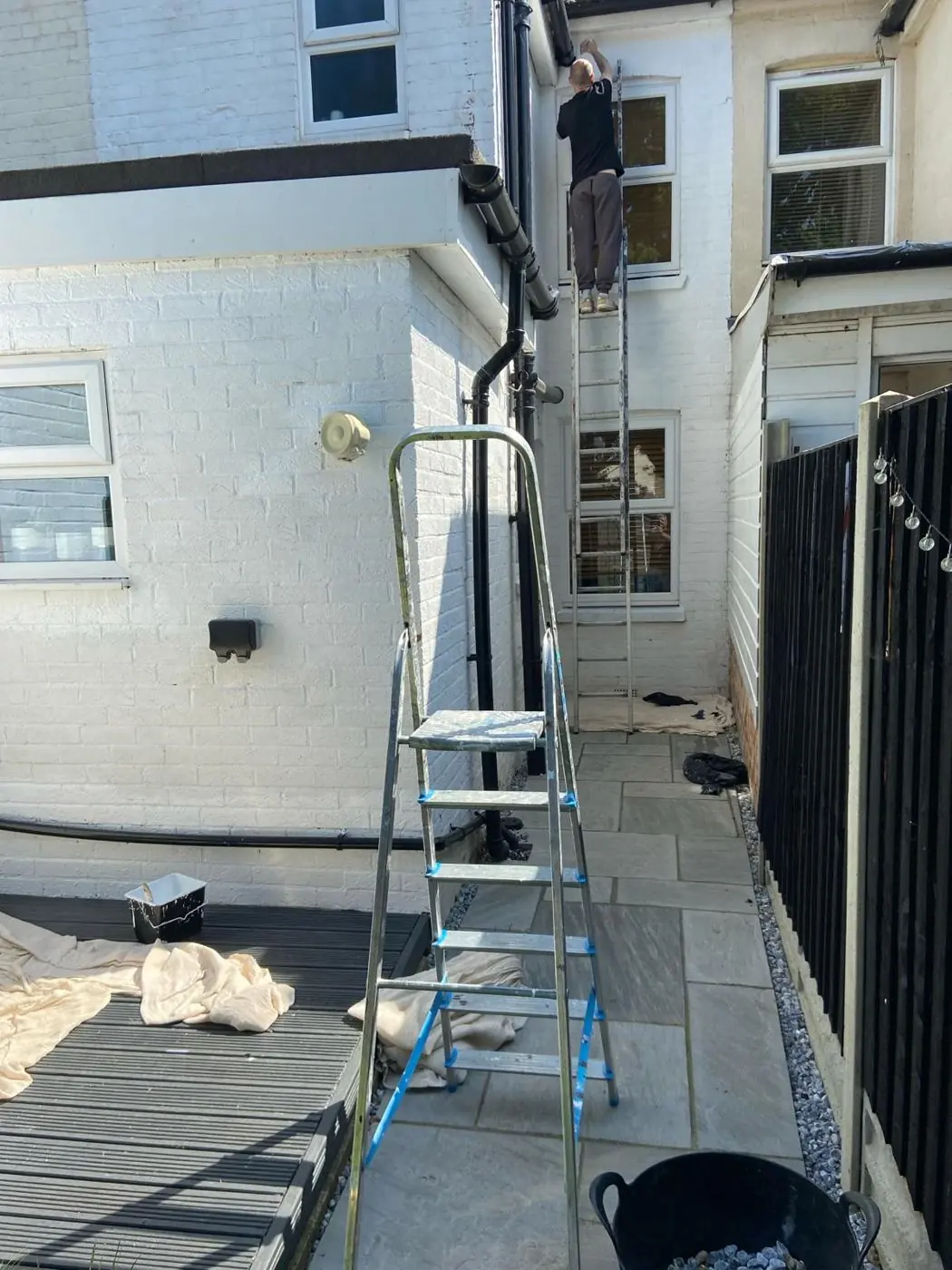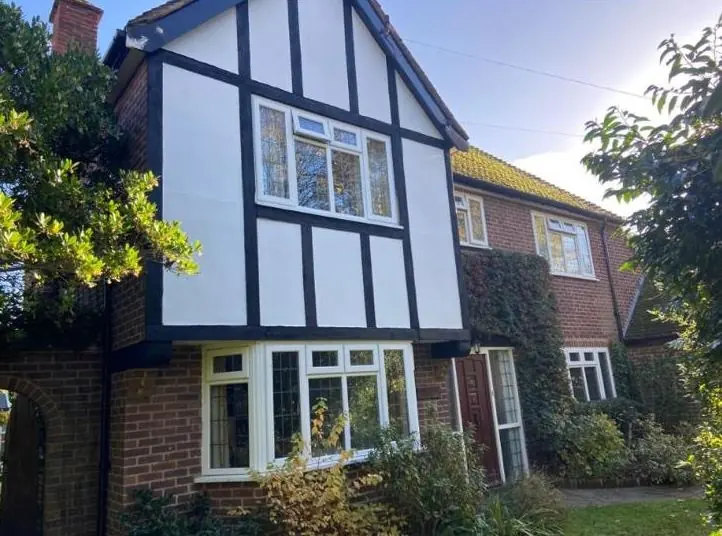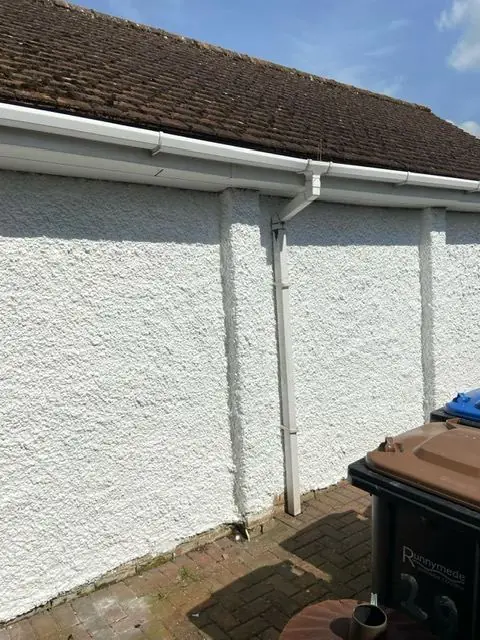
We paint rendered and masonry walls across Far Cotton, the riverside suburb about 0.9 miles south of Northampton town centre. Because many walls here sit near the railway, a main road or the Nene, Dean washes them down, takes moisture readings and uses breathable masonry coatings. Quotes are free.
What ends up on a Far Cotton wall
The outside walls in this suburb collect different kinds of dirt depending on which edge of it they face. Far Cotton is boxed in by a railway on the west, the river and canal on the north, the A5076 on the south and Delapre Abbey’s park on the east, and each edge leaves its own mark on painted masonry.
| Where the wall is | What builds up | What the prep involves |
|---|---|---|
| Near the railway and the Network Rail depot | A dark, oily film on render and sills | Detergent wash and rinse, then a test patch to make sure paint will stick |
| Front elevations on Towcester Road and London Road | Traffic grime, worst at ground-floor height | Wash down, then a dirt-resistant masonry finish |
| Close to the Nene, the canal and waterside trees | Green algae, slow drying, damp plinths | Fungicidal wash, a wait for it to work, then moisture readings |
| Next to the abbey parkland and woods | Shade, leaf litter and organic staining | Biocide treatment and checking that gutters above are clear |
Paint put straight over any of these films lets go early. That is why washing down usually takes the first day of a Far Cotton render job and why the walls are left to dry before anything goes on.
Flood history and why breathability matters here
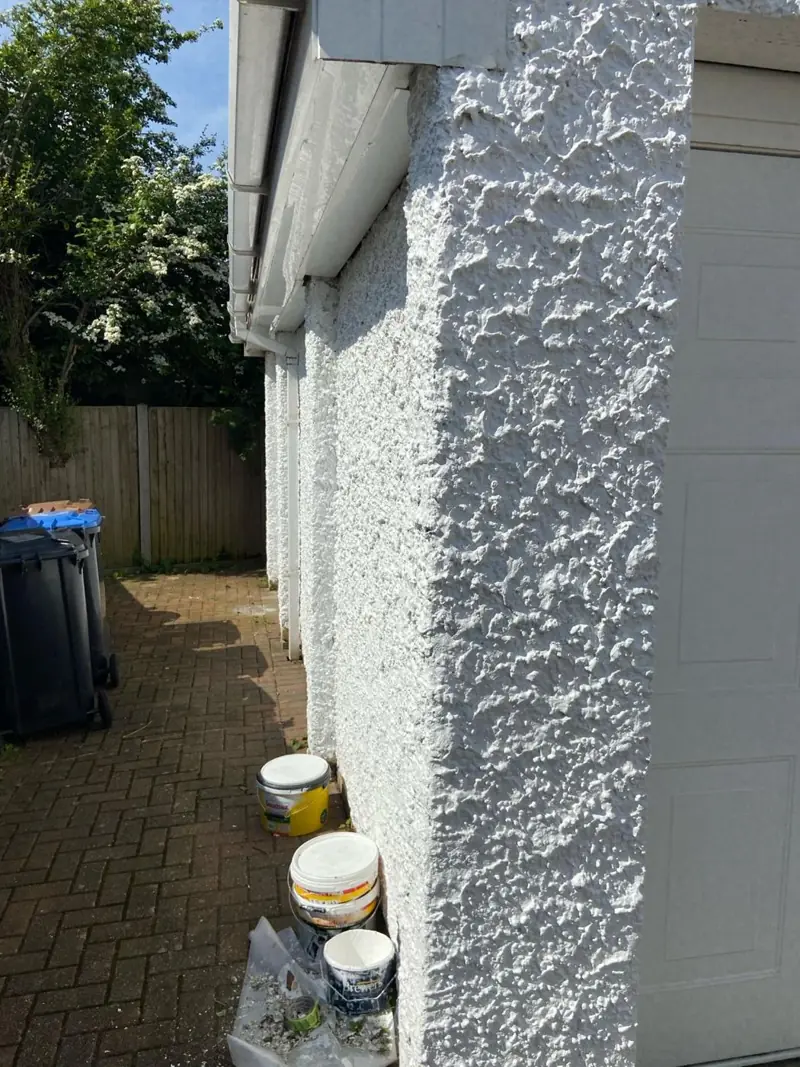
The 1998 Good Friday flood pushed residents out of their homes, and the community council still lists parts of Far Cotton and Delapre as at risk of flooding. A wall that has been wet from the ground up can hold moisture in its lower courses long after the surface looks dry. Covering it with a non-breathable coating traps that water, and the result is blistering, flaking and salt staining near the base.
So before quoting, we take moisture readings at plinth height as well as higher up. Where the readings are acceptable, a breathable masonry paint lets vapour escape through the finish. Where they are not, the cause needs dealing with first, whether that is a blocked gully, a leaking downpipe or soil banked against the wall. We say so plainly rather than paint over it. Our guide to painting render and roughcast covers the coating types in more depth.
Different walls, different systems
The houses on Far Cotton’s older terraced streets and main-road semis date from its growth after the railway came, while the riverside estates were built in the 2000s. Wall finishes vary from street to street, so we identify each one on the survey: painted brick, smooth render, roughcast or pebbledash. Each needs its own approach to filling and priming.
Older buildings of traditional construction, St Mary’s Church on Towcester Road (1885) being the obvious local example, need coatings that work with soft, breathable materials rather than against them. The same applies to any older house where lime mortar or lime render may be present. Where a newer estate house turns out to have cement render or modern brick, an acrylic masonry system usually suits it better.
Booking a masonry repaint south of the river
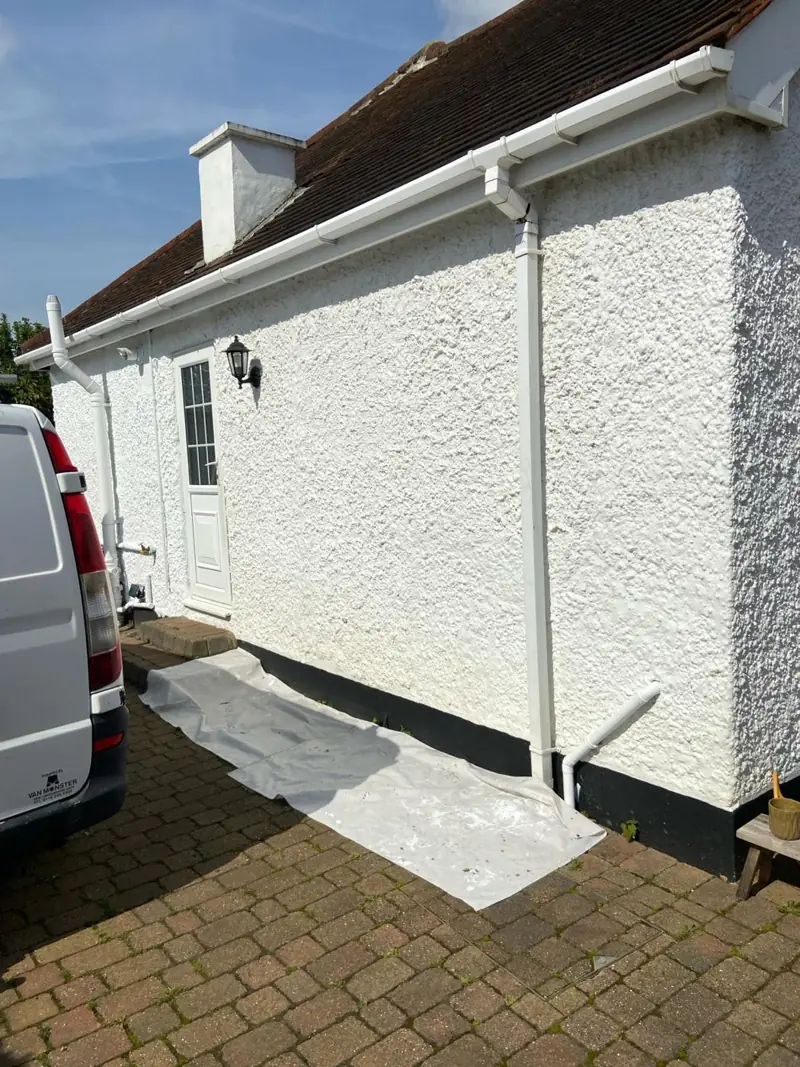
Because the waterside streets dry slowly, we prefer to book masonry work here between late spring and early autumn, leaving extra drying time after any wet spell. On a terrace with a gated rear alley, we need the alley key or a neighbour’s help to reach the back wall. For a full explanation of how we prepare and paint render, see the main render and masonry painting page, and for other services in the area see our Far Cotton page.
Last updated by Dean, DH Painter & Decorator.