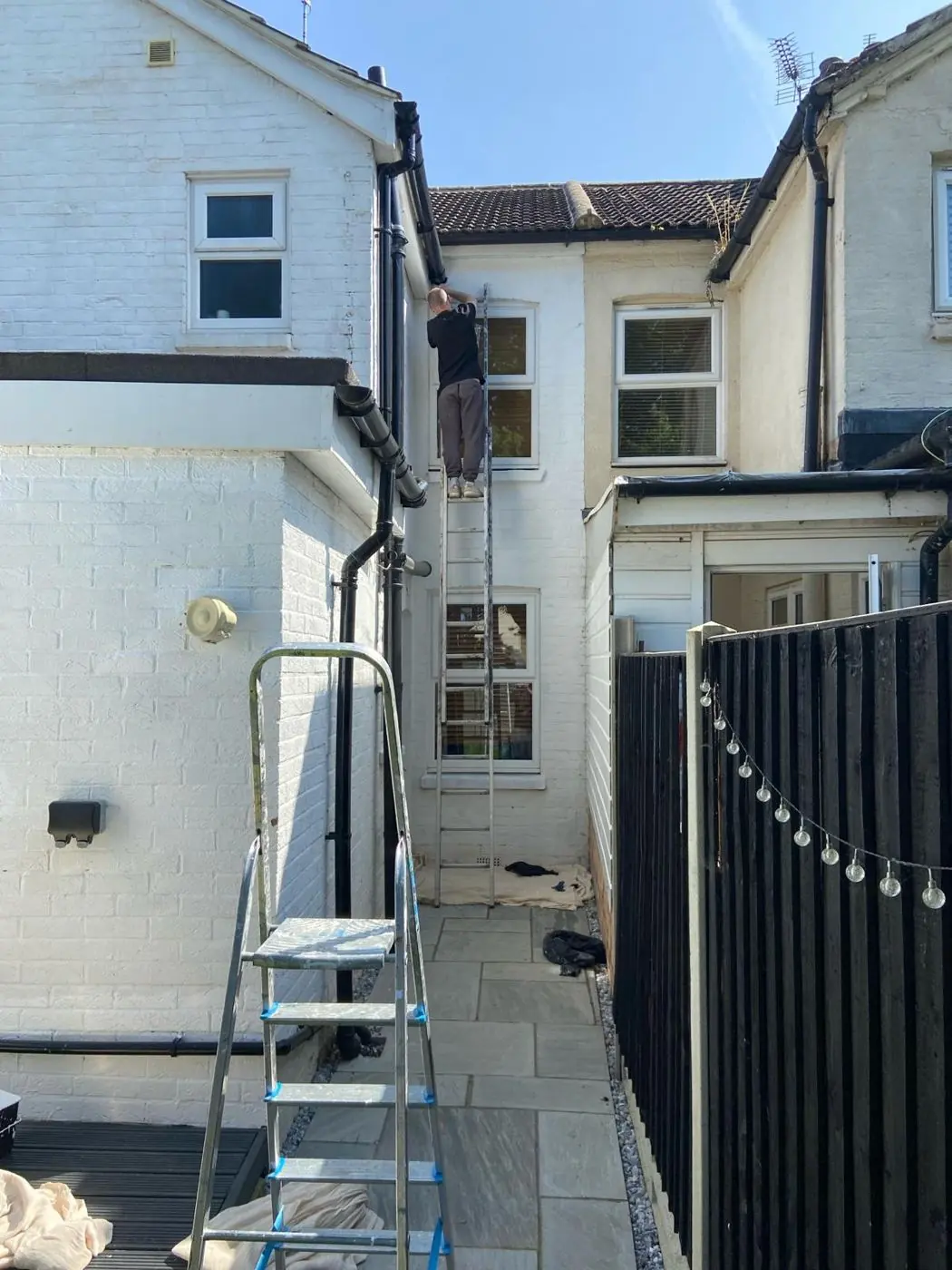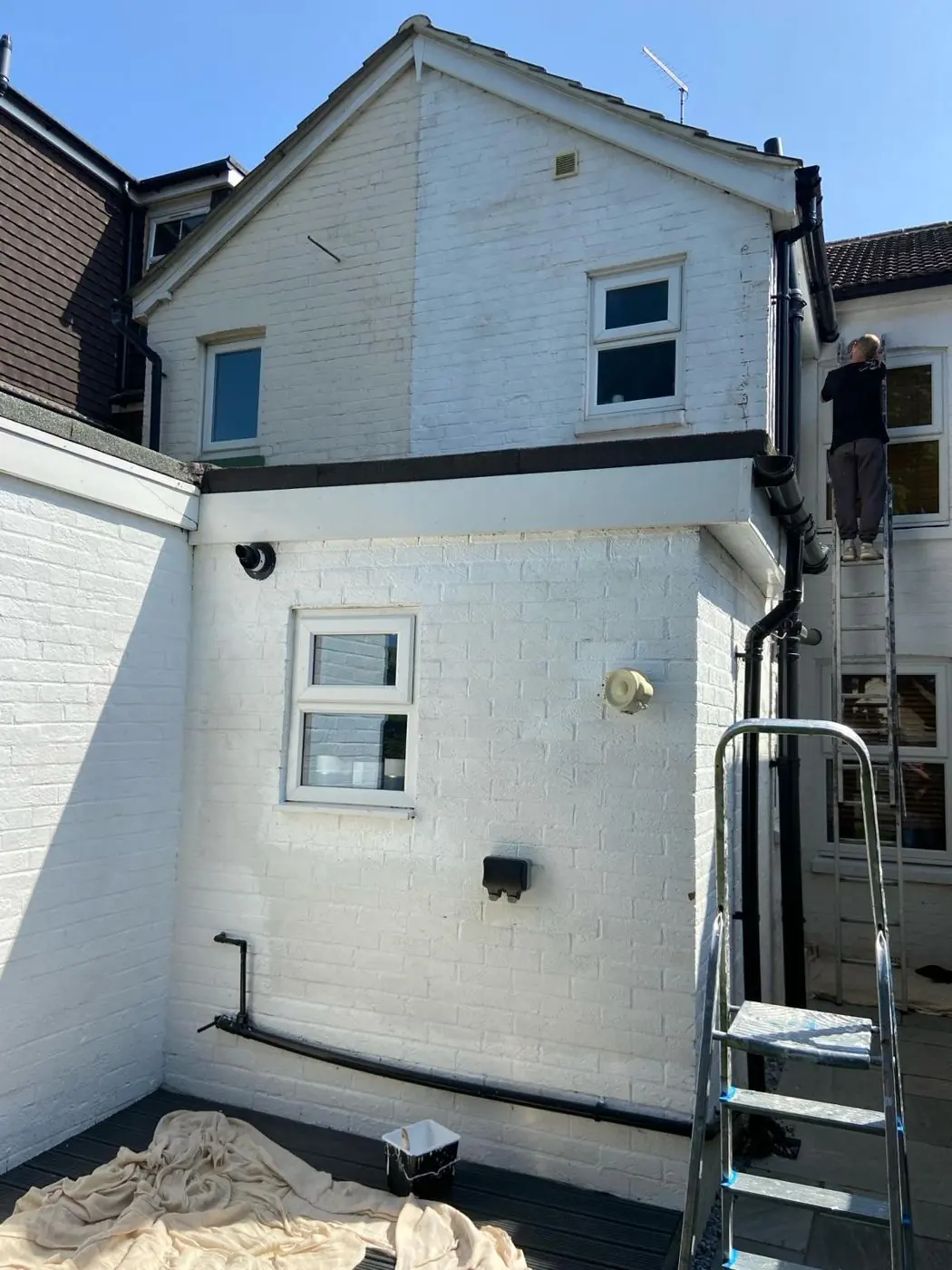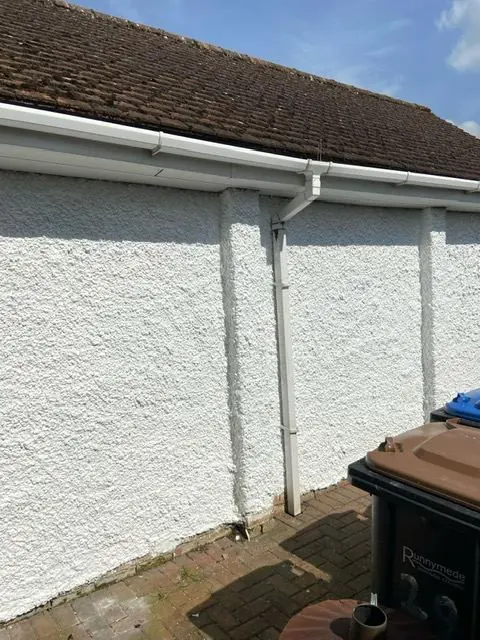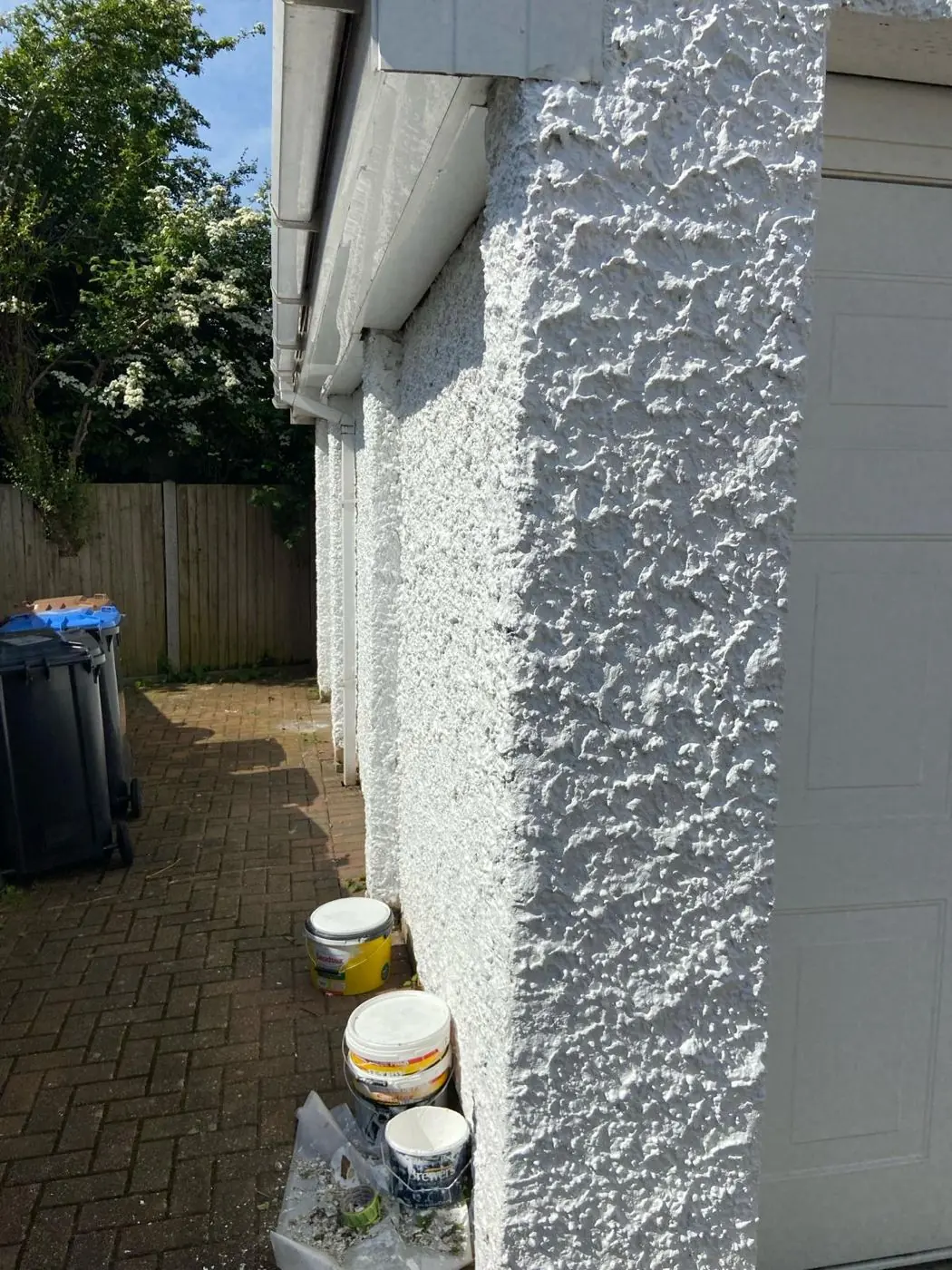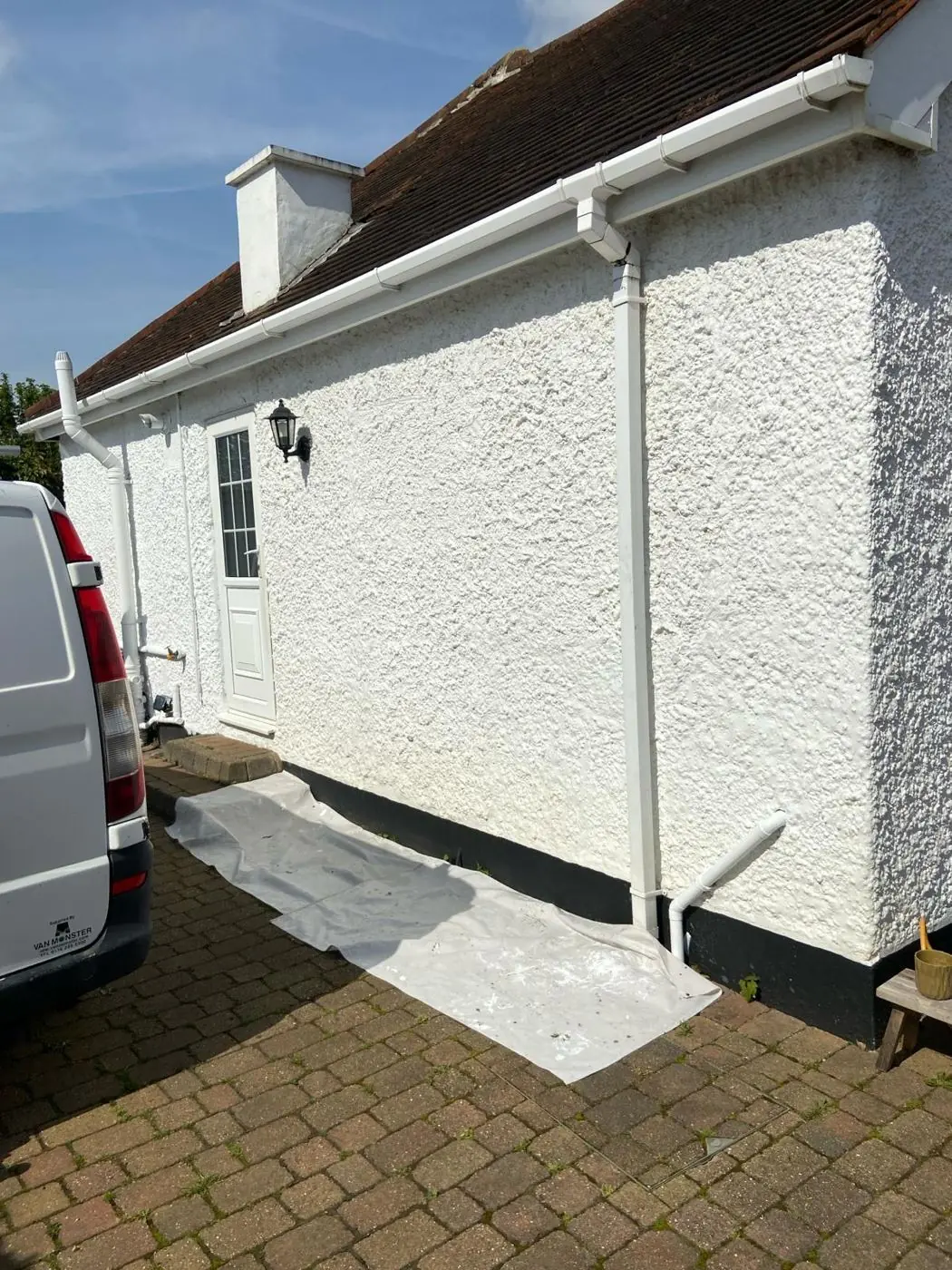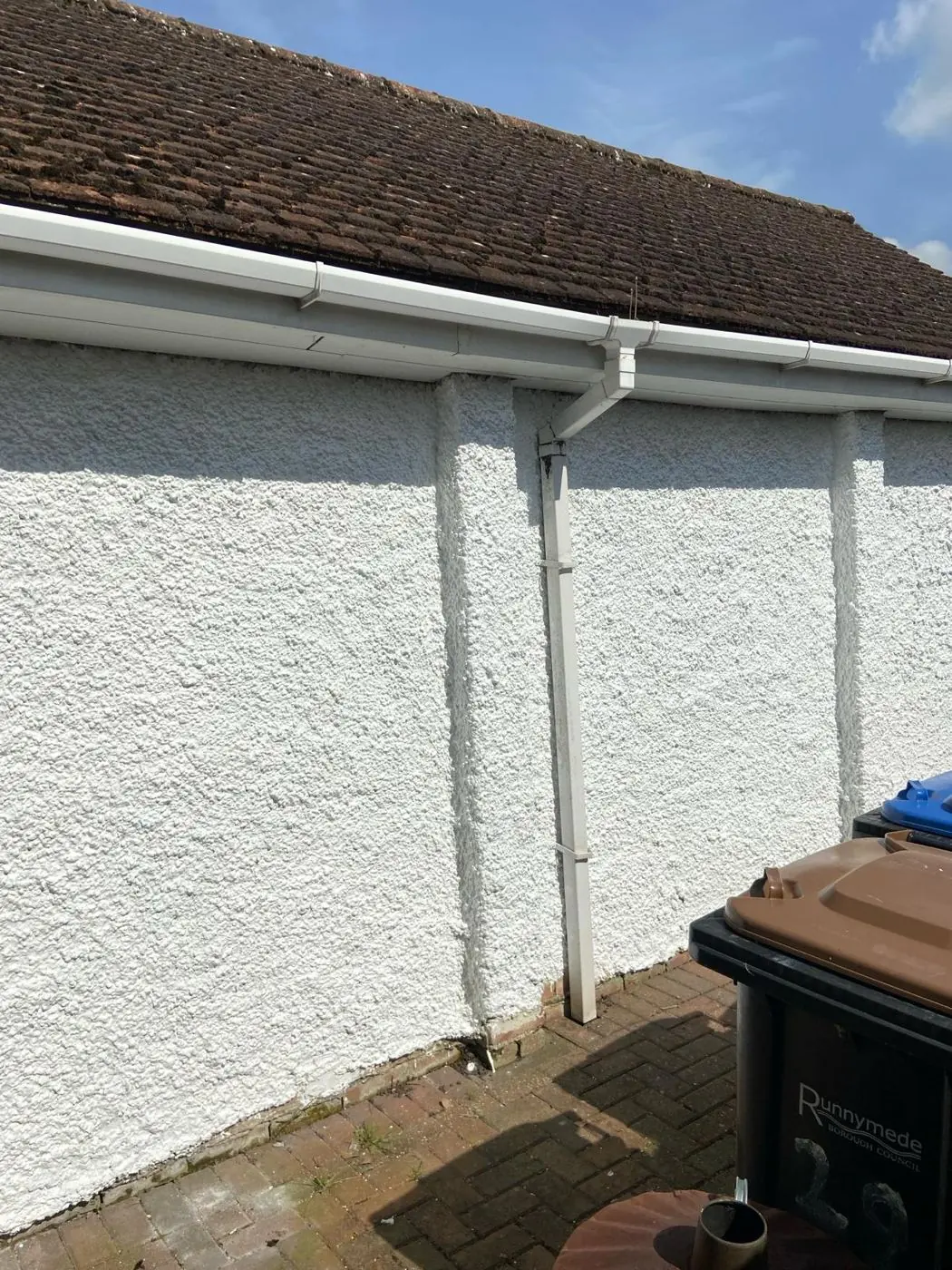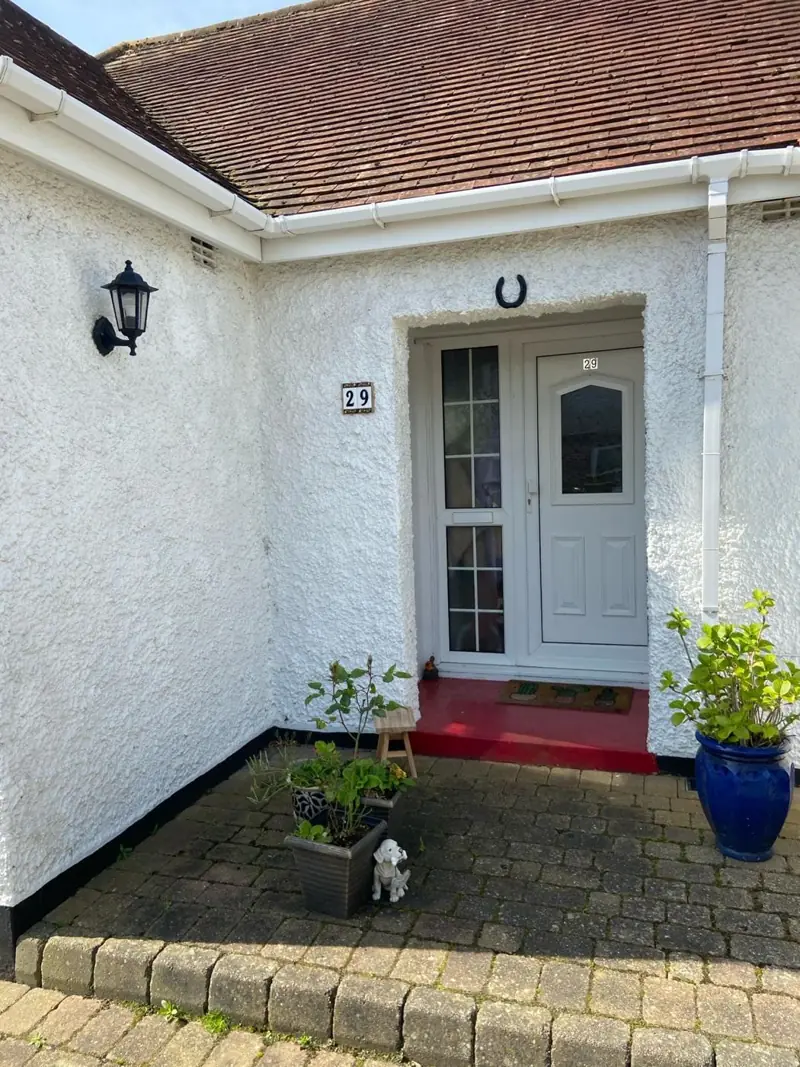
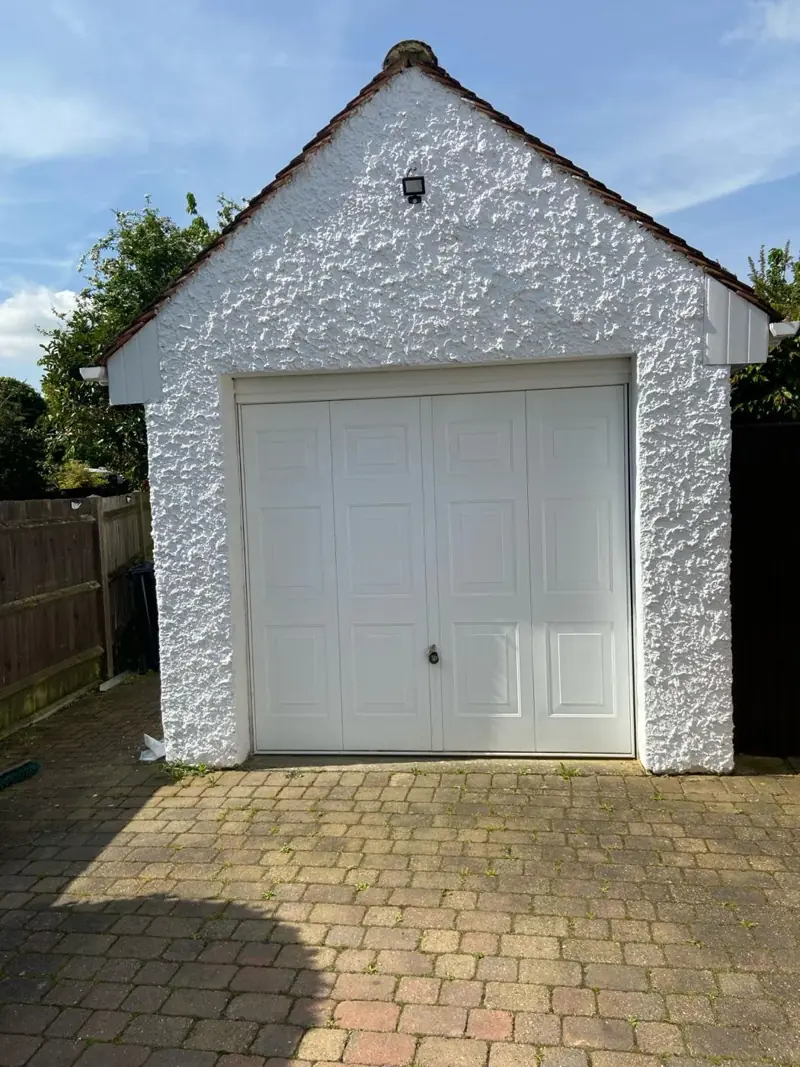
We paint rendered panels, plinths, garden walls and other masonry in East Hunsbury, NN4, a brick-built suburb about 1.9 miles south of Northampton. Most homes there are facing brick that should stay unpainted, so Dean will tell you plainly which walls need a coating and which do not.
Most walls here should be left as bare brick
This page starts with a caveat. East Hunsbury was built mainly in the 1980s and 1990s, and a detached house listed for sale on Stanford Way was described as brick and tile, which fits what you see across Merefield, Blacky More and Collingtree Park. Facing brick of that age needs no paint at all. A masonry coating on sound brick adds a maintenance job every several years, can hold moisture in the wall and is very hard to take off again. If you are thinking of painting brick to freshen up the house, we will usually suggest cleaning it instead and spending the money on the roofline timber and doors.
So the render and masonry work we take on in East Hunsbury is narrower than in Northampton’s older districts, and it falls into a few clear groups.
Where coatings are needed: panels, plinths and walls
| Surface | Typical condition | Approach |
|---|---|---|
| Rendered panels and bay infills | Smooth render between brick piers, faded or patchy after decades | Clean, stabilise any chalky areas, two coats of breathable masonry paint |
| Rendered plinths | Splash staining and green growth at ground level | Biocide wash, rinse, dry out fully before coating |
| Garden and boundary walls | Previously painted block or render, often flaking | Scrape back to sound coating, fill, then repaint |
| Extension walls | Render or block work added to an older house | Check the render has cured, then coat to match |
Our main render and masonry painting page sets out the full preparation sequence, and the guide to painting render and roughcast explains which paints suit which surfaces.
Low ground, run-off and the base of a wall
East Hunsbury’s main flood risk is surface water running along old natural valleys towards Wootton Brook. The parish’s flood study records flooding at Lichfield Drive in 2005 and 2007, at two properties on Marlowe Close, and on Rowtree Road from Grange Wood Park runoff in 2012. Where water has sat against a house, the bottom course of render and any plinth can stay wet long after the surface looks dry. Painting over damp masonry is the quickest way to get blistering and peeling. We check moisture at the base of walls on lower-lying plots, clear any growth and wait for the wall to dry before the first coat goes on. Sometimes that means booking the plinth for later in a dry spell than the rest of the job.
The rendered front of Wootton Grange Farmhouse
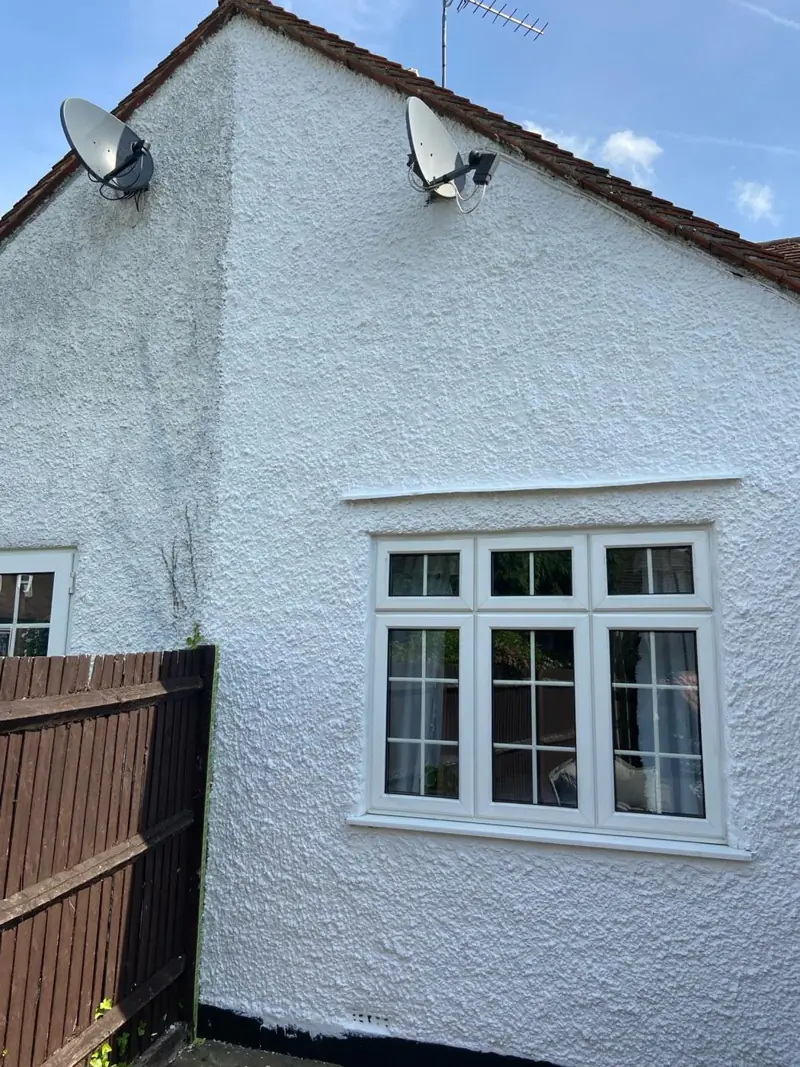
One building in the area stands apart. Wootton Grange Farmhouse on Towcester Road is Grade II listed, mid-19th century, with a cement-rendered front under a hipped Welsh slate roof. Its 17th-century barn is coursed, squared rubble stone. Old buildings like these need to lose moisture through their walls, so modern plastic-based masonry paints are the wrong choice. Breathable mineral or lime-compatible coatings suit them better, and any change in colour or finish should be checked with West Northamptonshire Council first. The converted listed farm buildings used by the Grangewood Park residents’ club raise the same questions. On these we would discuss the existing coating, its condition and what it was before anything is proposed.
A practical point on colour. Rendered panels on estate houses are often finished in white or a pale neutral to sit between brick piers, and the neighbouring houses in a cul-de-sac often share the same scheme. Keeping to a similar tone tends to look right against the brick and tile, while a strong colour on one panel can look odd in a row of matching brick fronts. We can bring sample cards to the visit so you can judge the shade against your own brick in daylight.
You can read more about the area and the rest of our services on the East Hunsbury page.
Last updated by Dean, DH Painter & Decorator.