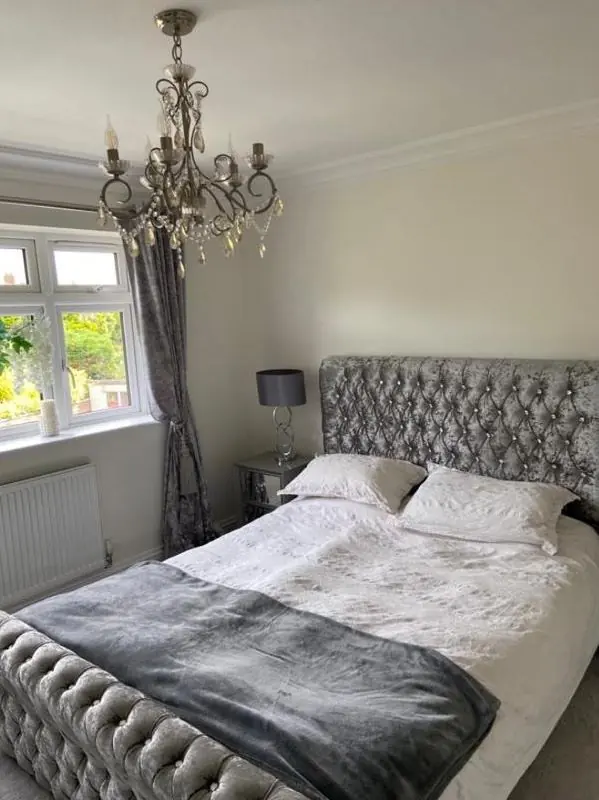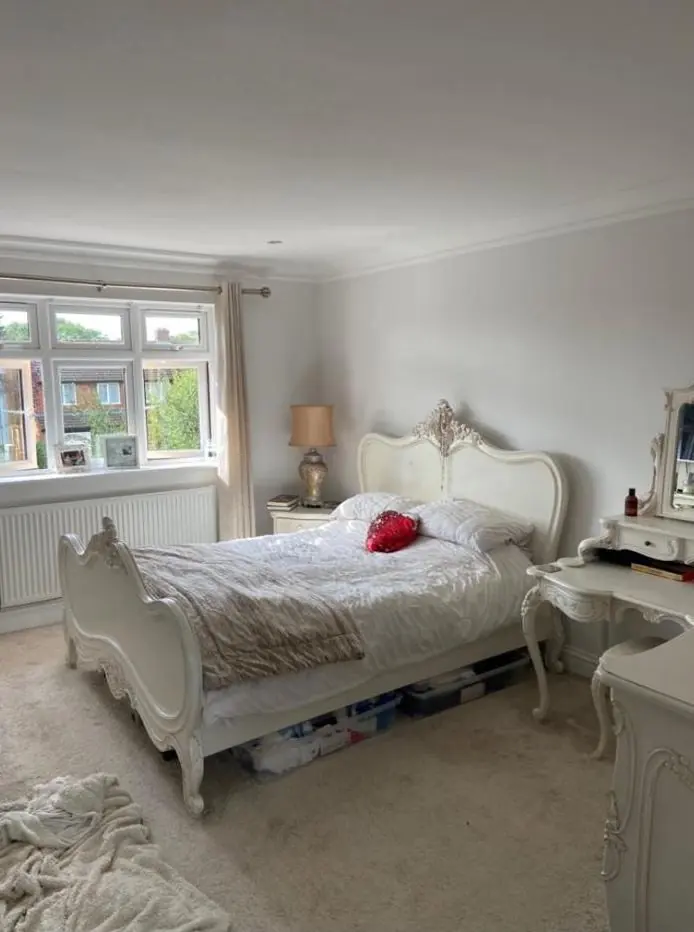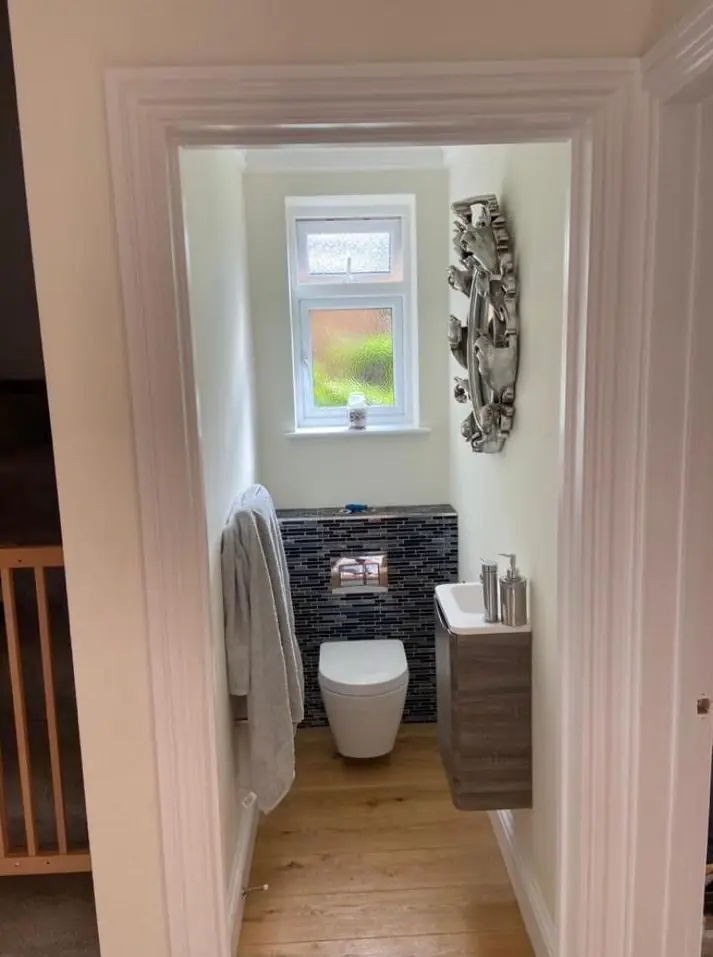
Dean paints the insides of homes in Denton, the NN7 village 5.4 miles east of Northampton town centre, just north of the A428 Bedford Road. The work divides into two kinds: solid limestone cottages and farmhouses in the conservation area, where walls need paint that lets moisture out, and the late-1960s Leys estate, where most jobs are straightforward repaints.
Two very different interiors in one village
For a village of well under a thousand people, Denton’s rooms vary a great deal. The older houses on Main Street, Church Way, Bedford Road and Wareing Lane were put up over roughly three centuries, from the 1600s into the 1800s. Church Farm on Main Street is dated 1675, and a thatched house on the west side of the village carries the date 1606. They are built of pale local stone, typically two floors high, with attic rooms in some and a third storey in a handful. The Leys estate was laid out south of them at the end of the 1960s, and bungalows and further houses have since filled the ground down to the bypass. The two groups need different paint and different planning, so we start every Denton job by working out which kind of house we are in.
Solid limestone walls and the paint they tolerate
A cottage built of limestone rubble or coursed stone has no cavity. Moisture moves through the wall in both directions, and the inner face is often lime plaster rather than gypsum. Coat that plaster in a vinyl emulsion and the moisture still has to go somewhere, which usually means blistering, flaking or damp patches low on the wall. Denton’s setting makes this more likely in some houses: it lies in a hollow on the limestone belt, and the heavily vegetated ground along the spring-fed stream below the church holds damp.
For these rooms we use breathable mineral or clay-based emulsions, and we take any vinyl coating off where it is clearly trapping moisture rather than painting over it again. Expect a few other things in an older Denton house:
- Low ceilings and exposed or boxed beams, so cutting in is slow work and ceilings take more time than their size suggests.
- Deep window reveals in thick stone walls, which collect condensation and need preparing before they are painted.
- Attic rooms under thatch, pantile or slate, where sloping ceilings meet uneven walls and there is little room to work.
- Old plaster that is soft or hollow in places and needs lime-compatible repairs before any new colour goes on.
Listed interiors need a check before the brush comes out
Roughly twelve Denton buildings are on the national list, Manor Farmhouse, Church Farm, both Gate Houses, Stone House and 5 Wareing Lane among them. Listing covers the inside as well as the outside. Repainting a plain wall in the same type of paint is normally fine, but stripping historic finishes, painting panelling that has never been painted, or changing the character of a room can need listed building consent. If you live in one of these houses, we will raise it at the quote stage so you can speak to the council’s conservation officer before anything is booked.
Repaints on the estate side of the village
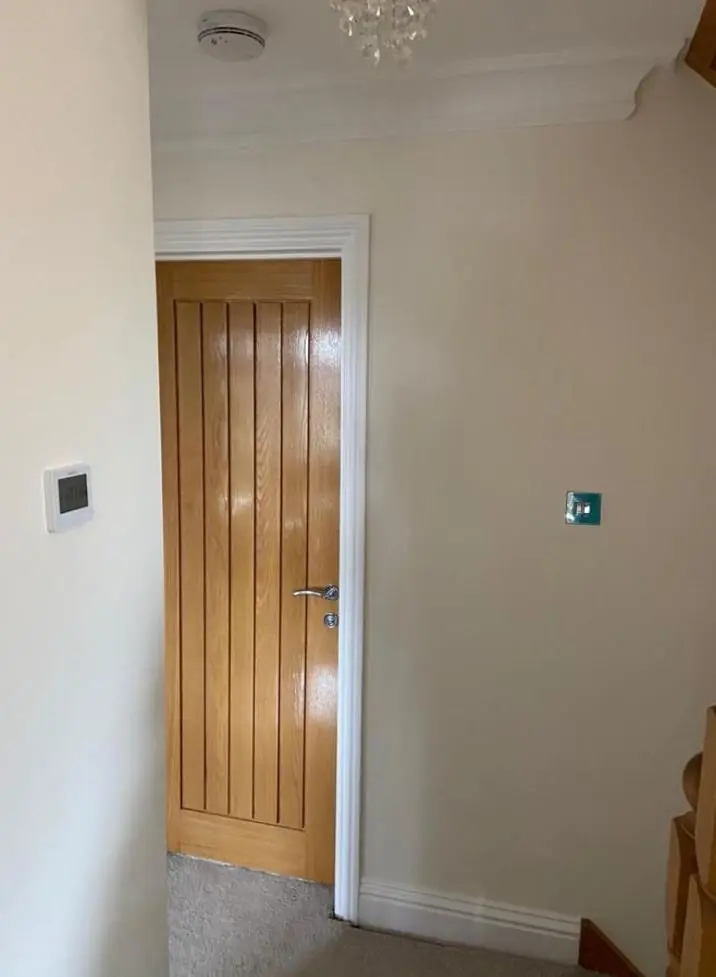
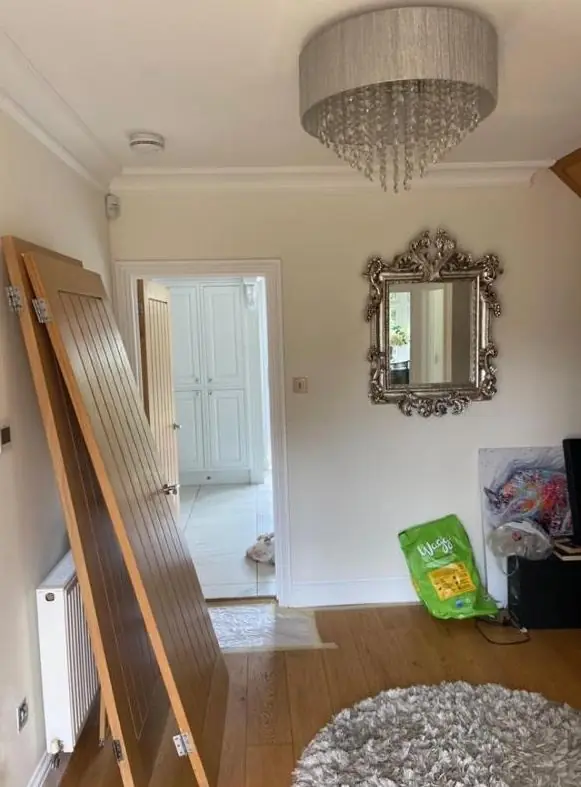
Inside the Leys houses and the newer bungalows, the job is a conventional one: plasterboard or skimmed walls, standard ceiling heights, modern skirtings and doors. Older 1960s ceilings can show hairline cracks along board joints, and kitchens and bathrooms often have years of grease or condensation staining that needs cleaning and a stain-blocking primer. Bungalows are quick to move through because nothing is upstairs, which suits whole-house repaints done in a few consecutive days. Parking is also easier here than in the conservation area, where many lanes have a single footway, or none, and cars line the roadside.
For the full list of what an interior job covers, from ceilings to spindles, see our main interior painting service. For costs, read the painter and decorator cost guide, and for other work in the village, go to the Denton area page.
Last updated by Dean, DH Painter & Decorator.