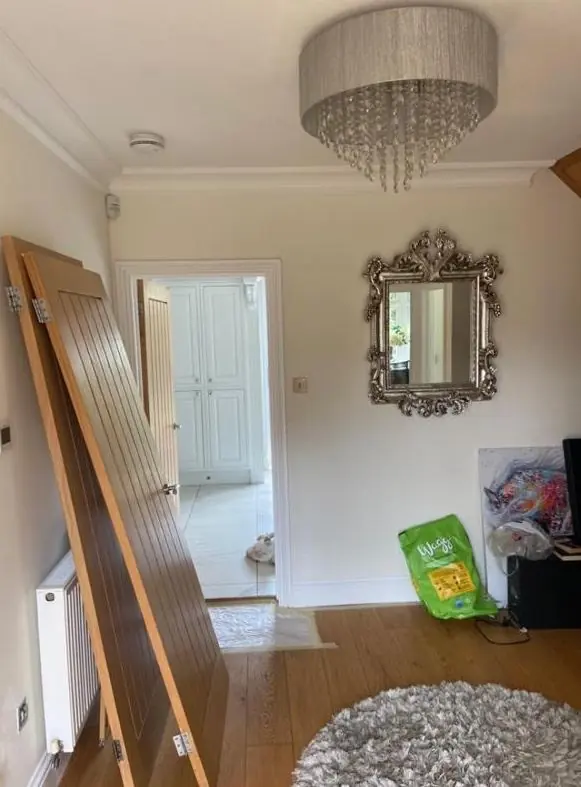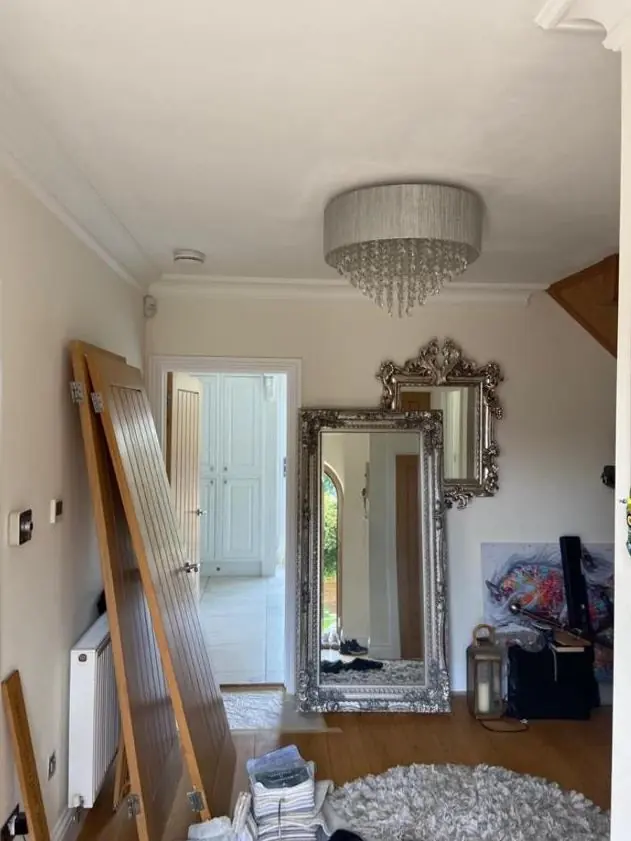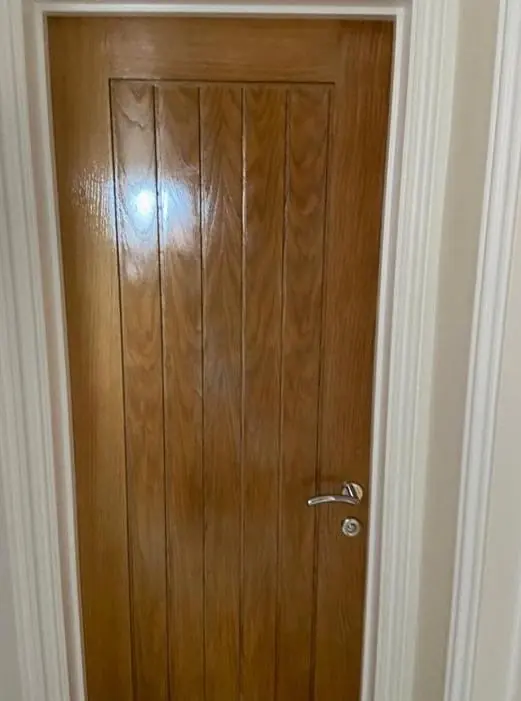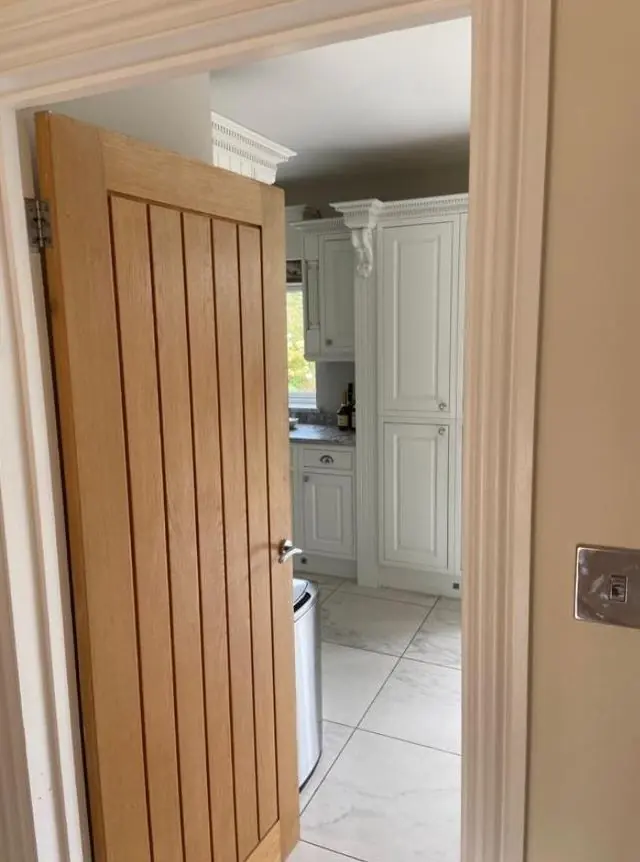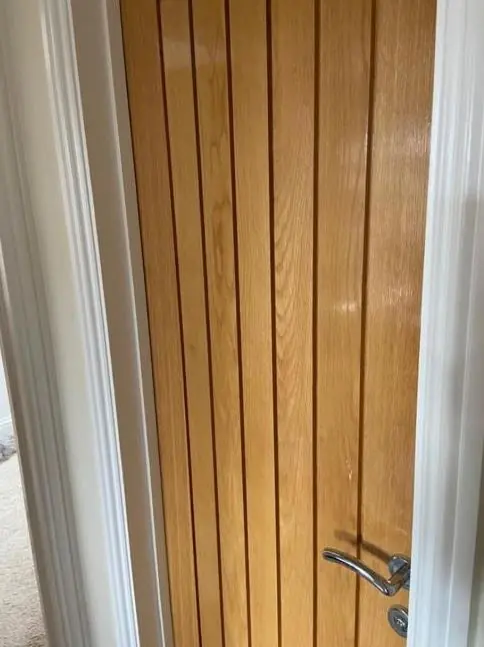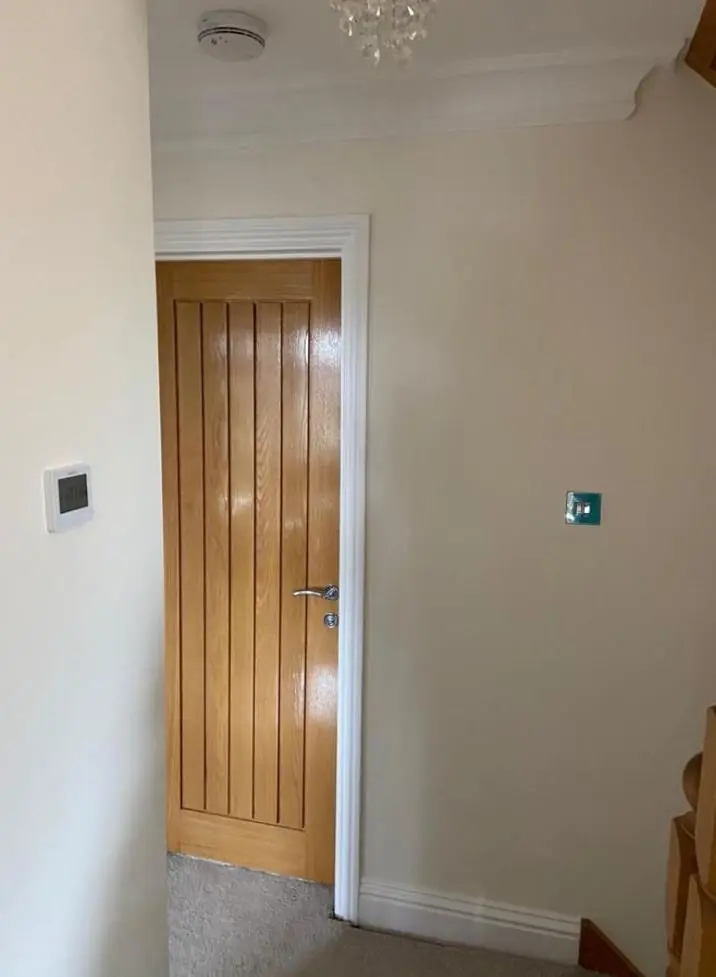
Dean paints doors, skirtings, frames, casements and sashes in Denton, about 5.4 miles east of Northampton town centre off the A428. Older houses in the conservation area need oil-based or microporous systems and careful masking against bare stone, while homes on The Leys take a straightforward modern repaint.
Plank doors, casements and a 16-pane sash
Denton’s historic core along Main Street, Church Way, Bedford Road and Wareing Lane is a run of 17th to 19th century limestone cottages, farmhouses and former farm buildings. The council’s 2014 conservation area appraisal notes that most original windows here have already been replaced, some with uPVC. That makes the timber that survives worth looking after: traditional plank and panelled front doors, timber casements like those on the thatched Upper and Lower Gate Houses, and sashes such as the 16-pane windows recorded on Stone House, dated 1813, at 14 Bedford Road.
Old softwood joinery moves with the seasons, so we use systems that move with it. For doors and casements that means either a traditional oil-based paint or a microporous coating that lets trapped moisture escape. Bare or weathered timber on sashes and casements can take a linseed-based primer first. Heavy modern coatings, built up over decades, tend to crack along the boards of a ledged door and let water in behind, so we strip back failed layers rather than adding more.
Keeping the ironstone bare
Many of the village’s limestone fronts carry orange ironstone around the openings: quoins, string courses and window surrounds. That colour contrast is deliberate and the stone should never be painted. When we paint a frame set in an ironstone surround, we cut in by hand against the stone and mask where we need to. We also cover the sill and the ground below before sanding, so dust and drips stay off the stone. A smear of white gloss on porous ironstone is very hard to remove without damaging the face.
About a dozen buildings in Denton are listed. If your door or windows have never been painted, or you want a different colour on a listed house, check with the council before work starts, because a change in appearance can need listed building consent. Repainting like for like is a different matter, and we can talk through which applies to you.
Thatch overhead: stripping without a flame
Several cottages, including the Wareing Lane row and Stone Cottage, sit under reed thatch. On these we never use a heat gun or a blowlamp anywhere near the eaves, dormers or porch joinery. Old paint comes off with chemical strippers or steam, followed by hand scraping and sanding. It takes longer, but it removes a real fire risk. If your cottage is thatched, say so when you book and we will plan the stripping around it.
Outside doors in the old core also take a fair amount of shade. Mature trees around the church and along Orchard Lane drop sap and leaf debris and keep some frontages damp. For an external door, we prefer a settled run of dry weather between spring and early autumn, and we allow extra drying time between coats on north-facing doors.
Leys estate doors and skirtings
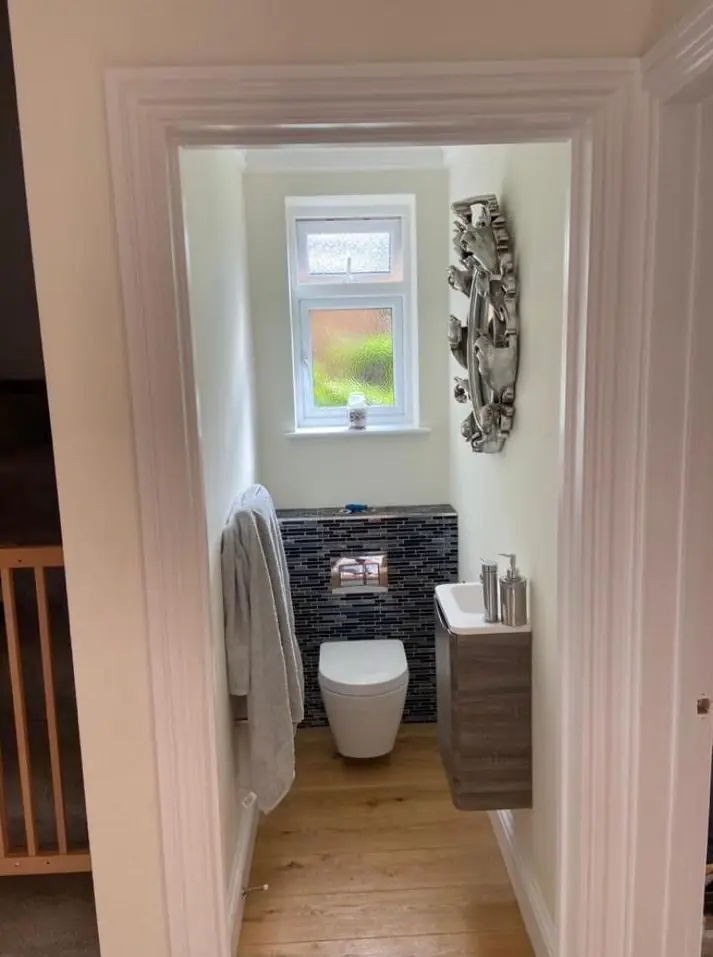
Between the old village and the A428, The Leys dates from the late 1960s, and later bungalows and two-storey houses fill the rest of the ground. Inside, these homes usually have standard machined skirtings, architraves and flush or panelled internal doors. That is a more routine job: we degrease, key the old gloss, fill dents and open joints, caulk the gap where skirting meets wall, then lay off in satin or gloss. Many owners now ask for water-based satinwood, which keeps its white longer than oil gloss.
For the full preparation process and finish choices, see our main door, skirting and woodwork painting page. You can also read about the rest of our work in the village on the Denton area page.
Last updated by Dean, DH Painter & Decorator.