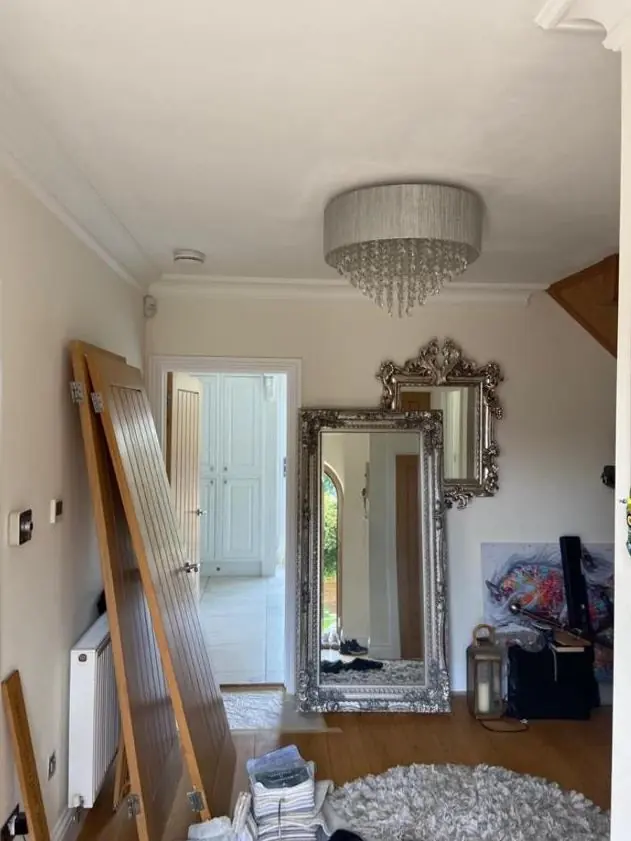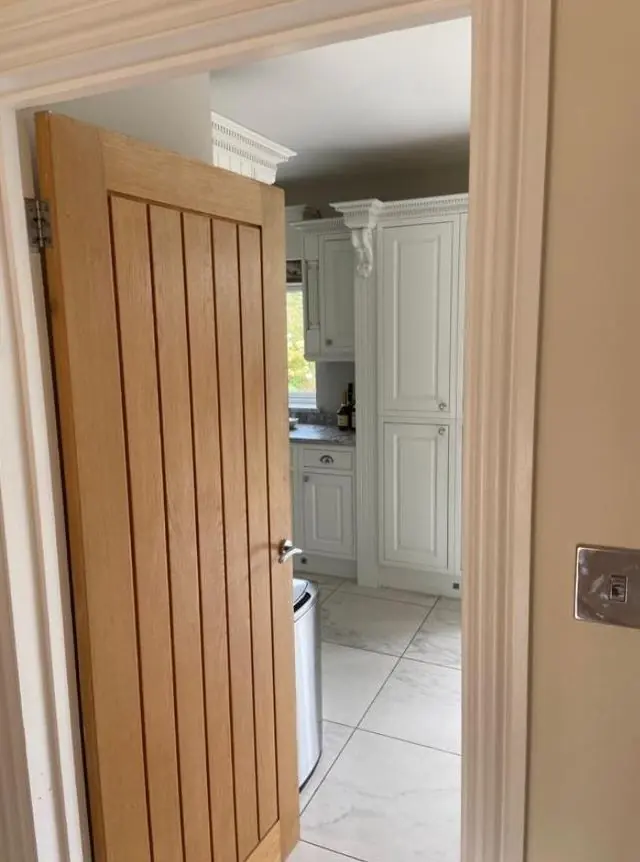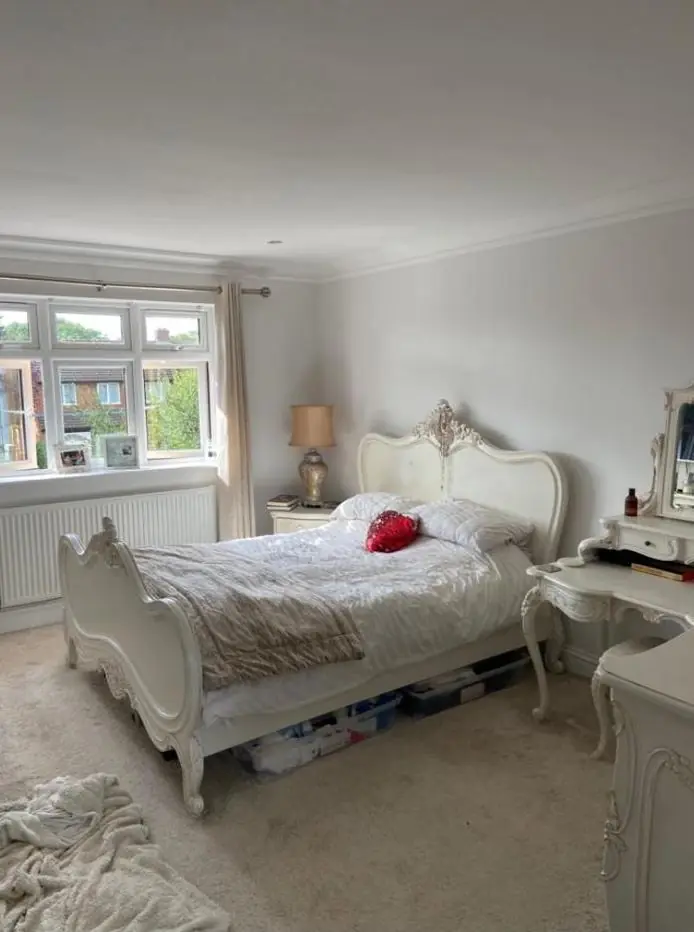
Dean hangs wallpaper in Denton, 5.4 miles east of Northampton in the NN7 postcode. In the conservation area's older stone cottages, walls are rarely flat, so lining paper usually goes up first. In the late-1960s Leys estate homes, plasterboard and skimmed walls take decorative paper directly once they have been prepared.
Why a stone cottage wall usually gets lined first
The 17th to 19th century houses along Main Street, Church Way and Wareing Lane are made of limestone rubble or coursed stone, with lime plaster on the inside face. After two or three centuries that plaster follows the stone behind it: walls bow, corners are out of square and the surface has dips that a strong light shows up at once. A good wallpaper reveals every one of those flaws, and printed patterns can look skewed even when each drop has been hung plumb.
Lining paper hung horizontally across the wall, at right angles to the finish paper, evens out the minor dips and gives the decorative paper a consistent surface to dry onto. On very uneven walls we sometimes use a heavier grade, or two layers. Lining does not fix loose plaster, so we tap-test the wall first and get hollow areas repaired with lime before any paper goes up.
Damp, breathability and the wrong adhesive
Denton sits in a small valley on the limestone belt, with land falling towards the village centre from every side and a spring-fed stream running south from the church through heavily vegetated ground. North-facing and ground-floor walls in the older houses can stay damp for long spells. Vinyl wallpaper and plastic-coated papers stop a solid wall from drying, so mould can form behind them. For those rooms we suggest paper-based, breathable wallcoverings, a paste suited to the wall, and in some cases leaving a damp external wall painted rather than papered. If the wall is wet when we arrive, we will tell you instead of covering the problem.
| Wall you have | What goes on before the paper |
|---|---|
| Lime plaster on limestone, older cottage | Tap-test, lime repairs, lining paper cross-hung |
| Old paper over stone, never stripped | Careful steaming, check the plaster underneath, then line |
| Plasterboard or skim, Leys estate or later house | Fill, sand, size or primer, then hang directly |
| New plaster in an extension or conversion | Full drying time, then sizing before any paper |
Setting out in rooms where nothing is level
Low ceilings and beams in the older houses change how a pattern should be planned. Where a ceiling line wanders by a couple of centimetres across a room, a large repeat lines up badly against it. We choose where the pattern will break: usually at the least visible corner, or behind a door, with the main drop centred on a chimney breast or window. In attic rooms the sloping ceilings and dormers turn each length into a separate cut. Small, random designs forgive these rooms much more than geometric stripes, which pick out every wobble, and we will say so before you order the paper.
Leys estate rooms and the later infill
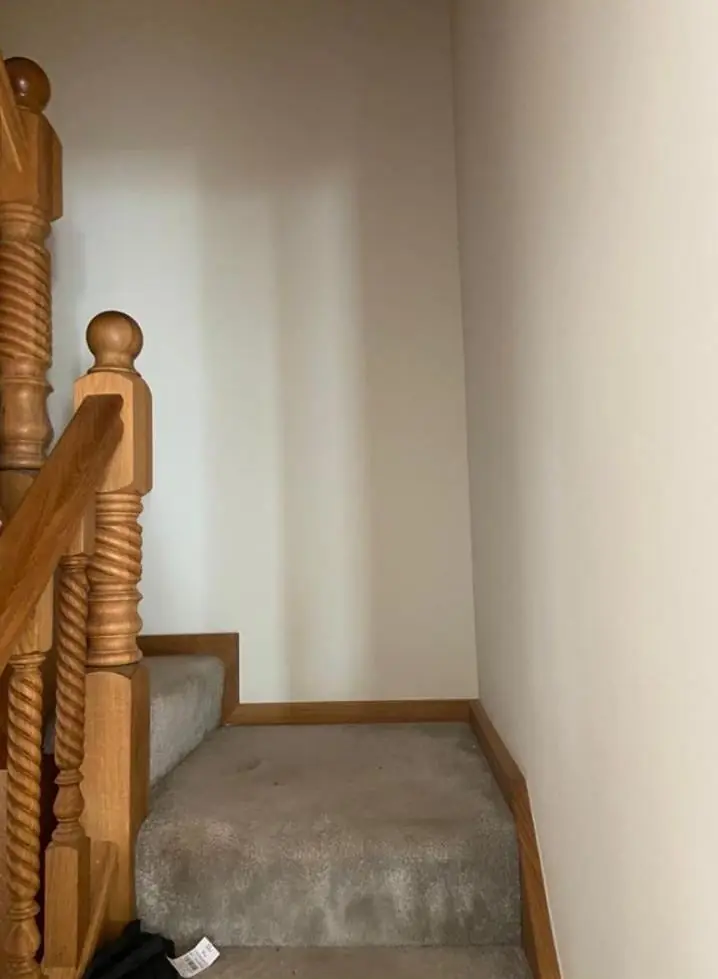
The Leys went up at the end of the 1960s, south of the historic core towards the A428 bypass, and has since been joined by bungalows and newer houses. Here the walls are generally plasterboard or skimmed, the angles are much truer, and a feature wall or full room can go up without lining. Stripping old layers is the main preparation, as many of these houses have had several decorating cycles since they were built.
The wallpaper hanging service page explains how we strip, prepare and hang. Other Denton services are listed on the Denton area page.
Last updated by Dean, DH Painter & Decorator.